REVIEW · KYOTO
Kyoto: Tea Ceremony with Maiko Premium
Book on GetYourGuide →Operated by B.B.Advisors Inc. AN KYOTO · Bookable on GetYourGuide
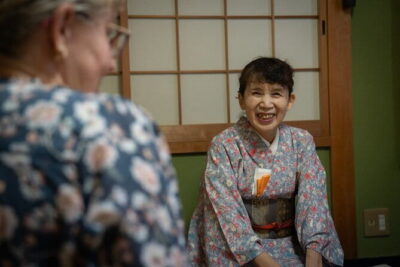
A Maiko can teach matcha in 90 minutes. You’ll learn how to make matcha with a Maiko, then hear her story through a lively Q&A and finish with dances and games. My favorite part is that it isn’t just watching—you’re right there, asking questions and taking close photos; the one catch is the setting is not a classic tatami ochaya, so the vibe is more modern room than old-world teahouse.
This is built for visitors who want Kyoto culture without spending half a day planning or booking separate experiences. You get the core pieces—tea-making basics, sweets, her routines and training, performances, and interaction—packed into a clear schedule. Just go in with realistic expectations about the venue and the group format, especially if you’re chasing the most “quiet and ceremonial” atmosphere.
In This Review
- Key Takeaways Before You Go
- Tea Ceremony With Maiko Premium: What You’re Really Buying
- Getting There Near Gojo Station (And What the Building Feels Like)
- The Matcha Moment: Making Tea With Your Performer
- Q&A With a Maiko: Real Questions, Real Answers
- Close Photos and the Senjyafuda Lucky Charm
- The Dance Performance: Two Pieces of Seasonal Storytelling
- The Game With Maiko: Why the Fun Part Works
- Premium Seats and the First-Row Choice
- Who This Is Best For (And Who Should Think Twice)
- Practical Details You’ll Actually Care About
- Should You Book This Maiko Premium Tea Ceremony?
- FAQ
- How long is the Kyoto Tea Ceremony with Maiko Premium?
- What is included in the price?
- Do children get a discount?
- Where is the meeting point?
- Is the venue inside a traditional Japanese house?
- Is there elevator access?
- Will I be able to communicate in English?
- Should You Book This Tour?
Key Takeaways Before You Go
- Matcha with a Maiko: You make the tea yourself, not just a demo.
- Q&A time: You get direct answers about daily life and training.
- Up-close photo moment: This is one of the main reasons people book Premium.
- Dance + seasonal stories: Two performances tied to love, everyday life, or the seasons.
- Interactive game: You may play, or you can cheer and still have fun.
- Sometimes it’s Geiko instead: Depending on availability, you might meet a Geiko rather than a Maiko.
Tea Ceremony With Maiko Premium: What You’re Really Buying
On paper, this looks like a tea ceremony. In practice, it’s a short cultural evening with a working performer—someone trained in Kyoto’s geiko/maiko arts—who talks to you while still doing the job of entertaining. The value is in the combination: you taste and make matcha, you learn what it means from inside the tradition, and you get performances plus a chance to interact.
The Premium angle matters because the program is fuller than the basic idea of tea alone. It includes two dances, a game, a photo opportunity close to your performer, and a special gift (a lucky charm called a Senjyafuda). If you like structured experiences—clear steps, a timeboxed schedule, and frequent moments to participate—this is a good fit.
And at $50 per person for about 90 minutes, the best way to see value is to compare it to what it costs to get multiple separate pieces in Kyoto: a tea activity, cultural explanation, and a photo moment with a performer. You’re essentially paying for access and time with a Maiko/Geiko, not for fancy dining.
You can also read our reviews of more tours and experiences in Kyoto.
Getting There Near Gojo Station (And What the Building Feels Like)
The meeting point is simple: a 1-minute walk from Exit 1 of the Karasuma Line’s Gojo Station. The store entrance faces Gojo-dori, so you’re not hunting for a hidden alley.
Inside, plan for stairs. There’s no elevator in the building, and you’ll take steps to reach each venue space. If stairs are a deal-breaker for you, this is the one practical limitation worth taking seriously.
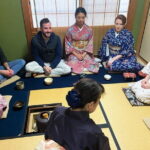
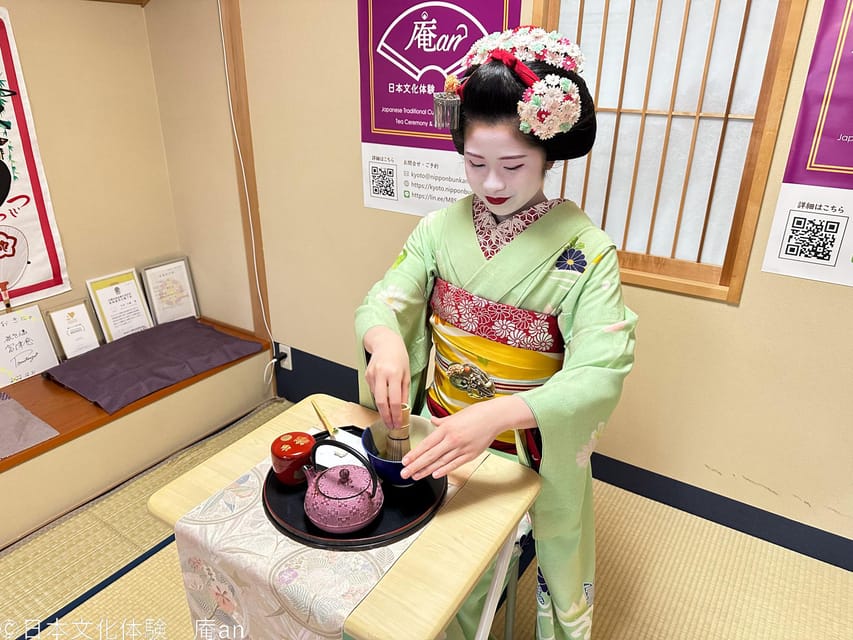
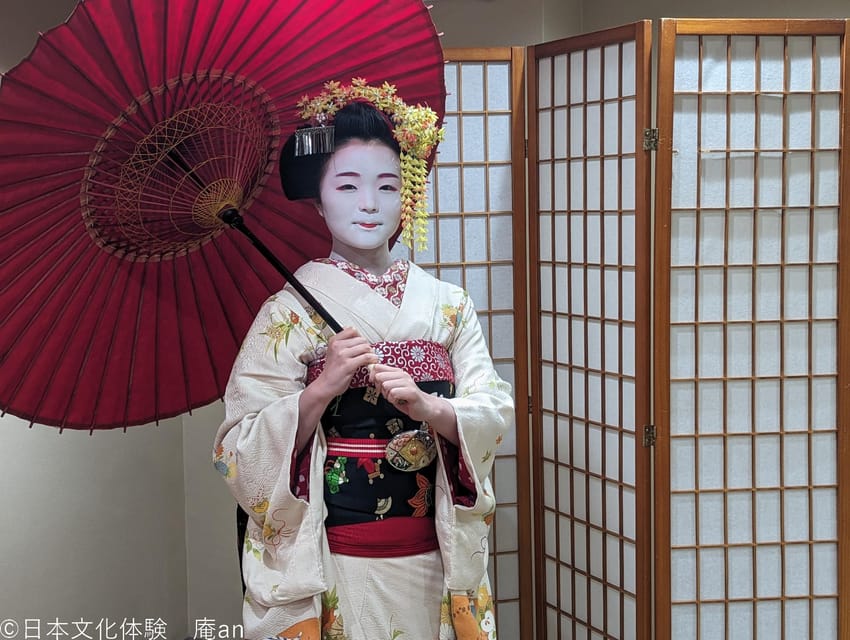
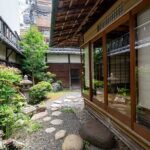
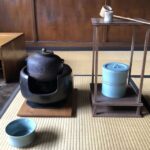
Now, about atmosphere: this isn’t held in a traditional tatami teahouse room, and it’s not described as an ochaya. People like the experience anyway, but they also note the room is more modern—tables and chairs, and a performer seated at a small setup rather than in a fully traditional interior. You’ll still get the cultural content, but if your dream is absolute visual authenticity (quiet tatami, minimal signage, incense-in-the-air vibes), you might feel the difference.
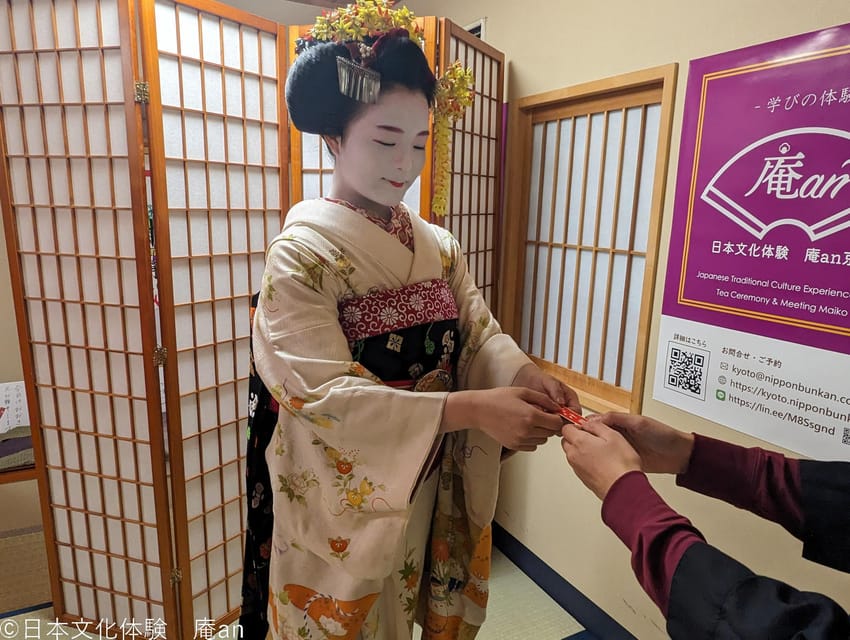
There’s also a photography reality to know. Some photos can include prominent vendor signage or QR-style ads in the background. You can still get good pictures because the close photo moment with the Maiko/Geiko is a highlight, but for wide shots, be ready to frame around the background.
The Matcha Moment: Making Tea With Your Performer
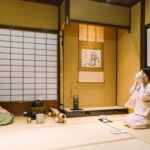
The experience starts with a greeting, then moves into the tea ceremony. You’ll do more than watch: you make your own matcha under the guidance of the Maiko. The program includes matcha plus two dried-type Japanese sweets. The sweets are part of the rhythm—small bites that help you focus on taste and texture while the tea-making steps happen.
This part is valuable even if you already know matcha basics. You’re learning the process through a performer who lives the tradition, so you pick up the “why” behind small details. And because it’s hands-on, you’ll remember it as an activity, not just a lecture.
Timing-wise, you’re not stuck through a long, formal ceremony. Instead, it’s the essentials: how matcha is prepared, how to handle the tools and steps, and what the tea moment represents. Expect it to feel friendly and guided rather than strict and silent.
Q&A With a Maiko: Real Questions, Real Answers
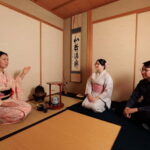
This is the part I’d prioritize. The program includes a dedicated Question and Answer session, and that’s where the evening becomes more than a show. You get to ask directly, and you’ll learn about her world—daily routines, training, and what life as a Maiko looks like today.
From the way the program is described, you’ll feel like you’re stepping into a private viewpoint of training and tradition. One small but important detail: English translation is provided as much as possible. If your group needs extra help, you’ll need to ask in advance.
When you’re standing there and the conversation opens up, the best questions tend to be simple and human:
- What surprised you most when you started training?
- What’s a typical day like?
- What do people misunderstand about Maiko/Geiko life?
- How do you practice for dances and formal moments?
You don’t need expert-level questions. The point is that your performer can explain what “looks graceful” is actually built from routines and repetition.
Close Photos and the Senjyafuda Lucky Charm
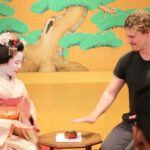
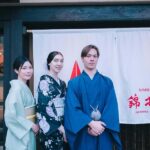
A key highlight is the photo opportunity. You’ll get a commemorative photo right beside the Maiko/Geiko. This isn’t just a quick glance—people specifically mention getting the chance to take photos up close as a major reason they booked.
After the Q&A and photo moment, you’ll also receive a Senjyafuda lucky charm. It’s given as a special gift during the ceremony, and it’s a nice souvenir with meaning. Even if you don’t treat souvenirs as “proof” of a trip, this one works because it ties to the ritual flow: tea, connection, then a token.
One practical tip for photos: arrive a bit early if you can. Some guests mention watching the Maiko arrive by taxi to enter the building, which adds a fun pre-show moment. And once the performer appears, keep your phone ready but don’t rush the moment—your best shots come from calm positioning and framing, not frantic timing.

The Dance Performance: Two Pieces of Seasonal Storytelling
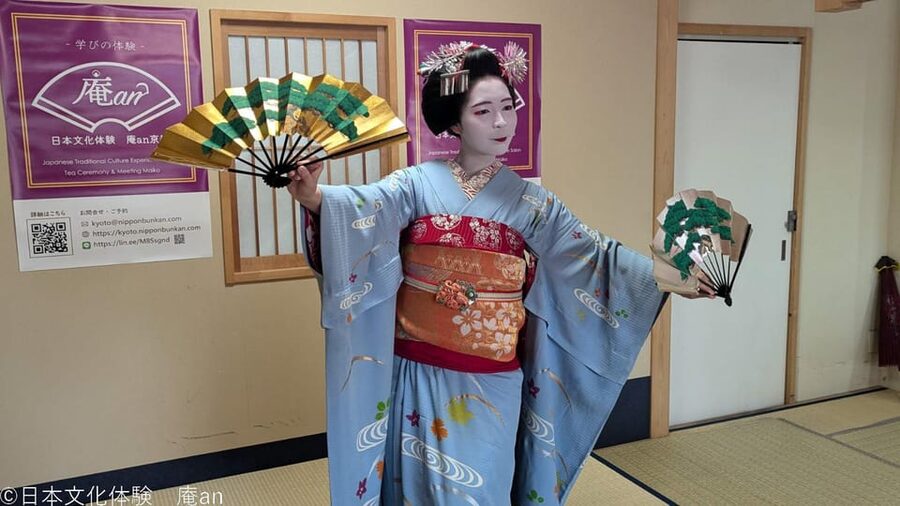
After tea and conversation, the program shifts into performance mode. You’ll see two traditional dances. The dances are designed to express themes such as the seasons, love stories, or everyday life. That matters because you’re not just watching movement—you’re watching narrative and symbolism translated into choreography.
People report getting goosebumps from the dances, and that lines up with how these performances land: the motions look elegant, but there’s discipline behind them. Also, because you’ve been talking to the performer earlier, the dance feels more personal than a distant stage show.
You should also expect the overall program to feel organized, with enough pacing that you can catch each part without feeling entirely rushed. Some participants do mention it may run slightly shorter than advertised (around 70 minutes vs. 90 in a few cases), but the structure still includes the major set pieces: tea, Q&A, photos, dances, and game.
The Game With Maiko: Why the Fun Part Works
Then comes interaction. The program includes an interactive game with the Maiko. You may be invited to participate, and if you’re not, clapping and cheering are part of the atmosphere.
This is one of those moments that surprises first-timers. You expect a formal culture activity. Instead, you also get hospitality—light competition, a shared laugh, and a performer who knows how to keep the group comfortable.
This matters for families and first-time cultural visitors. It gives kids something to do and gives adults a way to connect without feeling like they’re interrupting a serious ritual. People also recommend the Premium experience specifically because it includes these additional interactive elements.
Premium Seats and the First-Row Choice
The experience offers extra seating options for an upgrade:
- SS seat (First row): 3,300 JPY
- S2 seat (Second row): 2,200 JPY
- S3 seat (Third row): 1,100 JPY
The Premium you’re paying for already includes dances, photos, and games, but seat upgrades can improve your view—especially during the parts where the performer is seated behind a setup and you’re watching from close to mid-room distances.
If you care about photos, choose seats with sightlines in mind. If you’re just there to hear the explanations and enjoy the ceremony flow, you might decide seat upgrades are optional.
Who This Is Best For (And Who Should Think Twice)
This program shines if you want:
- A single evening with tea + explanation + performance
- A chance to ask questions in a real Q&A setting
- A close photo and a cultural souvenir in the form of a Senjyafuda
- An experience that’s structured enough for a group activity but still interactive
It’s also a strong pick for families. Multiple people note that kids enjoyed it, and the game plus hands-on matcha tends to keep attention.
You might reconsider if you’re strict about authenticity of setting. Some guests point out the room feels modern and more like a program space than a traditional tatami interior. If your top priority is atmosphere—silence, decor, and the full old-house feeling—this may not scratch that itch. It can still be culturally worthwhile, but it’s not a perfect match for people who judge by interior aesthetics.
Also consider mobility. The building has stairs and no elevator.
Practical Details You’ll Actually Care About
A few scheduling notes help you plan better:
- Operating hours: 10:00 to 17:00
- The experience is about 90 minutes
- The venue can’t adjust for delays, so show up on time
English support is provided “as much as possible.” If you want additional English translation, you should contact the provider ahead of time.
And here’s something important: depending on the situation, they may invite a Geiko instead of a Maiko. That’s not a downgrade—it’s still part of the same world—but it changes the identity of the performer you meet.
Should You Book This Maiko Premium Tea Ceremony?
Book it if you want a high-touch Kyoto cultural evening: matcha you make yourself, a real Q&A, dance performances, a game, close photos, and a Senjyafuda charm—all in one timeboxed block. It’s especially worth it if you don’t have hours to piece together separate activities.
Skip it if your main goal is a traditional ochaya-style setting and you’re sensitive to modern-room visuals, signage in the background of photos, or a group atmosphere. In that case, you may still enjoy matcha and the performer, but the experience likely won’t feel like the fully cinematic version you imagined.
If you want my simple decision rule: if you’re excited to talk, ask questions, and take close photos as part of the cultural exchange, this Premium program is a strong pick.
FAQ
How long is the Kyoto Tea Ceremony with Maiko Premium?
The experience lasts about 90 minutes.
What is included in the price?
It includes the tea ceremony with Maiko Premium, free snacks and drink, and two dried-type Japanese sweets with matcha, plus the program activities such as Q&A, photos, dances, and the lucky charm.
Do children get a discount?
Children under 2 years old are free if they sit on their parents’ laps. If a seat or meal is required, the child is charged the same fee as one person.
Where is the meeting point?
You meet about a 1-minute walk from Exit 1 of the Karasuma Line Subway Gojo Station. The store entrance faces Gojo-dori.
Is the venue inside a traditional Japanese house?
No. The venue is in a building and is not described as an ochaya or a traditional tatami teahouse.
Is there elevator access?
No. There is no elevator, so you’ll take stairs to reach the venues.
Will I be able to communicate in English?
English translation is provided as much as possible. If you want to add English translation, you should contact the provider in advance.
Should You Book This Tour?
If you want the best chance of getting real interaction—making matcha, asking questions, watching two dances, and taking close photos—this Premium Kyoto program is worth booking. Just be sure you’re okay with a program-room setting rather than a fully traditional ochaya interior, and plan to arrive on time since the event can’t wait for delays.