REVIEW · KYOTO
Kyoto: Table-Style Tea Ceremony at a Kyo-Machiya
Book on GetYourGuide →Operated by Éclat Japon · Bookable on GetYourGuide
Tea, minus the floor.
This Kyoto table-style tea ceremony keeps things comfortable while still feeling deeply Japanese, starting with a welcome drink and a look at how tea rules shape manners. I love that you’ll make your own matcha with a bamboo whisk (creamy, frothy, not just a sip), and that the setting feels like real daily Kyoto in a more than 100-year-old townhouse. One possible drawback: it’s photo-friendly and explanation-heavy, so it won’t feel like a strict silent ritual with zero talking.
You spend 90 minutes learning the steps, tasting traditional sweets, and practicing hands-on extras like calligraphy and a simple flower arrangement. The guides teach etiquette and the meaning behind movements (with presentations), and the format is designed for English speakers. If you’re chasing a quiet, minimalist tea moment, you may find the “whole experience” vibe a little more active than expected.
In This Review
- Key points that make this tea ceremony special
- Chair-and-Table Tea Ceremony: Comfortable, Still Authentic
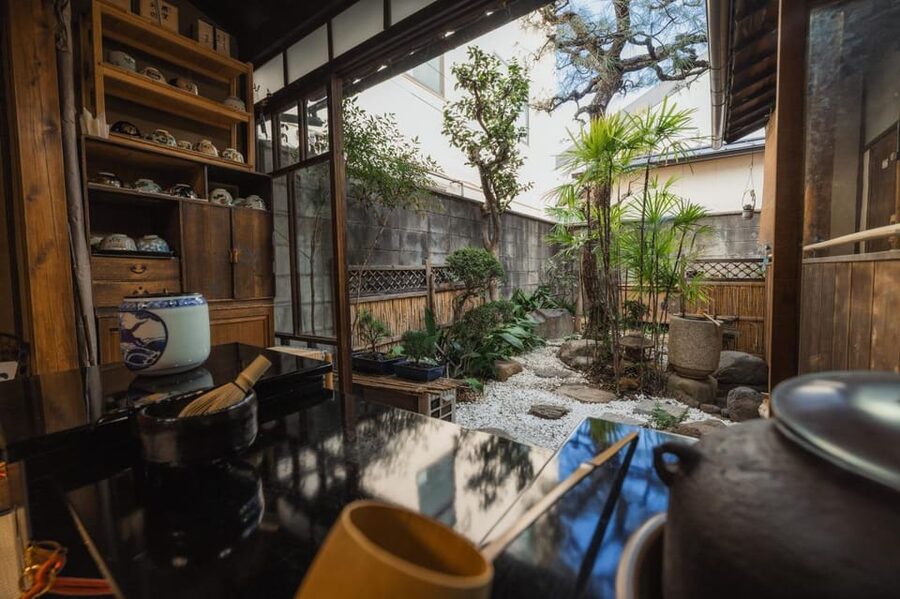
- A 100+ Year Kyo-Machiya House and Kyoto Garden Photo Stops
- What Happens in 90 Minutes: Purification, Matcha, Sweets, Calligraphy
- Welcome drink and sweet
- Purification at the stone basin
- Matcha: the hands-on moment
- Etiquette and history in English
- Calligraphy and a name keepsake
- Flower arranging time
- Kimono Time in Southern Kyoto: How to Get the Most
- History and Manners Lessons That Actually Help You
- Price and Value in Plain Terms
- Who Should Book This Kyoto Tea Ceremony (and Who Shouldn’t)
- Making It Easy: Getting There and Pairing With Fushimi, Uji, Osaka
- Should You Book This Kyoto Table-Style Tea Ceremony?
- FAQ
- Do I have to sit on the floor for this tea ceremony?
- How long is the Kyoto tea ceremony experience?
- Is the instruction available in English?
- What is included besides the tea?
- Can I rent a kimono for this activity?
- Where do I meet the guide?
- Is pickup from my hotel included?
- Is the experience wheelchair accessible?
- What’s the cancellation policy?
Key points that make this tea ceremony special
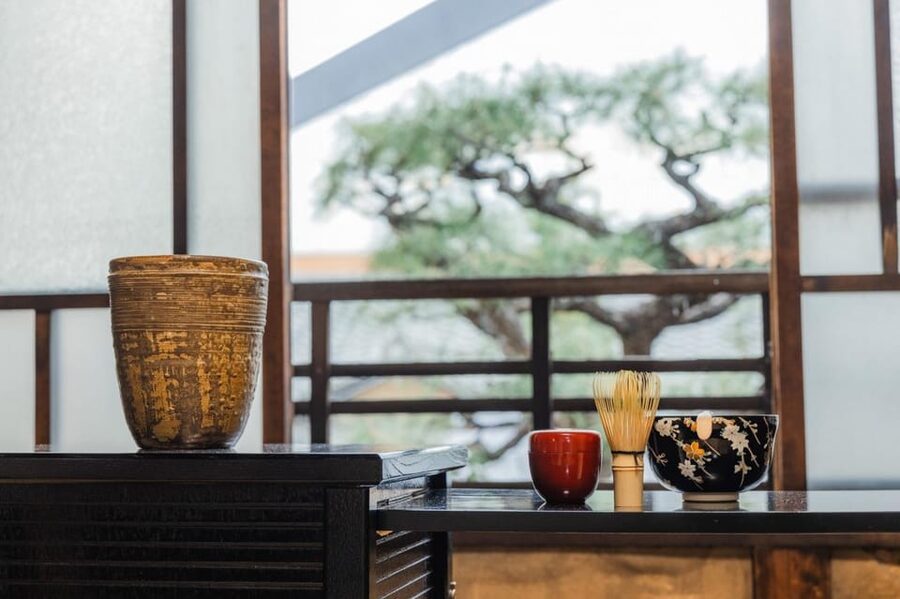
- Chair-and-table seating: No floor kneeling needed, so you can focus on the details.
- A 100+ year Kyo-machiya house: Stroll through the architecture before the ceremony starts.
- Purification at a stone basin: You get a shrine-style cleansing moment in a garden setting.
- Hands-on matcha and latte art: Whisk it yourself, then try a thick-tea art style.
- Name calligraphy plus a keepsake: Write your name in Japanese characters and take home a hanging scroll or envelope.
- Photo set built into the experience: Umbrellas, folding fans, and sword-themed props help you get great shots.
Chair-and-Table Tea Ceremony: Comfortable, Still Authentic
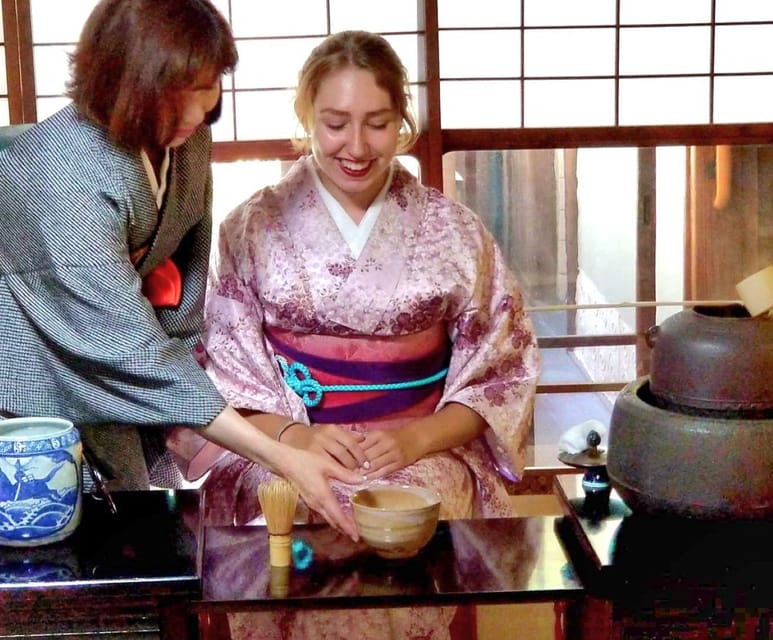
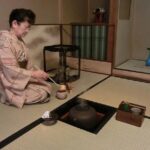
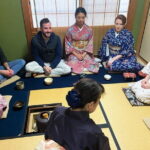
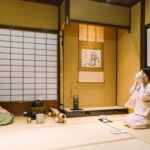
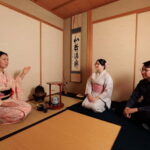
The biggest shift here is simple: you sit at a table in a chair. Traditional tea ceremony is often taught on tatami mats, which can be tough if your knees hate that setup. With this format, the physical “challenge” gets removed, so you can actually enjoy the sequence of gestures, the tasting, and the explanations without counting the minutes until your legs go numb.
What you still get is the heart of tea ceremony: the pace, the attention to small movements, and the focus on manners. You’ll be guided through purification-like steps (more on that soon), then into serving and tasting. Expect a clear run-through of why each move matters, not just how to copy it. Even if you’ve never touched a bamboo whisk before, the experience is set up so you can participate right away.
The tone also helps. It’s not just “watch and leave.” You’ll be doing things: whisking matcha, sampling sweets, writing your name, and even trying a flower arrangement. That hands-on approach is often what makes a cultural workshop feel real instead of staged.
You can also read our reviews of more tours and experiences in Kyoto.
A 100+ Year Kyo-Machiya House and Kyoto Garden Photo Stops
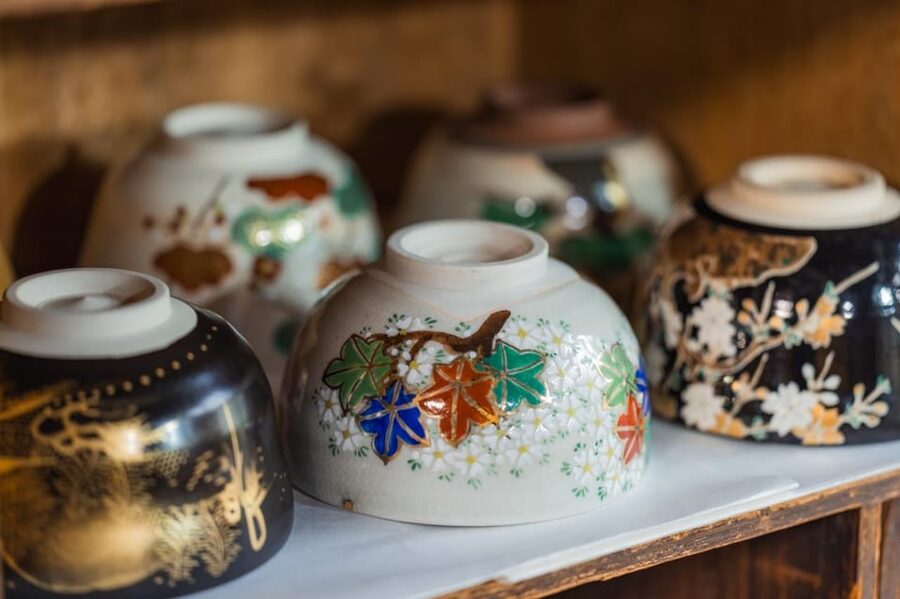
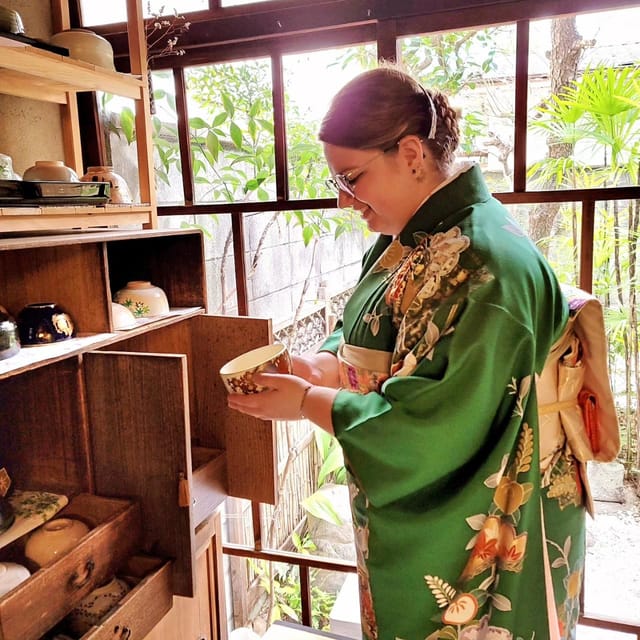
The ceremony takes place in an old Kyoto townhouse style home, described as more than a 100-year-old traditional house. From the start, the place feels nostalgic, not generic. You’re encouraged to take time to look around, including the architecture and the presence of old Buddhist or Shinto altars, plus antiques in the home.
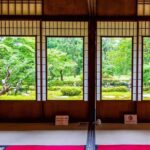
There’s also a garden element. Before you even get fully into tea-making, you’ll purify yourself at a stone basin in the garden, similar to what you might see at a shrine. It’s a small moment, but it frames the whole experience. Tea is treated like something you prepare yourself for, not just something you consume.
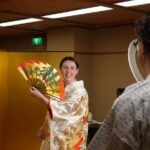
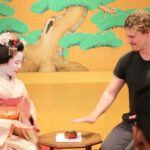
Then comes the fun part for photos and videos. The experience includes props and time to shoot: umbrellas, folding fans, and sword-themed accessories (like katana sword props). This is one reason the session feels like a “Kyoto day” rather than a single drink station. You’ll likely leave with more than a memory.
One practical note: this is a historic property. Comfort is great, but you should still be ready for a bit of uneven space and stairs. The activity isn’t designed as a wheelchair-friendly setup (more in the FAQ).
What Happens in 90 Minutes: Purification, Matcha, Sweets, Calligraphy
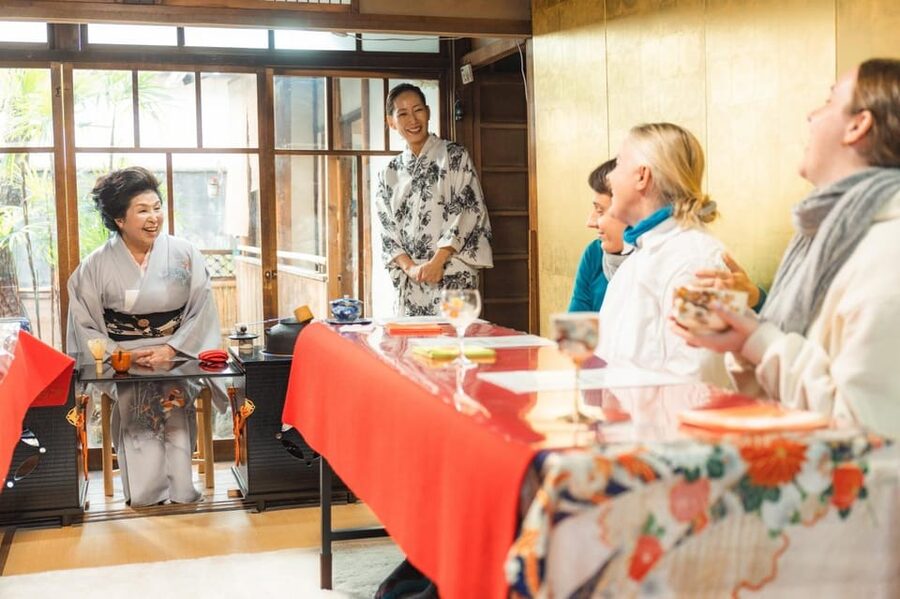
Plan for a full 90-minute block, not a quick demo. The flow is built so you get context first, then you do the steps yourself.
Welcome drink and sweet
You start with a welcome drink—options like sake or juice, plus Japanese tea. This keeps the pace relaxed while you get oriented. Traditional sweets for the tea ceremony are included too, which matters because matcha isn’t just about taste. The sweets help set the mood and balance the flavor.
Purification at the stone basin
Next is the garden cleansing moment at the stone basin. You’re basically practicing a shrine-like idea: wash away everyday “noise” before entering a more mindful space. It’s short, but it makes the later etiquette feel more meaningful.

Matcha: the hands-on moment
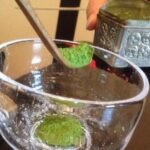
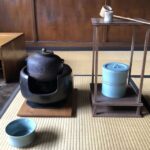
The centerpiece is making your own matcha using a bamboo whisk. The goal is a creamy, frothy texture. You’ll learn how to whisk and how to treat the bowl and whisk during the process, not just the mechanics of mixing powder and water.
Then there’s an extra bonus: latte art using thick tea. It’s not a café latte, and it’s not trying to replace café culture. It’s more like a playful skill check, and it gives you something to try beyond the standard whisking step.
Etiquette and history in English
You’ll also sit through presentations that explain how tea ceremony developed in Japan and how spirit and manners connect to the ritual. This part matters because it helps you understand what you’re doing and why people behave the way they do—so you’re not left thinking: I stirred matcha in a bowl. That’s the difference between a photo op and a real cultural experience.
Calligraphy and a name keepsake
To close, you’ll write your name in Japanese characters. The included keepsake can be a hanging scroll or an envelope, with your name written in kanji or hiragana. Many people find this more satisfying than they expect, because it turns the workshop personal. It also gives you something to show later: this was my name, in the script used in everyday Japanese writing.
Flower arranging time
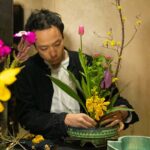
You’ll also have a flower arranging experience included. Even if you’ve never tried ikebana-style arranging, the workshop format makes it approachable. It’s one more way to connect tea ceremony to the Japanese idea of seasonal beauty and simple form.
Kimono Time in Southern Kyoto: How to Get the Most
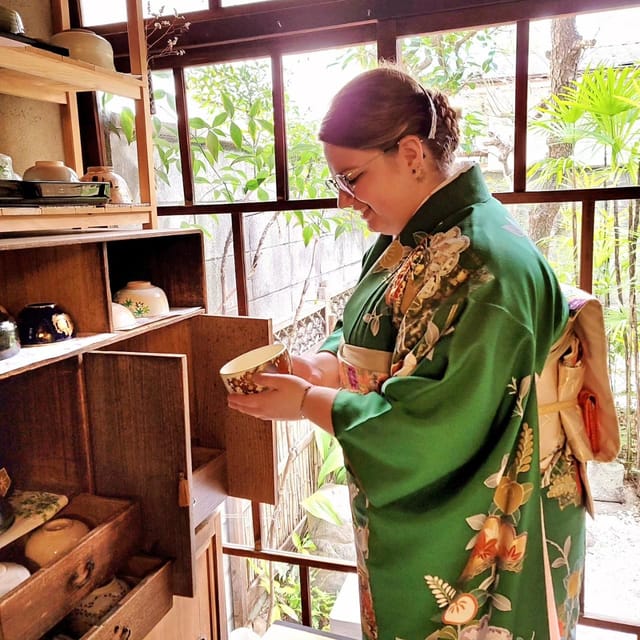
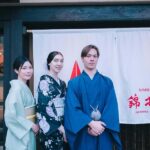
The kimono option is optional, but it’s the part many people say makes everything feel extra. You can reserve it, and if you select it you should arrive 30 minutes before the experience begins so there’s time for dressing.
A few practical points from the way the experience is set up:
- Kimono styling is included when you choose that add-on.
- The activity involves a historic house, so wearing kimono means you’ll want to move carefully and let your outfit guide how you step.
- There are stairs involved, and the team has helped people manage mobility challenges, though the activity still isn’t suitable for wheelchair users.
If you’re pregnant, the guidance is to refrain from wearing a kimono for your health and safety.
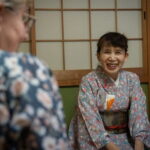
If you want the “full Kyoto” photos, this is where the experience really clicks. With the kimono on, the townhouse and garden become a proper set, and the prop moments (fans, umbrellas, sword-themed accessories) feel less like gimmicks and more like playful dressing for the setting you’re in.
History and Manners Lessons That Actually Help You
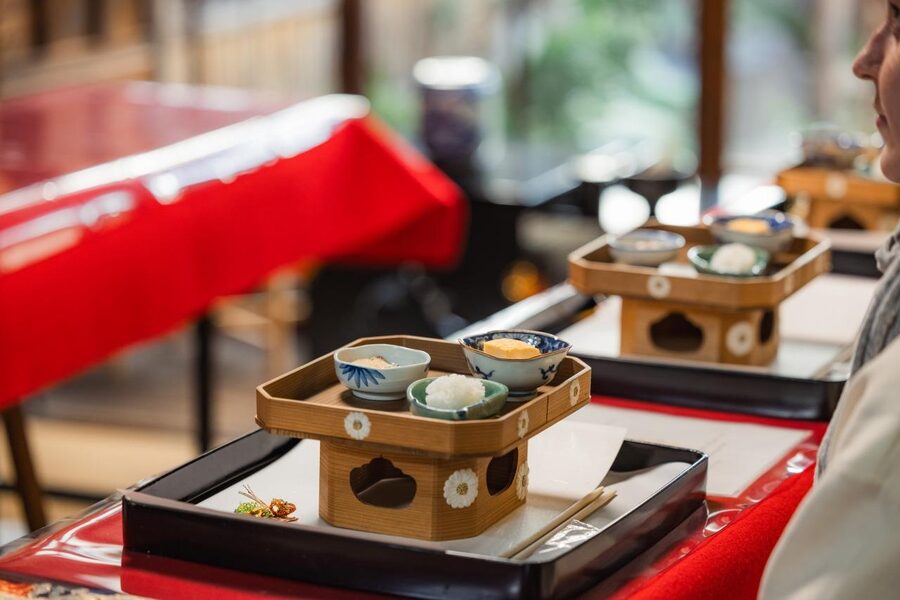
Tea ceremony can feel mysterious if you only know it from movies. Here, the workshop explains the rules in a way that helps you not just perform steps, but understand what they’re for.
You’ll learn:
- how tea ceremony developed in Japan,
- how manners and spirit show up in the movements,
- and how the serving/tasting process works as a kind of respectful communication.
The best part is that it’s taught alongside doing. When you whisk matcha, the etiquette explanations stop sounding theoretical. When you’re writing calligraphy at the end, you’re still in the same mindset: careful gestures, focus on form, and patience.
Also, because the instruction is in English, you can ask questions during the process. That turns tea ceremony from a show into a conversation. The result is that even if you do not keep every detail, you still understand enough to appreciate the ritual.
Price and Value in Plain Terms
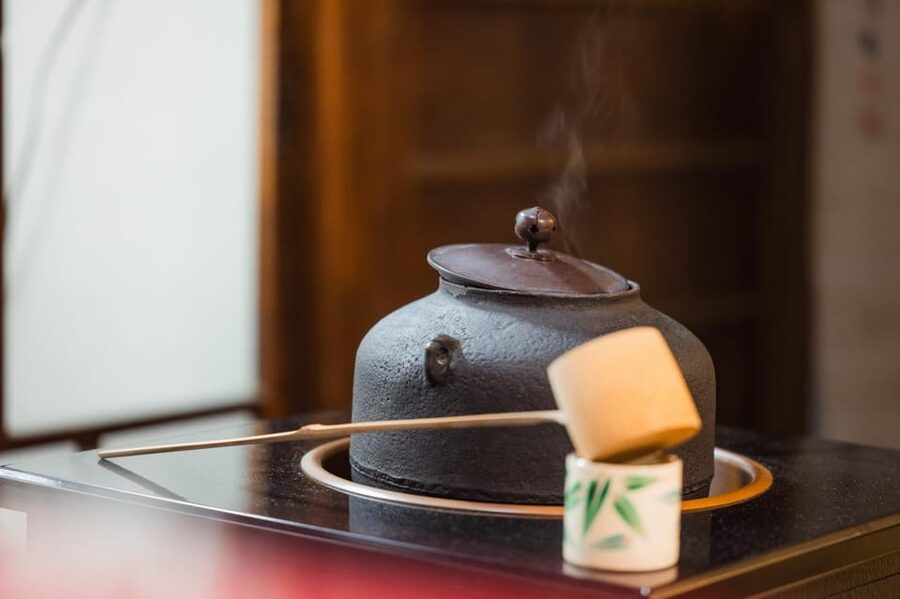
At $45 per person for 90 minutes, this is positioned as a cultural workshop, not a bargain snack lesson. The value is in what’s included:
- tea ceremony experience (the full sequence),
- welcome drinks (sake or juice, plus Japanese tea),
- traditional sweets,
- making your own matcha,
- latte art using thick tea,
- calligraphy with a hanging scroll or envelope,
- flower arranging,
- and, if you add it, kimono rental.
So you’re not just paying for one drink. You’re paying for multiple crafts and a full guided program in a real Kyoto-style townhouse setting in southern Kyoto.
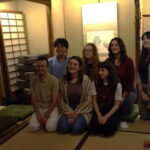
The small-group format also matters for value. When you’re not lost in a large crowd, you can actually participate, ask questions, and take photos without feeling rushed.
One trade-off: there’s no hotel pickup or drop-off. You’ll use public transit and walk the final few minutes to the meeting point.
Who Should Book This Kyoto Tea Ceremony (and Who Shouldn’t)
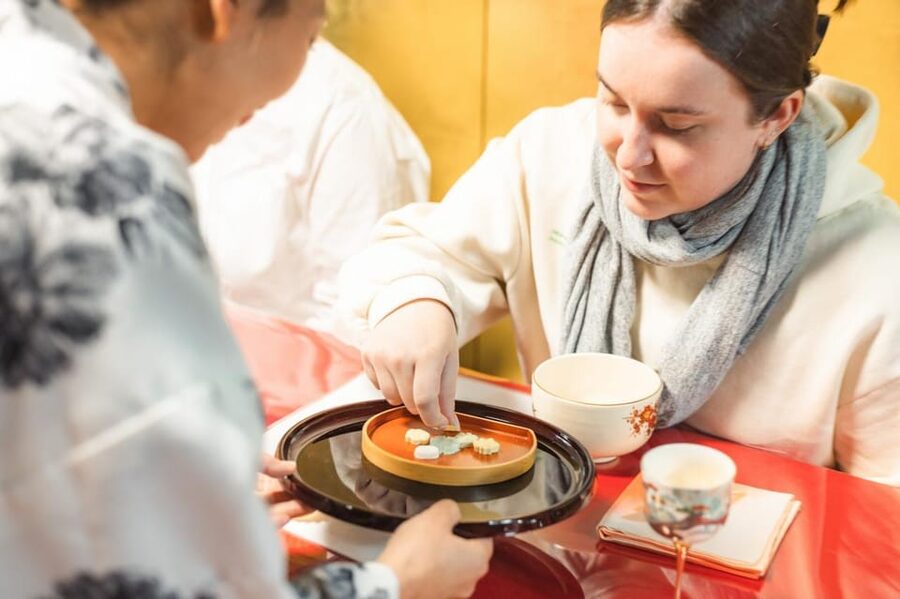
This workshop fits well if you:
- want a tea ceremony without floor seating,
- enjoy hands-on cultural activities like matcha-making and calligraphy,
- like photographing in traditional settings,
- and want an English explanation of etiquette and meaning.
It’s especially good for first-time tea ceremony visitors. You’ll leave knowing the basics of what to watch for next time you see tea ceremony in Kyoto.
Where it may not fit:
- wheelchair users (explicitly not suitable),
- anyone who wants a strictly silent, minimalist experience with no extra activities.
If you’re planning the rest of your day, you’ll appreciate the location. Southern Kyoto is a bit quieter than the core tourist lanes, and it’s well connected to day trips.
Making It Easy: Getting There and Pairing With Fushimi, Uji, Osaka
The meeting point is on the outskirts of Kyoto, about 20 minutes by train. It’s conveniently linked to major areas, so you can attach this to a larger itinerary.
From Kintetsu Kyoto Station: take the express train about 15 minutes to Kintetsu Momoyama-Goryo-mae Station.
From Keihan Gion-Shijo Station: get off at Fushimi-Momoyama Station.
Then you’ll walk:
- Head west on the Otesuji shopping arcade.
- Walk about 3 minutes.
- Turn right at Mizuho Bank or at Rakuten (mobile shop).
- Continue until you see an old Kyoto townhouse with a blue curtain.
- Kimono-clad guides will be waiting.
If you’re arriving from Momoyama Station (JR): go north west, pass by a shrine (Gokogu) on the right, continue on Otesuji Arcade, turn right near Mizuho Bank or Rakuten, and keep going about 2 minutes to spot the blue curtain.
Pairing ideas that make sense:
- Add Fushimi Inari Shrine on the same travel stretch (it’s about 15 minutes from Keihan Fushimi Inari Station).
- If you like tea themes, Uji City is about 20 minutes away by train.
- For a bigger day: Osaka is around 40 minutes by express train, and Nara about 50 minutes.
Should You Book This Kyoto Table-Style Tea Ceremony?
If you want Kyoto culture in a format that’s comfortable, participatory, and easy to understand in English, this is a strong pick. The chair-and-table setup is the practical advantage, and the combination of matcha-making plus calligraphy plus flower arranging is why it feels worth your time.
Book it if:
- you’re new to tea ceremony,
- you want a more modern-friendly approach without losing the ritual,
- and you like the idea of leaving with a keepsake written in Japanese.
Skip or reconsider if:
- you need a fully wheelchair-accessible activity,
- or you want a long, silent, traditional-only ceremony with no extra crafts.
If you’re deciding on the kimono add-on, I’d lean toward yes. The extra time for dressing helps you get photos, and the workshop already builds in photo moments and prop play. Just arrive early for the dressing window, and if you’re pregnant, follow the guidance about skipping kimono.
FAQ
Do I have to sit on the floor for this tea ceremony?
No. This experience is designed for chair-and-table seating, so you can enjoy the ceremony comfortably without floor kneeling.
How long is the Kyoto tea ceremony experience?
The duration is 90 minutes.
Is the instruction available in English?
Yes. The instructor is listed as English.
What is included besides the tea?
Included items cover the tea ceremony itself, traditional sweets, welcome drinks, latte art using thick tea, calligraphy, a hanging scroll or envelope with your name written in Japanese characters, and a flower arranging experience.
Can I rent a kimono for this activity?
Yes, a kimono rental option is available. If you choose it, you should arrive 30 minutes before the experience.
Where do I meet the guide?
You’ll meet at a location in southern Kyoto on the outskirts of the city. Directions reference the Otesuji shopping arcade and a townhouse with a blue curtain, with guides waiting.
Is pickup from my hotel included?
No. Hotel pickup and drop-off are not included.
Is the experience wheelchair accessible?
No. It is not suitable for wheelchair users.
What’s the cancellation policy?
Free cancellation is available up to 24 hours in advance for a full refund, and there’s also a reserve now & pay later option.