REVIEW · KYOTO
Elegant Tea Ceremony While Wearing Kimono Experience in Kyoto
Book on Viator →Operated by H.I.S.Co., Ltd. · Bookable on Viator
A kimono makes Kyoto feel personal fast. At Nishiki Orizuruya, you get dressed in a kimono and step into a calm, guided Japanese tea ceremony where you make matcha yourself in a traditional tea room. The whole thing runs in English, so you are not stuck guessing what is happening.
What I like most is the way this experience mixes performance with hands-on craft. After the tea, you pick a second act: calligraphy to create a personal kanji keepsake, gold leaf art to make a tiny plate souvenir, or a guided walk through Nishiki Market and the surrounding local streets.
One heads-up: if you expect a long, step-by-step lecture on the deeper history behind every movement, the ceremony may feel a bit more focused on doing it right than deep background. And on weekends and holidays, crowds near the market can add some bustle to your timing and photos.
In This Review
- Key highlights you should know
- Nishiki Orizuruya: a tea room that sits right by Kyoto’s food scene
- Pick the right plan after matcha (tea-only vs. calligraphy vs. gold leaf vs. Nishiki Market)
- Getting dressed in kimono: the fun starts before the tea
- The 90-minute tea ceremony: how you learn by doing
- Calligraphy with brush and ink: turning one kanji into a keepsake
- Gold leaf workshop: the tiny plate souvenir that feels expensive
- Nishiki Market walking tour: tea to snacks, with an English-speaking guide
- Timing, crowds, and how to make the day run smoothly
- Value check: does $50.58 feel fair for what you get?
- Who should book this Kyoto kimono tea ceremony?
- Should you book this experience?
- FAQ
- Where does the experience start?
- How long is the tea ceremony?
- Is kimono rental included?
- Is the guide language English?
- Can children join, and is there a child discount?
- Is it refundable if I cancel?
Key highlights you should know
- Kimono rental included, plus free hair styling for women
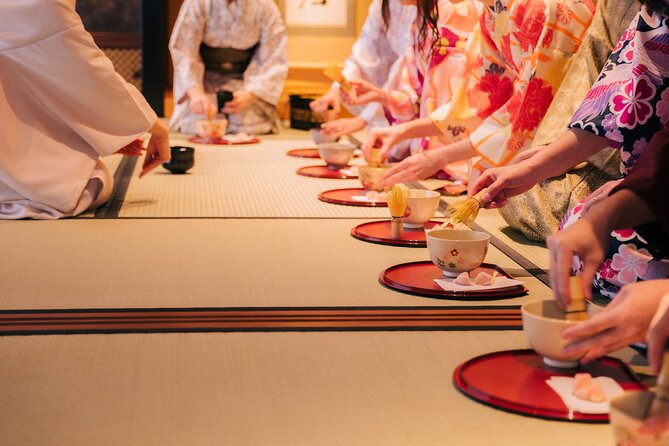
- Hands-on tea making with a bamboo whisk and a chance to prepare your own matcha
- Seasonal wagashi sweets paired with matcha, sourced from a 100-year-old confectionery
- Choose your add-on after tea: calligraphy, gold leaf, or a Nishiki Market walking tour
- Small group size (max 10), with lots of help for getting dressed and taking photos
Nishiki Orizuruya: a tea room that sits right by Kyoto’s food scene
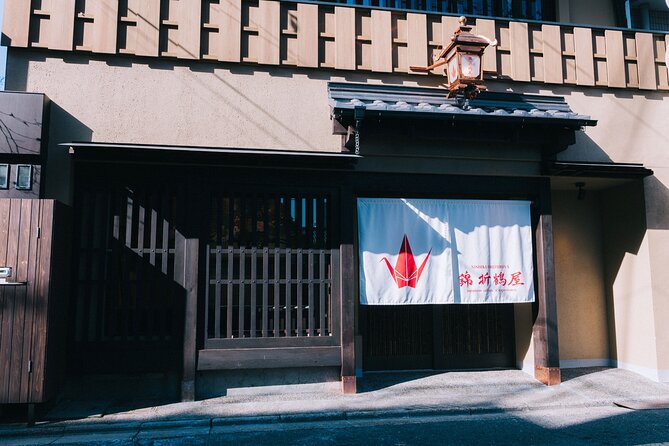
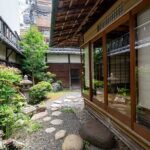
Nishiki Orizuruya is a traditional tea house tucked just a minute’s walk from Nishiki Market. That location matters. You can do something genuinely Kyoto in a quiet setting, then step right back into the street-level energy when you want it.
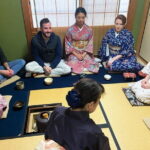
The vibe is formal, but it is also visitor-friendly. You start in the calm of the tea house, and you will be guided in English through what to do and when. With a maximum of 10 travelers, it also feels less like you are standing in line for culture and more like you have a real seat at the table.
If you like experiences that feel curated without feeling staged, this is a good match. You are not just watching tea happen; you are learning the steps and tasting the results.
You can also read our reviews of more tours and experiences in Kyoto.
Pick the right plan after matcha (tea-only vs. calligraphy vs. gold leaf vs. Nishiki Market)
This experience comes in different lengths depending on what you want to do after the tea ceremony. The core tea portion is always about learning Japanese tea in a quiet tea room, watching a demonstration, and then preparing matcha yourself.
Here is how the options break down:
- Tea Ceremony (about 90 minutes): You learn the method, make your own matcha with a bamboo whisk, and enjoy seasonal wagashi.
- Tea Ceremony & Gold Leaf (about 130 minutes): After matcha and sweets, you join a hands-on gold leaf workshop and decorate a small plate with high-purity gold leaf, which you take home.
- Tea Ceremony & Nishiki Tour (about 150 minutes): You do the tea ceremony first, then head into Nishiki Market for a guided food-culture walk that includes nearby shrines and historic shops.
- Tea Ceremony & Calligraphy: This option combines tea and then Japanese calligraphy, where you write a favorite kanji with brush and ink. The exact duration for this variant is not stated in the info, but it is positioned as an add-on after enjoying matcha and sweets.
How to choose?
- If you want the pure tea experience and the calmest pace, go tea-only.
- If you want a hands-on art souvenir you can keep for years, choose gold leaf or calligraphy.
- If you like mixing culture with practical sightseeing and snacks, go for the Nishiki Market walk.
Getting dressed in kimono: the fun starts before the tea
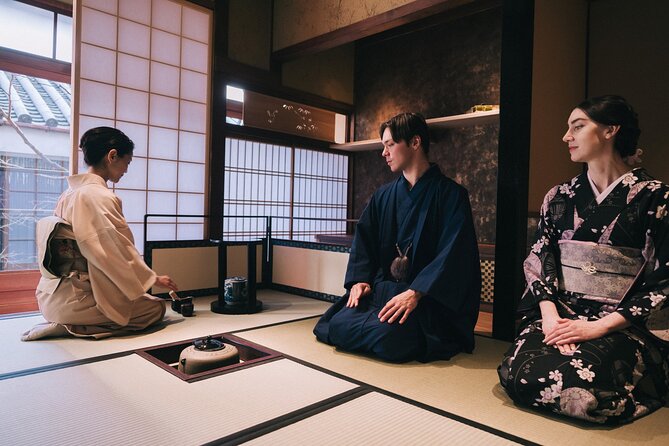
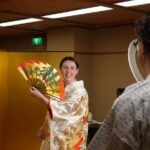
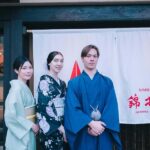
The kimono part is not an afterthought here. You arrive and start with dressing and presentation. You can pick out your kimono and accessories, and the staff helps you get properly dressed.
Women get free hair styling, which makes a real difference in how polished everything looks in photos. The staff is also attentive to fit and comfort. One reviewer noted that they could not sit on the floor and a chair was provided, which is a helpful detail if you are worried about knees or back during the ceremony.
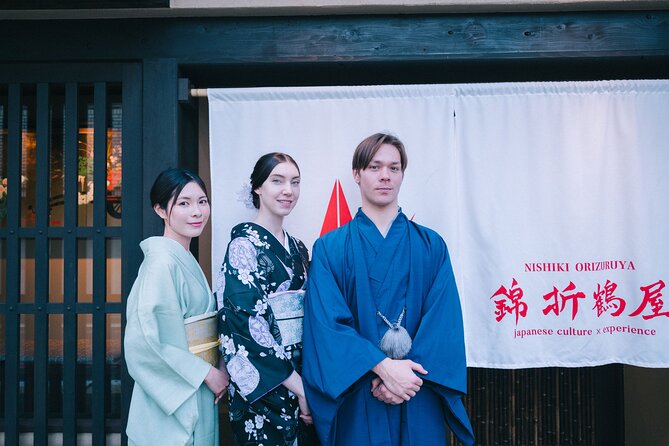
There is also a clear photo culture to the session. You get time for pictures while you are dressed, and the staff helps with that while you are in kimono.
One nice perk that shows up in the experience flow: you may be allowed to keep your kimono on for a while after the ceremony to walk around the area. In other words, you get more than one staged moment. You can actually wear it, not just change into it for 90 minutes.
Practical tip: plan to go slowly. Even if you are a confident walker, kimono cloth and sleeves mean you adjust your stride.
The 90-minute tea ceremony: how you learn by doing
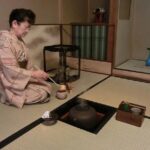
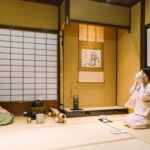
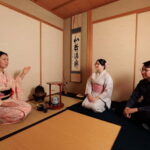
At the heart of this experience is a formal Japanese tea ceremony led by a professional tea master in an English-guided format. You start by watching a demonstration. Then you shift from observer mode to participation mode.
You will:
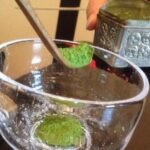
- Prepare matcha using a bamboo whisk
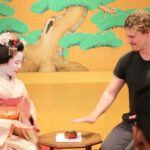
- Taste matcha with seasonal wagashi (traditional sweets)
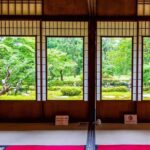
- Follow the flow of the ceremony inside a peaceful tea room
Wagashi are paired with your tea, and the sweets are highlighted as coming from a 100-year-old confectionery. That matters because it frames the treat as part of the ritual, not a random snack break.
The host typically explains the meaning behind what you are doing. Names show up in the experience descriptions from the tea master side, including Ruriko, who is praised for explaining the true meaning behind the ceremony steps. If you want more context than the standard talk, a simple question like why this step matters can help you get the extra layer.
What to expect emotionally: it feels calm and a bit ceremonial, but not stiff. The staff and tea master keep you on track.
Possible drawback to consider: one participant felt there was not much explanation about the history or significance of each step. If you love deep cultural background, you might want to ask questions during the ceremony so you can get the details you care about.
Calligraphy with brush and ink: turning one kanji into a keepsake
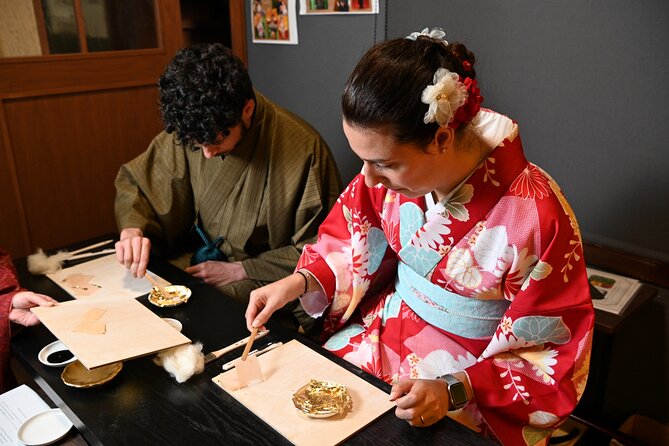
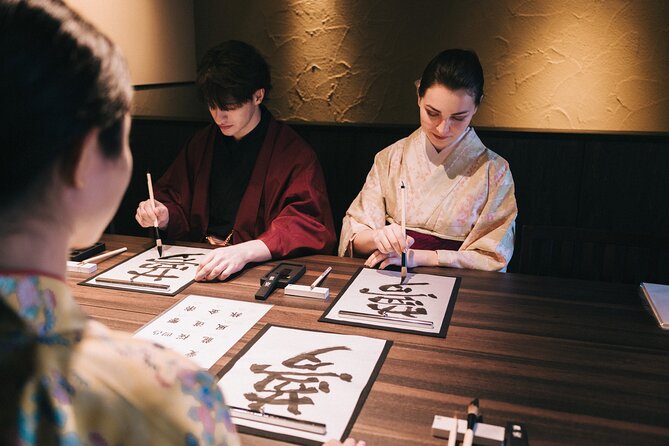
If you choose the calligraphy add-on, you go from tea-making to writing. After enjoying matcha and sweets, you learn to write your favorite kanji using a brush and ink.
The result is a personal keepsake. The setup is meant for you to walk away with something you made, not something you simply watched someone else do.
A good way to approach calligraphy in a workshop like this is to pick a character that has meaning for you before you arrive, even if you do not know the exact stroke order. The instructor can guide you through what to do, and you will leave with a piece that feels like it belongs to your trip.
Also note: calligraphy can be easier than you think if you are not trying to write calligraphy like a master. Your goal is a real practice session, not perfection.
Gold leaf workshop: the tiny plate souvenir that feels expensive
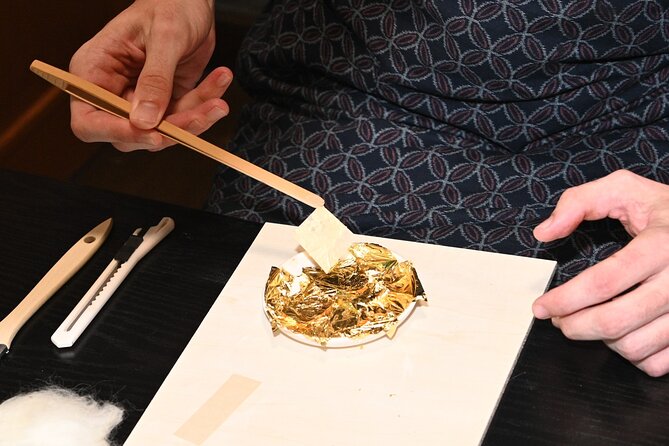
Gold leaf is a great choice if you like hands-on crafts with a clear before-and-after. After the tea ceremony, you join a workshop where you decorate a small plate using high-purity gold leaf.
This is not just decorating for decoration’s sake. Gold leaf is delicate. You are learning how to handle something thin and finicky enough that it changes how careful you have to be. That kind of tactile focus is part of why these sessions feel memorable.
The best part is practical: you take the finished, handmade souvenir with you. That makes it easier to justify as more than an activity fee. You are buying an object you can actually keep and use as a reminder.
Nishiki Market walking tour: tea to snacks, with an English-speaking guide
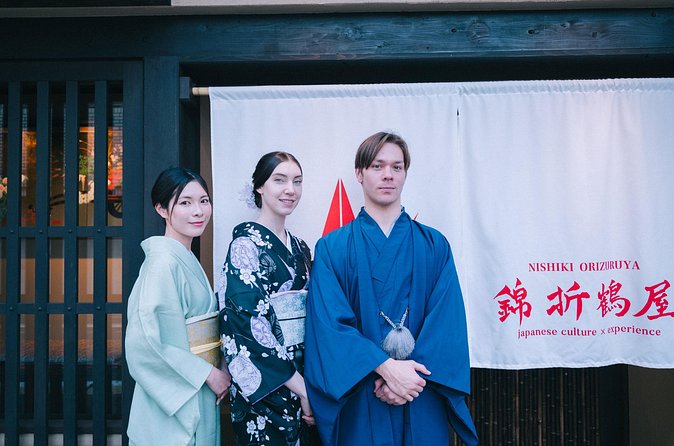
If you pick the Nishiki option, you extend your time and shift from the tea room to street-level Kyoto. Nishiki Market is often described as Kyoto’s Kitchen, and in this version you explore the market with an English-speaking guide.
The walk also includes nearby shrines and historic shops, which helps you connect what you see on the street to the wider neighborhood context instead of treating it like a standalone shopping strip.
One reason this add-on is smart: it plugs a real gap in many Kyoto plans. People visit Nishiki Market as a quick stop, but they often do not have someone help connect it to the food culture, the local shopping streets, and the shrine-adjacent atmosphere nearby.
In other words, you get both the ritual side of Kyoto and the everyday food scene.
Timing, crowds, and how to make the day run smoothly
The ceremony is listed at about:
- 90 minutes for tea-only
- 130 minutes for tea + gold leaf
- 150 minutes for tea + Nishiki Market walk
The overall experience is described as approximately 2.5 hours, which likely covers many of the common combinations.
You also want to build in a little buffer. The guidance is to arrive at least 10 minutes early. That matters because you start with dressing and hair (for women), and you do not want to feel rushed.
Crowds are the one real variable. Expect potential crowding on weekends, holidays, and during special events. Since you are near Nishiki Market, that can affect photos and how quickly you can move through the area afterward.
If you are planning to look very polished for photos, pick calm timing when possible and do not treat the schedule like a stopwatch. Kyoto has a way of making you slow down, even when you try not to.
Value check: does $50.58 feel fair for what you get?
At $50.58 per person, you are not just paying for tea. You are getting several bundled pieces:
- Kimono rental for the experience
- Free hair styling for women
- An English-guided tea ceremony
- Hands-on matcha preparation with a bamboo whisk
- Seasonal wagashi paired with your tea
- And then, depending on the plan, a second activity (calligraphy, gold leaf, or a Nishiki Market guided walk)
The value is strongest if you want structure. Kyoto can be overwhelming. This gives you a clear sequence and a staff that handles the details: getting you dressed, getting you seated, and guiding you through the craft.
The other “value” is emotional. People remember the combination: the quiet room, the act of making matcha, and the fact that you can walk around (at least for a while) in kimono after.
Balanced view: it is still a focused class and not a full-day cultural immersion. If you want to spend hours roaming Nishiki Market on your own, the Nishiki Market version gives you more time, while tea-only keeps things calmer.
Who should book this Kyoto kimono tea ceremony?
This is ideal for:
- Couples or friends who want a memorable, photo-worthy Kyoto experience with real instruction
- People who enjoy hands-on arts more than museum-style sightseeing
- Families with children age 5 and up (there is no child discount, but the experience accommodates kids)
- Anyone who wants English guidance and a small group pace (max 10 travelers)
It is especially appealing if you want a built-in reason to slow down. You are not racing from shrine to shrine. You are learning a ritual step by step.
One more practical note: if you do not want to sit on the floor, ask about seating options. A chair was provided for at least one participant who needed it.
Should you book this experience?
Yes, if you want a genuine Kyoto cultural activity that is structured, guided, and hands-on. The kimono setup plus the tea-making experience is already a strong package. Add calligraphy for a personal keepsake, gold leaf for a craft souvenir, or Nishiki Market for food-and-sightseeing right outside the door.
If you are mainly chasing deep historical lectures, you might want to bring curiosity and ask questions during the ceremony. And if you are visiting on a busy day, plan extra time for photos and movement near Nishiki Market.
FAQ
Where does the experience start?
It starts at Nishiki Orizuruya, 452 Jūmonjichō, Nakagyo Ward, Kyoto, 604-8121, Japan.
How long is the tea ceremony?
The tea ceremony itself is listed as about 90 minutes. The total time changes depending on the add-on you choose.
Is kimono rental included?
Yes. All plans include kimono rental. Free hair styling is included for women.
Is the guide language English?
Yes. The experience is guided in English.
Can children join, and is there a child discount?
Children aged 5 and above may join. There is no child discount.
Is it refundable if I cancel?
No. This experience is non-refundable and cannot be changed for any reason. If you cancel or ask for an amendment, the amount you paid will not be refunded.