REVIEW · KYOTO
Kyoto Private Tea Ceremony at a Japanese Inns
Book on Viator →Operated by ZEN: Tea Ceremony Experience in Kyoto (茶道体験所 禅) · Bookable on Viator
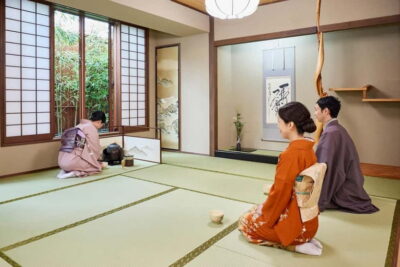
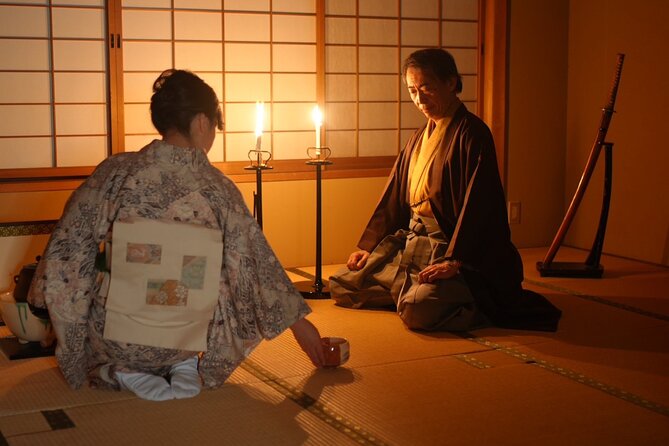
Tea ceremony at night feels different. This Kyoto experience gives you a peaceful, candlelit ritual inside a traditional Japanese inn (ryokan), in a private 20-tatami room that is usually closed to the public.
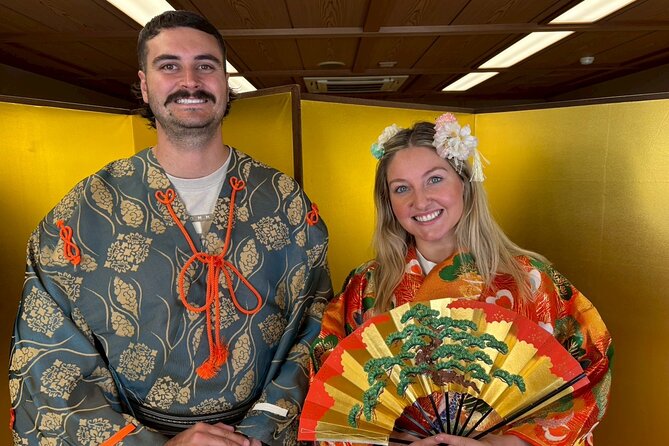
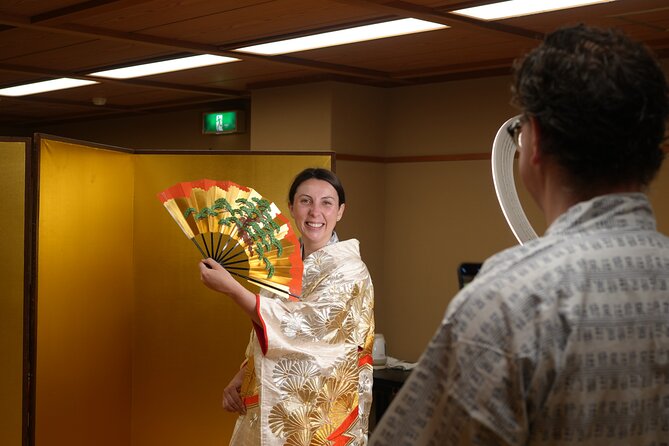
Two things I really like: you get kimono dressing with a photo shoot (15 minutes) using bridal-style uchikake or men’s haori with props and professional lighting, and the hosts (Matsuda and Mayumi) help you through every step with translator devices so the vibe stays calm and easy.
One possible drawback: the whole program is just about 59 minutes, so it’s not the long, slow, all-evening kind of cultural immersion. It’s more like a focused, well-paced taste of tradition.
In This Review
- Quick Key Points Before You Go
- Kyoto Private Tea Ceremony at a Japanese Inns: What the Evening Actually Feels Like
- Price and Value: What You’re Paying For in Matcha and Time
- Meeting Point Reality: Finding the Inn and Starting Calm
- Step-by-Step Program: The Evening Flow from Kimono to Your Own Matcha
- Kimono Dressing and Photo Shoot (About 15 Minutes)
- Zen Meditation (About 4 Minutes)
- Tea Ceremony Demonstration (About 20 Minutes)
- Matcha Whisking Experience (About 20 Minutes)
- Who This Is Best For (And Who Might Want Something Different)
- The Real Win: Translator Devices and Hosts (Matsuda and Mayumi)
- Practical Tips to Get the Most Out of Your Candlelit Ceremony
- Should You Book This Kyoto Private Tea Ceremony at a Ryokan?
- FAQ
- How long is the Kyoto private tea ceremony experience?
- Is this experience private?
- How many people can be in a group?
- Do I need to speak Japanese?
- What does the kimono part include?
- Is there Zen meditation in the program?
- What will I drink and eat?
- Will I be able to take photos?
- Where does the activity meet in Kyoto?
Quick Key Points Before You Go
- Private 20-tatami room in a historic inn: candlelight and a quiet setting, not a crowded showroom
- Kimono + photo shoot: uchikake or haori, props, and staff help with photos
- Zen meditation moment: short (4 minutes), but built into the flow
- Tea demo first, then you whisk: you don’t just watch matcha being made
- Translator devices included: language isn’t the bottleneck for questions
Kyoto Private Tea Ceremony at a Japanese Inns: What the Evening Actually Feels Like
Kyoto after dark can be a little frustrating if you’re chasing temples. Many of the big sights close in the evening, and then you’re left deciding between food streets, nightlife, or going back to your room. This is a third option: a quiet, indoor cultural program that still feels very Kyoto, because it’s tied to how the city lives.
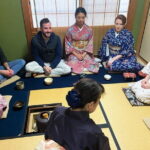
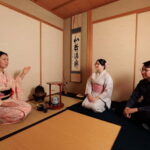
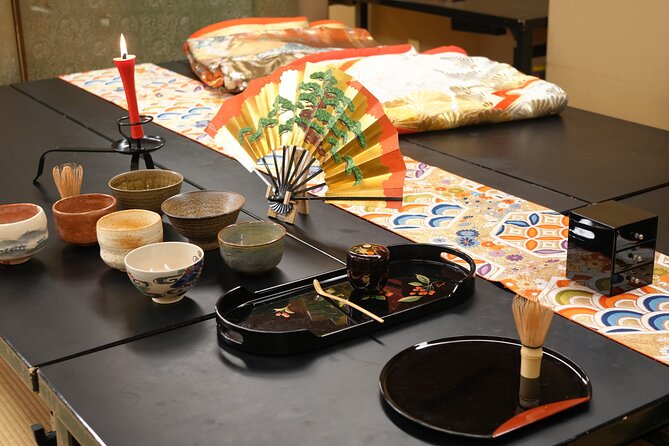
The experience is set up for a small group of 2 to 6 people, so you’re not pushed into a tight schedule with dozens of others. You’ll be in a ryokan setting, using a 20-tatami banquet hall that is normally closed to the public. That matters. It’s one thing to watch a performance; it’s another to be inside a space that’s meant for guests and ceremonies, where the layout helps you slow down.
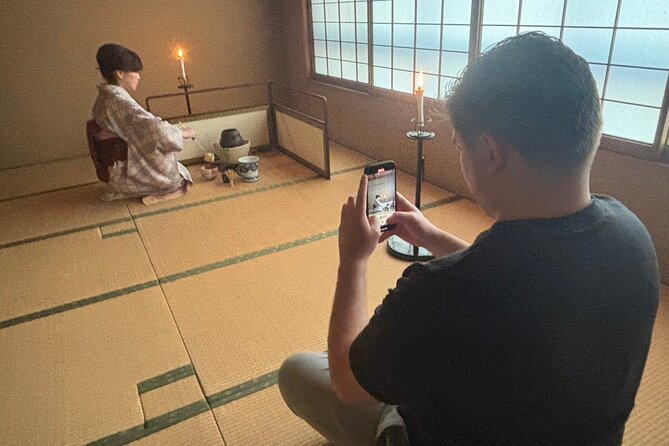
The mood is the star here. The ceremony takes place in a candlelit room, and the description calls out the candle flicker in the dark. Even if you’re not chasing a spiritual experience, the lighting and stillness make it feel intentional. It’s a nice break from the bright, fast-paced daytime Kyoto routine.
You can also read our reviews of more tours and experiences in Kyoto.
Price and Value: What You’re Paying For in Matcha and Time
The listed price is $97.98 per person (adults ¥15,000). On the surface, that can sound like a lot for something that lasts under an hour. But the value isn’t only the tea. You’re paying for several specific pieces that are hard to DIY in Kyoto:
- Kimono dressing plus a photo shoot with props and professional lighting
- A full tea ceremony demonstration plus guided practice
- A translator device setup so you can actually ask questions and understand the steps
- A private room inside a historic inn, not a shared public venue
If your Kyoto itinerary already has temple entry fees, transit costs, and a few paid food experiences, this gives you something different: hands-on culture, in an intimate space, at night. And because it’s private, you’re not losing the experience to crowd noise or rushed explanations.
The total duration is about 59 minutes, which is efficient. It’s long enough to do the key ritual steps and make your own matcha, but short enough that it fits neatly into an evening without forcing you to rearrange your whole day.
Meeting Point Reality: Finding the Inn and Starting Calm
The meeting point is at 茶道体験所 禅 (ZEN: Tea Ceremony Experience in Kyoto), on the 4th floor of 緑風荘, in Shimogyo Ward, Kanayachō (600-8323). It’s a good sign that it’s described as near public transportation, because Kyoto is easiest when you’re not fighting last-mile uncertainty.
Try to arrive with enough buffer to change into your kimono comfortably. Dressing and photos take time, and the whole ritual flows better when you’re not rushing. If you’re carrying a large bag, you might find it helpful to travel light for this part of your trip, since a ceremony room and kimono don’t love bulky luggage.
Step-by-Step Program: The Evening Flow from Kimono to Your Own Matcha
This is a guided experience in a private ryokan space. The program runs roughly like this: kimono and photos, a brief Zen meditation, tea demonstration, and then matcha whisking.
Kimono Dressing and Photo Shoot (About 15 Minutes)
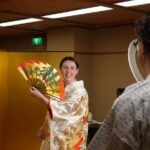
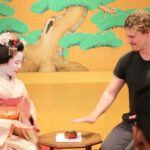
You’ll start with kimono dressing and a photo shoot. The experience offers two outfit options: a bridal-style uchikake for women, or a men’s haori for men. Props are part of the session too, including items like folding fans and swords, plus staff assistance with photography.
A pro tip: even if you’re not used to posing in traditional clothing, the staff’s job is to help you look natural. The professional lighting is there for a reason. You’ll get photos that feel like Kyoto cosplay-adjacent, except it’s tied directly to the ceremony world. If you want a souvenir that doesn’t look like a generic tourist snapshot, this segment is where you get it.

Zen Meditation (About 4 Minutes)
Next is a short Zen meditation moment. It’s only 4 minutes, so don’t expect a deep silence retreat. Think of it more like a reset switch. The idea is to calm your mind and get your body into the slower rhythm that matches the tea ritual.
If you tend to keep moving even while traveling, this micro-meditation can be surprisingly effective. You’re entering a room with candlelight and ceremony tools; your attention matters more than your schedule.
Tea Ceremony Demonstration (About 20 Minutes)
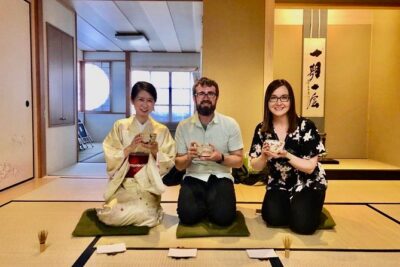
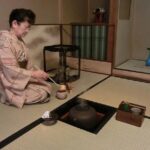
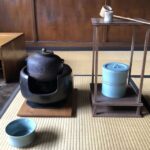
Then comes the heart of it: the tea ceremony demonstration (about 20 minutes). You’re welcomed as a guest, you receive a bowl of matcha, and you follow the traditional flow of a tea gathering.
This is where the program’s translator setup really helps. If you have even basic questions, you can usually get answers in your own language through the provided translation devices. That changes the experience from watch-and-guess to actually understand what’s happening and why.
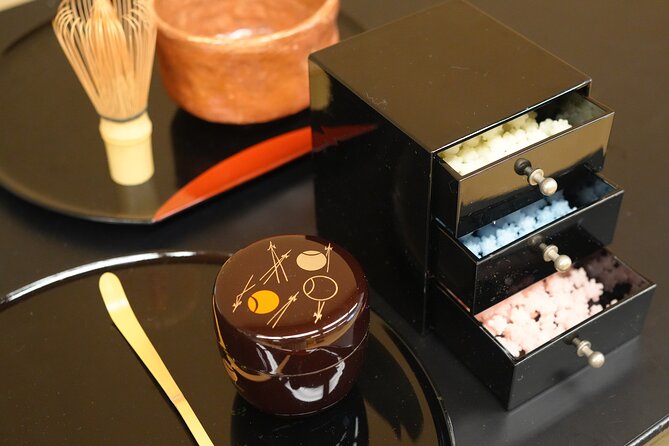
Also, the tea ceremony includes matcha green tea and sweets. The sweets aren’t just a snack; in many tea gatherings, they help balance taste and create a rhythm for the palate before matcha. Here, you’ll get the pairing as part of the session.
Matcha Whisking Experience (About 20 Minutes)
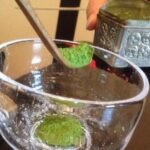
Finally, you do matcha whisking yourself for about 20 minutes. This is the part that turns a cultural show into a skill. Instead of only observing, you make the matcha.
And yes, you’ll likely discover that whisking isn’t a “stir it like coffee” situation. You’re learning the rhythm needed to create the right texture. The value here isn’t mastery for life; it’s the satisfaction of knowing what you’re drinking and being able to repeat the basics at home.
Photos are welcome throughout, which is a big practical win. You get to document the moment without feeling like you’re intruding on a quiet ritual.
Who This Is Best For (And Who Might Want Something Different)
This tea ceremony is a great fit if you want a Kyoto experience that’s:
- cultural, but not hard to understand
- hands-on (especially the whisking)
- calm and private after a day of temples and crowds
- friendly for mixed-language groups
It also works for families and kids in practice because the experience provides translator devices and is described as enabling kids to ask questions in their own language. There’s also a specific children under 15 price.
Who might find it less ideal: if you’re craving a long, multi-hour Zen session, or you want a full night out with flexibility, this isn’t that. It’s tightly scheduled and ends back at the meeting point.
The Real Win: Translator Devices and Hosts (Matsuda and Mayumi)
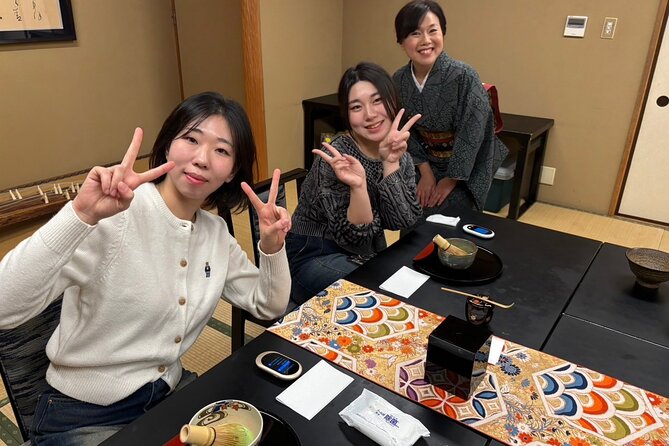
In Kyoto, language can decide whether a cultural activity feels welcoming or stressful. Here, you get translator devices, which means you can ask questions rather than silently wonder what’s going on. That’s a big deal when the ritual has steps that matter.
The hosts, Matsuda and Mayumi, are repeatedly highlighted for friendliness and joy. That energy matters because it shapes the room atmosphere. When your host is patient, you’re more likely to relax into the moment, accept the kimono, and enjoy the matcha-making without feeling self-conscious.
Practical Tips to Get the Most Out of Your Candlelit Ceremony
- Dress-ready mindset: kimono dressing is part of the experience, so plan to cooperate with the process rather than treating it like a costume shortcut.
- Take your photos: the staff supports photography, and photos are welcome throughout. Do it, but also pause so you can actually enjoy the candlelight and quiet.
- Ask questions: translation devices are there for a reason. Even one or two questions can turn the session from pretty to meaningful.
- Keep your expectations realistic: about 59 minutes is enough for the core ritual. If you want more meditation time, pair this with a separate quiet stop later.
Should You Book This Kyoto Private Tea Ceremony at a Ryokan?
Yes, I think you should book it if you want a genuine Kyoto night activity that feels intimate, not touristy. The combination of a private 20-tatami ryokan space, kimono dressing and photos, Zen meditation, and then making matcha gives you real value for the time.
Book it especially if your group includes kids, non-Japanese speakers, or anyone who’s worried they won’t understand the ritual. With translator devices and hosts like Matsuda and Mayumi, you’re set up to participate, not just observe.
If you hate structured schedules or you’re looking for something longer and more meditative, consider pairing a shorter tea ceremony with an evening walk or another calm stop. But as a focused, candlelit cultural reset, this one makes a lot of sense.
FAQ
How long is the Kyoto private tea ceremony experience?
It lasts about 59 minutes.
Is this experience private?
Yes. It’s a private tour/activity, and only your group participates.
How many people can be in a group?
The group size is 2 to 6 people.
Do I need to speak Japanese?
No. Translator devices are available so you can communicate regardless of language.
What does the kimono part include?
You’ll get kimono dressing and a photo shoot, with professional lighting and props such as folding fans and swords.
Is there Zen meditation in the program?
Yes. There is a Zen meditation session that lasts about 4 minutes.
What will I drink and eat?
You’ll have matcha green tea and sweets as part of the tea ceremony experience.
Will I be able to take photos?
Yes, photos are welcome throughout, and staff will assist with photography.
Where does the activity meet in Kyoto?
The meeting point is 茶道体験所 禅 (ZEN: Tea Ceremony Experience in Kyoto), in 緑風荘 4階, Shimogyo Ward, Kanayachō, Kyoto (600-8323).