REVIEW · KYOTO
Kyoto: Maiko, Samurai, or Kimono Rental and Tea Ceremony
Book on GetYourGuide →Operated by Maiko Transformation Studio Shiki・Rental Kimono Shiki Sakura · Bookable on GetYourGuide
Kimono time by Kiyomizu-dera feels instantly Kyoto. You pick a look at Maiko Transformation Studio Shiki, then head a short walk to Akebonotei for matcha with sweets. It’s a very practical way to experience Kyoto’s costume-and-culture vibe without losing half your day to planning.
I especially like the clear structure: costume first, then a matcha ceremony you can plan around. I also like that it’s small-group and built for families of up to four, so the whole thing stays manageable even if you’re traveling with kids.
One drawback to consider is the strict timing. If you’re late for either the kimono or the matcha slot, you’ll be forced to join partway through or you might miss the ceremony entirely, which can make the experience feel rushed.
In This Review
- Key points to know before you go
- Kyoto Kimono Rental and Matcha: why this part of town works
- Maiko, Samurai, or Kimono: what you’re really choosing
- The studio-to-tea-parlor flow (and why punctuality is everything)
- Inside the kimono experience: what’s included and what isn’t
- Matcha tea at Akebonotei: the short ceremony style
- Strolling afterward: how to use kimono time until 5 PM
- Price and group size: what $77 really buys you
- Who this experience suits best (and who might feel boxed in)
- Getting the most out of your day: practical tips that matter
- Should you book this Kyoto kimono and matcha experience?
- FAQ
- How long is the Kyoto kimono and matcha tea experience?
- What does the $77 per person price include?
- Can I choose Maiko, Samurai, or Kimono?
- Is the tea ceremony part included for everyone?
- Where is the meeting point?
- What are the age and pregnancy rules?
- Is hair styling included?
Key points to know before you go
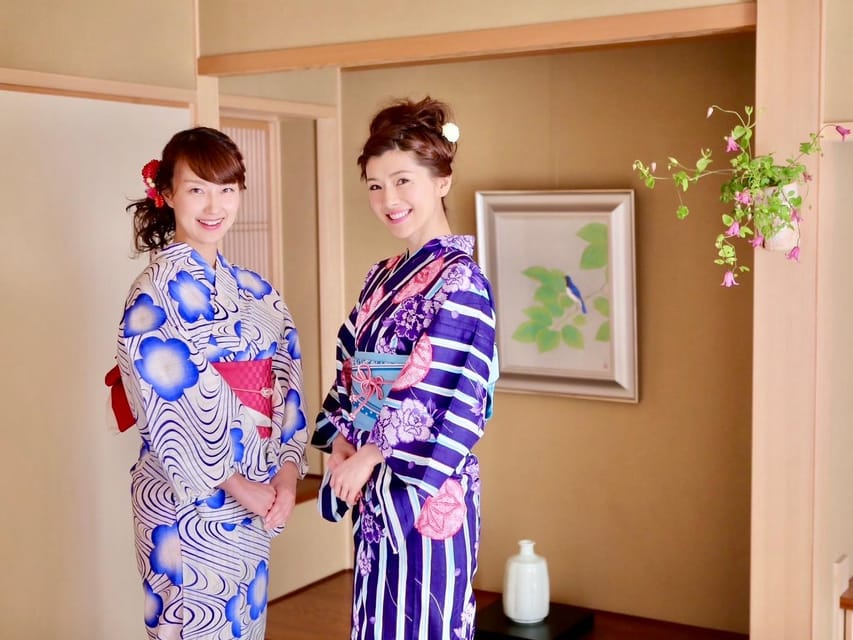
- Multiple costume options: Maiko transformation, Samurai look, or kimono (yukata plan in summer dates)
- Timed matcha at Akebonotei: a short ceremony, designed to fit your exact slot
- Near the big Kyoto sights: the area around Kiyomizu-dera, Gion, and Higashiyama streets is within easy reach
- Family-friendly limits: ages 5+ only, and families of up to four
- Costume extras included: kimono, obi, bag, underwear, sandals; hair styling is add-on
- Strict punctuality: arriving late can affect whether you can participate fully
Kyoto Kimono Rental and Matcha: why this part of town works
Kyoto is packed with heritage sites, but most visitors waste time figuring out logistics. This experience is built to solve that problem in a clean, timed way. You’re in the Higashiyama orbit, close enough to Kiyomizu-dera that you can turn this into a half-day costume moment and then keep exploring on foot.
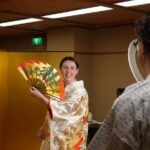
What makes it feel “real” (even though it’s a structured program) is the physical transformation. Once the kimono is on, everything changes: walking slower, taking photos differently, and actually paying attention to the narrow lanes around you. The setting also matters. The meeting area puts you near classic landmarks like Yasaka Five-Story Pagoda, Yasaka Shrine, and the famous streets in the Kiyomizu/Gion region—so you’re not spending your day somewhere that feels detached from Kyoto.
Value-wise, the package is focused. You’re not buying a long lecture or a full-day itinerary. You’re buying a costume experience plus a matcha tea ceremony, and then you’re free to do your own sightseeing after.
You can also read our reviews of more tours and experiences in Kyoto.
Maiko, Samurai, or Kimono: what you’re really choosing
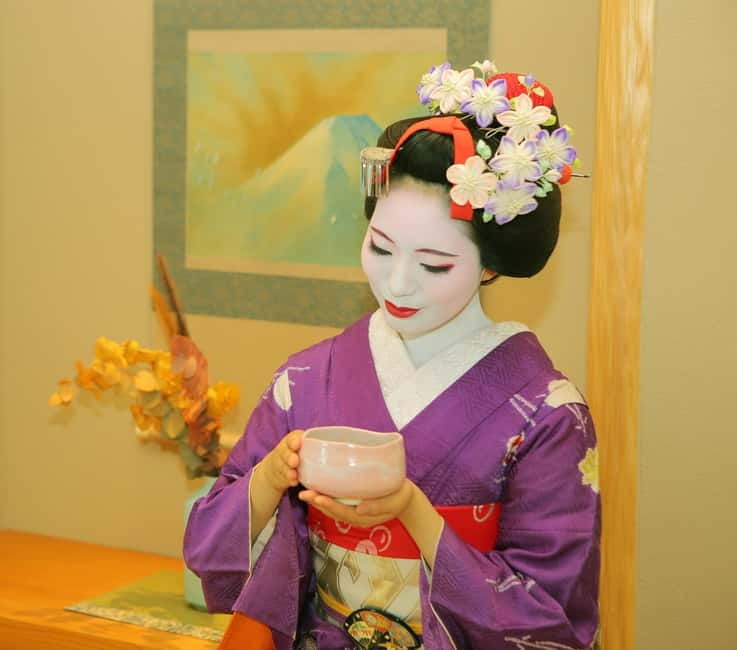
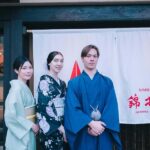
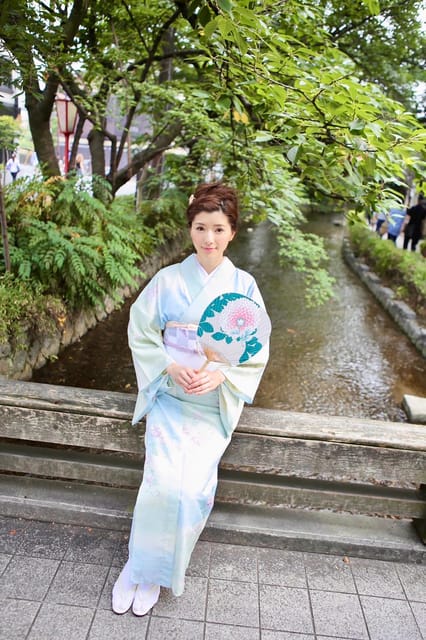
You get three different identity styles under one roof at Maiko Transformation Studio Shiki: Maiko, Samurai, or kimono (yukata in the summer plan period).
Here’s how to think about your choice:
- If you want the most instantly Kyoto look, pick Maiko. It’s the classic visual many people come for.
- If you want something more dramatic and photo-friendly, Samurai is usually the fun contrast—less delicate, more strong silhouette.
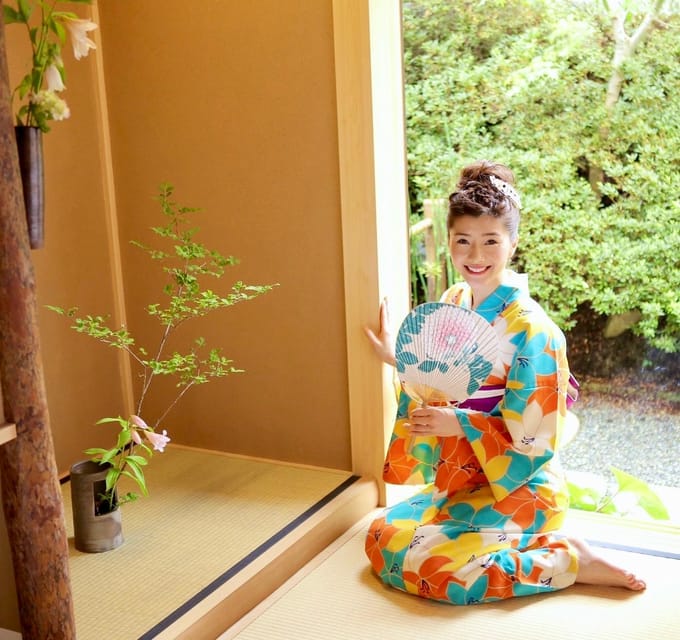
- If you prefer flexibility and comfort, kimono is the safe bet, and the yukata plan (June 1 to September 15) can feel lighter for summer heat.
Either way, the essentials are included: kimono, obi, bag, underwear, and sandals. That matters because it removes the usual “Wait, where do I get socks and shoes?” stress. Hair styling is not included, and it’s offered as an extra service (one reported add-on price is 1,650 yen), so if you want a polished look, you should budget time and money.
Also, note the limits: this experience is limited to families up to four people (ages 5 and up), and pregnant women are not allowed. If you’re traveling as a couple, you’ll want to double-check group rules before booking.
The studio-to-tea-parlor flow (and why punctuality is everything)
The rhythm is simple, but it’s strict. You do the kimono experience at Studio Shiki, then walk to the tea ceremony parlor “Akebonotei,” located about a 3-minute walk away. That short distance is great—less waiting, less confusion, and you stay in the same neighborhood.
Your timing depends on which slot you book. The experience uses a paired schedule where your matcha ceremony time is fixed after your kimono start time. For example:
- 9:00 AM kimono → 10:30 AM matcha
- 10:00 AM kimono → 11:30 AM matcha
- 11:00 AM kimono → 12:30 PM matcha
- 12:00 PM kimono → 1:30 PM matcha
- 1:00 PM kimono → 2:30 PM matcha
- 2:00 PM kimono → 3:30 PM matcha
- 3:00 PM kimono → 4:30 PM matcha
The most important practical lesson: you must be on time for both pieces. If you’re late, you won’t just get a minor adjustment. You’ll be asked to join halfway through, or you may not be able to participate in the ceremony at all. That’s why I’d build in extra buffer time before your slot.
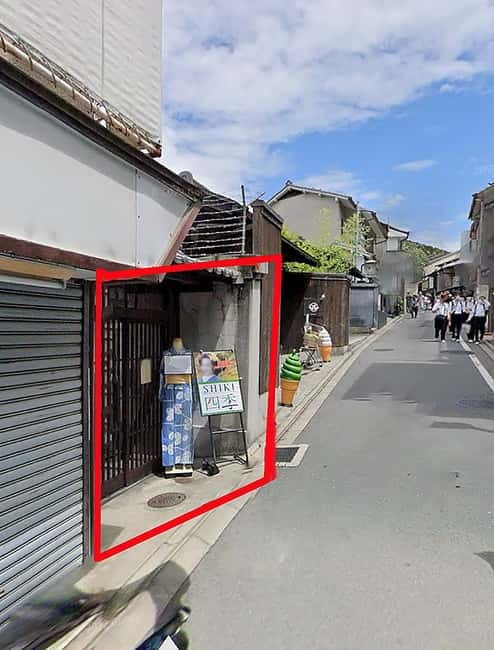
On logistics: if you’re arriving by city bus, you’ll get off at the Kiyomizu-michi bus stop (about a 20-minute ride) and then walk around 10 minutes to the shop. It’s close, but don’t treat it like a five-minute stroll if you’re juggling kids or photo stops.
Inside the kimono experience: what’s included and what isn’t
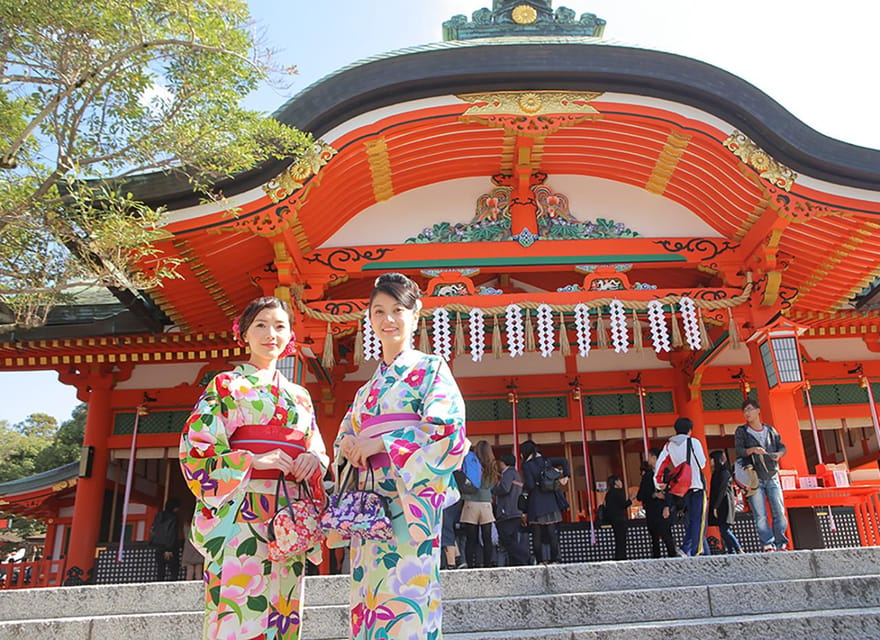
Your kimono appointment is where the transformation happens. You’ll receive the kimono, obi, bag, and underwear, plus sandals. It’s not just renting fabric and walking away. Someone is helping you with the basics so you can actually wear it correctly and feel comfortable moving around.
What’s not included:
- Hair styling
- Any additional admissions for people who do not participate in the tea ceremony
That last point is easy to miss if you’re thinking about splitting a family group. If one person isn’t doing the tea ceremony, the cost won’t automatically cover everything for them.
A small but useful tip: if you care about looking camera-ready, plan hair styling as an add-on from the start rather than trying to decide mid-queue. The experience is designed around time blocks, not flexible browsing.
Matcha tea at Akebonotei: the short ceremony style

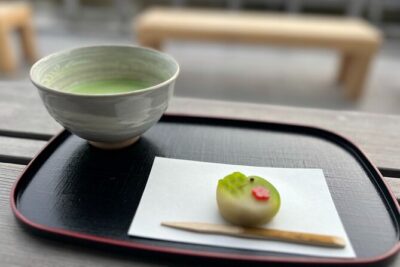
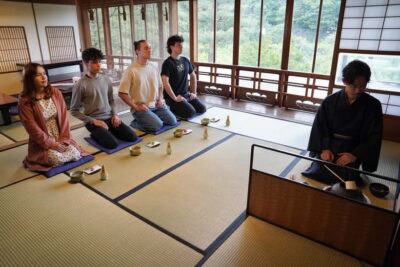
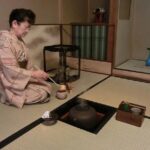
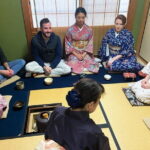
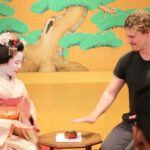
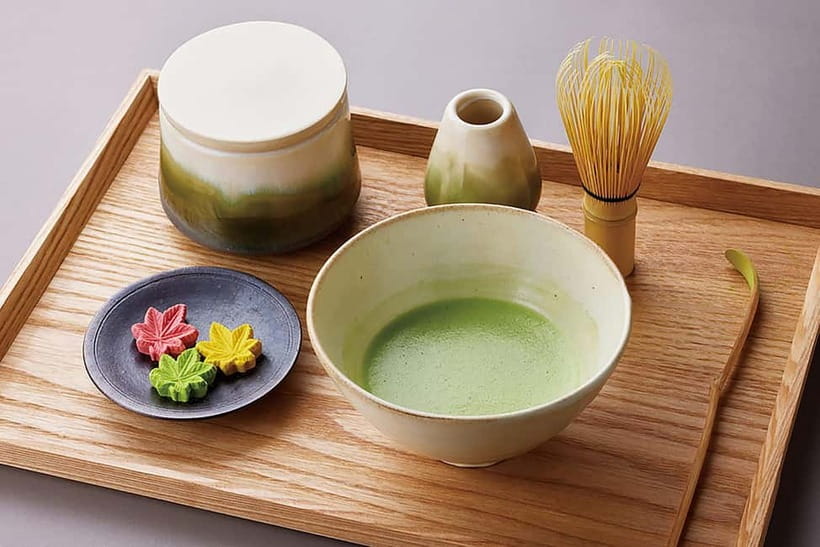
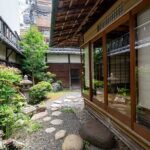
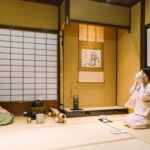
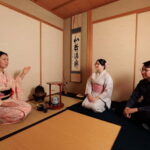
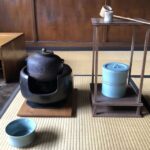
The matcha portion is held at Akebonotei, a short walk from the studio. This is a matcha tea ceremony experience with sweets included, and it’s designed to fit the timed schedule you booked.
Because the ceremony is scheduled as part of a package (not as a standalone, slow-paced ritual), expect it to be shorter. That can actually be a plus. One family reported it worked well even with children because it didn’t drag on. If you’re a first-timer, this length also helps you learn the basics without feeling overwhelmed.
What you should do to get more from a short ceremony:
- Pay attention to instructions the first time. You likely won’t get multiple “try again” chances.
- Take your photos after you’ve settled in, not while staff are speaking.
- Go in ready to enjoy the taste. Kyoto matcha is one of those things that’s easier to appreciate in person than from descriptions.

Strolling afterward: how to use kimono time until 5 PM
If you rent a kimono, you can enjoy it until 5 PM. That’s a big deal for value because it turns the package into more than a scheduled stop. You’ll likely be wearing the outfit while you explore.
This is the sweet spot for planning: do the matcha ceremony, then walk the streets with your costume on. The area around the studio is near the usual “Kyoto postcard” zones, including Kiyomizu-dera and the Gion-adjacent streets such as Ninenzaka and Sannenzaka. Even if you don’t have time for everything, you can pick a few lanes and enjoy them slowly.
One warning for reality checks: Kyoto streets are crowded in peak hours, and the costume adds a bit of friction. If your goal is to move fast between temples, this may not be your best match. If your goal is to slow down for photos and atmosphere, it fits perfectly.
Price and group size: what $77 really buys you
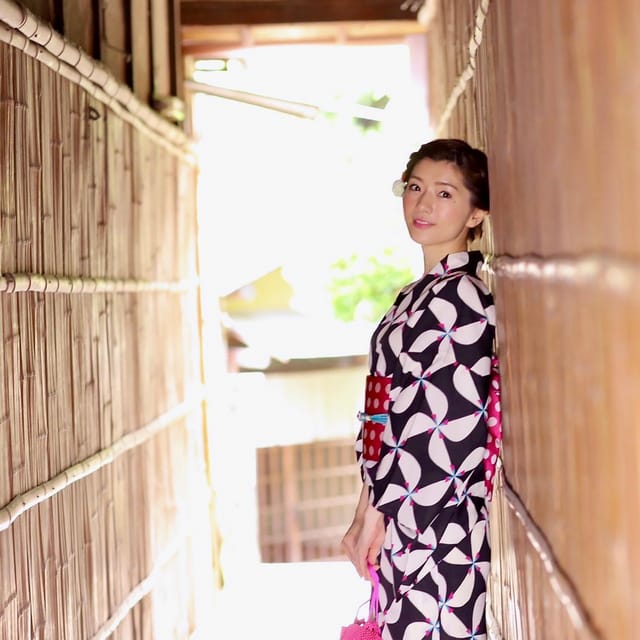
At $77 per person, you’re paying for three things bundled together:
- Kimono rental (including obi, sandals, and other basics)
- A matcha tea ceremony at Akebonotei
- Sweets
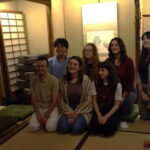
That’s a fair package for people who want both the costume moment and the tea ceremony without organizing them separately. The cost also makes sense in a small-group context. The experience is limited to up to 6 participants, which usually helps avoid a chaotic free-for-all.
That said, there are two sides to consider. Some people have criticized the experience as tourist-forward and tightly controlled. Others have been happy, especially families who felt the timing worked. Since this is near major attractions, crowd density in the area is part of the overall equation. Even a well-run program can feel “factory-like” if you’re expecting a private, slow, no-rush cultural lesson.
So here’s the balanced takeaway: this is best when you treat it as a timed introduction. If you’re chasing deep cultural nuance or a quiet, off-the-map ceremony, look for a longer, more flexible tea experience.
Who this experience suits best (and who might feel boxed in)
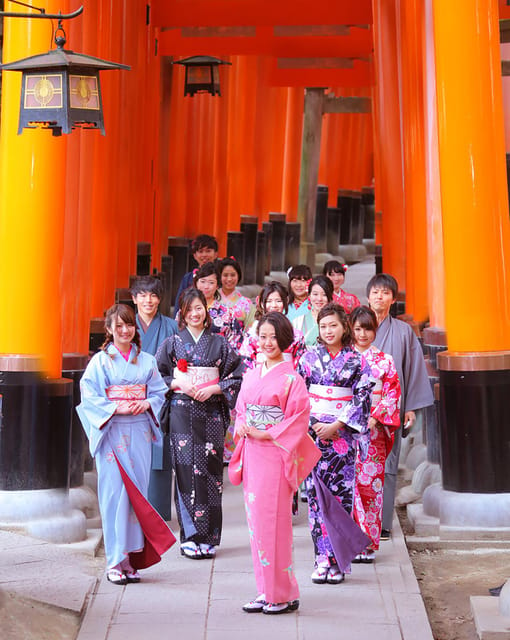
This experience is a good fit if you:
- Want Kyoto kimono rental plus matcha in one organized block
- Are traveling as a family of up to four
- Have kids age 5+ and need a shorter activity
- Prefer a small group (limited to 6 participants)
It may not be your best fit if you:
- Want a very long ceremony or a lot of explanation time
- Hate strict schedules and hate the idea of being penalized for late arrival
- Are traveling with someone who needs an accessible alternative for pregnancy (pregnant women are not allowed)
Getting the most out of your day: practical tips that matter
If you book this, your success mostly comes down to timing and expectations.
- Arrive early enough to breathe. Don’t plan photos right up to the moment you need to start.
- Decide your costume category before you arrive so you don’t lose time during selection.
- If you want hair styling, treat it as an add-on plan, not a last-minute maybe.
- Wear comfortable walking shoes underneath when possible. You’re getting sandals with the package, but you’ll still be walking.
- Use the kimono until 5 PM to make the rental feel like more than a short event.
One more strategic thought: schedule this for a time when you can still enjoy the streets afterward. The later slots end later, which can be fun for photos in softer light, but you’ll also be dealing with evening crowds.
Should you book this Kyoto kimono and matcha experience?
Book it if you want a straightforward, small-group way to get Kyoto kimono rental and a matcha tea ceremony without juggling multiple reservations. The package is designed to work for families, and the fact that you can keep the kimono until 5 PM makes the value feel real.
Skip it or consider an alternative if you’re hoping for an unstructured, deeply traditional tea experience with lots of time for explanation, or if you know punctuality will be hard with your group. This is a timed program. When you respect that, it tends to work well.
FAQ
How long is the Kyoto kimono and matcha tea experience?
The duration is about 150 minutes to 3 hours, depending on your booked time slot.
What does the $77 per person price include?
It includes kimono (or the relevant plan), obi, bag, underwear, sandals, the matcha tea ceremony experience, and sweets.
Can I choose Maiko, Samurai, or Kimono?
Yes. You can select a Maiko costume, a Samurai style, or a kimono option.
Is the tea ceremony part included for everyone?
The matcha tea ceremony is included as part of the experience. Admission fees are not included for those who do not participate in the tea ceremony.
Where is the meeting point?
If you’re coming by city bus, get off at Kiyomizu-michi bus stop, then walk about 10 minutes to the store.
What are the age and pregnancy rules?
Children under 5 years old are not allowed, and pregnant women are not allowed.
Is hair styling included?
No, hair styling is not included and is offered as an extra service.