REVIEW · OSAKA
Tea and Calligraphy Session at a Table in Osaka
Book on Viator →Operated by 道-michi- · Bookable on Viator
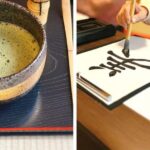
Calligraphy and matcha, right at your table. That’s the appeal of this Shinsaibashi experience: you get Japanese tea ceremony and calligraphy in one guided session, designed to feel beginner-friendly instead of intimidating.
I like two things most. First, the staff runs it with real warmth, staying on hand to help and even help with photos. Second, you don’t just watch—you make your own calligraphy and take the artwork home, plus you get matcha with Japanese sweets as part of the tea moment.
One consideration: if you’re hoping for kimono or samurai roleplay, that stuff costs extra. The base session is focused, and the dress-up add-ons and related experiences are listed separately.
In This Review
- Key things that make this experience worth your time
- Tea and Calligraphy at a Table in Osaka: What You’re Really Signing Up For
- Getting Oriented at Shinsaibashi ARTY Inn (and Why the Location Helps)
- Matcha, Sweets, and a Tea Master’s Pace
- Calligraphy at Your Table: Make Something You Can Keep
- How the Samurai Add-Ons Work (and When They’re Worth It)
- Price and Logistics: Is $22.76 Actually Good Value?
- Who Should Book This (and Who Might Skip It)
- Should You Book Tea and Calligraphy at a Table in Shinsaibashi?
- FAQ
- How long is the tea and calligraphy session?
- What’s included in the price?
- Can I do only tea ceremony or only calligraphy?
- Where does the experience start and end?
- How large is the group?
- Is free cancellation available?
Key things that make this experience worth your time
- Table-based format that lowers the intimidation factor so you can focus on doing the craft
- A professional tea master guide to keep the tea ceremony feeling authentic and clear
- Matcha plus Japanese sweets to make the tea part feel complete, not just ceremonial
- Calligraphy you create and take home so you leave with something tangible
- Small group size (up to 10) which helps you get help when you need it
- Samurai outfit display in the facility gets high praise for photos and atmosphere
Tea and Calligraphy at a Table in Osaka: What You’re Really Signing Up For
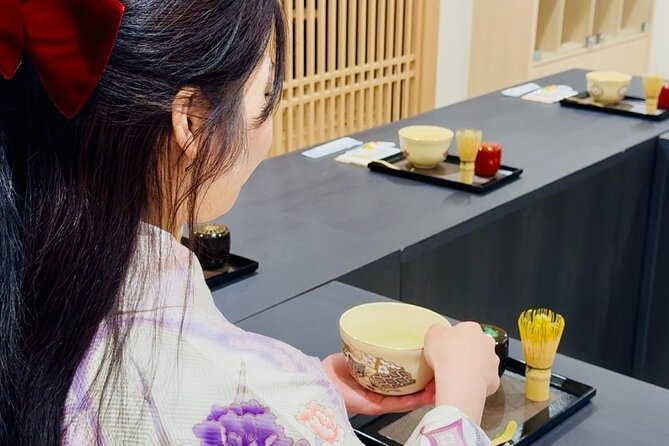
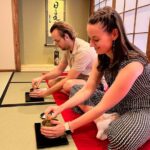
This is a compact, hands-on cultural session in Osaka’s Shinsaibashi area. The format matters. Instead of doing calligraphy and tea on traditional tatami, you sit at a table. For first-timers, that’s a big deal. It makes the experience feel more natural—less setup stress, fewer rules to manage, and more time spent learning what you came for.
You’re not choosing between two separate activities, either. The limited-time plan bundles tea ceremony and calligraphy together, guided by professionals. And if you prefer to focus on just one, you can choose tea only or calligraphy only. That flexibility helps if your schedule is tight or if one part interests you more.
You’ll spend about an hour total, and the setting is a newer facility in Shinsaibashi. That means the experience is meant to be straightforward and visitor-friendly. You’re likely to notice that in how the session is paced and explained—people consistently highlight that the staff stays attentive and makes it easy to jump in.
You can also read our reviews of more tours and experiences in Osaka.
Getting Oriented at Shinsaibashi ARTY Inn (and Why the Location Helps)
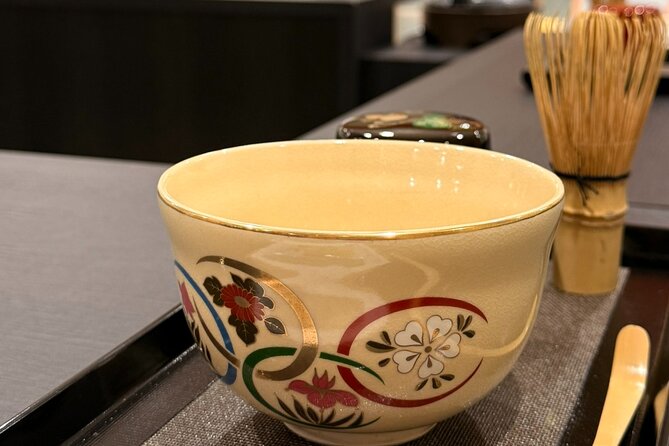
The session starts at 2-chōme-17-3 Nishishinsaibashi, Chuo Ward, Osaka, 542-0086, Japan. It ends back at the meeting point, so you don’t have to worry about a confusing second location.
Shinsaibashi is a smart base for cultural activities because it’s connected and easy to reach. The activity is also described as being near public transportation, which matters in Osaka where you may hop between neighborhoods quickly. If you plan your day around shopping streets and food stops, this is a good way to add something calm and hands-on without losing hours to logistics.
A practical detail that I like for any short experience: it uses a mobile ticket. That reduces the “where’s my ticket” stress right before you arrive.
Also, group size is capped at 10 people. That small cap tends to translate into better attention—especially useful in a hands-on class where you may need quick fixes or guidance on how to proceed.
Matcha, Sweets, and a Tea Master’s Pace
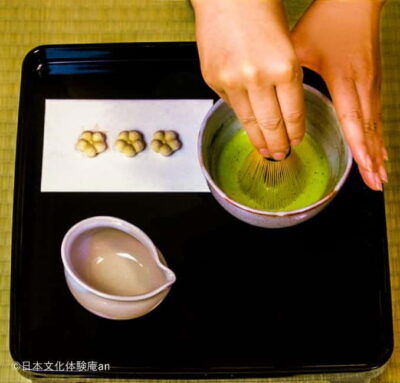
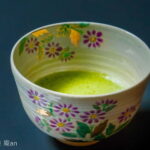
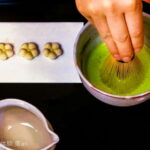
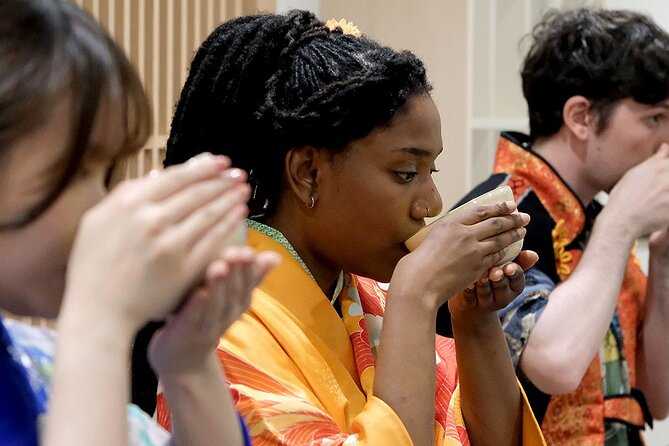
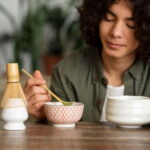
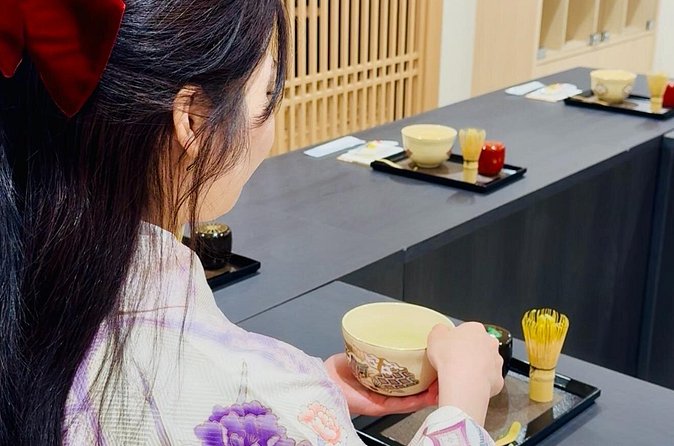
The included tea ceremony part is centered on matcha and Japanese sweets. That pairing is classic for a reason: the sweets help balance the experience so the matcha doesn’t feel too intense on its own. In a one-hour format, having both is what makes the tea segment feel complete rather than rushed.
The key difference here is that you’re guided by a professional tea master. In tea ceremony, context is everything. Even when you’re new, a good guide helps you understand what matters—tone, timing, and how each part fits the whole. You get both the practical steps and the sense of why people treat tea as a ritual instead of just a drink.
What I’d watch for is your own pace. A tea ceremony isn’t about speed. If you try to “get through it,” you’ll miss the feel of the session. Instead, let the guide set the rhythm. You’ll likely find that the staff keeps things easy to follow, and that friendly attention is a major reason this session gets strong marks.
If you’re the kind of person who enjoys learning by doing, you’ll appreciate that the tea part supports that mindset. It sets the tone for the calligraphy that follows, too—calm focus before the brushwork.
Calligraphy at Your Table: Make Something You Can Keep
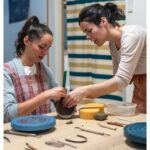
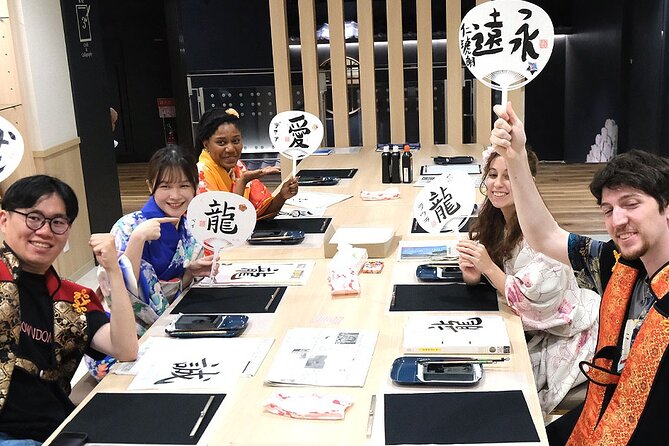
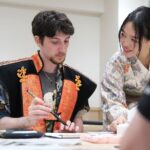
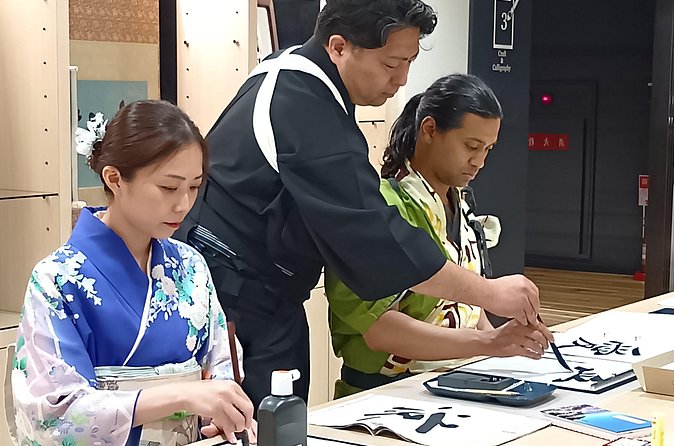
The calligraphy class is the other half of the limited-time plan, and it’s included in the price. You’ll create and take home your calligraphy artwork. That take-home element is where this session earns its place on a “do it once” list and also on a “do it again” list—because you’re not leaving with photos only.
Calligraphy is often intimidating at first because it looks so exact. But a table-based setup makes a difference. It’s simply easier to sit comfortably, concentrate, and follow instructions when your body isn’t fighting a tough posture requirement. The experience is also described as beginner-friendly, so the teaching approach is likely geared toward people who’ve never touched a brush for real.
From the feedback, people clearly find the calligraphy portion enjoyable and interactive—not passive. That lines up with what you should want: you should feel like you’re participating, not watching someone else perform. And because you make something tangible, you also get closure. You’ll see the results of what you were taught right in front of you, then pack it up.
One small tip: treat the final product as both art and practice. If it’s not perfect, that’s normal. The value is the learning moment and the fact you get to keep what you made.
How the Samurai Add-Ons Work (and When They’re Worth It)
This experience exists in a larger cultural space where extras are available. The base session includes tea ceremony and calligraphy only. Separate add-ons are listed for:
- Samurai immersive experience and traditional Japanese music (¥3,300 per person)
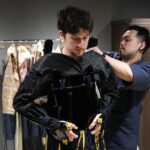
- Samurai armor dressing (¥12,000 per person)
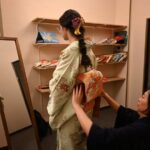
- Kimono dressing (¥12,000 per person)
- Ninja dressing (¥5,000 per person)
Those numbers matter for value. The $22.76 base price is for tea + calligraphy. If you add costumes and roleplay-style activities, your total spend can jump quickly. So I recommend you decide early what you actually want your afternoon to be:
- If you want hands-on learning and something you can take home, keep it to the base.
- If you want photos, costumes, and the big character moment, budget for at least one of the add-ons.
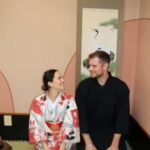
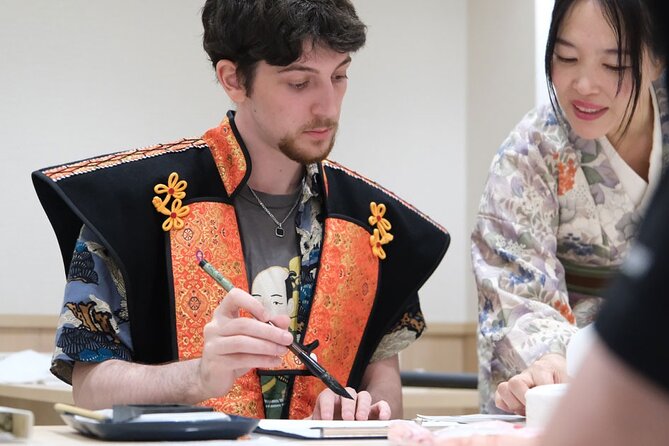
Even without paying for costume dressing, people specifically praise the samurai outfit display in the facility. That suggests the space has visual appeal, and you may enjoy that part as you move through the experience—even if dress-up isn’t included.
A balanced approach works best: do the core tea-and-calligraphy session, then decide on add-ons based on your time and budget once you see how you feel during the first hour.

Price and Logistics: Is $22.76 Actually Good Value?
At $22.76 per person for about one hour, this isn’t trying to be a long, expensive cultural tour. It’s a focused activity that gives you two included components:
- Tea ceremony with matcha and Japanese sweets
- Calligraphy instruction plus a take-home artwork
That combination is the core value. A lot of “single-theme” experiences cost similar money but don’t necessarily give you both a guided craft and an edible ritual included in the price. Here, you’re getting a full cultural pairing in one block of time, which is exactly what works well in Osaka when your day is already packed.
Timing is also a practical win. One hour is long enough to feel like you did something real, but short enough that you can fit it between shopping and dinner plans. And because it’s near public transportation and the group size is small, you’re less likely to feel like you’re waiting around forever.
Logistics are handled in a visitor-friendly way: you get confirmation at booking time, you use a mobile ticket, and the activity ends where it starts.
One more budgeting note: if you have your heart set on kimono or samurai dressing, the add-on prices are substantial. Factor that in now, so you don’t get surprised later.
Who Should Book This (and Who Might Skip It)
This experience is a strong match for:
- First-timers who want an easy entry point into two Japanese traditions in one go
- People who like hands-on classes and want something to take home
- Anyone who prefers a calm, guided pace over a fast “look-only” sightseeing stop
- Beginners who want a table-based setup instead of worrying about tatami posture
It may be less ideal if:
- You’re looking for a longer, deeper historical program. This is focused on the practice and the experience length is about an hour.
- You want costumes and roleplay built into the base price. The samurai, kimono, and ninja dressing are listed as separate add-ons.
If you like learning by doing, I think you’ll enjoy the feel of this. People consistently praise the staff for being helpful and friendly, and for making sure you’re taken care of while also giving you space to participate.
Should You Book Tea and Calligraphy at a Table in Shinsaibashi?
Yes—if you want a high-value, beginner-friendly cultural block with real participation. The biggest reasons to book are simple: you get tea + calligraphy together, you have a professional tea master guiding the tea part, and you leave with a calligraphy piece you made yourself.
I’d book with a clear mindset: this is not a full costume day package by default. If you want kimono or samurai roleplay, plan your budget for the extras in advance. But if you’re happy with a guided craft session plus matcha, it’s a great use of an hour in Shinsaibashi.
FAQ
How long is the tea and calligraphy session?
The experience runs for about 1 hour.
What’s included in the price?
The price includes the tea ceremony with matcha and Japanese sweets, plus Japanese calligraphy where you create and take home your artwork.
Can I do only tea ceremony or only calligraphy?
Yes. The plan includes both by default, but you can choose just tea ceremony or just calligraphy if you prefer.
Where does the experience start and end?
It starts at 2-chōme-17-3 Nishishinsaibashi, Chuo Ward, Osaka, 542-0086, Japan, and it ends back at the same meeting point.
How large is the group?
The experience has a maximum of 10 travelers.
Is free cancellation available?
Yes. You can cancel up to 24 hours in advance for a full refund.