REVIEW · XI AN
Xi’an Chinese Calligraphy Workshop: Ink Art & Tea Tasting
Book on GetYourGuide →Operated by YunyunTours · Bookable on GetYourGuide
A brushstroke can slow your day. In Xi’an, this 3-hour workshop pairs Chinese calligraphy with a calm tea tasting so you learn strokes, meaning, and culture without feeling rushed. You work with real ink tools, practice core characters, and leave with something you made yourself.
What I like most is the way Yunyun’s teaching makes a tricky art feel doable, even if you’re starting from zero. I also enjoy that you don’t just copy shapes—you learn why the characters matter, then you pick your own words to turn into a take-home piece.
The only real drawback to keep in mind: it’s focused on basics and creating one main artwork (plus bookmarks), so if you’re chasing advanced technique or a longer studio session, 3 hours may feel short.
In This Review
- Key highlights worth planning around
- Where the workshop really happens: Beilin District, scholar-style tea time
- The strokes lesson that actually teaches you to look
- A quick history thread: characters and why they feel different
- Your hands-on session: from practice lines to writing your name
- Make your keepsake: choose a fan or a traditional scroll
- Tea tasting that sets the mood (and teaches you what to notice)
- Price and value: $55 for 3 hours with real tools and instruction
- Who should book this workshop in Xi’an
- Where it fits in your Xi’an day plan
- Should you book this Xi’an calligraphy workshop?
- FAQ
- How long is the Chinese calligraphy and tea workshop?
- How much does it cost?
- What language is the instruction offered in?
- What do I make and take home?
- Are materials included?
- Is it suitable for children?
Key highlights worth planning around
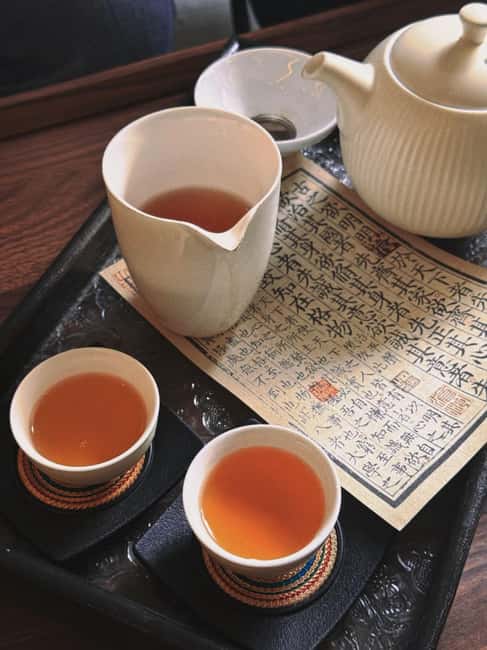
- Tea and calligraphy together: you start with a traditional tea service and snack break, not a dry classroom lecture
- Yunyun’s patient English instruction: clear explanations and lots of help for beginners
- Practice real strokes and meaningful characters: you work from simple lines to words like 龙 and 爱
- A character-history story thread: you learn how written Chinese characters evolved over thousands of years
- Pick your keepsake: choose a painted folding fan or a traditional scroll, then personalize it
- You can write your name in Chinese: it’s a satisfying way to connect the art to your own identity
Where the workshop really happens: Beilin District, scholar-style tea time
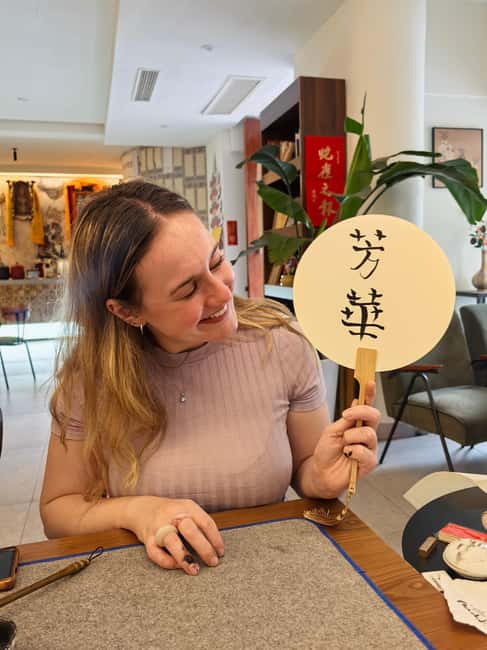
The experience is set up in a small, calm room in Xi’an’s Beilin District (easy to find once you have the address: Room 0102, Unit 1, Building 7, No. 6 Xiamaling). The setting matters more than you might think. Calligraphy isn’t a loud, performative thing—it’s about control, breath, and patience. A quiet scholar-like atmosphere makes you actually slow down and focus on the brush.
You’ll begin with a traditional Chinese tea service alongside local snacks. This is one of those “small” parts that can change the whole mood. After a day of walking in Xi’an, tea gives you a reset. And it also fits the theme: calligraphy grew inside the same cultural world that valued tea, writing, and scholarship.
If you’re the type who learns best when you feel comfortable, you’ll appreciate that the class is small (limited to 8 people). That size keeps the pace human. You’re not just watching what someone else does—you get real attention while you practice.
The strokes lesson that actually teaches you to look
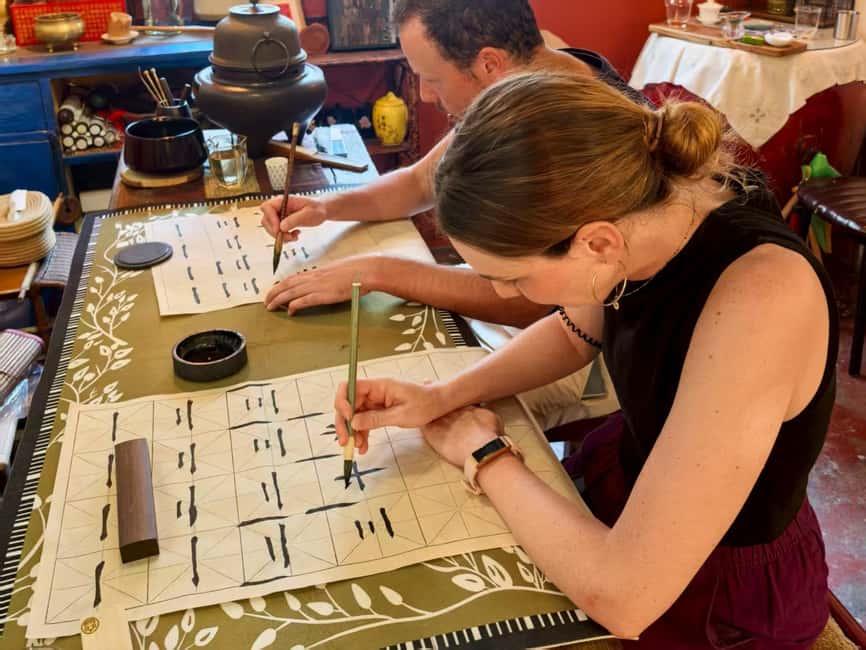
Chinese calligraphy is often sold as art, but it’s also a form of training. Before you decorate anything, you learn how to control the brush—basic strokes first, then you start using them to build characters.
What surprised me (in a good way) is how quickly you can start noticing structure. Even when you don’t know the language, you begin to see rhythm: the way lines start, the way they curve, how weight changes across the stroke. You’re not tracing mindlessly. You’re building the muscle memory for how Chinese characters are made.
You practice characters that are common and meaningful, including:
- 一 (one), 十 (ten)
- 大 (big), 小 (small)
- 米 (rice), 永 (forever)
- 龙 (dragon), 武 (martial)
- 爱 (love)
These choices help for two reasons. First, they cover a range of stroke types, so you keep getting exposed to new movements. Second, you’re not stuck writing random marks—you’re writing words with emotional and cultural weight (like 爱) and cultural symbols (like 龙 and martial spirit with 武).
Yunyun’s approach is designed for beginners and language-curious travelers. In the reviews, people highlighted her clear explanations and the patience that keeps you from panicking when the brush does its own thing. That matters because ink work can be unforgiving. A stroke that’s slightly off is normal. You learn by trying again, not by pretending you got it right the first time.
A quick history thread: characters and why they feel different
You’re also given stories about Chinese writing—how characters developed over about 3,000 years, and what that evolution means culturally. This is not meant to turn you into a historian. It’s there so your characters don’t feel like random symbols.
When you know that Chinese writing has had a long journey, your relationship to the shapes changes. You stop treating them like letters and start treating them like a system with memory—something shaped by culture, not just sound.
This is also where the workshop becomes more than a craft class. You learn cultural significance, then you translate that into action: practicing characters that connect to everyday life and values. The goal is to give you context without slowing you down.
If you like learning while you do (instead of after you do), this format hits the right balance. Tea arrives early, history gives you a theme, and then you move your hand again.
Your hands-on session: from practice lines to writing your name
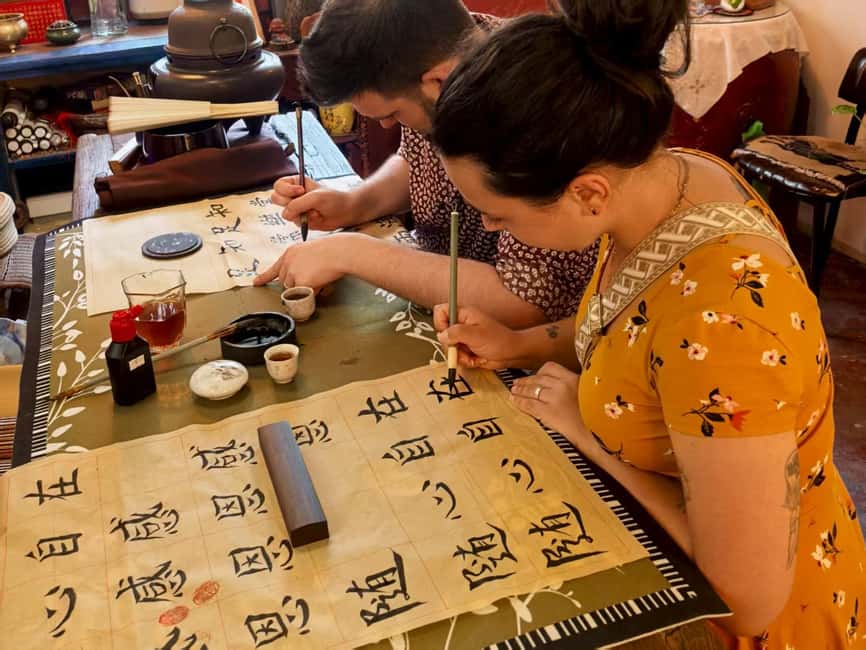
The practical core of the workshop is the making. You’ll use authentic calligraphy tools—ink, paper, and an inkstone—so you experience the real workflow, not a simplified version.
You start with basic strokes and then practice meaningful characters. In a class like this, the hardest part isn’t talent. It’s fear of wasting ink and fear of messing up. That’s why the instructor’s pacing and feedback matter. People who booked the class specifically called out how relaxed the atmosphere felt and how easily Yunyun helped them get started.
Then comes one of the most fun moments: learning how to write your name in Chinese characters. Even if you don’t know Chinese well, writing your own name is instantly personal. It turns practice into something you can recognize, and that recognition gives you confidence for the rest of the class.
One practical note for you: don’t treat this like a calligraphy test. The point is to learn how the strokes behave and how meaning shows up in the structure. Your take-home piece is one finished outcome, but your real win is what your hand learns along the way.
Make your keepsake: choose a fan or a traditional scroll
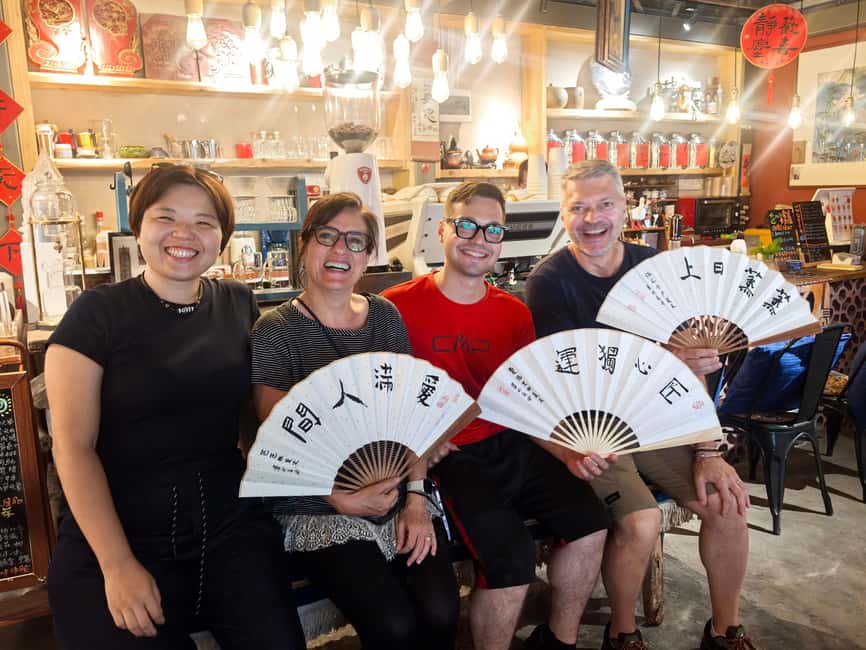
This is the part you’ll want to photograph, but also the part you’ll actually treasure later.
At the end, you pick the format for your main artwork:
- a painted folding fan, or
- a traditional scroll painting
You also personalize it. You can choose favorite words or a sentence, and your chosen text gets written on the fan or scroll. That means you’re not just copying a template. You’re deciding what message you want your calligraphy to carry.
You’ll also receive personalized bookmarks. This is a smart extra because it lets you enjoy the craft beyond one big piece on the wall. If you read at home, bookmarks become daily reminders of what you learned.
If you’re torn between fan and scroll, choose based on how you’ll display it:
- A fan is compact and easy to keep with travel souvenirs.
- A scroll feels more like classic scholar art, great for framing or careful storage.
Either way, you’re taking home finished items that reflect your own choices—words you picked, strokes you practiced, and an artwork that’s genuinely yours.
Tea tasting that sets the mood (and teaches you what to notice)
Tea is not just a break here. It’s part of the cultural frame. You’ll have a traditional tea service with local snacks, and it’s treated as a normal part of the experience, not an afterthought.
This matters because calligraphy is sensitive to your state of mind. If you feel rushed, your brush control suffers. The class structure gives you a calm start so you can actually focus once the inkstone and paper come out.
Based on what I’ve seen from similar workshops and what people consistently highlight in feedback, tea also helps beginners feel at ease. You’re not thrown into the hardest part first. You sit, sip, and then start learning the strokes with a bit less pressure.
If you enjoy tea culture in general, you’ll likely find this more satisfying than just a quick tasting.
Price and value: $55 for 3 hours with real tools and instruction
At $55 per person for about 3 hours, this workshop offers value mainly because you’re paying for three things at once:
1) Professional instruction (in English)
2) Real materials (ink, paper, inkstone) and guided practice
3) A take-home artwork (fan or scroll) plus personalized bookmarks
A lot of short cultural activities give you a performance or a one-time photo moment. This is different. You’re actively making something while learning the basics of how characters are formed.
Small group size (limited to 8) is part of that value too. You’re more likely to get hands-on correction instead of watching from the side. That correction is what helps your strokes improve during the session, not just after you leave.
Also, the class is not pitched as advanced art mastery. You’re being taught foundational strokes and meaningful characters, plus your name and a personalized message. For the time and price, that’s a strong payoff.
Who should book this workshop in Xi’an
This is a great fit if you want culture you can actually touch.
You’ll likely enjoy it if:
- you’re a beginner or just curious about traditional arts
- you want a calmer break from temples and markets
- you enjoy mindful, hands-on activities
- you want a meaningful souvenir that’s not mass-produced
- you travel with a small group and want something interactive
It’s also suitable for families and small friend groups, with one important limitation: it’s not suitable for children under 12. And the class is wheelchair accessible, which is worth noting if mobility access is part of your planning.
If you already do calligraphy and want advanced styles, you might find the focus on basic strokes and core characters feels more beginner-friendly than specialist-level. But for most people, that’s exactly why it works.
Where it fits in your Xi’an day plan
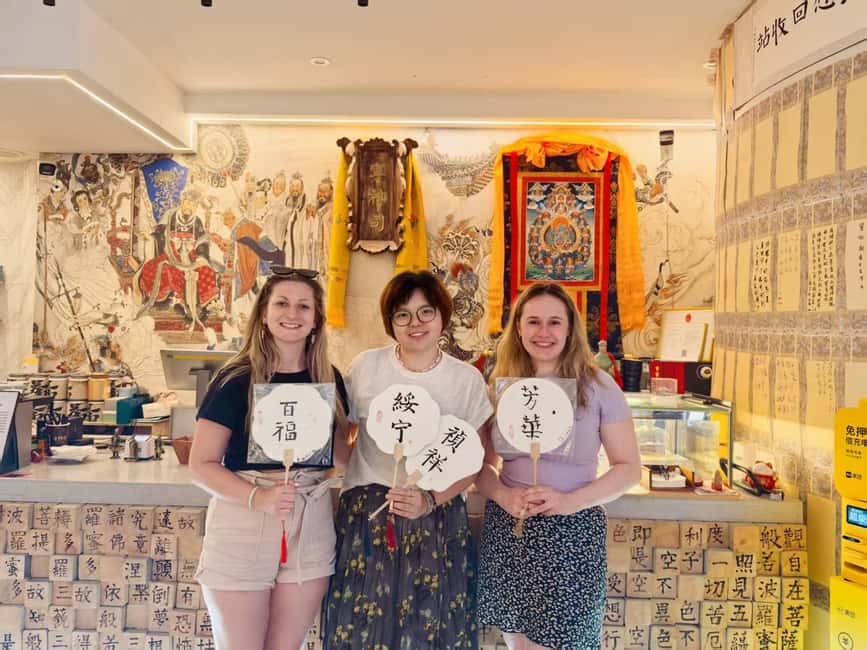
This workshop is ideal when you want a change of pace. Xi’an can be intense: big sights, long walks, and constant motion. A 3-hour calligraphy session gives you a quieter experience you can mentally recharge from.
If you’re planning a day that includes museums or heritage sites, put this workshop when your brain needs a break from reading signs and scanning exhibits. Ink and brush work is also easier to appreciate without needing much Chinese knowledge upfront.
And because the instructor helps you learn characters like 一, 十, 大, 小, 米, 永, 龙, 武, and 爱 (plus your own name), you’ll leave with immediate takeaways you can review later.
Should you book this Xi’an calligraphy workshop?
If you want a hands-on cultural activity where the learning is practical and the keepsake is personal, I’d book it. The combination of tea + calligraphy, small-group attention, English instruction, and a real take-home fan or scroll makes it feel worth your time and money.
I’d skip it only if you’re looking for advanced instruction, or if you want a workshop that lasts much longer than 3 hours. Otherwise, this is one of those rare experiences where you walk away with both cultural context and something you made yourself.
FAQ
How long is the Chinese calligraphy and tea workshop?
It lasts 3 hours.
How much does it cost?
The price is $55 per person.
What language is the instruction offered in?
The instructor teaches in English.
What do I make and take home?
You will create either a painted folding fan or a traditional scroll painting, plus you’ll get personalized bookmarks.
Are materials included?
Yes. All writing materials are included, including ink, paper, and an inkstone.
Is it suitable for children?
It is not suitable for children under 12.