REVIEW · OSAKA
Osaka: Private Tea Ceremony and Calligraphy Experience
Book on GetYourGuide →Operated by Japanese Culture Experience WA NO MA · Bookable on GetYourGuide
Slow down with matcha and ink. This Osaka private tea ceremony and calligraphy session is a calm, hands-on way to learn Japanese culture without fighting crowds, and you get to take home something you made yourself. I like the full attention you get in a private group setup, and I love the creativity of turning your name into kanji. The main thing to think about is that it’s not set up for wheelchair users.
What makes it especially practical in Namba is that it’s built around your pace. You can request extra time for photos, you can go slowly for kids, and your instructor keeps you moving with clear, patient guidance. For me, the standout combo is that you learn both the ritual side of tea and the technique side of brush writing, so the cultural lesson actually sticks.
In This Review
- Key moments you’ll remember
- Why this tea and calligraphy setup feels different in Osaka
- Finding the studio: the simple Namba meeting point
- Calligraphy hour: choosing a theme, practicing strokes, then writing your name
- Tea ceremony hour: matcha making, selecting a bowl, and enjoying sweets twice
- The instructor’s role: why private attention changes the quality
- What you take home: a souvenir with real meaning
- Price and value: is $64 per person fair for 135 minutes?
- Who this private class is best for
- Practical tips before you go: socks, photos, and pacing
- Should you book Osaka private tea ceremony and calligraphy?
- FAQ
- FAQ
- How long is the Osaka private tea ceremony and calligraphy experience?
- Where is the meeting point in Namba?
- How will I know where to find the instructor?
- What language is the instructor?
- What is included in the price?
- Do I need to bring anything?
- Is smoking allowed during the experience?
- Is this experience suitable for wheelchair users?
- Is the calligraphy lesson beginner-friendly?
- Can kids join, and is there a child-friendly option?
- What are the cancellation and payment options?
Key moments you’ll remember
- Private, slow-paced attention: photos when you want, pacing adjusted to your group.
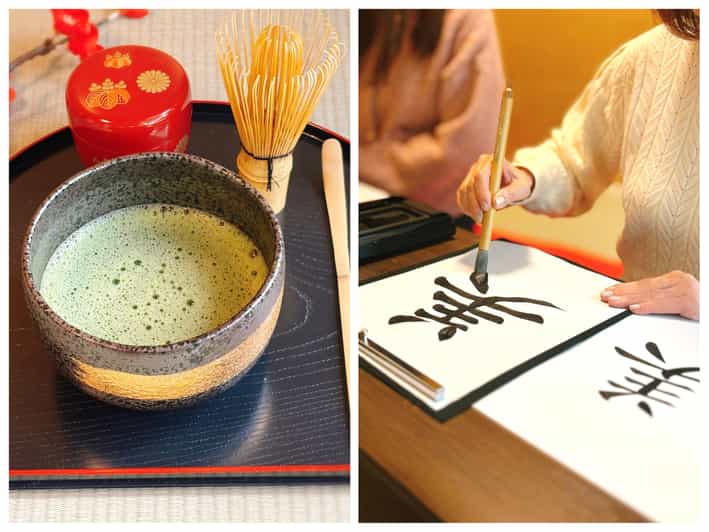
- Kanji calligraphy souvenir: write your name in Japanese characters and stamp your initials.
- Personality-based kanji idea: you convert your name into kanji tied to your personality.
- Matcha hands-on: learn steps, then make your own matcha.
- Sweet selection twice: enjoy different Japanese sweets during the tea ceremony.
- Studio in Namba: easy access from Shinsaibashi, with a clear meeting point near New Osaka Hotel Shinsaibashi.
Why this tea and calligraphy setup feels different in Osaka
Most “culture experiences” in Japan are either scripted to the minute or split across a group where you can’t really ask questions. This one is different because the entire flow is built for a private session. You’re not sharing your teacher’s focus with strangers, and that changes everything: you can ask the same question twice, you can take a breath between steps, and you can settle in instead of rushing.
Another reason it works: you do two crafts that calm your brain in different ways. Tea ceremony gives you structure and rhythm. Calligraphy gives you a physical focus. Together, they turn into a skill-building memory, not just a photo stop.
And you’ll get real take-home value. You’re not leaving with a generic “Japan postcard” feeling. You leave with paper, ink technique, and a finished piece you wrote.
The experience is also easy to fit into a first-time Osaka day. It’s in Namba, near where a lot of people already spend time, so you’re not planning a long trip just to sit down for 135 minutes.
You can also read our reviews of more tours and experiences in Osaka.
Finding the studio: the simple Namba meeting point
You’ll meet outside New Osaka Hotel Shinsaibashi, then walk west about 30 seconds. Look for the blue vending machine near the entrance. They’ll be waiting outside about 5 minutes before your scheduled time, and they’re wearing kimonos, so you won’t miss them.
Why I like this meeting point: it’s precise, and it’s in an area with lots of foot traffic. That matters when your day is already packed with trains, shopping, and lunch lines. If you’re the type who hates guessing games, this one keeps things clear.
Also, the class being in Namba means you can combine it with nearby plans like shopping around Shinsaibashi-suji before or after your session. Just give yourself a little breathing room. Tea and calligraphy reward a calm mindset.
Calligraphy hour: choosing a theme, practicing strokes, then writing your name
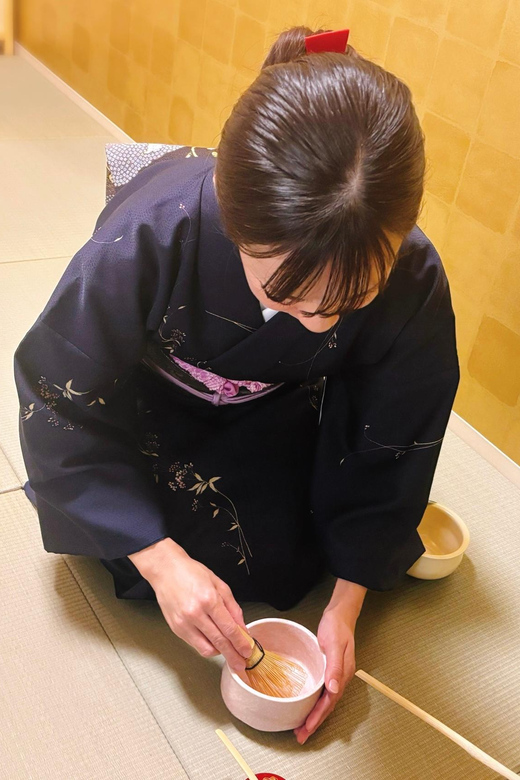
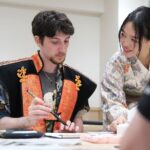
The calligraphy part starts with choices. First, you pick a theme you want to write that day. You can tell the instructor your favorite letters and words. If you want suggestions, they can guide you toward the best kanji to express yourself.
One detail I genuinely appreciate is that the lesson isn’t just hand-over-hand. You get a basic lecture on practices that apply to calligraphy in general. Then you choose from different types of colored paper and you prepare your final piece.
Here’s the flow that makes it feel achievable:
- You select the theme and the kanji idea
- You get instruction on how the strokes should work
- You do practice with the character you choose
- You write your name in Japanese characters
- You stamp your initials to finish
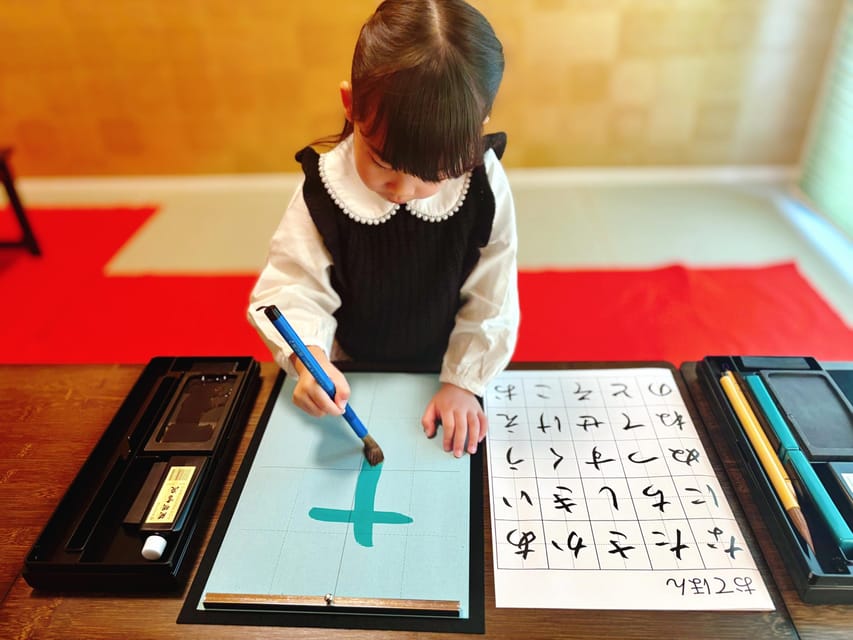
It’s also not only about adults. For young children, the experience offers water calligraphy, which helps prevent mess on hands and clothes.
If you’re worried about skill level, don’t be. The setup is designed for beginners to end with a real souvenir. Even in the feedback, people highlight how patient the instructor is, especially with groups that need extra time.
Tea ceremony hour: matcha making, selecting a bowl, and enjoying sweets twice
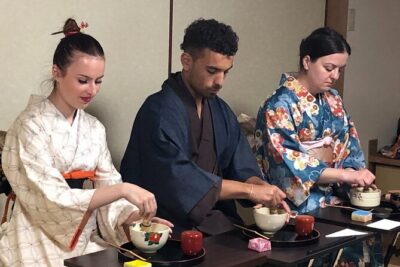
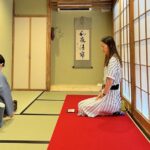
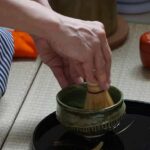
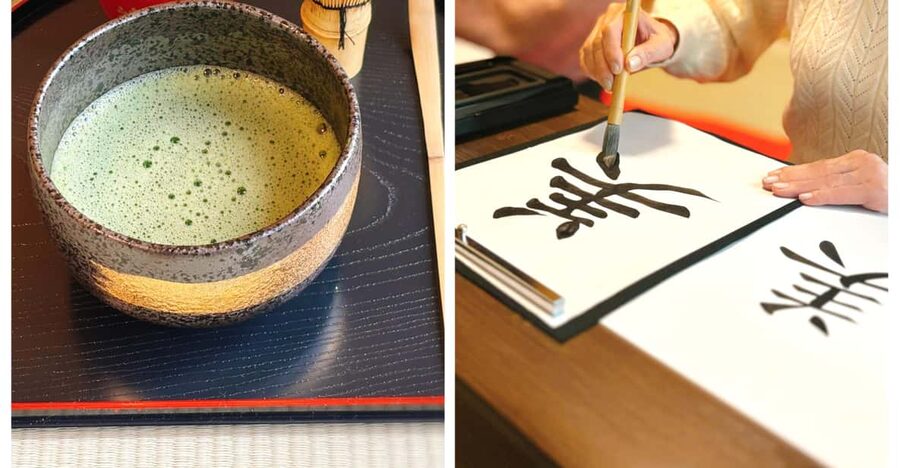
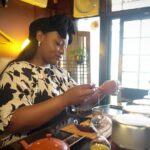
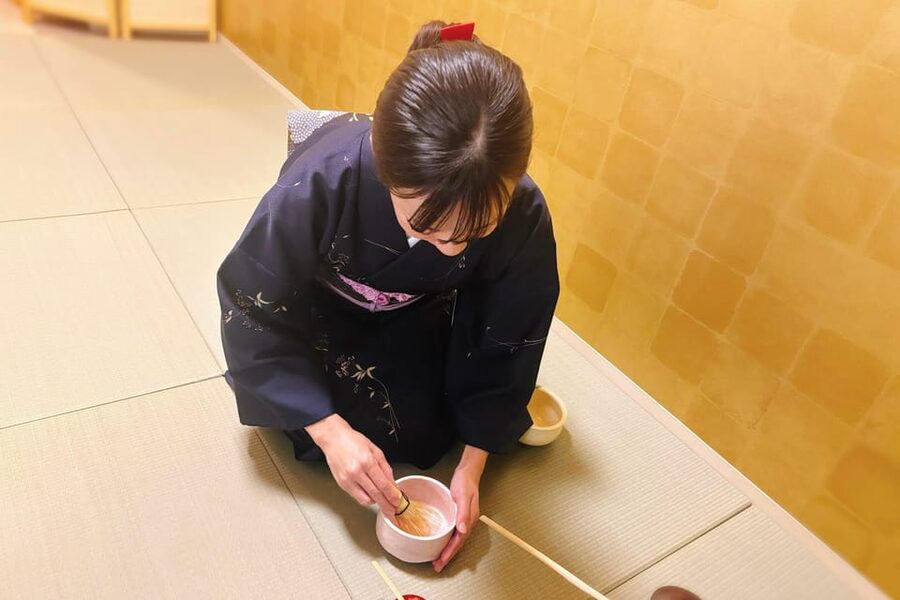
After calligraphy, you shift to tea. The tea ceremony part teaches you how to make tea, then you make it yourself. At that point, you’re not just watching. You’re doing the steps and tasting the result.
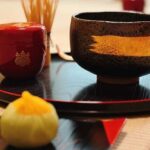
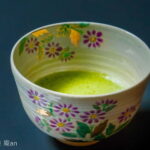
A nice touch is that you choose a tea bowl that expresses your feelings that day. That turns something formal into something personal. It also gives you something to pay attention to besides your phone and your schedule.
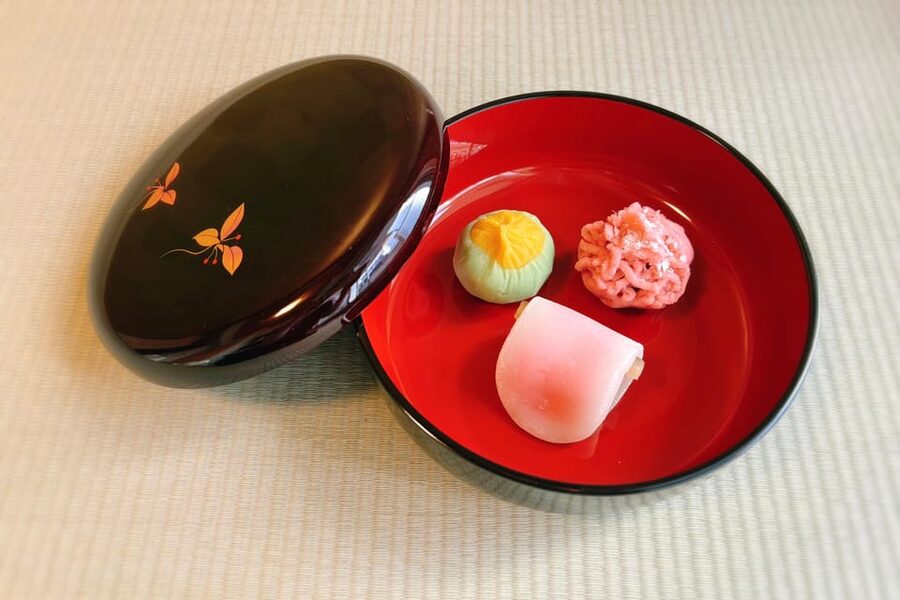
The lesson includes matcha and Japanese sweets. You’ll taste and make matcha, and you’ll enjoy different types of Japanese sweets twice during the tea ceremony.
Two practical reasons this matters:
- Tea ceremony can feel abstract if you only learn theory. Doing matcha makes the ritual physical and memorable.
- Sweets create a natural pause and sensory contrast. Matcha has a distinct taste and texture, and the sweets help balance that experience.
If you have dietary concerns, keep this in mind. One review mentions lactose-free sweets, so it sounds like the instructor may accommodate needs depending on what’s available. If that matters to you, ask in advance when you reserve.
The instructor’s role: why private attention changes the quality
In a private class, the instructor can adjust to your group. The experience description specifically allows tweaks like taking lots of photos or proceeding slowly for a child. That’s not fluff. It affects how you learn.
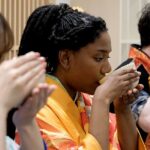
In real feedback, many people call out how friendly and focused the instructor is, and how the class stays calm instead of turning into a rush job. A recurring name shows up in the reviews: Wanoma. Multiple participants mention how she explains tea ceremony and calligraphy clearly, answers questions, and stays patient while people make mistakes.
That patient teaching style is especially important for calligraphy, where tiny differences in stroke order or pressure change the look of the final kanji. If you’re new to brush writing, you’ll do better when someone checks your approach in the moment.
It also helps with the cultural part. Tea ceremony includes history and meaning, not just steps. When your instructor can explain why certain actions matter—like timing and how seasons connect to sweets—you end up learning the “why,” not just the “how.”

What you take home: a souvenir with real meaning
Your final calligraphy piece is the obvious takeaway: you select paper, practice a character, and write your name in Japanese characters. Then you stamp your initials. That means your souvenir is personal, not generic.
There’s also value in the process. When you learn how to form strokes and how brush calligraphy is structured, the piece you bring home has a story you can tell. It’s proof that you didn’t just take pictures in Japan—you created something.
And because it’s private, you can generally move at the pace you need to finish with something you feel good about. People in the feedback repeatedly mention not feeling rushed. That matters because calligraphy needs time for control.
You may also leave with a better sense of tea ceremony basics: how to brew matcha in the traditional way and how the sweets fit into the whole ritual. That makes it easier to replicate the experience later at home, even if you’re just making tea and taking a few minutes to slow down.
Price and value: is $64 per person fair for 135 minutes?
$64 for 135 minutes can feel like a bargain or a splurge depending on your travel style. Here’s how I’d judge it: you’re paying for a private instructor, not a shared workshop.
Included in the price are the instructor, colored paper, matcha and Japanese sweets, and the matcha making experience. The materials are part of the experience, and you end with a finished artwork you made.
Compared with other “learn something in Japan” activities, the value comes from two places:
- Two skills in one session (tea + calligraphy) instead of one
- Private attention instead of time spent waiting your turn
Also, the class length is long enough to actually learn. Some activities cram everything into a short window. Here, 135 minutes gives time for instruction, practice, and finishing your piece.
If you’re traveling with someone who also likes hands-on learning, it becomes even better value because you both get your own completed calligraphy work and your own matcha experience.
The only drawback on the value side is the setting: it’s not described as wheelchair accessible. If mobility access is a concern, the price won’t matter if the experience doesn’t work for you.
Who this private class is best for
This is a strong fit for people who like calm experiences and clear instruction. It’s also a great choice if you want a break from the usual Osaka grind of walking, eating, and shopping.
You’ll enjoy it most if you:
- Want a cultural experience that feels hands-on, not just observational
- Like making a take-home souvenir you personally created
- Prefer private learning time over group tours
- Travel with kids and need flexible pacing (the class offers water calligraphy for young children)
It’s also a good match if you’re a first-timer in Japan and want a focused introduction to tea culture and Japanese writing. The instructor explains both the rituals and the technique, so it’s not just “look and try.”
If you’re the type who needs constant action, you might find the pace slower. Tea ceremony is intentionally measured. For that reason, it’s best when you’re ready to slow down a little.
Practical tips before you go: socks, photos, and pacing
The big practical item is simple: bring socks. That’s listed as what you should bring, and it’s a common requirement for studio-style activities.
No smoking is also stated, so plan accordingly around the meeting area.
Two other practical tips come from how the experience is designed:
- Tell the instructor your photo preferences early. The class allows photos anytime, and you can ask for extra time to take them.
- If you’re traveling with a child, ask to proceed at the child’s pace. The experience is described as adjustable, and some feedback specifically mentions keeping kids attentive without rushing them.
For best results, go in with a mindset that calligraphy takes practice. Your first strokes won’t look perfect, and that’s fine. Your goal is to learn the process and finish with something you’re proud to carry home.
Should you book Osaka private tea ceremony and calligraphy?
If you want an Osaka experience that feels calm, personal, and genuinely creative, this is a yes for many people. The combination matters: matcha making gives you a sensory ritual, while calligraphy gives you a real skill and a finished keepsake.
I’d book it if you:
- Like private instruction and want a relaxed pace
- Care about learning the meaning behind Japanese tea and sweets
- Want a unique souvenir that isn’t mass-made
- Are near Namba/Shinsaibashi and want a meaningful activity without major travel
I’d hesitate only if wheelchair access is needed, since it’s stated as not suitable for wheelchair users. If that isn’t a concern, the structure, included materials, and private attention make the $64 price feel like solid value for what you get.
FAQ
FAQ
How long is the Osaka private tea ceremony and calligraphy experience?
The experience lasts 135 minutes.
Where is the meeting point in Namba?
Meet at the entrance of New Osaka Hotel Shinsaibashi, then walk west for about 30 seconds. A blue vending machine is near the entrance.
How will I know where to find the instructor?
They will wait outside the building, in front of the main entrance, about 5 minutes before your booking time. They are wearing kimonos.
What language is the instructor?
The instructor can teach in English and Japanese.
What is included in the price?
It includes all fees and taxes, colored paper for calligraphy, matcha and various Japanese sweets, the matcha making experience, and an instructor.
Do I need to bring anything?
Bring socks.
Is smoking allowed during the experience?
Smoking is not allowed.
Is this experience suitable for wheelchair users?
No, it is not suitable for wheelchair users.
Is the calligraphy lesson beginner-friendly?
The lesson includes instruction and practice steps, and it’s set up for you to finish by writing your name in Japanese characters, stamping your initials, and taking your artwork home.
Can kids join, and is there a child-friendly option?
Yes. For young children, water calligraphy is offered to help prevent hands and clothes from getting dirty.
What are the cancellation and payment options?
Free cancellation is available up to 24 hours in advance for a full refund, and you can reserve now & pay later.