REVIEW · OSAKA
Learn Zen in a class of making Matcha tea near Osaka Castle
Book on GetYourGuide →Operated by 株式会社武士の誉れ · Bookable on GetYourGuide
A matcha class can feel like a tiny time machine. Here, you dress in traditional outfits, learn tea etiquette, and even step through the tea-room entrance where everyone is treated as equals. I especially like the practical etiquette practice and the way wagashi connects tea to seasons and wabi-sabi. One thing to plan for: you’ll need to arrive early and be comfortable following a set routine for changing clothes and photos.
If you want a short, focused cultural experience, this one hits the sweet spot—60 minutes with a small group capped at 6. I also love that the vibe is hospitality in both directions, so you’re not just watching; you’re participating. The main consideration is that it may not suit very young kids (it’s not for children under 10), and the venue lists limits around age and altitude sickness.
In This Review
- Key highlights worth making time for
- Kimonos, samurai roles, and the equality you feel in the tea room
- Your 60-minute flow: dressing, etiquette practice, and making matcha
- Wagashi: tasting the four seasons and learning wabi-sabi beauty
- Photo shooting in kimono: what you’ll get and what to ask about
- Where to meet: Samurai Honor near Osaka Castle (and the landmark to watch for)
- Price and value: why $40 can be a fair deal for this kind of class
- Who this matcha class suits (and who should skip it)
- Should you book this Zen matcha class near Osaka Castle?
- FAQ
- How long is the matcha tea ceremony class?
- What languages are available for the guide?
- Where do I meet, and what’s the easiest landmark to find?
- Is transportation or pickup included?
- What should I bring?
- What’s included in the price?
- Can I cancel for a full refund?
Key highlights worth making time for
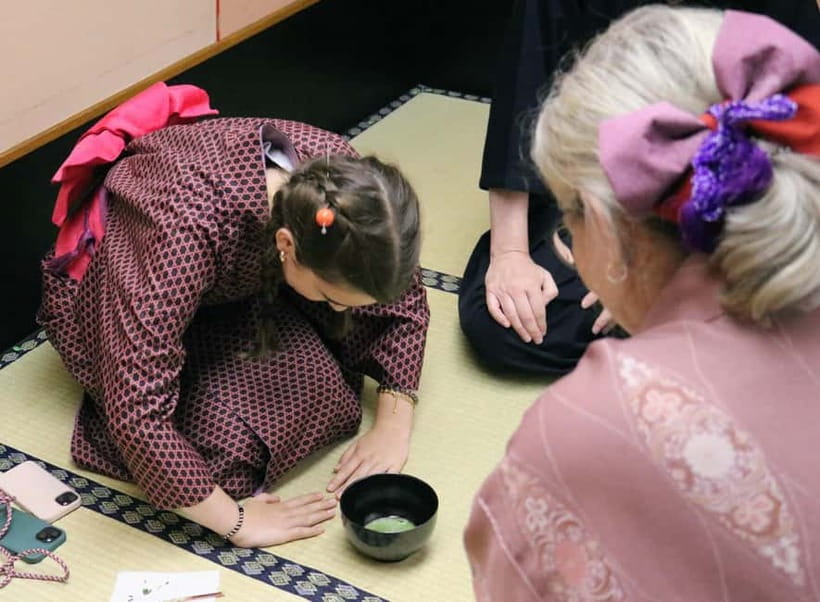
- Enter as a guest, leave with manners: you practice the bows, serving steps, and gestures that define chanoyu
- Kimono role-play adds meaning: men wear Hakama/Dōgi as samurai; women wear kimono as Yamato Nadeshiko
- Wagashi isn’t a snack—it’s seasonal storytelling through wabi-sabi style beauty
- Equality inside the tea room: once you pass the nijiriguchi, status disappears
- Photos are built in: matcha-making and costume moments are captured, with digital files sent by email
Kimonos, samurai roles, and the equality you feel in the tea room
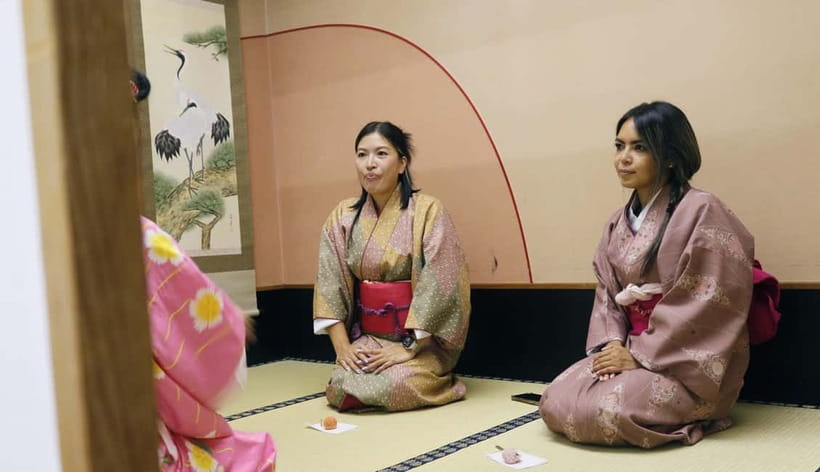
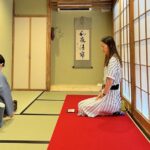
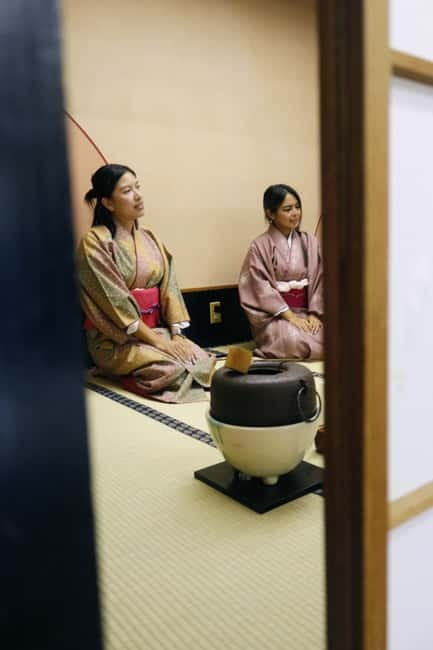
The first wow moment is simple: the minute you cross into the tea ceremony space, the world changes. The experience is designed so that when you pass through the nijiriguchi (the tea-room entrance), everyone is treated equally—regardless of nationality, age, gender, or social standing.
That matters more than it sounds. Japanese culture can feel complex at a distance. Here, you don’t need insider knowledge to understand the point. You physically move through the same entrance as everyone else, then you follow the same etiquette flow. Status goes away, and you start paying attention to the details that actually matter in tea: posture, timing, and calm.
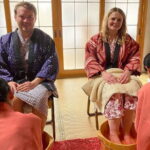
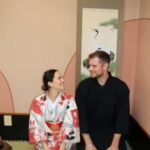
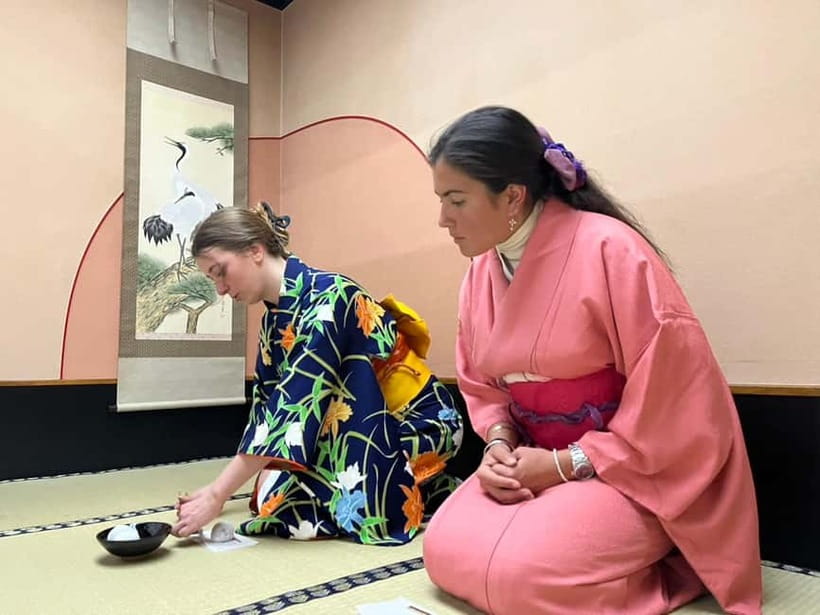
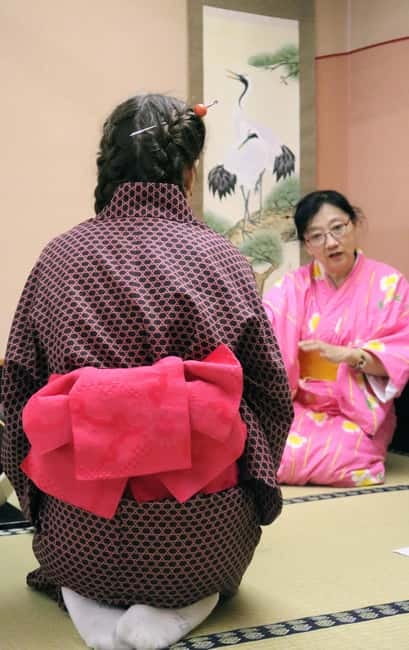
And then there’s the costume layer, which helps you step into the role the ceremony is teaching. Men dress in Hakama and Dōgi and are styled as samurai. Women wear kimono as Yamato Nadeshiko. Even if you’ve worn a kimono before, the role language adds structure. It’s not just dressing up for pictures; it’s part of the lesson.
You can also read our reviews of more tours and experiences in Osaka.
Your 60-minute flow: dressing, etiquette practice, and making matcha
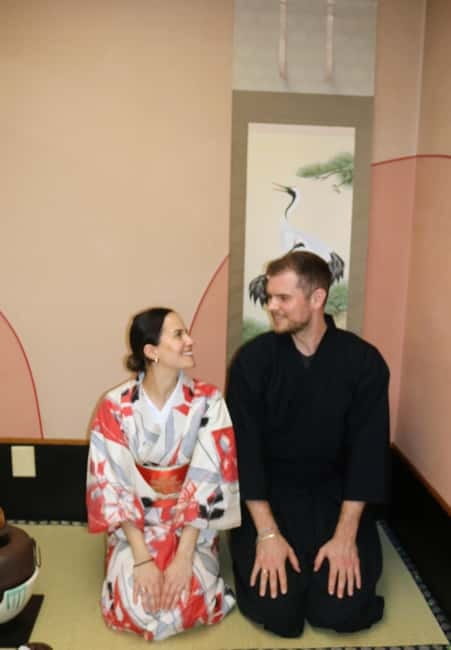
This is a 1-hour experience, which is great if you don’t want to lose a half day to a cultural activity. The pacing is intentional: you get instruction, you practice, then you do the ceremony steps in sequence.
Here’s how the time usually feels, step by step:
1) Arrive early for changing and instructions
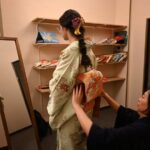
You should show up 30 minutes before your reserved time. That early buffer is for changing into your outfit and getting guidance on what to do next.
2) You’re hosted through the manners
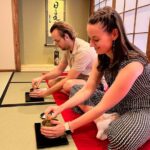
Before the tea is served, the hostess guides you through traditional conduct. You’ll learn etiquette and beautiful gestures—things like how to sit, how to bow, and how to handle yourself during the ritual. Even in a short class, the focus isn’t just on outcomes. It’s on how you move while you’re making the experience.
3) Matcha becomes the lesson
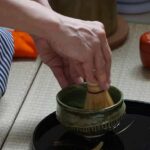
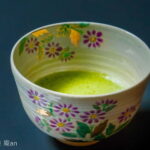
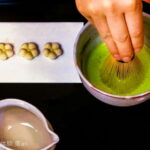
The master of the tea ceremony serves matcha, then you practice the guest experience. The wording used for this ceremony is about more than entertaining. The host doesn’t just perform, and the guest doesn’t just watch. The atmosphere is created by both sides responding to each other.
A practical note: you’re in a small group (up to 6). That size helps because the instructor can slow down. You’re less likely to feel like you’re part of a conveyor belt.
Wagashi: tasting the four seasons and learning wabi-sabi beauty
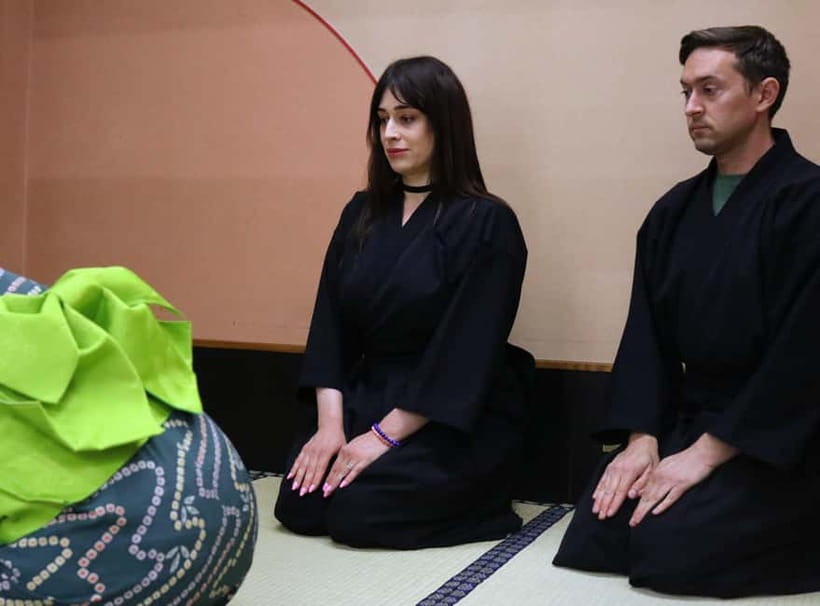
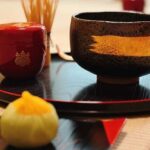
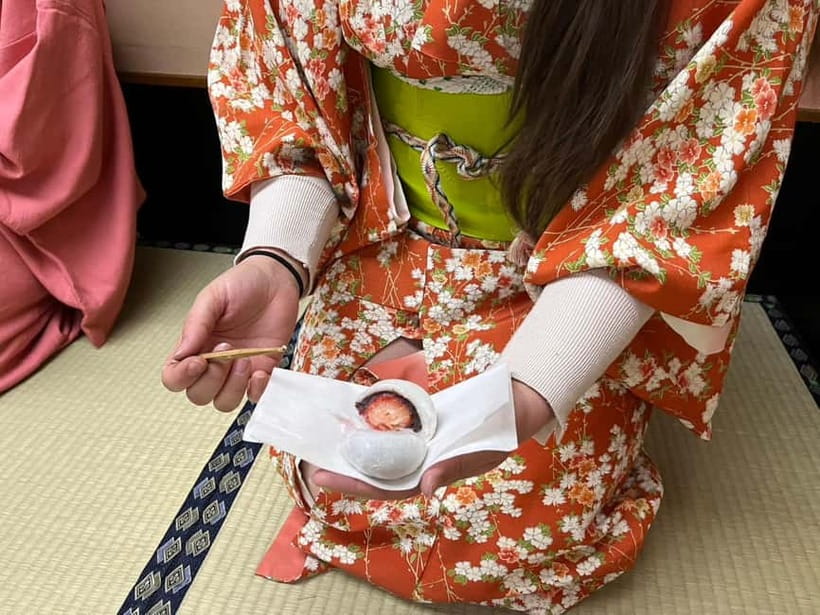
Matcha is the headline, but wagashi is where the philosophy comes alive. You won’t just eat a sweet and move on. The class explains how wagashi developed alongside the tea ceremony and why it matters.
You’ll learn about:
- wabi and sabi (Japanese sense of beauty—simple, imperfect, quietly refined)
- the four seasons and how sweets reflect them
- how wagashi uses handcrafted details to communicate seasonal themes
Wagashi is also described as having beauty that’s closely linked to wabi-sabi. One of the most useful things you’ll take home is how to look at it. The sweets often feel too detailed to rush. They’re made by hand by craftspeople one by one, and the designs tend to feel like seasonal miniatures.
A fun way to think about it: Japanese seasonal awareness isn’t only about weather. It’s visual, edible, and emotional. Wagashi is a shortcut to understand that idea without needing a textbook.
Photo shooting in kimono: what you’ll get and what to ask about
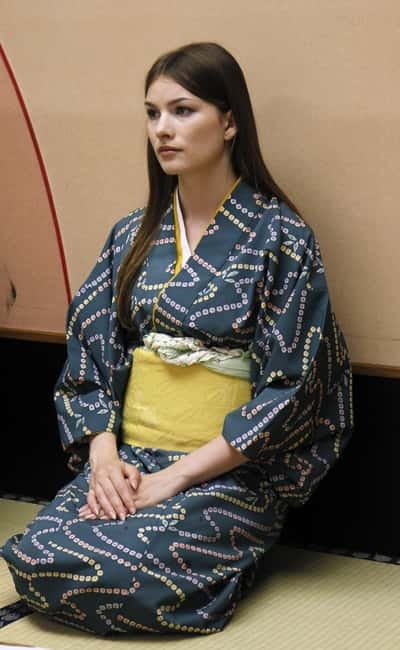
If you’re doing this in Osaka for kimono photos, this experience is set up for it. Photo shooting is included, and your photos are sent to a designated email address.
A few things to keep clear in your head:
- You’ll be photographed during the ceremony and costume moments (not just one posed snap).
- An outdoor photo shoot is listed as paid/optional.
- Wagami (collected hair + kanzashi) is listed as not included.
That hair detail is important because some people want elaborate styling. If that’s you, it’s worth asking before the day—how much hair styling is covered in your selected package, and whether floral or more decorative elements are possible. The base includes kimono clothing, but the extra hair accessories may depend on your option and what’s available.
Also: if you plan to use the photos for social posts, arrive a bit calmer. If you’re rushing through changing, you’ll feel it in the final minutes.
Where to meet: Samurai Honor near Osaka Castle (and the landmark to watch for)
This ceremony is at Bushi no Homare (Samurai Honor), operated by 株式会社武士の誉れ. The address is:
Excellence Takayama 1F, 2-3-19 Shiginonishi, Jōto-ku, Osaka-shi, Osaka 536-0014
Meeting point landmark: a wooden sign that reads Honor of the Samurai. The landmark is described as a rack in front of the store with Samurai Honor activity pamphlets, and you may also spot kimonos and hakama hanging to dry—so it should be hard to miss once you’re close.
One heads-up that saves time: the address shown on Apple Maps is said to be incorrect. Use Google Maps for navigation.
Transportation isn’t included, and there’s no pickup/drop-off from a hotel or train station. So plan to arrive under your own steam.




Price and value: why $40 can be a fair deal for this kind of class
At $40 per person for one hour, the value depends on what you want from your Japan time.
If your goal is simply to taste matcha, you might find cheaper options. But if you want:
- English-guided instruction
- kimono dressing
- a structured explanation of tea etiquette
- wagashi
- and included photo shooting
…then the pricing starts to make sense. It’s not a quick souvenir stop. It’s a small-group cultural performance where you participate, and the costume + ceremony teaching are doing most of the work.
Small group size matters for the experience quality. With up to 6 participants, you’re more likely to get individual attention and to actually practice gestures rather than just observe.
Who this matcha class suits (and who should skip it)
You’ll probably love this class if you want a guided, respectful introduction to chanoyu without committing to a half-day training course. It’s also a solid choice for families who want something memorable to share. The highlights specifically call out sharing the experience and making photos with children.
Who should think twice:
- Children under 10 (not suitable)
- Altitude sickness concerns (listed as not suitable)
- People over 95 (listed as not suitable)
If you’re comfortable dressing in traditional clothing and following etiquette steps, the class is built around that willingness.
Should you book this Zen matcha class near Osaka Castle?
Book it if you want an easy win: you’ll leave with matcha you helped prepare, a better sense of why wagashi and etiquette matter, and photos dressed in kimono that look like you actually planned your Osaka trip (because you did).
Skip it if you hate structured activities, need total freedom to roam, or you’re looking for a long, fully immersive multi-hour tea training. This one is short on purpose, and it rewards people who go with the flow.
One last practical tip: bring a T-shirt. You’ll be changing before the ceremony, and a simple top makes that part smoother.
FAQ
How long is the matcha tea ceremony class?
The experience lasts 1 hour.
What languages are available for the guide?
The guide staff offers English and Japanese.
Where do I meet, and what’s the easiest landmark to find?
Meet at Samurai Honor (Bushi no Homare). Look for the wooden sign that reads Honor of the Samurai, described as a rack with Samurai Honor activity pamphlets in front of the store.
Is transportation or pickup included?
No. Pick up and drop off at the train station or hotel is not included, and transportation is not included.
What should I bring?
Bring a T-shirt.
What’s included in the price?
Included items are kimono clothing, an English interpreter guide staff, matcha, wagashi, a certified professional instructor, tax and tips, and photo shooting (digital data sent by email).
Can I cancel for a full refund?
Yes. You can cancel up to 24 hours in advance for a full refund.