REVIEW · TOKYO
Japanese Traditional Breakfast and Tea Ceremony
Book on Viator →Operated by True Japan Tour · Bookable on Viator
A calm morning ritual beats a rushed hotel breakfast. I love the chance to learn practical matcha tea rituals you can recreate later, and I also like the thoughtful addition of a guided Zen-themed tea ceremony with a tea master in English. You’ll get a light Japanese breakfast with rice and sweets, then slow down with a short meditation.
One thing to plan for: the meeting venue can be a little tricky to spot at first, so I’d give yourself extra time to confirm you’re at the right building near Shibakoen.
In This Review
- Key Highlights You’ll Actually Use Later
- Morning Calm in Tokyo: A Tea Ceremony That Starts With Food
- Meeting Points, Timing, and Group Size (What You Need to Know)
- Breakfast Part: Rice Balls, Local Flavors, and Sweet Notes
- Zen Context: Meditation, Hanging Scrolls, and What You’re Looking At
- Tea Ceremony With a Tea Master: Matcha Made the Right Way
- Your Turn: Making Matcha and Doing a Second Ceremony
- Sweet Pairings and the Flow of the Morning
- Price and Value Check: Why This Costs $60.81
- Who Should Book This (And Who Might Skip It)
- Should You Book This Japanese Traditional Breakfast and Tea Ceremony?
- FAQ
- FAQ
- What is the duration of the Japanese Traditional Breakfast and Tea Ceremony?
- What time does the tour start?
- Where is the meeting point?
- Is pickup or drop-off included?
- What does breakfast include?
- Do I learn how to make matcha?
- Is the tea master able to speak English?
- Is there meditation during the experience?
- How large are the groups?
- What happens if the weather is poor or I need to cancel?
Key Highlights You’ll Actually Use Later
- Matcha rituals you can repeat at home: learn the flow, not just the details
- Breakfast that feels Japanese: rice balls plus local flavors and sweets
- Zen context with a hanging scroll: you’ll know what you’re looking at
- Tea master instruction in English: a bilingual licensed tea master guides you
- Your hands on matcha: you do a second ceremony with coaching
Morning Calm in Tokyo: A Tea Ceremony That Starts With Food
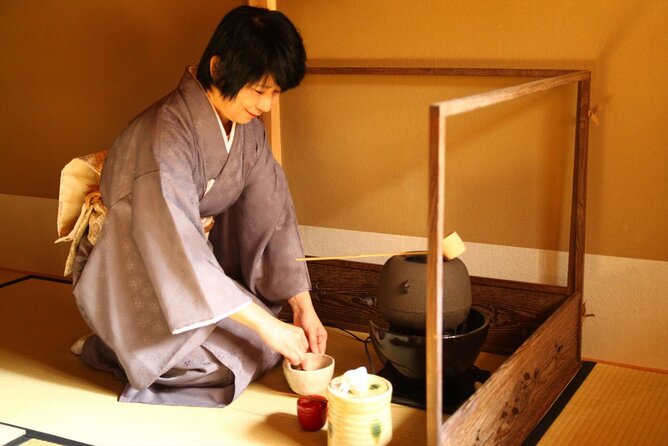
This experience is built for people who want more than a performance. You start with a light Japanese breakfast, then move into matcha and Zen. The best part is that the structure teaches you the logic behind the ritual. It’s not just sip-and-smile. It’s steps, meaning, and a chance to practice.
In Tokyo, it’s easy to eat “Japanese food” that’s really just convenient. Here, the breakfast and tea ceremony feel like they come from the same culture of daily attention—simple, orderly, and quietly intentional. You also get to meet a tea master with real experience (5+ years), plus a bilingual English approach that keeps it understandable.
The whole thing runs about 1 hour 30 minutes. That’s long enough to slow down, without dragging your morning into a whole production.
You can also read our reviews of more tours and experiences in Tokyo.
Meeting Points, Timing, and Group Size (What You Need to Know)
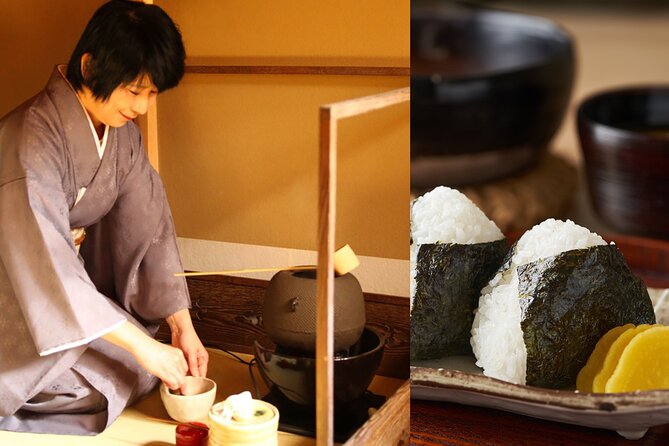
You meet at Kikai Shinkō Kaikan, 3-chōme-5-8 Shibakōen, Minato City, Tokyo. The start time is 9:00 am, and it ends back at the same meeting point. There’s no mention of pickup or drop-off, so plan to get there on your own using nearby public transport.
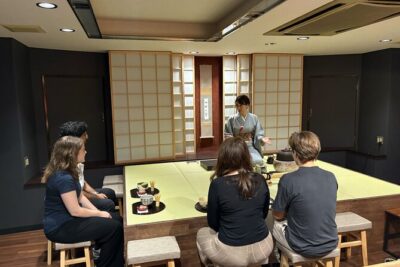
The group max is 28 travelers. That’s small enough to feel personal, especially when you’re doing matcha and a second tea ceremony yourself. Also, you’ll want to arrive on time, since the day starts with a short meditation period and then the ceremony begins.
Price is $60.81 per person, and on average this gets booked about 53 days in advance. If you’re traveling in a busy season or going as a group, it’s smart to lock in early rather than hope a slot opens.
One practical note: if venue-finding is stressful for you, do a quick check on the address and look at the map view before you leave. Even good tours can be hard to locate when the building name is unfamiliar.
Breakfast Part: Rice Balls, Local Flavors, and Sweet Notes
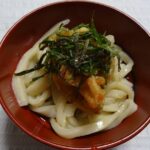
Before you touch matcha, you eat. You’ll get a light breakfast, including freshly prepared rice balls (onigiri) and other Japanese-style flavors. The goal isn’t to fill your stomach to the ceiling. It’s to give you comfortable energy before a calm, careful activity.
You also get traditional Japanese sweet confections. In tea culture, sweets aren’t random desserts. They help balance flavors, and they set your palate for the matcha that comes next. If you tend to think of matcha as only bitter or only “powder tea,” the pairing helps you experience it more fully.
This matters if you’re doing more of Tokyo later that day. A heavy breakfast can make the tea ceremony feel slow in a bad way. A lighter meal keeps you focused. Plus, if you’re used to coffee-and-toast mornings, this is a reset.
Zen Context: Meditation, Hanging Scrolls, and What You’re Looking At
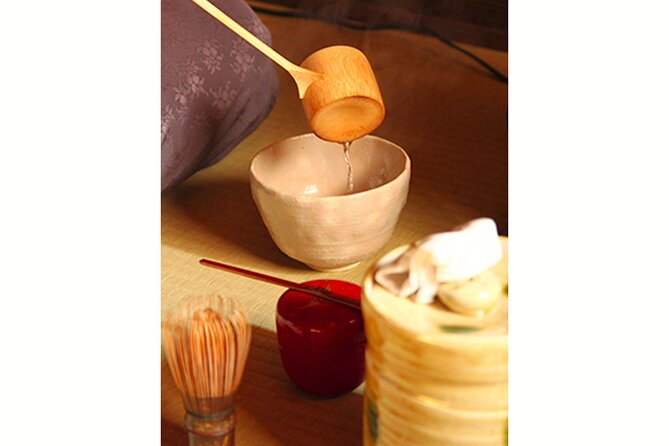
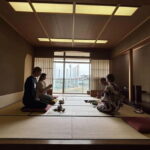
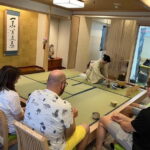
After breakfast, you shift gears into the cultural meaning behind the ceremony. There’s a short meditation period. It’s not long, but it does the job: it moves you from sightseeing mode into present-moment mode.
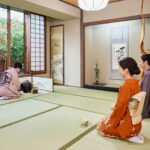
You’ll also get an explanation of the hanging scroll, which expresses the spirit of Zen. That’s a key detail. When you know what the scroll represents, the room stops feeling like a backdrop and starts feeling like a teaching space.
Think of it like this: matcha is the drink, but the scroll and the meditation are the framework. They tell you why the ritual is built the way it is—why there’s pacing, respect, and attention to how tools are handled.
And don’t worry if this is your first time. The experience is designed for English understanding, with commentary that makes the ideas clear rather than mysterious.
Tea Ceremony With a Tea Master: Matcha Made the Right Way
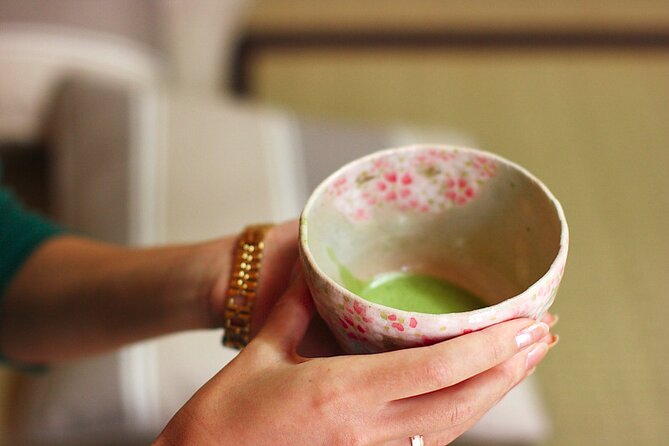
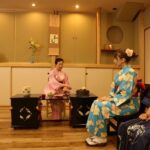
The tea ceremony is led by a tea master with 5+ years’ experience. You’ll also have a bilingual licensed tea master (English), plus a nationally certified guide interpreter providing hospitality. Translation support matters here. Tea ceremony terms can be dense, and the point is learning, not struggling through explanations.
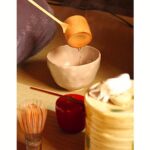
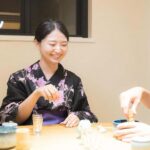
A big highlight is the matcha itself. You’ll drink matcha made by the host using high-quality matcha. That’s important because matcha quality changes the whole experience—taste, aroma, and texture. Lower-grade matcha can feel harsh or thin. Better matcha tends to be smooth and balanced, and it shows up in the overall experience you remember.
You’ll also learn about the tea utensils and the process behind the ceremony in English. That’s the stuff you need if you want to recreate it at home later without turning it into a “close enough” version.
Your Turn: Making Matcha and Doing a Second Ceremony
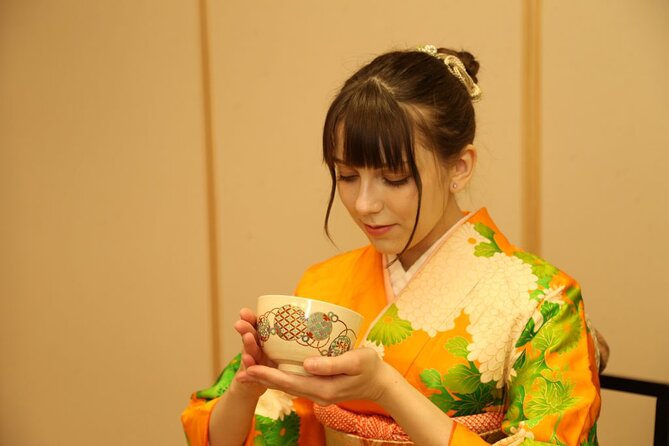
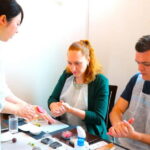
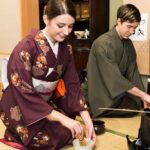
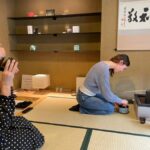
This isn’t just watching. You get a hands-on moment. The experience includes a second tea ceremony performed by yourself, with instruction.
That’s the payoff if you’re the type who likes to understand how things work, not just what they look like. When you whisk matcha, handle utensils, and follow the steps, you start learning the rhythm of the ritual. You don’t just hear about it—you build muscle memory for how it feels.
If you worry you’ll mess it up, don’t. The instruction is part of the package, and the format supports questions and learning. In a small group of up to 28, it’s easier for the tea master to keep things moving without leaving you behind.
In short: you’ll get both the cultural explanation and the practical experience. That combination is why this feels worth your time.
Sweet Pairings and the Flow of the Morning
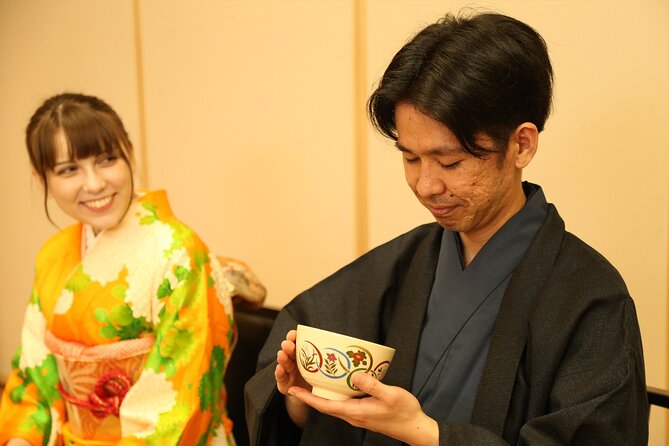
One underrated part of the format is how it’s paced. Breakfast first gives you comfort. Then meditation and Zen context slow your mind down. Then matcha happens at the right moment—when you can appreciate it rather than chase it.
The sweets also play a role in the flow. They create contrast with matcha, and they give you a structured experience rather than random snack breaks.
If you like your activities organized and clear, you’ll probably appreciate the teaching sequence: tea context → ceremony performance → explanation of utensils and scroll → your practice and second ceremony.
And if you’re the opposite type—someone who wants only food or only a show—this might feel a bit “ritual heavy.” But the hands-on part helps keep it engaging.
Price and Value Check: Why This Costs $60.81
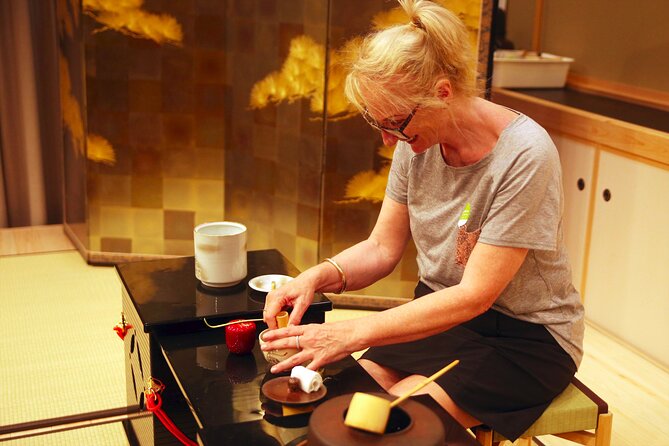
At $60.81 per person, you’re not paying for a generic meal. You’re paying for instruction, guided English explanation, a tea master with 5+ years’ experience, and the fact that you do a second ceremony yourself.
Here’s the practical value angle: this is a short format (about 90 minutes) that still covers multiple parts—breakfast, Zen context, tea ceremony, and hands-on matcha. Many food experiences in Tokyo are either meal-only or activity-only. This blends them into one coherent morning lesson.
Also, the group size is kept relatively small (max 28), which usually supports better attention during the hands-on segment. You’re not just hovering in the back row hoping you can see the whisking.
If you’re thinking about doing a tea ceremony anyway, this one’s stronger because it teaches you what to do, not just what to watch.
Who Should Book This (And Who Might Skip It)
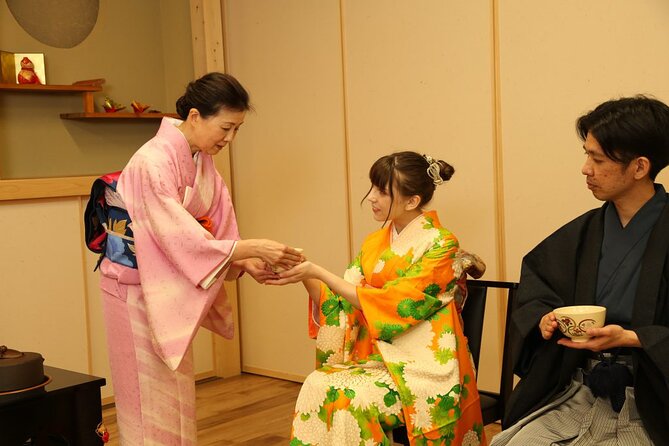
I’d book this if you want a calmer Tokyo morning and you like learning how daily rituals work. It’s also a good fit for people traveling as a family. The experience format is structured, friendly, and easy to follow, and the breakfast plus sweets make it feel like a real day start rather than an art class.
You should consider skipping it if:
- you only want a quick snack and don’t care about the Zen meaning
- you strongly prefer large-scale attractions and don’t want a small, quiet room experience
- you get stressed by finding a specific building and you can’t spare a little buffer time before 9:00 am
Should You Book This Japanese Traditional Breakfast and Tea Ceremony?
Yes, if you want an authentic cultural experience that actually teaches you something. This is one of those activities where you leave with a better understanding of matcha—taste and technique—and you also get the mindset behind the ceremony through Zen commentary and a hanging scroll explanation.
If you’ve been thinking, I’d like to try a tea ceremony but I don’t want it to feel like a performance, this fits. The practical “your hands on it” part makes it more than a photo stop.
Book it sooner rather than later, since it often gets reserved ahead (and it’s limited to a group size). And on the day, arrive a few minutes early to get your bearings fast around Shibakoen.
FAQ
FAQ
What is the duration of the Japanese Traditional Breakfast and Tea Ceremony?
It runs for about 1 hour 30 minutes.
What time does the tour start?
The start time is 9:00 am.
Where is the meeting point?
The meeting point is Kikai Shinkō Kaikan, 3-chōme-5-8 Shibakōen, Minato City, Tokyo 105-0011, Japan.
Is pickup or drop-off included?
No. Pick-up & drop-off services are not included, and it ends back at the meeting point.
What does breakfast include?
You’ll have a light breakfast that includes breakfast and freshly prepared rice balls, along with sweets.
Do I learn how to make matcha?
Yes. The experience includes a second tea ceremony performed by yourself, with instruction, and you drink authentic matcha green tea.
Is the tea master able to speak English?
Yes. There is a bilingual licensed tea master (English), and the explanation is provided in English.
Is there meditation during the experience?
Yes. There is a short meditation period.
How large are the groups?
The activity has a maximum of 28 travelers.
What happens if the weather is poor or I need to cancel?
The experience requires good weather. If it’s canceled due to poor weather, you’ll be offered a different date or a full refund. You can also cancel for a full refund up to 24 hours before the experience’s start time.