REVIEW · SHANGHAI
Private Qibao Ancient Town Walking Tour with Tea Tasting and Calligraphy Experience
Book on Viator →Operated by Sunny Private Tours · Bookable on Viator
Tea and calligraphy in a water town. That’s the heart of this private Qibao Ancient Town outing, a smooth way to get out of Shanghai and into the older alley streets with an English-speaking guide. I love how the tour is built for personal pacing and real Qibao wandering time, and I really like the tea tasting plus calligraphy combo, which turns sightseeing into something you can actually do and take part in. One thing to consider: it’s still a walking tour, so comfortable shoes matter if you’re not used to steady, old-street walking.
For most people, it’s an easy cultural reset. You’ll choose a morning or afternoon departure, get picked up from your downtown hotel, travel with local transport, and end back in the city. The schedule is short enough to feel doable, but compact enough that you’ll want to pay attention when your guide points out the little details you’d otherwise miss along the riverside areas and temples.
In This Review
- Key Points Worth Knowing Before You Go
- Why Qibao Works So Well as a Private Walking Tour
- Getting There From Downtown Shanghai: Pickup and Transfer Choices
- Stop 1: Shanghai Qibao Town Alleys and Riverside Architecture
- Stop 2: Qibao Old Street Teahouse Break and Tea Tasting
- Calligraphy Experience: Writing Characters and Listening Close
- Guide Quality and Group Size: How It Shapes Your Day
- Departure Timing: Morning vs Afternoon for a Better Feel
- Price and Value: Is $100 Per Person Worth It?
- What to Bring (and What to Skip) for a Smooth Walking Day
- Who This Tour Is Best For
- Should You Book This Qibao Ancient Town Tour?
- FAQ
- How long is the Private Qibao Ancient Town tour?
- Will I be picked up from my hotel in Shanghai?
- How do you travel to Qibao from Shanghai?
- Is tea tasting included?
- What about the calligraphy experience—does that come with the tour?
- Is this tour truly private?
- Can I cancel and get a full refund?
Key Points Worth Knowing Before You Go
Private guide for your group (one to four uses Uber/Didi; five-plus gets private transfer)
Tea tasting at a local teahouse with snacks, then calligraphy instruction
Choose morning or afternoon departure to match your day and energy level
Riverside and old-street alley walking for history, customs, and local flavors
Works in all weather—dress for rain or heat so you stay comfortable
Guide names you might meet include Jun and Annie, plus the provider team behind Sunny Private Tours
Why Qibao Works So Well as a Private Walking Tour

Qibao Ancient Town is the kind of place where group tours can feel like a race. This version slows things down. You don’t just “see” old streets—you get time to walk, ask questions, and follow your guide’s thread through history, customs, and everyday life.
I like how the experience is structured around two hands-on stops: tea tasting and calligraphy. That matters because it gives you a break from just photographing doors and bridges. It also makes the story of the place stick. When someone talks about temples and local traditions while you’re sitting with tea, the information lands in a way that’s hard to get from a quick bus stop.
The other big win is the private setup. Even with the transfer differences (Uber/Didi for smaller groups, private transfer for larger ones), your day feels arranged around you instead of around a crowd.
You can also read our reviews of more tours and experiences in Shanghai.


Getting There From Downtown Shanghai: Pickup and Transfer Choices

Your day starts with pickup from your downtown Shanghai hotel, then travel to Qibao by Uber or private transport. That’s not just convenience; it shapes the whole feel of the trip. You avoid the stress of sorting transit on the day you’re trying to enjoy an out-of-city cultural walk.
Here’s the practical part:
- For groups of one to four, the tour uses local Uber/Didi transport.
- For five or more, you’ll have a private transfer.
That detail matters if you’re traveling as a family or with a small group. In small groups, you still get the “private tour” experience with your guide, but the transport plan stays simple. With bigger groups, you don’t have to worry about coordinating multiple cars.
The tour runs about 5 to 6 hours, which is long enough to feel like a real outing, but short enough that you won’t lose the whole day to logistics.
Stop 1: Shanghai Qibao Town Alleys and Riverside Architecture
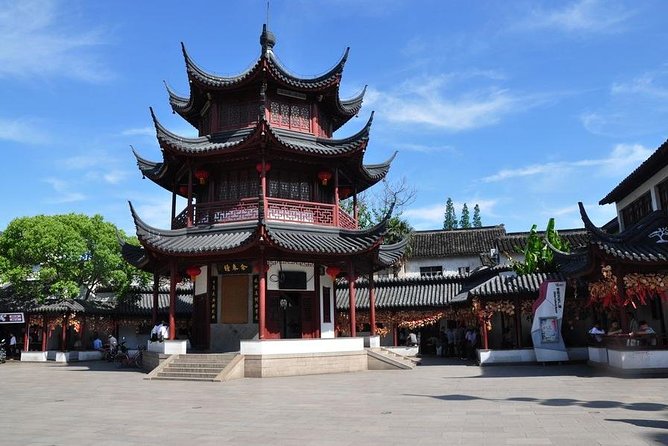
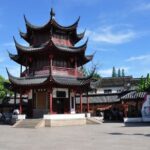
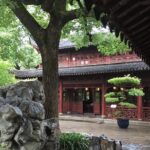
After arrival, you start walking through ancient alley streets where local life is the main attraction. This isn’t a museum-style route. It’s more like strolling through an old water-town neighborhood with your guide pointing out what to notice—architecture, local history, and customs you might never think to look for on your own.
You’ll spend about 1 hour 30 minutes here, and the tempo is the point. You’re not crammed into one or two photo stops. You can slow down at the riverside areas and get context as you go.
If you like food, this is also where the tour can become genuinely fun. The route gives you chances to sample street snacks and local delicacies if you want. I like this approach because it lets your personal curiosity set the pace: snack-first if that’s your style, or just watch what’s happening and ask your guide what you’re seeing.
Two useful notes from guide-led experiences you might encounter:
- Guides often give you temple and local-context details, not just generic history.
- Your guide may take photos during the day—handy if you’d rather spend time walking than constantly switching modes on your phone.
Stop 2: Qibao Old Street Teahouse Break and Tea Tasting
Next comes the part that turns the walking into a real cultural pause: the teahouse stop on Qibao Old Street. Plan for about 1 hour 20 minutes for this segment.
The tea tasting here is described as relaxing and social, and it’s paired with snacks. That combination is a smart setup. Tea tasting can be a “sit and listen” activity, but adding food makes it easier to stay engaged and comfortable while you learn.
In real life, this is where you pick up practical context. Tea experts and guides can explain what you’re tasting and what tea culture means in daily life—especially when you’re in a teahouse connected to the temple area. One experience description mentions stopping at a teahouse next to the temple, so you’re not just consuming tea—you’re in the environment where tea culture fits naturally into the flow of the town.
And yes, this is also a good moment to reset your feet. Old streets can be uneven and a little slow going, so the break is more than a scheduled stop—it’s a comfort tool.
Calligraphy Experience: Writing Characters and Listening Close
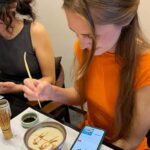
After tea, you move into a calligraphy experience. This is the second hands-on segment, and it’s the one people often remember most because it feels personal.
You’ll get instruction and then participate in the activity. The tone described is fun and calm—people find it relaxing, but also a little challenging at first. That’s normal. Calligraphy has the kind of muscle memory and focus that makes you slow down, pay attention to technique, and stop rushing your way through the day.
One detail I think is especially meaningful: in one group experience, the calligrapher wrote a family member’s name in Chinese characters. It’s a small moment, but it makes the whole thing feel more like an encounter than a performance.
Even if you’re not planning to make anything fancy, treat this as your “I’m here” activity. You’ll walk through ancient streets all day, but calligraphy gives you a tangible souvenir with a story attached.




Guide Quality and Group Size: How It Shapes Your Day
This tour is designed to be private, meaning only your group participates. That matters because Qibao can be confusing to navigate if you don’t know what to look for. A good guide helps you connect what you’re seeing with why it matters.
You may meet different English-speaking guides depending on your departure, and guide names that have shown up in experiences include Jun and Annie. One guide-led description highlights Jun taking photos and sharing temple details. Another highlights Annie teaching a lot about Qibao and pairing the walking with deeper tea and calligraphy context.
So what should you do with that information? Simple: show up with questions. Ask about what the temples mean in local life. Ask why certain streets feel the way they do. And if you’re unsure how to respond to tea or calligraphy instruction, that’s part of the learning curve. You’re not expected to already know.
Group size is also part of the value equation:
- One to four: easier, more flexible car rides (Uber/Didi), more intimate conversation time.
- Five-plus: private transfer helps keep logistics smooth.
If you’re traveling with friends who want both culture and a low-stress schedule, the private format is a real advantage.
Departure Timing: Morning vs Afternoon for a Better Feel
You can choose a morning or afternoon departure. That choice matters in a place like Qibao because lighting, energy, and crowds change throughout the day.
One of the most appreciated angles in similar outings is getting a quieter morning feel, with time to walk and learn without feeling constantly squeezed. If you want that calmer energy, choose the morning slot when you can.
If you prefer a later pace—maybe you’ve had breakfast plans in Shanghai already—go with afternoon. Either way, the experience still keeps a clear structure: town walking first, teahouse second, calligraphy to close, then drop-off back in downtown Shanghai.
Price and Value: Is $100 Per Person Worth It?
At $100 per person, you’re paying for more than entry into a town. You’re paying for:
- a private English-speaking guide,
- transport from your hotel area (Uber/Didi or private transfer depending on group size),
- tea tasting (including snacks),
- and the calligraphy experience segment.
That’s why this doesn’t feel overpriced if you compare it to the cost of cobbling together your own half-day plan. A self-planned trip usually means buying tea separately, figuring out where to do calligraphy, and losing the guiding layer that helps the day make sense.
Also, the tour is scheduled for 5 to 6 hours, which is a practical length. It’s not a full day that drains you for the next day’s travel, and it’s long enough that you don’t feel like you rushed through your “out of Shanghai” moment.
One more value point: it’s been booked fairly far ahead on average (about 71 days). That’s a sign the timing works for people planning a Shanghai schedule. If you’re going during a busy season, it’s smart to lock it in earlier rather than hoping.
What to Bring (and What to Skip) for a Smooth Walking Day
This is an outdoor walking tour, and it runs in all weather conditions, so pack for reality, not ideal forecasts. Dress appropriately for rain or heat, and plan to stay comfortable for the walking segments.
Bring:
- comfortable walking shoes (non-negotiable)
- a light layer for weather swings
- something small for tea time (you’ll likely want a free hand while listening and tasting)
Skip:
- overly precious outfits. Old streets can be a little tricky to walk on, and you’ll enjoy the day more if you don’t worry about every step.
If you’re with kids, note that children must be accompanied by an adult. Most people can participate, so it’s not an endurance challenge, but it’s still walking.
Who This Tour Is Best For
This tour fits best if you want a mix of:
- old-town strolling with context (not a checklist)
- hands-on culture through tea tasting and calligraphy
- a guide who helps you understand what you’re looking at
You’ll especially like it if:
- you’re traveling with someone who enjoys learning but doesn’t want a lecture
- you want to see a different side of Shanghai before you move on
- you’d rather do one well-organized afternoon than several uncertain stops on your own
If you hate structured activities at all (even short ones), the tea and calligraphy pieces may feel like “extra.” But they’re short enough that most people find them relaxing rather than demanding.
Should You Book This Qibao Ancient Town Tour?
If you want a private, guided way to experience Qibao that includes real cultural activities—not just photos—this is a strong choice. The $100 price makes more sense when you factor in the guide, transport, tea tasting, and calligraphy in a single half-day plan.
I’d book it if you care about:
- getting away from crowds with a calmer walking pace (especially with morning departures),
- learning temple and town context as you stroll,
- and leaving with something memorable from tea and calligraphy, not just memories.
Just do one thing to make it work: wear shoes you trust. Old streets reward comfort, and you’ll enjoy every alley and every quiet teahouse moment more.
FAQ
How long is the Private Qibao Ancient Town tour?
The tour lasts about 5 to 6 hours.
Will I be picked up from my hotel in Shanghai?
Yes. Pickup is offered from your downtown Shanghai hotel, and you’ll also be dropped back to the downtown Shanghai area after the tour.
How do you travel to Qibao from Shanghai?
You travel using local Uber or private transport. For groups of one to four, the tour uses local Uber/Didi, and for groups of five or more, you get a private transfer.
Is tea tasting included?
Yes. Tea tasting is included, and it’s done at a local teahouse along with snacks.
What about the calligraphy experience—does that come with the tour?
Yes. The calligraphy experience is included, and you participate in the activity after the tea tasting.
Is this tour truly private?
Yes. It’s a private tour/activity, and only your group participates.
Can I cancel and get a full refund?
Yes. You can cancel up to 24 hours in advance for a full refund.