REVIEW · MARRAKESH
Marrakech: Cultural Bicycle Tour with Pastry and Tea
Book on GetYourGuide →Operated by Pikala bikes · Bookable on GetYourGuide
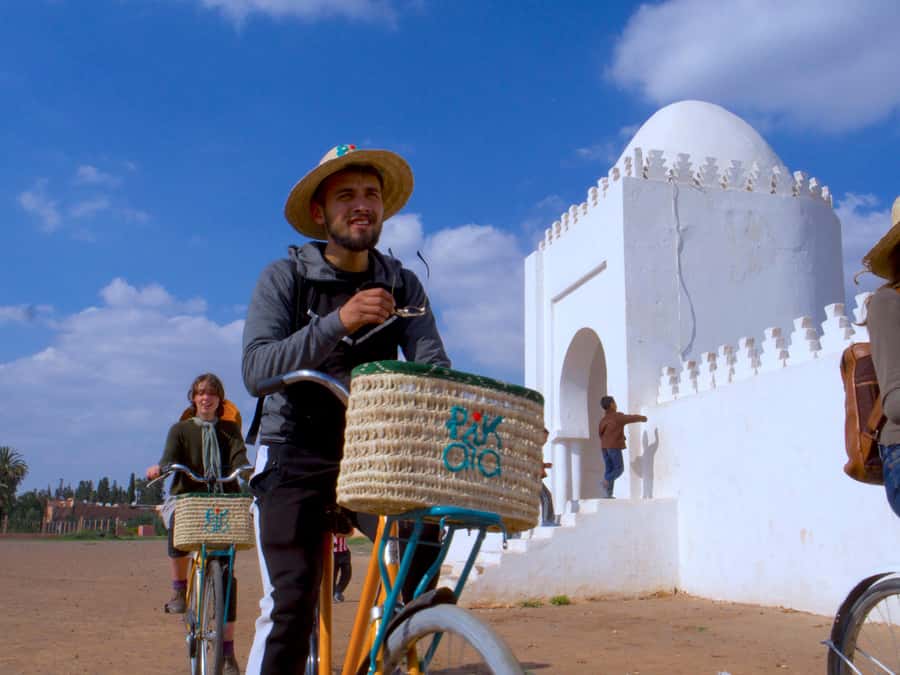
A bike ride can be the fastest way to understand Marrakech. This cultural bicycle tour goes beyond the usual lanes, mixing old medina stops with a ride through Gueliz and Hivernage. I especially liked the hands-on moments—watching bread bake and seeing zellige craft up close—and my main caution is that the first stretch of riding takes real road sense with scooters, carts, and pedestrians.
I also like that the tour is built around everyday culture, not just monuments. You’ll meet guides who share what life looks like on the ground, and I saw names like Ayoub, Rabab, Hamid, Khalil, Yassir, Simon, Sayid, and Yassine mentioned across recent bookings. Still, if you’re not comfortable cycling in tight spaces, this won’t feel relaxed at the start.
Plan for casual clothes, and keep long skirts/dresses out of the way. Marrakech traffic is organized chaos, so you’ll want a calm brain and a flexible attitude for crossings, especially during the medina part.
In This Review
- Key things that make this tour worth your time
- Why a 3-hour bike tour beats the usual Marrakech routine
- Meeting at Pikala Bikes: what you need to know before you roll
- Zawiya of Sidi Bel Abbas: a short stop that sets the tone
- Local bakery stop: bread from the clay oven to your hands
- Zellige tiles workshop: the geometry behind the color
- Royal Palace gardens: Dar El-Makhzen from public space
- Hammam tradition: a public bathhouse visit with social context
- Place des Ferblantiers break: where craft meets city sound
- Multiple “hidden” stops that aren’t about hiding
- مشور البراني and Koutoubia Mosque: landmark rhythm without the crowds
- Church of the Holy Martyrs and the ride to Pikala Café
- The modern Marrakech contrast: Gueliz and Hivernage on two wheels
- Price and value: what $34 buys you in real terms
- Who should book this bike tour (and who should skip it)
- Final call: should you book this Marrakech cultural bicycle tour?
Key things that make this tour worth your time
- Bread culture in a clay oven: You’ll see how Moroccan bread is baked and learn why it matters day to day.
- Zellige tiles with a real artisan angle: You can watch how the iconic Moroccan mosaics are made.
- Royal Palace gardens viewing: You get architecture context from the outside, with history tied to the monarchy.
- Hammam tradition, explained: A public bathhouse visit frames hammams as social life, not just hygiene.
- Old medina to modern boulevards: You compare narrow alleys with wider streets in Gueliz and Hivernage.
Why a 3-hour bike tour beats the usual Marrakech routine
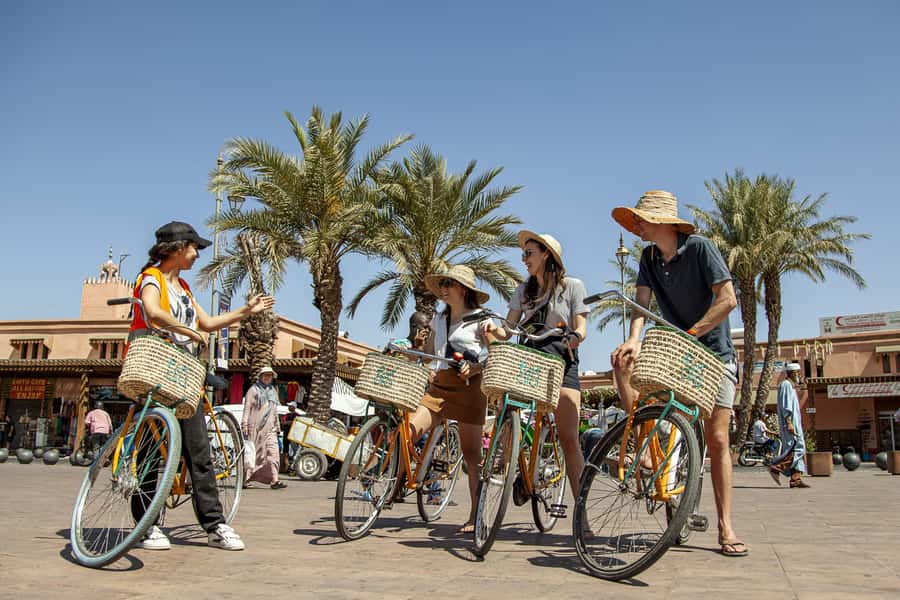
Marrakech can feel like a blur of stops: a photo here, a souvenir there, then you’re back in traffic again. This tour flips the rhythm. You move under your own power, with a local guide pacing the day so you can actually connect the dots between craft, daily routines, faith, and city growth.
You’re not only learning history from a distance. You’re watching work happen—bread in a communal oven, tiles with hands-on craft details, and hammam rituals as part of how people gather and care for each other. That’s the kind of context that makes the city stick in your memory after you leave.
You also get a built-in contrast. The ride switches from the walled-in feel of the medina to broader modern streets, with trendy cafés and luxury hotels in the background. It’s a simple idea, but it helps you understand Marrakech as a living place, not a museum set.
You can also read our reviews of more tours and experiences in Marrakesh.



Meeting at Pikala Bikes: what you need to know before you roll
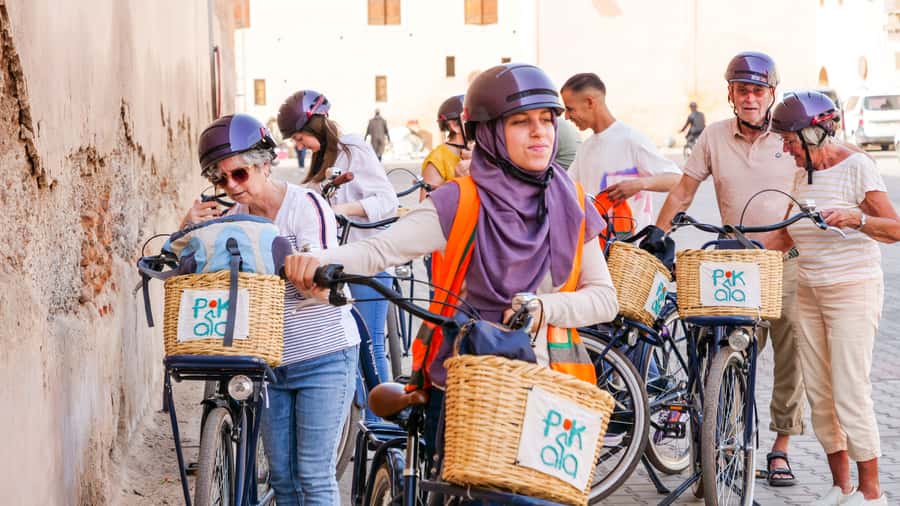
The tour starts at Pikala Bikes. From there, the route gradually builds from short stops into longer stretches of cycling through mixed traffic.
Here’s the practical point: you’ll be sharing space with mopeds, donkeys, carts, and plenty of pedestrians. Several bookings stress that the first hour is the hardest for nerves, not because the cycling is fast, but because the medina streets demand constant attention. You’ll likely feel like you’re threading a needle until your brain learns the flow.
The good news is that the guides work as a true group leader. Some recent guides (like Sayid) were noted for making sure everyone crosses together safely and for checking back to confirm nobody falls behind. You’ll also get breaks for water and snacks, so this isn’t an all-out endurance ride.
Zawiya of Sidi Bel Abbas: a short stop that sets the tone
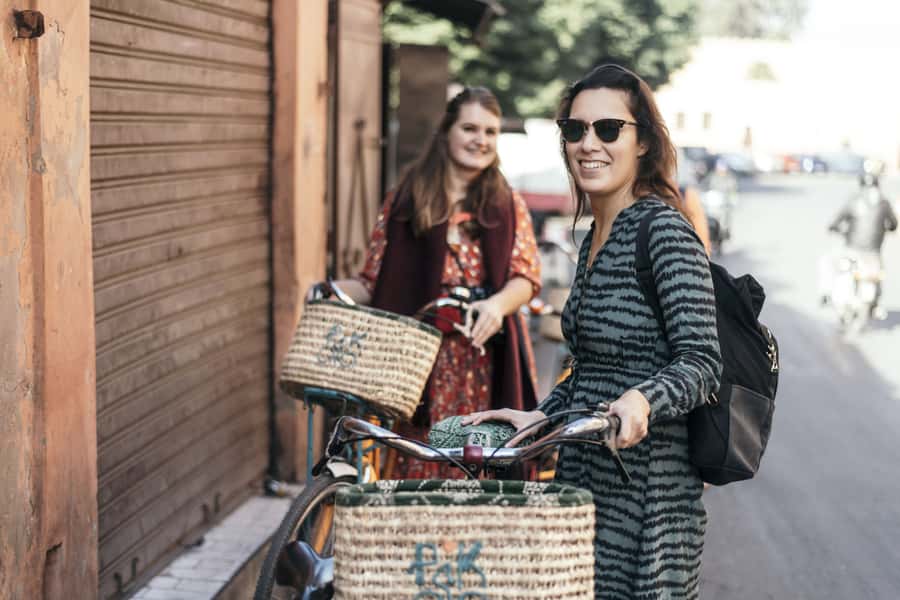
Early on, you’ll ride to the Zawiya of Sidi Bel Abbas for about 15 minutes. This is one of those moments where a quick visit can make the rest of the day feel more grounded.
Expect a photo stop plus a bit of sightseeing context—enough to understand what you’re looking at without turning it into a lecture. You’ll also get a sense of how spiritual sites sit inside everyday neighborhoods, not off in a separate bubble.
Drawback: because the stop is brief, go with a curious mindset. If you want deep, slow museum-style explanations, you might find this part too short. But as a kickoff, it works.
Local bakery stop: bread from the clay oven to your hands
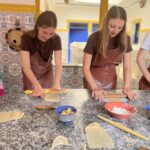
One of the most memorable parts is the traditional bakery visit (around 10 minutes). You’ll step into a working space where bread is baked in a clay oven, then taste fresh Moroccan bread.
This is more than a food break. Bread in Morocco isn’t a side dish—it’s a daily staple and a cultural anchor. Watching bread baked in a clay oven helps you understand why texture, heat, and timing matter, especially when bread shows up at meals every day.
What to expect on the ground:
- You’ll likely smell the heat and yeast right away.
- You’ll see how the process is woven into the rhythm of the shop.
- You’ll connect the taste to what your guide explains about everyday life.
Consideration: even though the stop is short, it can be busy inside a bakery. Keep your belongings compact, and follow the guide’s lead on where to stand so you’re not in the way.
Zellige tiles workshop: the geometry behind the color
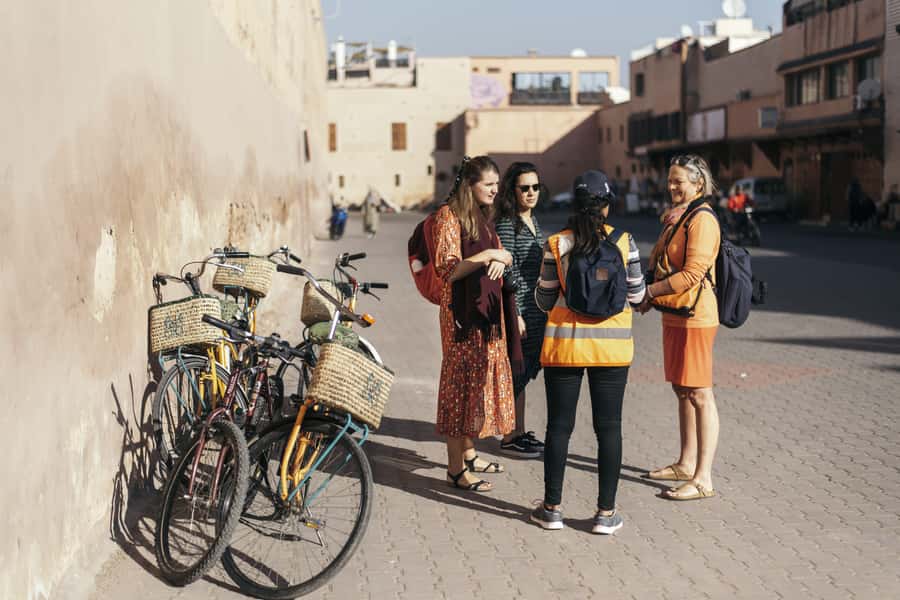
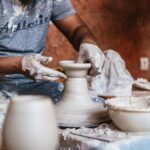
Next, you’ll hit the zellige tile experience. The tour is designed to take you to an artisan setting where you can see firsthand how the mosaic tiles are made.
Zellige is famous for a reason: it’s not just decoration. It’s pattern logic, craft repetition, and tiny precision. When you see how the pieces come together (and learn the background behind why these designs became such a strong Moroccan tradition), you’ll start noticing tilework everywhere in Marrakech.
Why this stop is high value: it trains your eye. After a hands-on or in-process view, you’ll be able to spot how motifs and craftsmanship show up in mosques, palaces, and older buildings.
Possible drawback: if you’re expecting a long workshop where you personally make a tile, you might be surprised by how much is observation and explanation. Still, the payoff is seeing craft up close instead of relying on shop displays.



Royal Palace gardens: Dar El-Makhzen from public space
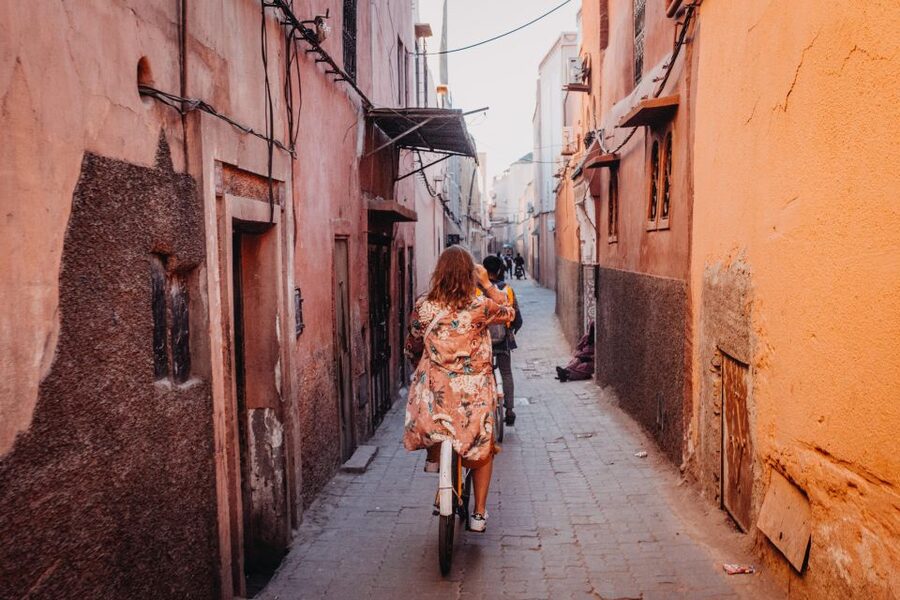
You’ll ride by the Royal Palace (Dar El-Makhzen) area and admire the surrounding public gardens. This viewing happens from the outside—so you’re not touring royal interiors—but you’ll learn what makes this area historically significant and how it ties to the monarchy.
This stop works well for bike tours because it’s scenic without requiring long indoor time. You’ll get architecture context while you’re still moving through the city’s layers.
What you’ll gain:
- A clearer mental map of where power and heritage sit in the city plan
- A better sense of why some buildings feel untouchable and how the gardens connect public life to royal space
Consideration: if you’re the type who only likes ticketed palace interiors, this won’t be that. But it’s a smart way to understand the palace setting without losing the flow of cycling.
Hammam tradition: a public bathhouse visit with social context
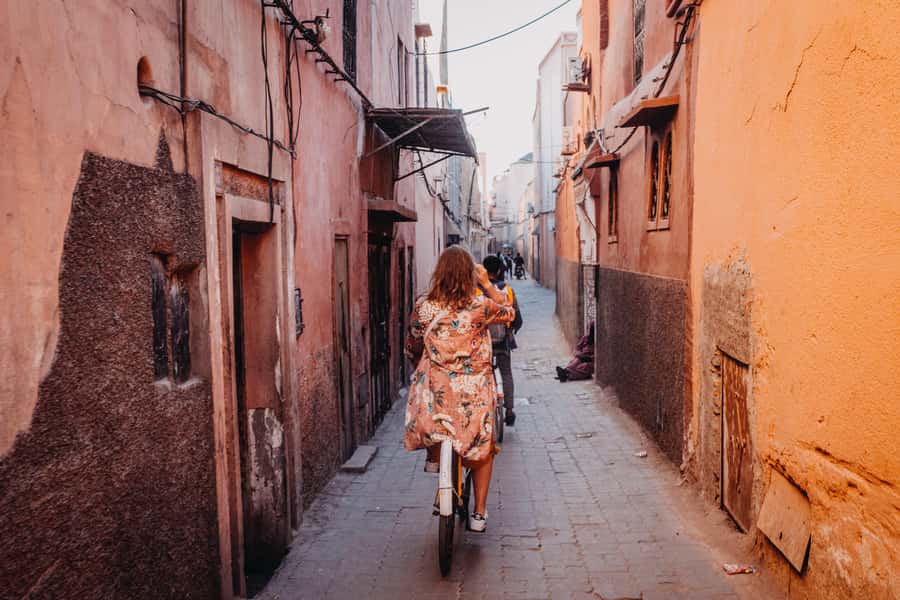
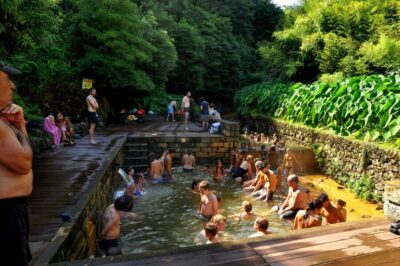
A big cultural highlight is the hammam visit. You’ll uncover rituals, traditions, and the social role of hammams in Moroccan daily life.
This is one of those stops where your guide’s framing matters. Hammams aren’t only about cleanliness. They’re also about routine, community, and how people take care of themselves and each other. When someone explains what’s typical—how people use the space, how the tradition functions—the whole idea becomes easier to respect and understand.
Practical note: the tour reminds you to wear casual clothes and be careful with long dresses or skirts. For a bathhouse stop, follow the guide’s cues about what’s appropriate and how to move comfortably.
Possible drawback: if you’re uncomfortable with public social spaces or you don’t like being in semi-informal settings, this might feel intense. Keep an open mind and remember the purpose here is cultural understanding, not spectacle.
Place des Ferblantiers break: where craft meets city sound
You’ll stop around Place des Ferblantiers for about 20 minutes. This is a break time with photos, free time, and scenic riding views on the way.
The name hints at craft—ferblantier relates to metalwork—so the feel of the square is often about work culture and street life rather than polished tourism. In a bike tour, breaks like this matter because you recharge while still staying in the neighborhood’s pace.
What you can do with the break:
- Take photos without rushing
- Drink water, reset your posture, and get ready for the next alley stretch
- Ask your guide questions while you’re not on the move
One consideration: squares can be lively, so pay attention to bike parking and where your group gathers.
Multiple “hidden” stops that aren’t about hiding
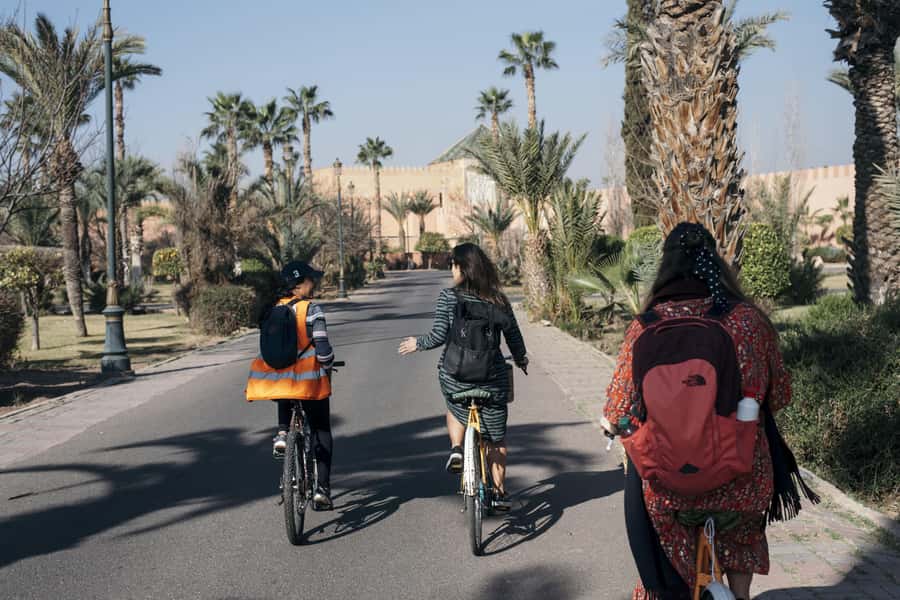
Between named landmarks, you’ll have several short rides to smaller local corners—some are quick photo stops, some are just passing by for sightseeing, each only about 10–15 minutes.
These interludes are useful. They stop you from burning out on the big sights and they help you notice how daily life works between the headline places. They also teach your eye to recognize craft styles, local patterns of building, and how neighborhoods organize themselves.
If you’re looking for a tour that feels like a slideshow of monuments, this structure might not be your favorite. But if you want a city introduction with texture, these short pauses make a big difference.
مشور البراني and Koutoubia Mosque: landmark rhythm without the crowds
At مشور البراني, you’ll get another break-and-photo style stop (around 15 minutes). Then you’ll continue to the Koutoubia Mosque, with a sightseeing pass of about 10 minutes.
This pairing gives you two different ways to read Marrakech:
- One stop gives you a sense of the site-and-city relationship.
- The other gives you a classic skyline anchor point.
Koutoubia is the kind of place you’ll recognize instantly once you see it, even if you haven’t studied it before. A short stop like this fits a bike tour because you get recognition and context without losing time.
Consideration: with brief stops, the best results come from letting your guide steer your attention. If you wander off, you’ll miss the explanations that make these moments meaningful.
Church of the Holy Martyrs and the ride to Pikala Café
Later, you’ll pass the Church of the Holy Martyrs for about 10 minutes, with a photo stop and scenic views. In a city that’s mostly understood through Islamic heritage, a stop like this can help you remember Marrakech is also a place where different communities live side by side.
Then the tour ends back at Pikala Café, where you’ll have coffee or tea plus local snacks for about 20 minutes.
This final café time is more than a reward. It’s where you connect the day’s details into a bigger picture: bread, tilework, hammam culture, palace gardens, and the city’s modern face. It’s also a good chance to ask what you should do next in Marrakech with your new mental map.
Practical: bring a light layer. Some people mention the sun can shift, and you’ll be riding outdoors for most of the 3 hours.
The modern Marrakech contrast: Gueliz and Hivernage on two wheels
A key part of the route is cycling through modern Marrakech—specifically Gueliz and Hivernage. You’ll see wide boulevards, trendy cafés, and luxury hotels. It’s intentionally different from the medina.
Why this matters: it stops Marrakech from feeling frozen in time. You’ll see where locals spend time, where newer commerce sits, and how the city keeps evolving while the older medina remains a living center.
This is also when you often relax a bit more. After the tight medina streets, wider roads can feel calmer and more predictable. Still, stay alert; traffic behavior doesn’t become perfectly Dutch just because the boulevard is wider.
Price and value: what $34 buys you in real terms
At $34 per person for about 3 hours, this tour is priced like a cultural activity, not a big-ticket attraction. The value comes from three places.
First, you’re getting multiple cultural stops: bread, zellige tile craft, palace gardens viewing, hammam tradition, and landmark passes. That’s a lot of content for a single morning or afternoon.
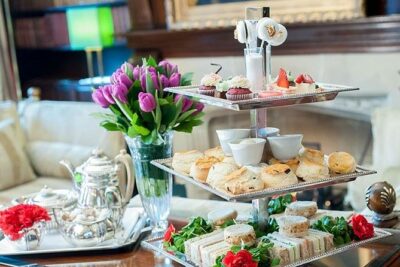
Second, snacks and drinks are included. You’ll have water and fruits, plus juices and Moroccan pastries at the cultural café. Sunscreen is included too, which sounds small until you’re actually riding under Marrakech sun.
Third, there’s a social purpose behind the experience. The program trains Moroccan youth as guides, and you can feel that commitment in how the tour is presented: it’s not just about showing you sights; it’s about sharing daily life and local perspective.
Who should book this bike tour (and who should skip it)
Book it if:
- You like hands-on cultural moments, like seeing bread baked and watching zellige craft.
- You enjoy a guide-led route that mixes neighborhoods rather than only sticking to the biggest monuments.
- You want a short way to get your bearings fast and feel what Marrakech is like at street level.
Consider skipping or choosing a different style if:
- You’re not a confident cyclist. The early medina segment is traffic-heavy and requires road awareness.
- You hate cycling in narrow alleys and around pedestrians. Some riders describe it as a bit hairy, especially at first.
- You’re expecting slow, quiet sightseeing. This tour keeps moving, with short stops that feed the ride rather than replace it.
A useful tip: pick the time of day when you feel best. One booking noted that a specific season (Ramadan) changed how crazy the streets felt. Even if the core traffic pattern stays, your comfort can improve depending on timing.
Final call: should you book this Marrakech cultural bicycle tour?
If you want Marrakech in motion—bread smells, craft details, hammam culture, and a real comparison between old and new—this is an easy yes at $34 for 3 hours. The biggest factor is your comfort cycling through mixed street life, especially during the first hour in the medina.
If you’re road-aware and ready for a bit of adventure, you’ll leave with a sharper sense of how people live, work, and celebrate. If you’re not, you’ll likely feel stressed rather than impressed.