REVIEW · MARRAKESH
Marrakech: Pottery Workshop with Moroccan Tea
Book on GetYourGuide →Operated by Atelier Lamsaty · Bookable on GetYourGuide
Marrakech slows down on a pottery wheel. This hands-on workshop at Atelier Lamsaty is built around wheel throwing and Moroccan tea, taught with patient, step-by-step help from the team (including Asma). I especially like that you get real coaching on technique instead of just watching someone else make things. The only real drawback: it’s about 15 minutes from the Medina, so getting there by taxi can add a noticeable chunk to your day.
What makes this class feel worth the money is the pace and the structure. You start with a short demo, then you get time to make your own cup, box, tagine-style piece, or go for wheel throwing. You also leave with your creations wrapped up to take home—perfect if you want a souvenir that isn’t mass-produced.
One more thing to plan: if you want your pieces fired, you’ll need extra drying time and (ideally) a longer stay in Marrakech. And since food isn’t included, you may want to eat before or after your two-hour session.
In This Review
- Key things to know before you go
- Atelier Lamsaty: a family-run workshop you can actually learn in
- How the 2-hour class is paced (and why it works)
- What you’ll make: cups, boxes, tagines, and wheel-thrown pieces
- Wheel throwing basics you can use right away
- The Moroccan tea break: more than a nice pause
- Drying, decoration, and optional firing: plan for time
- Getting there from the Medina: quick taxi, longer planning
- Price and value: $45 for a real skill session
- Who should book this pottery class (and who might reconsider)
- Final verdict: should you book the Marrakech pottery workshop with Moroccan tea?
- FAQ
- FAQ
- How long is the Marrakech pottery workshop?
- What’s included in the $45 per person price?
- What techniques will I learn during the workshop?
- Can I make specific items like a cup or a tagine-style piece?
- Where exactly do I meet for the workshop?
- How far is the workshop from the Medina and city center?
- Do I need to bring anything?
- Is Moroccan tea included?
- Can they fire my pottery so I can decorate it later?
- Is the workshop suitable for young children or pets?
Key things to know before you go

- Real wheel time: You try working the potter’s wheel, even if it’s a first go.
- Guided hand-building options: You can shape pieces like a cup, box, or tagine-style item.
- A proper tea break: A warm glass of mint tea resets you mid-class.
- You take your pottery home: Pieces are wrapped for travel.
- Drying matters: If you’re considering firing, you’ll need extra drying before it goes into the kiln.
Atelier Lamsaty: a family-run workshop you can actually learn in
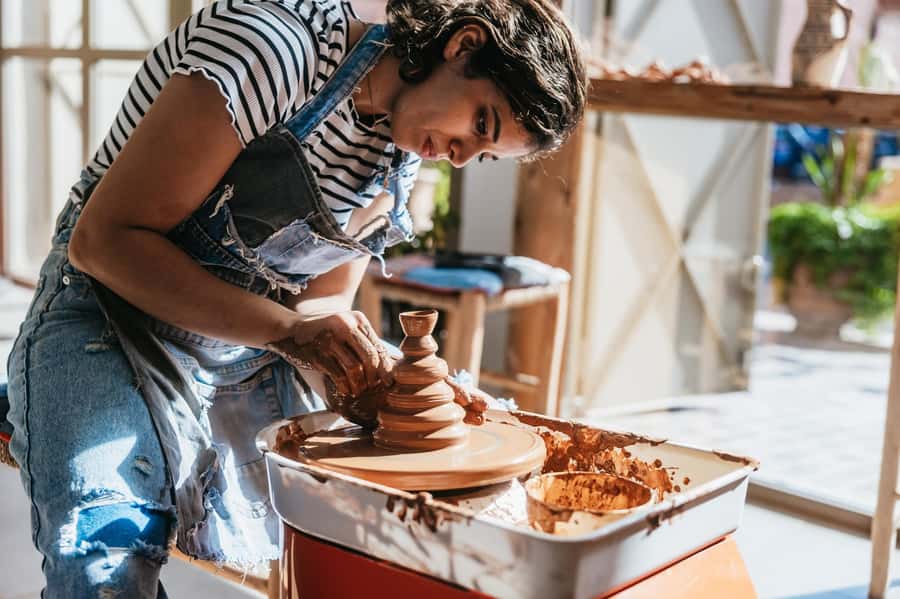
Atelier Lamsaty is the kind of studio that feels made for slow, focused making. It’s not a showroom where you stand back and wait. You’ll be working at your own station with tools and materials provided, and you get staff support when you need it.
A few details matter here. The space is clean and organized, and it’s comfortable enough that the class doesn’t feel like a chore. Some sessions also have music playing, which helps keep the mood relaxed while your hands learn new motions. And yes, this is a pottery studio connected to broader crafts, so the vibe is creative and practical, not staged.
In the more helpful parts of the experience, you’ll notice how much they adjust to beginners. When you’re learning how to shape clay, small corrections make a big difference, and that’s what you’re paying for: hands-on guidance rather than a one-time lecture.
You can also read our reviews of more tours and experiences in Marrakesh.



How the 2-hour class is paced (and why it works)
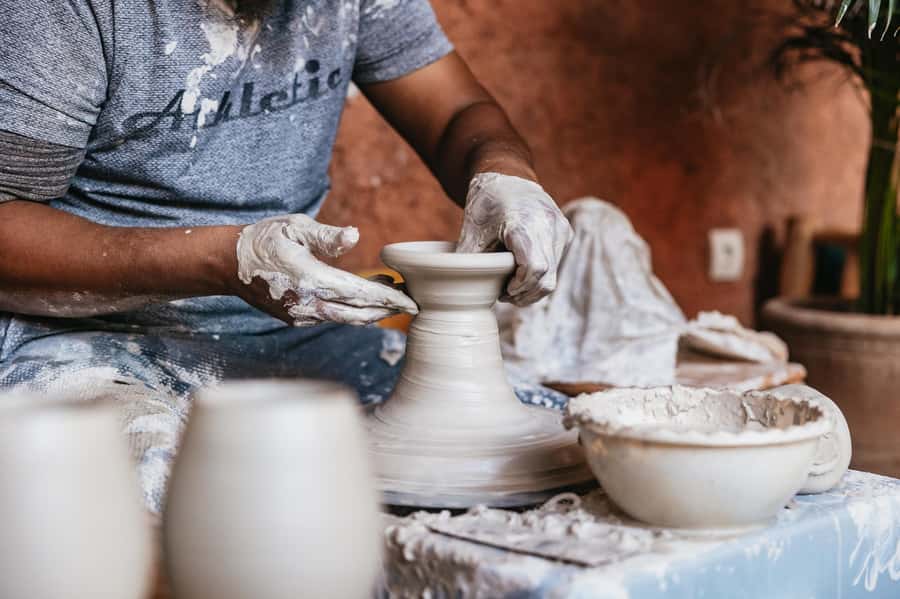
The workshop runs about two hours and follows a simple flow. It starts with a roughly 15-minute demonstration. That demo isn’t long, so you don’t waste time before getting to the fun part: your hands in the clay.
After the demo, the session shifts into practice. This is where you learn two different shaping techniques (and you’ll also get wheel practice). The teaching style is practical: you’re shown what to do, then you do it, then someone steps in with tips so you can correct quickly.
Halfway through, you get a friendly break with Moroccan tea. This isn’t just a drink stop. It helps you reset your grip, stretch your shoulders, and come back to the clay with better focus. In a skill class, that matters more than people think.
Near the end, you’ll wrap up what you’ve made so you can take it home safely. The time is long enough to feel productive, but short enough that you’re not trapped in a workshop all day.
What you’ll make: cups, boxes, tagines, and wheel-thrown pieces

You don’t have to invent something from scratch. The workshop gives you a menu of options. You can craft a cup, a box, a tagine-shaped piece, or try wheel throwing depending on what you want to focus on.
That flexibility is one of the smartest parts for Marrakech. Not everyone comes wanting the same challenge. If you want gentle, creative shaping, you can lean into modeling or sculpture. If you’re curious about the mechanics and want the thrill of making something centered on a spinning wheel, you can focus on wheel throwing.
Also, your choices are supported by the staff. They guide you through how to shape and refine the clay, and they’re used to beginners. If you’re worried that you’ll mess up, the better framing is this: the class is designed so you can learn the basics and still leave with something you’re happy to pack.
Wheel throwing basics you can use right away
Wheel throwing is where most people feel both excited and immediately humbled. That’s normal. The good news is that the workshop gives you the chance to experience the wheel without needing prior training.
Here are the parts you’ll want to listen for during your wheel session:
- Hand positioning: The staff will help you keep your hands stable so the clay doesn’t wobble.
- Starting shape: Getting the clay formed early makes everything after easier.
- Pressure control: Too much force makes messy edges; too little can stop shaping.
- Consistency: The wheel is your timer. Slow down your thinking and keep your motions steady.
One practical tip: if you want to maximize your wheel time, stay mentally present during the demo and ask questions when you can. Wheel throwing is one of those skills where one correction can save an entire attempt.
There’s also a time reality to note. Some people find the wheel experience is shorter than they hoped, because the class has to cover multiple techniques in two hours. Still, even brief wheel time is a worthwhile bucket-list moment, especially if you’ve never tried it.
The Moroccan tea break: more than a nice pause
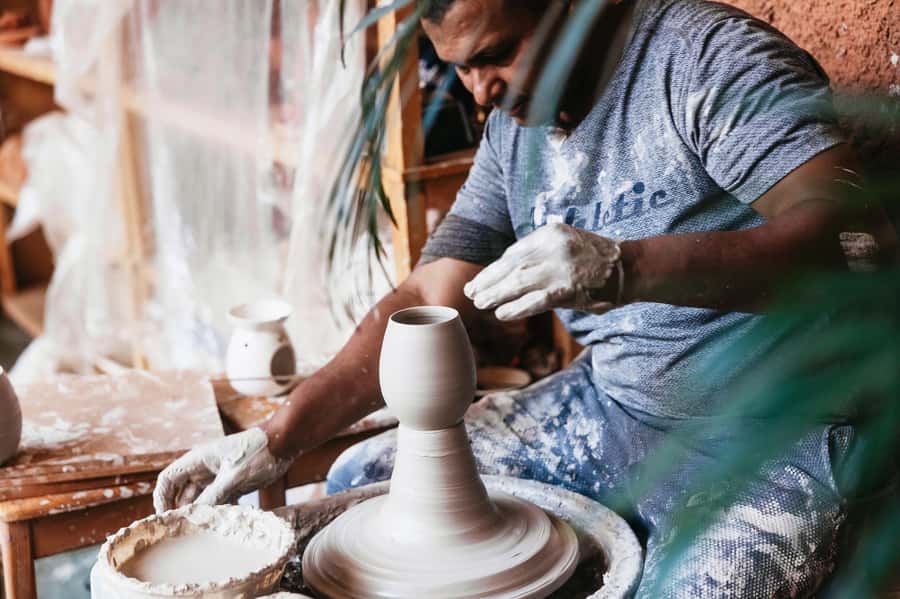
The warm Moroccan tea is included, and it’s a real part of the class rhythm. In Marrakech, tea culture is a comfort ritual, not just a beverage. In this workshop, it functions like a reset button in the middle of making something.
You’ll sip your tea while the earlier steps dry a bit and your brain catches up. It also gives you a moment to watch what your neighbors are shaping and compare results. That social, quiet break helps the workshop feel less like a test.
If you’re sensitive to schedule, this is another reason the two-hour format works. You won’t feel rushed to drink, and you also won’t feel stuck waiting.






Drying, decoration, and optional firing: plan for time
What you take home is only half the story. Clay needs time to finish drying so it’s stable for the next step.
At the end of class, your pieces are wrapped and taken home. You’ll let them dry for a day, then you can decorate them with paint of your choice. That gives you flexibility after your visit and turns the souvenir into an activity you can stretch over your trip.
If you want firing, you can request an option that involves biscuit firing before you decorate. For this, you need extra timing. The important practical note is that a piece containing water inside can explode in the kiln, which is why there’s a required drying period of six days before firing.
So how do you decide? If you’re staying in Marrakech for at least a week after the workshop, the firing option can be worth asking about. If you’re leaving soon, stick to the take-home drying and decorating plan.
Getting there from the Medina: quick taxi, longer planning
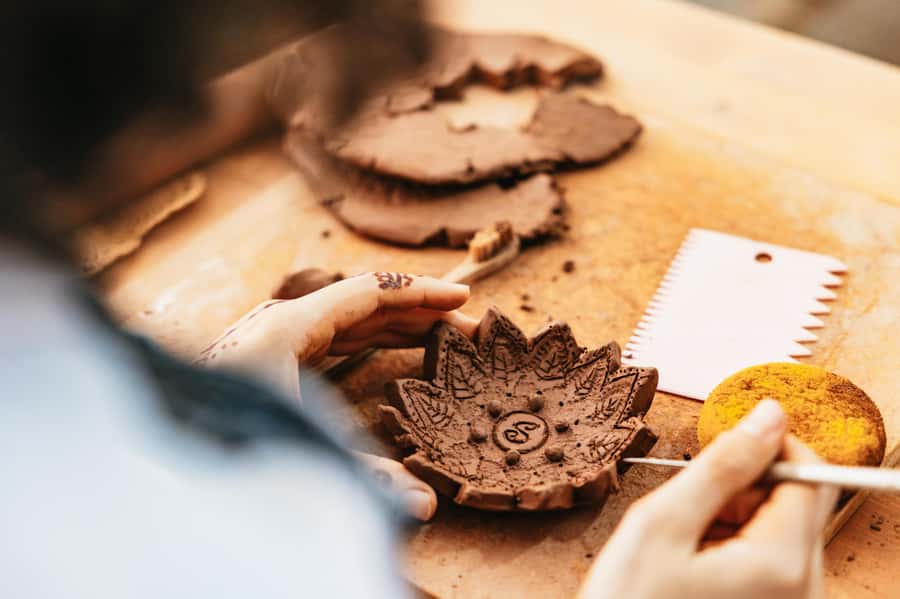
Location matters here. The studio is about 10 minutes from the city center by taxi and around 15 minutes from the Medina.
That means it’s not far, but it’s also not a “walk out the door” kind of stop. If you’re staying in the medina, you’ll want to budget time for a taxi pickup and a return ride.
A simple strategy: book or arrange your taxi timing so you’re not rushing out right at the end of the class. People in the studio area can help coordinate a return if things get delayed, but the smoother path is planning ahead.
Also note: the meeting point is in front of the AHMA Construction building, and you’ll meet at Workshop Lamsaty Handmade Course Pottery And Embroidery. If you’re using a taxi, show the exact studio name and address area.
Price and value: $45 for a real skill session
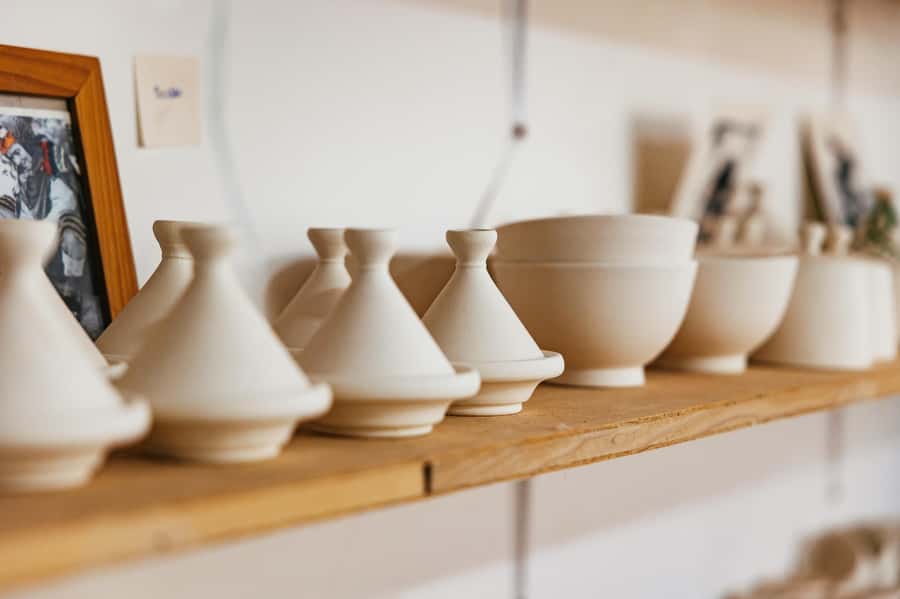
At $45 per person for about two hours, this workshop doesn’t feel overpriced when you look at what’s included: the instructor, tools and materials, Moroccan tea, and the chance to learn multiple techniques. You’re not paying just for a finished product. You’re paying for coaching and time in a real studio setup.
To judge value, I look at three things:
- Do you actually work with the medium? Here, yes: you shape clay and you get wheel time.
- Do you have support? Yes, the staff helps when you’re stuck and explains techniques in English, French, and Arabic.
- Do you leave with something you made? Yes, your pieces are wrapped to take home.
There can be extra costs if you want to buy items from their on-site shop. Some people also report that bringing money helps, because you might see tools, ceramics, or related crafts you’ll want to take home.
Still, even with that possibility, the core class price covers the experience. It’s a strong deal for couples, solo travelers, and friends looking for a calm break from Marrakech traffic and chaos.
Who should book this pottery class (and who might reconsider)
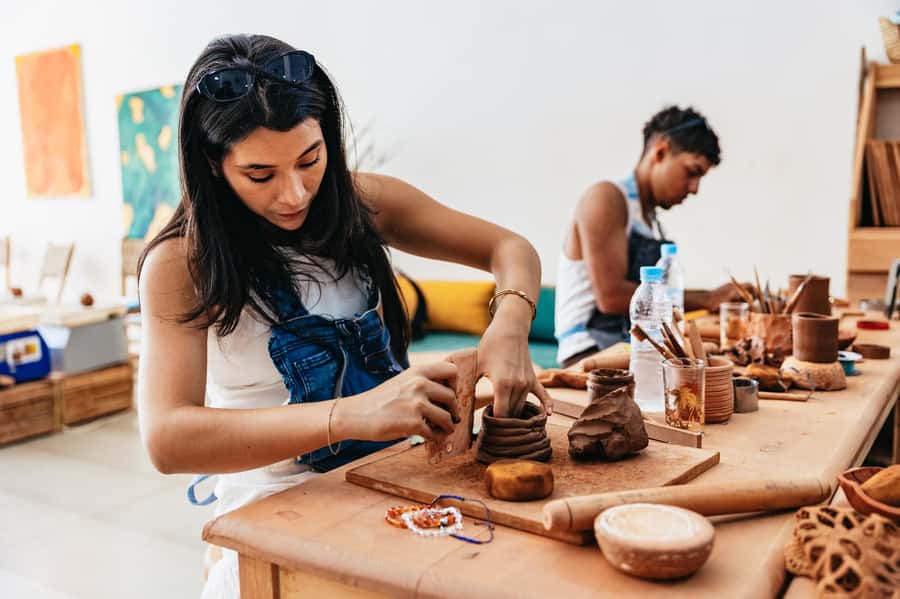
This workshop fits well if you want:
- a hands-on Marrakech activity that doesn’t rely on speed or crowds
- a beginner-friendly class with real instruction
- a souvenir that’s shaped by you, not ordered off a shelf
- a relaxing break with Moroccan tea and calm studio time
It’s also a great date option. Wheel throwing and hand-shaping make natural conversation, and both people can participate in the same activity.
There are two groups to consider carefully. First, it’s not suitable for children under 90 cm. Second, if you’re the type who expects a full-day experience or a longer wheel session, the two-hour structure may feel brief. Wheel throwing is fun, but it’s one part of a broader class.
Final verdict: should you book the Marrakech pottery workshop with Moroccan tea?
If you’re looking for a Marrakech experience that’s practical, calming, and genuinely creative, I think you should book this. The combination of instruction + hands-on making + tea is the right formula for a memorable morning or afternoon, even if you’re a complete beginner.
I’d skip it only if you’re tight on time and can’t manage the trip out to the studio, or if you want something more like a long private session with extended kiln work. Otherwise, this is exactly the kind of class that turns a trip into something you keep, not just something you watch.
FAQ
FAQ
How long is the Marrakech pottery workshop?
The class lasts about 2 hours.
What’s included in the $45 per person price?
The price includes the pottery workshop, an instructor, tools and materials, Wi-fi, and Moroccan tea.
What techniques will I learn during the workshop?
You’ll learn two different shaping techniques, plus you’ll try working with the pottery wheel.
Can I make specific items like a cup or a tagine-style piece?
Yes. You can make items such as a cup, a box, a tagine-style piece, or focus on wheel throwing.
Where exactly do I meet for the workshop?
Meet at Atelier Lamsaty Pottery and Embroidery. The workshop is located in front of the AHMA Construction building.
How far is the workshop from the Medina and city center?
It’s about 15 minutes from the Medina and around 10 minutes from the city center by taxi.
Do I need to bring anything?
Bring a credit card and/or cash.
Is Moroccan tea included?
Yes. Moroccan tea is included, with a break partway through the class.
Can they fire my pottery so I can decorate it later?
If you’re staying in Marrakech for at least one week after the workshop, they can fire your pieces with a biscuit firing before you decorate. Pieces need at least a six-day drying period before firing.
Is the workshop suitable for young children or pets?
It’s not suitable for children under 90 cm. Pets are not allowed.