REVIEW · FUKUOKA
Ceramics and Green Tea Tour of Nagasaki and Saga Prefecture
Book on Viator →Operated by Shannon Lefebvre · Bookable on Viator
Kyushu turns a pottery obsession into a tea lesson. This private outing strings together Arita-area porcelain landmarks and Saga green tea stops, so you see how craft and food culture grow up side by side across the countryside.
I especially like the way the schedule gives real time at the makers’ side of the story, not just photo points. You also get a clear focus on both worlds: porcelain history and shopping in Arita/Hasami, then Ureshino tea culture through places like Chaoshiru and the site tied to Japan’s first Ureshino tea.
One thing to consider: the day needs good weather. If conditions are poor, the tour can be changed or refunded, and rain can make countryside walking feel longer.
In This Review
- Key highlights you’ll feel in the day
- Why ceramics and green tea fit together in Nagasaki and Saga
- The private pacing from Fukuoka, and why it matters
- Ceramics route: from Okawachiyama to Hasami-style kiln country
- Stop 1: Okawachiyama Village in Imari (Saga)
- Stop 2: Izumiyama Quarry (Arita)
- Stop 3: Tozan Shrine’s porcelain designs
- Stop 4: The Kyushu Ceramic Museum
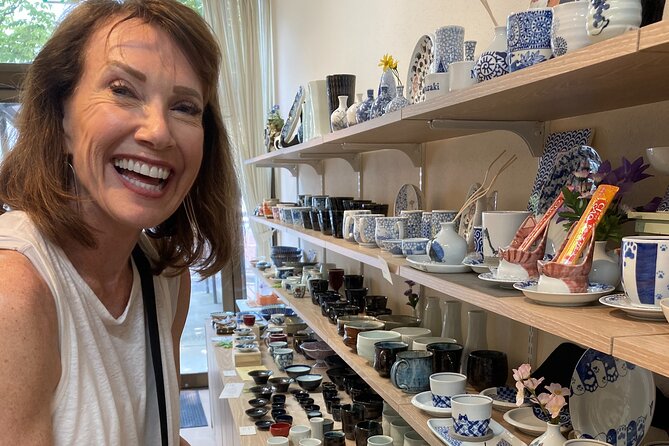
- Stop 5: Arita Sera (shopping with guidance)
- Stop 6: Arita Porcelain Park
- Stop 7: Ceramics Park (Yakimono Kouen) in Hasami
- Green tea route: Ureshino’s origins, tasting, and tea people
- Stop 8: Ureshino Tea Exchange Museum, Chaoshiru
- Stop 9: Tokunaga Seicha (guided by a specialty tea sommelier)
- Stop 10: Site of Japan’s first Ureshino tea (giant tree)
- Lunch, snacks, and the comfort stuff you’ll actually notice
- Price and value: when a group deal actually helps
- Who should book this tour (and who might not)
- Practical tips for shopping pottery and keeping tea lessons useful
- Should you book this Ceramics and Green Tea Tour from Fukuoka?
- FAQ
- What’s the duration of the tour?
- How much travel time is included during the day?
- Is pickup available from Fukuoka?
- Is this a private tour?
- What’s included in the price?
- Are attraction admission fees included?
- What happens if the weather is bad?
- Can I get a refund or change my booking after canceling?
Key highlights you’ll feel in the day
- Private group up to 3 means you can move at the pace your group likes
- Arita’s firing history is explained through key stops like Izumiyama Quarry
- Porcelain-themed shrine design shows how ceramics became part of local everyday tradition
- Ureshino tea focus includes Chaoshiru and Tokunaga Seicha’s guidance
- 3 hours of drive time still leaves lots of sightseeing moments between stops
- Lunch plus snacks and bottled water keeps you comfortable during a long day
Why ceramics and green tea fit together in Nagasaki and Saga
If you like Japanese culture but you also like your days to have a theme, this tour does a nice job. You’re not bouncing around randomly. The route is built around two signature Kyushu passions: ceramics (especially porcelain from the Arita/Imari–Hasami region) and green tea in Saga’s Ureshino area.
What makes it work is the pairing. Porcelain production and tea culture both depend on patient technique, careful sourcing, and respect for tradition. Even if you don’t buy a single item, the day teaches you how craft and food habits are tied to place—mountains, kilns, and local history.
The pace is also built for people who don’t want to sprint. It runs about 10 to 11 hours, with roughly 3 hours spent traveling between stops. That leaves room for scenery, commentary, and actually looking at what you paid for.
The private pacing from Fukuoka, and why it matters
This is a private tour for your group only (up to 3 people). That’s a big deal on a day with multiple small stops, because you can slow down if you see a piece you like, or speed up if you’d rather keep moving.
You’ll depart from the Fukuoka area with pickup offered. The tour also includes mobile ticket use, WiFi onboard, an air-conditioned vehicle, and bottled water (sparkling and still). Those small comforts matter because the day is long, and you’ll be switching between indoor museum time and outdoors countryside viewpoints.
Value-wise, it’s priced per group (not per person). For couples and small friend groups, that can make the total cost feel more reasonable than tours that charge separately for each stop.
Ceramics route: from Okawachiyama to Hasami-style kiln country
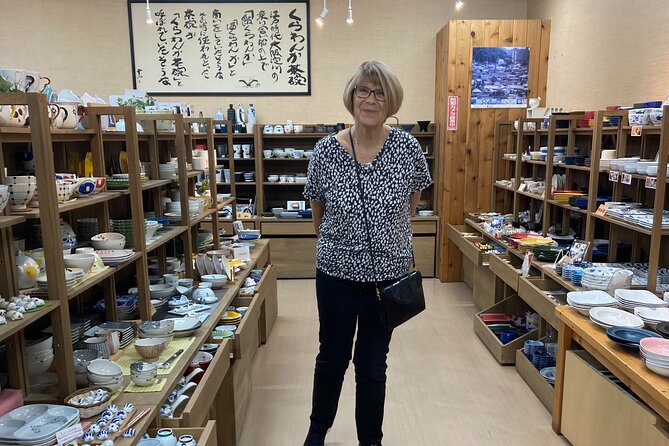
The ceramics half of the day focuses on the Arita–Imari–Hasami world—places tied to porcelain discovery, production, and the places where buying and learning happen in the same breath.
Stop 1: Okawachiyama Village in Imari (Saga)
You start in the mountains near Imari Town at Okawachiyama Village. This is framed as a pottery village that many people overlook, which is exactly what you want when you’re chasing authentic craft culture rather than just famous landmarks.
What to expect: more of a village atmosphere than a showroom vibe. You’ll get to see pottery territory as a lived-in landscape where ceramics aren’t just an attraction—they’re part of local identity.
Why it’s worth it: early in the day, it sets context for everything else you’ll see about porcelain styles and how local geography shapes craft.
Stop 2: Izumiyama Quarry (Arita)
Then you get history with a clear “how it started” story. About 400 years ago (1616), a group of Korean potters led by Yi Sam Pyeong discovered porcelain stone here in Arita. The tour points out that this group became the first in Japan to successfully fire porcelain.
What to expect: a short stop, but one that gives a strong foundation for understanding why Arita became such a key center.
Possible drawback: since it’s only about 20 minutes, don’t expect deep museum-style interpretation. Treat it like the day’s historical ignition point.
Stop 3: Tozan Shrine’s porcelain designs
Next comes a cultural surprise: Tozan Shrine, where the shrine is decorated with porcelain designs. The idea is that you can “see” ceramics in the sacred space itself.
Why it’s cool: it’s a reminder that ceramics weren’t stuck in workshops. They became part of what locals display, celebrate, and use in traditional settings.
Stop 4: The Kyushu Ceramic Museum
If you want a bridge from story to understanding, the Kyushu Ceramic Museum is that bridge. You get about 45 minutes, and the tour notes that there’s enough English support to provide background you can actually use.
What to look for: patterns of regional pottery styles and how the local craft story fits into Kyushu’s bigger ceramic identity.
Tip for your visit: if you’re planning to buy later in the day, pay attention to what the museum explains about types and characteristics. Even quick note-taking can help you shop with more confidence at Arita Sera and the parks afterward.
Stop 5: Arita Sera (shopping with guidance)
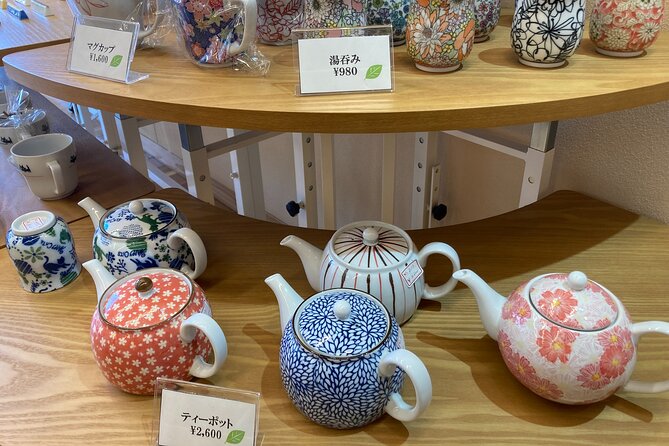
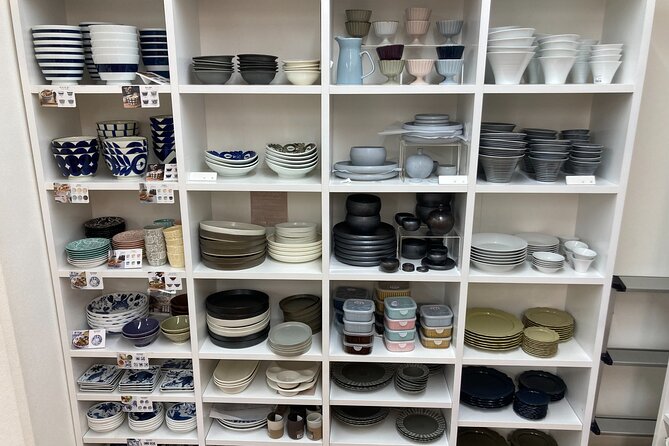
Arita Sera is where the tour shifts toward real purchasing decisions. The description emphasizes a practical problem: finding the right porcelain shop depends on matching the customer with the right kind of ceramic.
What that means for you: this stop isn’t just about browsing. It’s set up to help you connect what you like (style, use, likely quality) with the shop experience.
Value angle: the best shopping in Japan isn’t just buying—it’s buying something that fits how you’ll actually use or display it.
Stop 6: Arita Porcelain Park
From Arita Porcelain Park, you get a sense of scale. The park borders Nagasaki so closely that the prefecture line feels blurry—an easy reminder that cultural regions don’t stop at administrative borders.
What to expect: time to walk around the porcelain-focused park area and see the “public face” of the craft.
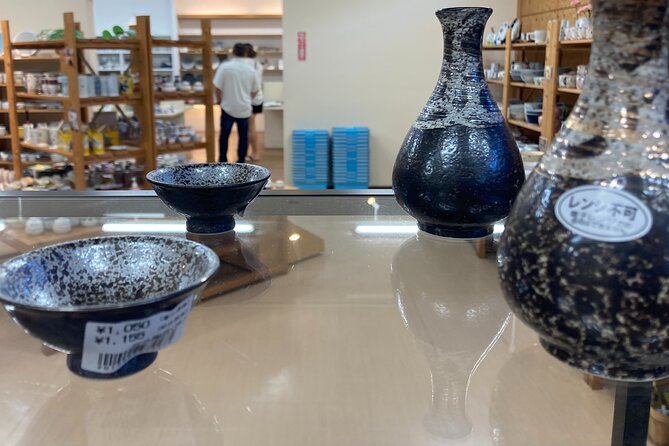
How to pace it: plan to move slowly here. This kind of place rewards looking at details because porcelain styles can look similar until you compare finishes, shapes, and decoration approaches.
Stop 7: Ceramics Park (Yakimono Kouen) in Hasami
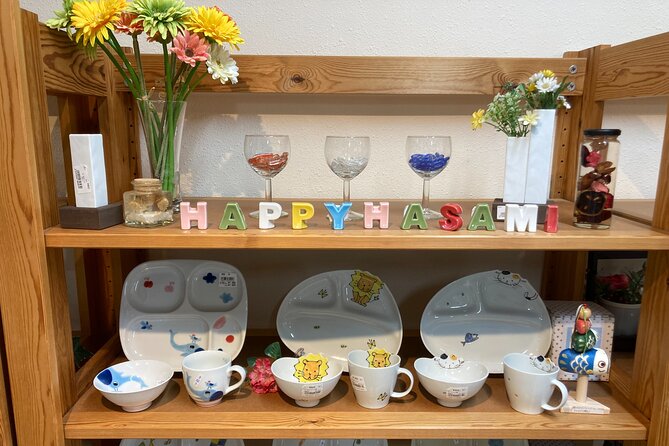
Hasami enters the scene here. The tour notes Hasami’s size (around 15,000 citizens) and its setting among mountains and rolling greenery. You’ll spend about 30 minutes at Ceramics Park (Yakimono Kouen).
Why this stop works: it broadens your view beyond just Arita. You see that the ceramic world of Kyushu isn’t a single town—it’s a network of production and place identity.
Potential consideration: because it’s a shorter stop, you’ll want to decide quickly whether you want more time for browsing or more time for viewing.
Green tea route: Ureshino’s origins, tasting, and tea people
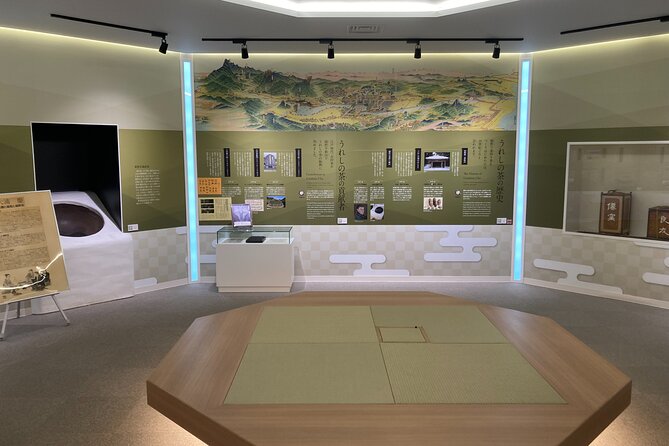
After ceramics, the day pivots to tea with the Ureshino theme. If you like food culture and you also like learning names, methods, and places, this section gives you the “who and where” behind the drink.
Stop 8: Ureshino Tea Exchange Museum, Chaoshiru
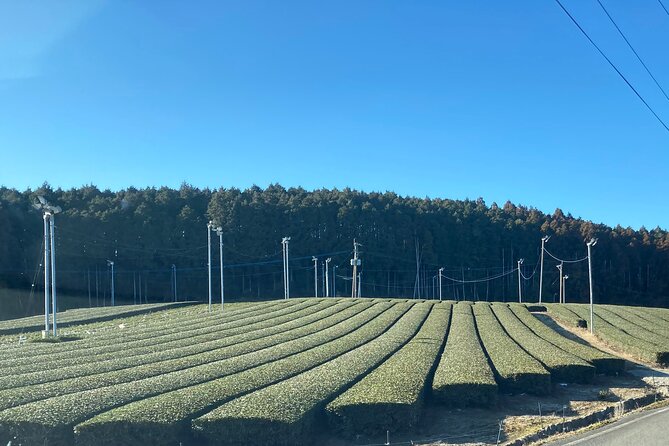
Chaoshiru is framed as a green tea learning stop, with the tour describing tea’s well-known health reputation and cognitive/digestive benefits. More importantly, it’s there to explain how green tea became so widely loved as a health drink.
What to expect: a museum-style experience with green tea context, and time to connect the plant to the people and production traditions around it.
Best mindset: don’t treat it like a “tea propaganda” stop. Treat it like your chance to learn the basics you can use when you taste later.
Stop 9: Tokunaga Seicha (guided by a specialty tea sommelier)
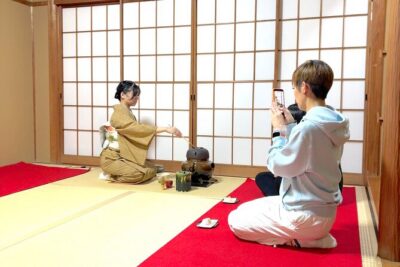
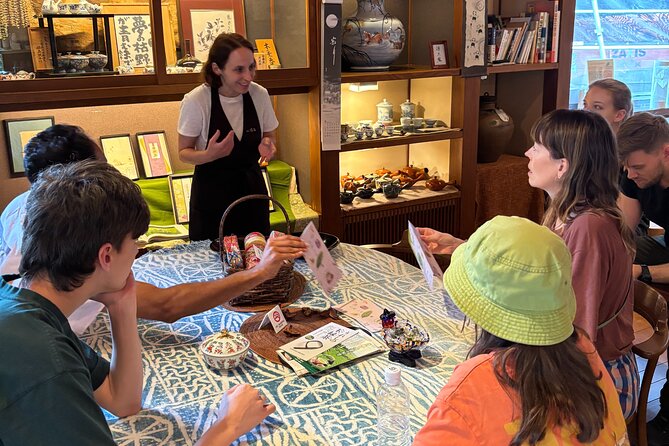
This is one of the most personal stops. You meet the wife of the owner of a specialty tea producer from the region, and she’s described as a tea sommelier originally from Europe.
What makes it special: you’re not just hearing about tea—you’re getting guided explanation from someone professionally trained in the craft of evaluation and pairing.
What to ask yourself during the talk: think about what you usually notice in tea—smell, bitterness, finish, or freshness. If she mentions how to assess quality, that’s the kind of framework you’ll carry home.
Stop 10: Site of Japan’s first Ureshino tea (giant tree)
The day finishes at a rural historical site tied to the origins of Ureshino tea: a giant tree of Ureshino.
Why it matters: it gives you a physical anchor for the origin story—tea history that isn’t just a paragraph, but tied to a place.
Timing note: it’s a short stop (around 15 minutes). It’s meant as a final stop that helps you connect everything you learned about tea culture back to one “beginning” point.
Lunch, snacks, and the comfort stuff you’ll actually notice
This tour includes lunch, and you can expect a sit-down meal or something on the go, with options noted as Japanese and Western. That matters because it keeps you from having to gamble on a random roadside option during a long day.
You’ll also get snacks carried on board and at certain picnic-like spots, plus bottled water (sparkling and still). Add WiFi on board, and it’s much easier to stay organized—especially if you’re planning purchases you’ll need to compare later.
The vehicle is air-conditioned, which you’ll appreciate if you’re traveling in warmer months. It’s a long day, so comfort stops being a luxury pretty quickly.
Price and value: when a group deal actually helps
At $716.68 per group (up to 3), the price is obviously not “cheap.” But it’s built like a private day with multiple included elements: private transportation, parking fees, lunch, snacks, bottled water, WiFi, and time at several stops where many admissions are free.
Here’s the practical way to look at value:
- If you’re traveling as a couple, you’re effectively splitting the cost of a private vehicle and guided itinerary across two people.
- Several stops have free admission, so you’re not paying extra at each location.
- The Kyushu Ceramic Museum has admission included, and the tea-related stops are set into the route in a way that’s hard to replicate without local planning.
If you only want one or two stops, this may feel like overkill. If you want a full themed day—ceramics plus tea—this becomes a strong use of time.
Who should book this tour (and who might not)
This is a good fit for you if you:
- Love ceramics and want context (history plus practical shopping)
- Also care about tea culture, not just sightseeing
- Prefer a private group day with pickup and guided commentary
- Want a route that mixes museums, shrines, origin stories, and buying time
It might not fit as well if you:
- Want a super relaxed day with only one shopping stop
- Are the kind of visitor who hates any schedule at all (this one has a clear sequence)
- Are traveling during periods where weather is unreliable, since it requires good weather
Practical tips for shopping pottery and keeping tea lessons useful
Ceramics buying can be easier if you show up prepared. You can do a lot just by planning your “use case” before you go.
- Decide what you want to buy: daily-use tableware, display pieces, or something small to pack safely.
- In the museum time, jot down what you see about types and qualities. That helps your brain match details to what you’ll later see in shops.
- Wear comfortable shoes for park areas and village-style walking.
- Bring a way to handle purchases you’ll likely bring home. (The tour includes plenty of time to shop, so plan for that reality.)
For tea, approach it like a tasting homework assignment. When someone like the sommelier guides you through tea characteristics, it’s not just for the moment. You’ll remember it more if you focus on one or two things—smell and finish are great anchors.
Should you book this Ceramics and Green Tea Tour from Fukuoka?
I’d book it if you want a themed private day that connects craft history to present-day culture. The ceramics portion gives you origin stories (like the porcelain discovery tied to 1616 and Yi Sam Pyeong), learning time at a ceramic museum with English support, and multiple chances to look and shop in Arita and Hasami areas. Then you finish with Ureshino tea culture at Chaoshiru, a guided tea stop with Tokunaga Seicha, and an origin site tied to Japan’s first Ureshino tea.
Skip it if your goal is mostly famous-city highlights, or if you can’t handle a schedule that runs 10 to 11 hours. Also keep an eye on weather plans, because the tour depends on good conditions.
If you’re the kind of traveler who enjoys understanding what you buy, not just collecting photos, this is a solid day that earns its price.
FAQ
What’s the duration of the tour?
The tour runs about 10 to 11 hours total.
How much travel time is included during the day?
About 3 hours of the total time is traveling between attractions, leaving more time for stops and sightseeing.
Is pickup available from Fukuoka?
Yes, pickup is offered.
Is this a private tour?
Yes. It’s a private tour/activity, and only your group participates.
What’s included in the price?
Lunch, snacks, bottled water (sparkling and still), an air-conditioned vehicle, WiFi onboard, private transportation, and parking fees are included.
Are attraction admission fees included?
Most stops list free admission, and Kyushu Ceramic Museum admission is included.
What happens if the weather is bad?
This experience requires good weather. If it’s canceled due to poor weather, you’ll be offered a different date or a full refund.
Can I get a refund or change my booking after canceling?
This experience is non-refundable and cannot be changed for any reason. If you cancel or request an amendment, the amount paid is not refunded.