REVIEW · HIROSHIMA
An Amazing set of Cultural experience: Kimono, Tea Ceremony and Calligraphy
Book on Viator →Operated by Okeiko Japan · Bookable on Viator
Kimono, tea, and art in one tidy hour. I love the way this combines kimono dressing with real, lived-in Japanese ceremony at Tokuji’s Zen setting on Miyajima. I also like how the tea is practical—you actually make matcha instead of just watching. One possible drawback: the whole experience is short (about 1.5 hours), so it’s more “taste and skill” than “master the arts.”
You’ll meet at Okeiko Japan Miyajima, about a 5-minute walk from the Miyajima ferry port, heading toward Tokujuji. Start times run in both the morning and afternoon, and the group stays small (max 8), which means more help during kimono fitting, calligraphy, and photos. Bring a little patience for changing outfits and photo stops, because they’re part of the fun.
In This Review
- Key things to look for
- Miyajima and Tokujuji: why this feels more real than a generic class
- Getting dressed: kimono fitting that actually helps you look right
- The temple visit: how it fits the culture lesson
- Matcha tea ceremony: watch, then make it yourself
- Calligraphy practice: kanji, names, and take-home results
- Photos, pacing, and the small-group feel (max 8)
- Price and value: what $132.14 gets you on Miyajima
- When this works best (and when it doesn’t)
- Should you book this kimono, tea, and calligraphy session?
- FAQ
- What is included in the Kimono, Tea Ceremony, and Calligraphy experience?
- How long does the experience take?
- Where do I meet for the activity?
- Are there different start times?
- What is the group size?
- What is the minimum age to participate?
- Is the ticket admission free for the activity?
Key things to look for
- Tokujuji Zen temple setting on Miyajima that turns a class into a mini cultural outing
- Kimono try-on with lots of personal guidance so you don’t feel lost
- Hands-on matcha whisking right after watching the ceremony style
- Calligraphy practice using kanji and names (yes, you’ll write something yourself)
- Photo support throughout, so you leave with more than memories in your head
Miyajima and Tokujuji: why this feels more real than a generic class
Miyajima has a way of making even simple plans feel special. You’re not just in a studio; you’re on an island tied to temples, quiet gardens, and routines that locals still respect. This matters because kimono, tea, and calligraphy aren’t meant to be “props.” Here, they’re tied to a place where those arts make sense.
The experience centers on a historic Zen temple visit at Tokuji (Tokujuji). That connection helps you slow down just a bit. You learn what you’re doing, but you also see the atmosphere—so the ceremony doesn’t feel like a performance staged for tourists. You’re also walking the route from the ferry area toward the temple area, which keeps the day from feeling like a single indoor activity.
If you’re visiting Hiroshima and you’ve already seen the big memorial sites, this is a good palate reset. It gives you quiet attention on beauty and craft, not only history you have to process.
You can also read our reviews of more tours and experiences in Hiroshima.
Getting dressed: kimono fitting that actually helps you look right
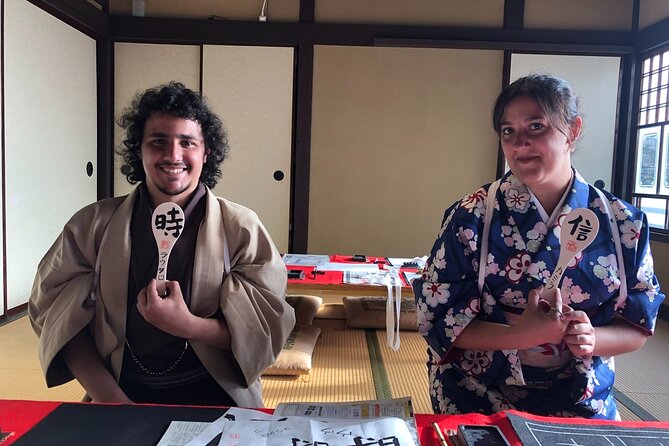
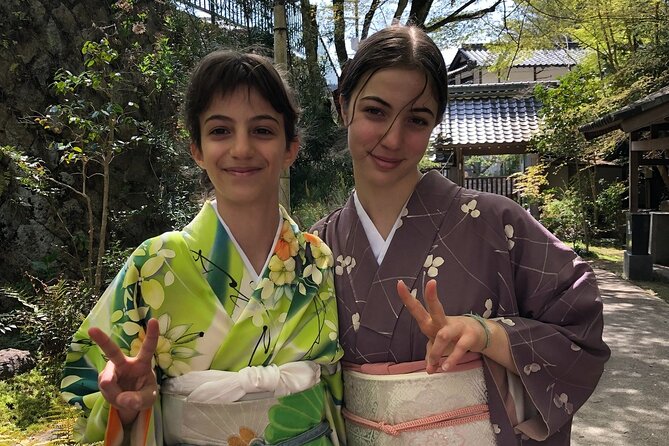
The experience starts at Okeiko Japan Miyajima, and the first big moment is kimono try-on. This is not a quick “pick a robe and go.” You’re guided through the process of choosing kimono and accessories in your size, with help that covers the details that make the outfit look right.
What I’d call the best part here is how personal it feels even with a small group. You get help selecting the kimono and accessories, and then someone helps you into the outfit. That reduces the usual stress: if you’ve never worn a kimono before, you know there’s a learning curve fast. Here, you’re not left figuring it out alone.
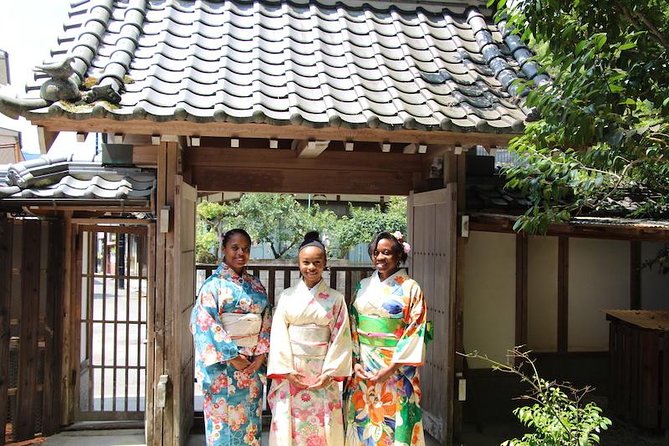
You’ll also get photos. That detail is bigger than it sounds. Kimono can be awkward to pose in if you don’t know where to stand and how to move. The staff take care of photo timing during the experience, so you’re not spending your limited time constantly asking for help.
One thing to consider: plan to spend some of your hour-and-a-half mostly in “ready mode.” If you’re the type who likes to move fast and keep your schedule ultra tight, this portion will slow you down on purpose. But it’s part of the value—kimono is only half the experience. The other half is being able to enjoy it and remember it.
The temple visit: how it fits the culture lesson
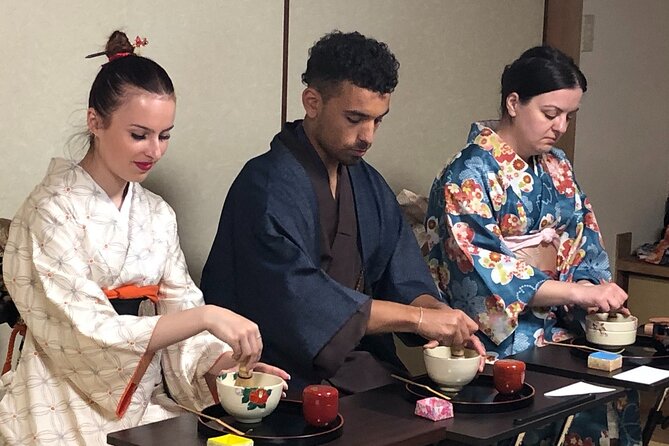
After you’re dressed, you’re taken into the temple setting. That’s where the experience gains depth. Tea and calligraphy are often taught as techniques; here, the temple setting makes them feel like practices you’re temporarily borrowing, not just crafts you complete.
The walking route is also part of the experience. Meeting is close to the Miyajima ferry port, so you’re not doing a complicated transfer. You just step into Miyajima’s rhythm and end up near the Tokujuji area. If you’re already on Miyajima, this reduces friction and lets you stay present.
A drawback to note: depending on start time and weather, you might feel some heat outside while changing and moving between photo spots. One of the most helpful ways to enjoy this is to show up ready for timing—expect to be in motion right after you meet.
Matcha tea ceremony: watch, then make it yourself
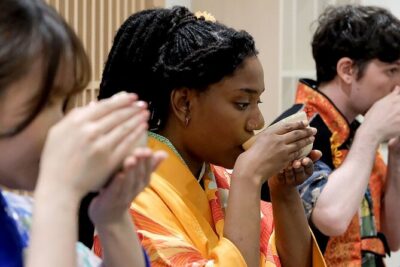
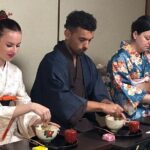
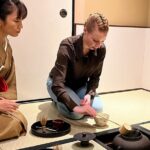
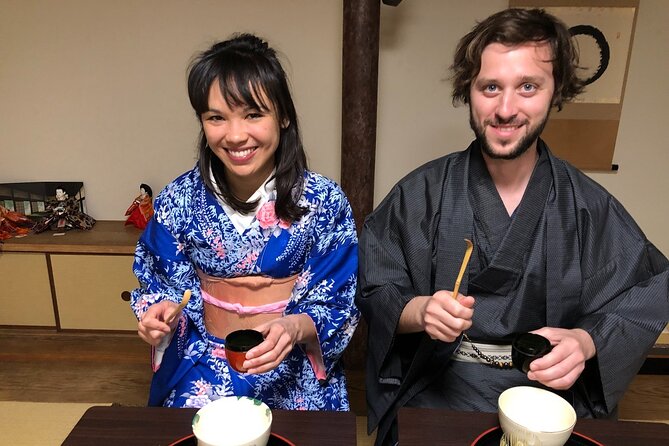
The tea ceremony is built around two phases: watching the performance first, then doing it yourself. That “see it, then try it” format is exactly how you learn something hands-on without getting overwhelmed.
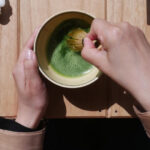
You’ll whisk your own matcha. That’s a key point for me because it turns the ceremony from a talk into a skill. Whisking is one of those small actions where technique and attention matter more than you expect. You’re also likely to learn a few “little intricacies” of how the tea is handled—things you wouldn’t pick up from a video alone.
The tea bowls can be especially beautiful. One account notes that the tea bowls were by local artisans. Even if you don’t know ceramics, you can still feel the difference when something looks and feels intentional in your hands.
Also: the tone is both serious and relaxed. You learn manners and movements, but you’re not treated like you’re under a classroom spotlight. That balance is what makes it feel enjoyable, not stiff.
If you’re hoping for a full tea-ceremony deep training, you may want more time. But for 1.5 hours, this does a strong job of giving you enough understanding to appreciate what you see later in Japan.
Calligraphy practice: kanji, names, and take-home results
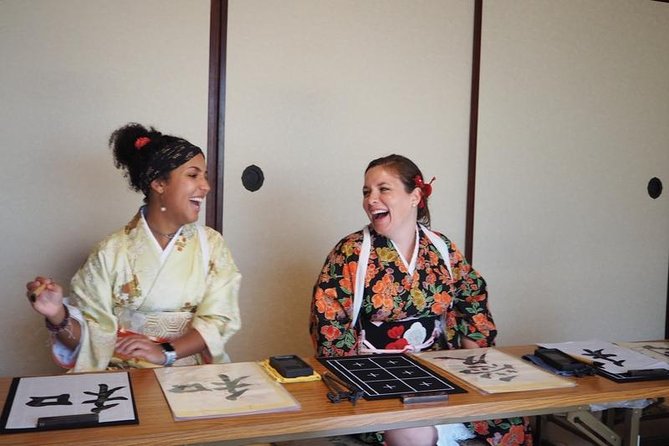
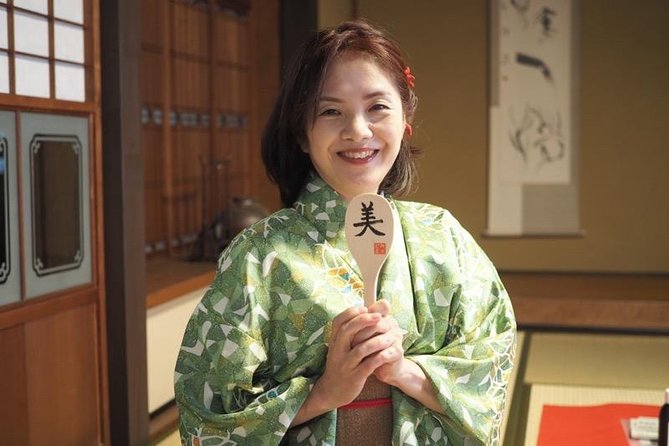
Then comes calligraphy. You’ll practice writing—using kanji and also your own name. That last part matters because it turns calligraphy into something personal. Instead of copying generic samples, you leave with evidence that you participated.
In practice, calligraphy looks easy until you try it. Your strokes need control, and your hand might disagree with your brain. That’s why I like that the lesson includes guidance while you’re working. You’re not just handed a brush; you’re encouraged through what to do.
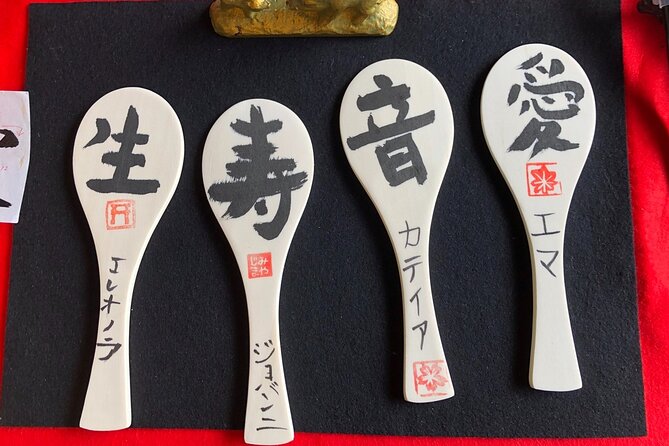
You may also create a piece that becomes a souvenir. One example mentions writing on wooden spoons, then having what you made wrapped nicely to take home. Even if your final take-home item looks slightly different day to day, the intention is the same: you should leave with something you actually made.
Tip for your expectations: this is learning-by-doing, not a test. You should expect imperfect strokes, but meaningful progress. The goal is appreciation and personal connection, not artistic mastery in 90 minutes.

Photos, pacing, and the small-group feel (max 8)
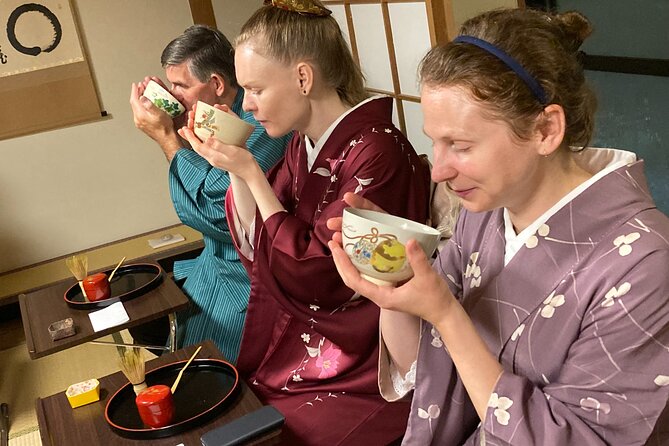
Small groups change the whole vibe. With a maximum of 8 people, you’re more likely to get real attention during kimono dressing, tea preparation, and calligraphy guidance. It also means the staff can help troubleshoot common issues—like outfit fit and how to hold things during the ceremony—without rushing you.
The photo support is a standout practical benefit. More than one person mentioned that photos happened throughout the experience, not only at the end. That’s good planning. It means you can enjoy the ceremony and writing without treating photography like a separate chore.
There’s also a calm hospitality angle. People describe a warm, welcoming atmosphere and staff who are experienced and kind. One theme shows up repeatedly: help is offered, but you’re not overwhelmed by instructions.
One consideration: because the day includes photos and outfit changes, it’s not the best fit if you only want the “purest” version of the arts. If you’re chasing total silence and no documentation, this may feel a bit too photo-friendly. Still, if you want your kimono moment to look like you actually belong in it, this format helps.
Price and value: what $132.14 gets you on Miyajima
At $132.14 per person, this isn’t a budget activity. But you’re paying for more than sitting through a cultural talk.
Here’s what’s bundled in a short window:
- Kimono try-on with guidance choosing and dressing in your size
- Tea ceremony experience, including whisking your own matcha
- Calligraphy practice with strokes guided and your name included
- Temple setting on Miyajima (Tokujuji area) tied to the cultural theme
- Photo taking throughout so you get real results, not just phone snaps
When you price those pieces separately, kimono + tea + calligraphy + a guided photos plan usually adds up quickly. The small group size also matters. If you’ve done DIY kimono rentals before, you know the “I’m wearing this” part is easy. The “I know what I’m doing and how to move” part is what costs time and effort. This experience supplies that support.
It’s also scheduled with morning and afternoon start times, which makes it easier to fit into your Hiroshima/Miyajima day planning. If you’re balancing ferry times, temple visits, and meals, flexible start times are real value.
One note on duration: it’s listed around 1 hour 30 minutes (approx.), but another detail shows a longer window for the activity segment. Either way, you should plan for about 1.5 hours minimum, and be ready for a slightly longer stay if photos and tea steps take their full time.
When this works best (and when it doesn’t)
This is a great match for:
- First-time visitors to Miyajima who want a compact cultural experience
- People who want hands-on practice (matcha whisking and calligraphy)
- Anyone who likes photos and wants the kimono moment handled for them
- Groups or mixed comfort levels—one account notes even men in the group enjoyed it, which suggests it’s not only for the “girly dress-up” crowd
It might be less ideal if:
- You want a long, slow training session (this is short)
- You dislike photo-taking elements and prefer minimal documentation
- You’re only interested in one art form and don’t care about the full package
Also, there’s a minimum age of 6, and most people can participate. If you’re traveling with kids, you’re still in a structure that keeps the focus moving.
Should you book this kimono, tea, and calligraphy session?
Yes, I’d book it if you want a high-value cultural block that’s practical, guided, and genuinely fun. The biggest reasons are simple: you learn by doing (matcha and calligraphy), you get real help with kimono, and you leave with a temple experience that fits Miyajima’s atmosphere.
One more practical reason: you can cancel for a full refund if you change plans at least 24 hours ahead. That lowers the risk if your Hiroshima day gets rearranged.
If your schedule is tight on Miyajima and you want one “worth it” activity that doesn’t feel like a ticketed show, this is a strong pick. The arts here are small, hands-on, and personal—exactly what you want when you’re visiting Japan for the first time.
FAQ
What is included in the Kimono, Tea Ceremony, and Calligraphy experience?
You’ll enter the historic Tokujuji Temple on Miyajima, learn how to wear a traditional kimono, try calligraphy, and take part in a tea ceremony where you make your own matcha.
How long does the experience take?
The experience is listed at about 1 hour 30 minutes (approx.). The activity details also show a time of around 2 hours for the stop.
Where do I meet for the activity?
Meet at Okeiko Japan Miyajima, address: 741-1 Miyajimachō, Hatsukaichi, Hiroshima 739-0588, Japan. It’s about a 5-minute walk from the Miyajima ferry port toward Tokujuji.
Are there different start times?
Yes. There are both morning and afternoon start times for more flexibility.
What is the group size?
The experience has a maximum of 8 travelers.
What is the minimum age to participate?
The minimum age is 6.
Is the ticket admission free for the activity?
The activity details show admission ticket free for the stop listed.