REVIEW · HONG KONG SAR
Tea Tasting and Pairing Concept Workshop
Book on Viator →Operated by MingCha Tea House · Bookable on Viator
Tea changes fast when you learn the rules. This Hong Kong workshop at MingCha Tea House in Chai Wan turns tea drinking into a hands-on mini tasting lab, where you sample green, scented green, red, and oolong and learn how to match tea with food. You’ll use all five senses, not just taste, and you’ll work with traditional tea ware in a small group.
What I like most is the hands-on Gung-fu approach. It’s not only sipping; you’re practicing how tea leaves behave with proper brewing and serving, and that makes the differences between tea types suddenly obvious. I also like the practical pairing format, because the workshop doesn’t stop at flavors—it has you test teas against dried nuts, chocolate, and flower honey toasts and notice what works.
One consideration: it’s only about 1 hour 30 minutes, so it’s packed. If you want a slow, full ceremony style experience, this may feel more like a focused tasting and technique session than an all-day deep ritual.
In This Review
- Key things to know before you go
- Tea Culture in Chai Wan: what your session feels like
- What You Taste: Green, Scented Green, Red, and Oolong
- Gung-fu Tea Ware Practice: why the pour changes the flavor
- Food Pairing Lab: nuts, chocolate, and flower honey toast
- Using all five senses: what you notice during the tasting
- Practical value: is $65.60 worth it?
- Who should book this workshop (and who might not)
- Quick tips so you get better tea results
- Should you book Tea Tasting and Pairing Concept Workshop?
- FAQ
- How long is the tea tasting and pairing workshop?
- Where does the workshop start and end?
- What teas are included in the tasting?
- Do you get to pair tea with food?
- Is there hands-on tea brewing instruction?
- Is this workshop family-friendly?
- How many people are in a group?
- Are there different start times?
- How will I receive my ticket?
- What if the weather is bad?
Key things to know before you go
- Four tea types: Green, scented green, red, and oolong, with multiple samples across the session
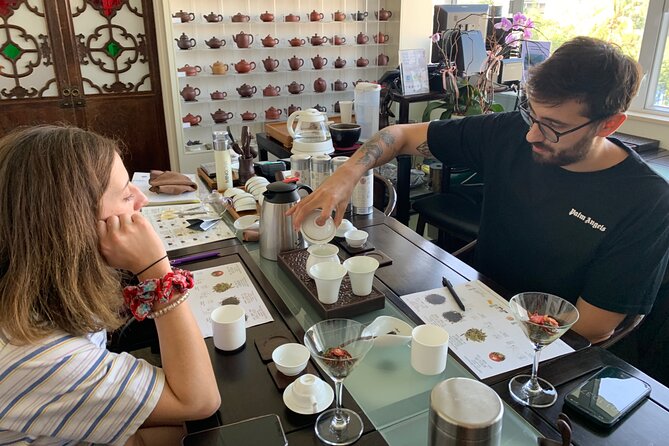
- Gung-fu tea ware practice: you learn to seep and pour properly, not just what to drink
- Food pairing experiments: dried nuts, chocolate, and flower honey toasts, so you can copy the matches later
- Five-sense tasting: aroma and appearance matter as much as flavor
- Small group size: up to 20 people, which keeps the pacing friendly
- Family-friendly option: you can pick a format that works better with kids
Tea Culture in Chai Wan: what your session feels like
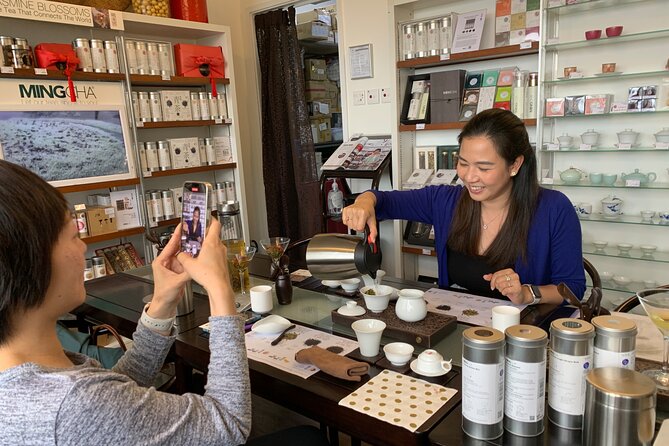
MingCha Tea House is in Chai Wan, and that’s a good sign for this kind of experience. This isn’t a rushed, tourist-only stop. You’re stepping into a proper tea setting where the focus stays on tea, tea brewing, and how tea behaves when you treat it the right way.
You’ll start on-site and finish back there. It’s designed as one continuous session, so you don’t have to worry about hopping between places or losing time. The session runs about 1 hour 30 minutes, and there are two start times you can choose from, which helps you fit it into your day.
The workshop is also capped at 20 people, so it stays interactive. That matters because learning tea is partly sensory and partly technique. If you’re in a crowd, it’s harder to watch details and ask questions. Here, you’re more likely to get real guidance on what to notice and how to try it.
You can also read our reviews of more tours and experiences in Hong Kong SAR.
What You Taste: Green, Scented Green, Red, and Oolong
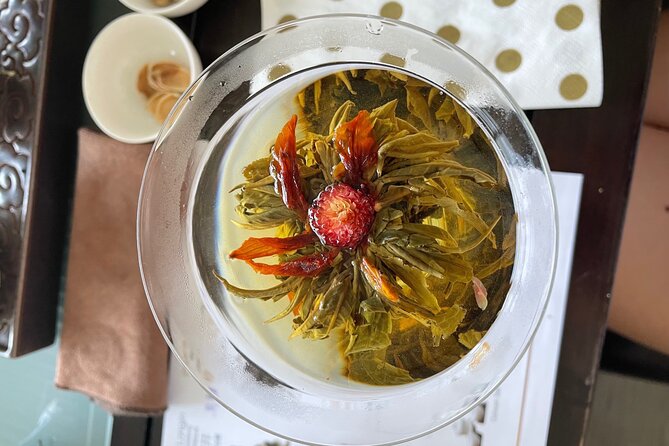
This is built around four premium teas from different categories: Green, scented green, red, and oolong. That lineup is smart for beginners and helpful for experienced tea drinkers too, because it covers the core flavor families you’ll keep running into in Chinese tea culture.
Here’s how this helps you as a visitor:
- Green tea usually makes you pay attention to freshness—sweet grass notes, clean bitterness, and aroma that changes as the cup cools.
- Scented green adds another layer on top of green tea. In this workshop style, you’re learning that scent isn’t just a nice bonus; it changes how you perceive taste and aftertaste.
- Red tea (often closer to what many people call black tea, though tea traditions differ by region) tends to feel fuller and rounder, which makes it a useful “contrast” test.
- Oolong is where a lot of people finally say, okay, that’s different. Oolong often shifts from floral and light to deeper toasted notes depending on how it’s brewed, so the technique portion really matters here.
You’ll be sampling the teas during the session, and the idea is that you start recognizing patterns. Once you can tell what category a tea belongs to just by smell and early taste, matching it with food gets much easier.
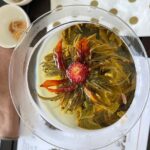
One unique detail worth calling out: people specifically rave about a Jasmine Blossoms tea presentation. That kind of scented green experience is a great reminder that tea tasting is often about balance—floral aroma without losing the underlying tea character.
Gung-fu Tea Ware Practice: why the pour changes the flavor
This workshop uses a Gung-fu style approach with traditional tea ware. Don’t let the name intimidate you. What you’re really learning is that tea is not a one-and-done drink.
In a Gung-fu setup, the brewing and pouring process is deliberate. Small changes—how you seep, how you pour, and how quickly you reset—can shift flavor from sharp to smooth. That’s why you’ll learn both how to seep and how to pour properly. And yes, that’s something that tends to click fast in a short class, because you can taste the difference.
One practical benefit: you’ll get to see what happens when you experiment before and after with tea leaves and brewing behavior. Even if you’re new to tea, that “try it, then compare it” approach trains your palate. After you go, you’re less likely to brew tea that tastes weak or harsh because you didn’t control the basics.
Also, using real tea ware (not just a casual cup) teaches you a mindset: pay attention to temperature, timing, and how tea is served. These aren’t fussy rules—they’re the difference between tasting the tea itself and tasting only hot water.
Food Pairing Lab: nuts, chocolate, and flower honey toast
Tea pairings can sound like a fancy idea—until you test them. This workshop pairs tea with three specific food types: dried nuts, chocolate, and flower honey toasts. That trio is a smart mix because each one stresses a different part of the tea.
Here’s what that means for your tasting:
- Dried nuts often bring a toasty, earthy, slightly oily feeling. This can either soften the tea’s edge or make bitterness show up more clearly. It’s a great way to learn whether your tea is smooth or sharp by nature.
- Chocolate is rich and persistent. It can amplify sweetness and make some teas taste rounder while pushing others to feel dry or too assertive. If you’ve ever had tea after dessert and wondered why it didn’t taste right, this pairing method gives you a direct answer.
- Flower honey toast brings floral sweetness plus bread warmth. It helps you learn how tea handles aroma and sweetness together, which is exactly what many people want when they try tea in real life—morning snacks, brunch, and dessert moments.
The pairing isn’t just about finding a perfect match and stopping. The workshop format encourages you to compare how the same tea reacts to different foods. That’s the key skill you can take home. Instead of memorizing “tea X goes with food Y,” you’ll start recognizing why certain flavors play well together.
Using all five senses: what you notice during the tasting
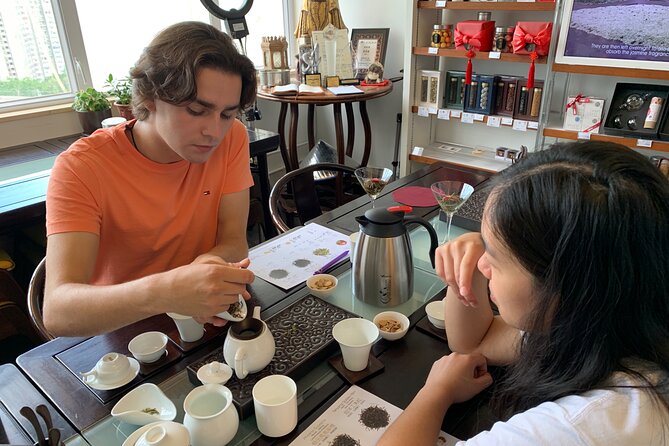
This experience is structured around a five-sense approach. That sounds poetic, but in practice it’s useful because it stops you from judging tea too early.
You’ll likely start with aroma and visual cues—tea color, clarity, and how the scent changes as you pour and taste. Then you move to flavor and aftertaste. Tea can taste one way in the first sip and another way after it rests in the mouth for a moment.
This also helps kids (and adults who think they are not tea people). If a child is not focused on bitterness or sweetness, you can guide them toward smell and color first. Then taste becomes less intimidating. That’s why the family-friendly option is worth considering even if you’re an adult who just wants a relaxed vibe.
And if you’ve ever had a jasmine-scented tea that felt either too perfumey or too weak, paying attention to aroma-to-taste balance is where this kind of workshop earns its keep.
Practical value: is $65.60 worth it?
At $65.60 per person for about 1 hour 30 minutes, this isn’t a cheap activity—but it also isn’t priced like a luxury private class. The value comes from three places:
First, you’re tasting four premium teas from different categories in one session. If you’ve ever bought tea samples one by one, it adds up fast.
Second, you’re not only tasting—you’re learning technique. Getting hands-on guidance for seep and pour is the part that makes the experience reusable. You can apply what you learn at home without needing special equipment beyond basic brewing tools.
Third, the food pairings make the whole thing feel like a lab, not a lecture. Chocolate and flower honey toast aren’t just snacks; they help you understand how your tea choice affects flavor perception.
One more note: this is commonly booked about a month in advance, which tells me demand is steady. If you care about a specific start time, check schedules early so you can pick the option that fits your day in Hong Kong.
Who should book this workshop (and who might not)
This is best for you if:
- You want a structured way to learn tea beyond guessing at labels.
- You like interactive lessons with quick tasting comparisons.
- You’re curious about pairing tea with real foods, not just theory.
- You’re traveling with kids and want a family-friendly option that stays engaging.
You might skip it if:
- You’re looking for a long, quiet ceremony experience. This is short and technique-focused.
- You only want shopping or sightseeing time. This is a dedicated class, and you’ll want your attention on tea.
If you’re staying in or around Hong Kong Island (Chai Wan area is the cue here), it’s a practical add-on. The session is also described as near public transportation, so you can get there without planning an expedition.
Quick tips so you get better tea results
A few small things can make a big difference in a class like this:
- Go with a light appetite. The tasting includes sweet and rich foods, and you’ll taste better if you’re not overloaded.
- Pay attention to aroma before you sip. Tea instructors often teach you to judge smell first, and it really does affect how your brain interprets flavor.
- Ask questions when you notice bitterness or sweetness shift. In a small group, you’re more likely to get direct guidance on what changed and why.
- If you have a preference—floral, grassy, malty, or roasted—share it early. It helps the tasting “land” in your personal taste map.
Also, if this is your first tea workshop in Hong Kong, don’t stress about knowing tea vocabulary. The session is designed to teach you what to look for and how to taste with structure.
Should you book Tea Tasting and Pairing Concept Workshop?
I’d book it if you want a hands-on tea lesson you can actually use after you go. The mix of four tea categories, Gung-fu brewing practice, and real food pairings makes it more than a sampling session. It teaches you a repeatable way to taste and match, and the small group format helps keep the experience interactive.
Skip it if your priority is only tourism photos or you want something very long and meditative. This is focused, sensory, and technique-led—exactly the kind of class that turns curiosity into confidence quickly.
If you’re in Hong Kong and you like learning by tasting, this is a solid value at $65.60 for what you get: premium tea, structured guidance, and pairing skills you can bring home.
FAQ
How long is the tea tasting and pairing workshop?
It runs for about 1 hour 30 minutes.
Where does the workshop start and end?
It starts at MingCha Tea House (B2, 15/F, Fortune Factory Building Block B, 40 Lee Chung St, Chai Wan, Hong Kong) and ends back at the same meeting point.
What teas are included in the tasting?
You’ll sample four premium teas: Green, Scented Green, Red, and Oolong.
Do you get to pair tea with food?
Yes. Tea is paired with dried nuts, chocolate, and flower honey toasts.
Is there hands-on tea brewing instruction?
Yes. You’ll get a hands-on experience using the Gung-fu way with traditional tea ware, including learning how to seep and pour properly.
Is this workshop family-friendly?
There is a family-friendly option available if you want to enjoy the experience with kids.
How many people are in a group?
The maximum group size is 20 travelers.
Are there different start times?
Yes, there are two different start times you can choose from.
How will I receive my ticket?
This activity uses a mobile ticket.
What if the weather is bad?
The experience requires good weather. If it’s canceled due to poor weather, you’ll be offered a different date or a full refund.