REVIEW · MUNNAR
Tea Plantation, Grass Land and Mountain Hiking in Munnar
Book on Viator →Operated by SreesTours · Bookable on Viator
Tea, birds, and mountain views in one morning. This guided hike links a working tea plantation history with a shola-forest bird walk, all with big Munnar views along the way.
I love how the guide turns the first tea-row walk into a story of Kannan and Devan, locals tied to Parvathimala’s first tea saplings under the British. I also love the Laxmi hills pause, when you slow down and take in the view of Munnar and the surrounding hills.
One thing to consider: this is still hill walking, not a flat stroll. Comfortable shoes matter, especially on misty mornings when the ground can feel slick.
In This Review
- Key things I think you’ll care about
- Why this Munnar hike feels different from a basic tea stop
- Getting started at KSRTC Depot Munnar (and why the meeting point helps)
- First hour: tea plantations and the Kannan and Devan story
- Grasslands on Lakshmi/Laxmi hills: plants, open sky, and possible bison
- Shola forest bird spotting: orange and black flycatchers
- Near the top on Laxmi hills: Anamudi context and the view pause
- The descent back to the start: how it usually ends
- Price and value: is $15.20 a fair deal for 4 hours in Munnar?
- Guides you might meet: Vinu’s viewpoint tweaks and Sarooj’s English-and-safety vibe
- What you should do to enjoy this hike more (quick practical tips)
- Should you book this Munnar tea, grassland, and shola hike?
- FAQ
- How long is the hiking experience in Munnar?
- What time does the tour start?
- Where is the meeting point?
- Where does the tour end?
- Is this experience guided?
- What will we see during the hike?
- Is it a private tour or a group tour?
- Do I get a ticket on my phone?
- Is there a group discount?
- What is the cancellation policy?
Key things I think you’ll care about
- Kannan and Devan tea story connected to Parvathimala and the seventhmala estate
- Grasslands on Lakshmi/Laxmi hills with flowering and non-flowering plants and wide-open views
- Shola forest bird time aimed at seeing flycatchers, especially orange and black
- Anamudi context (south India’s highest peak) built into the hike route and viewpoint talk
- Big panorama reward from near the top, with a real moment to relax and look out over Munnar
Why this Munnar hike feels different from a basic tea stop
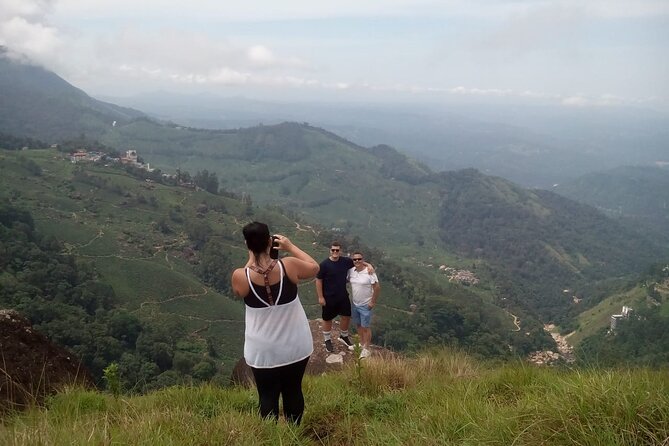
Munnar is famous for tea, but the best part of this hike is how it moves you through the region in stages. You start in tea plantations, shift into open grassland with views, then head into shola forest where the air changes and wildlife spotting becomes part of the plan.
That structure matters because it keeps your brain switched on. You’re not just looking at scenery from one spot. You’re walking through three very different habitats, with a guide who layers in stories as you go, from British-era planting history to what grassland areas might be doing in the landscape around you.
The payoff is a high viewpoint near Laxmi hills. That’s where the hike slows down and the view over Munnar becomes the main event.
You can also read our reviews of more tours and experiences in Munnar.

Getting started at KSRTC Depot Munnar (and why the meeting point helps)
You’ll meet at KSRTC Depot Munnar on MSA Rd, Moolakadai. It’s listed as being near public transportation, which is a relief if you’re moving around the area without a private driver already set up.
Your tour start time is 7:00 am, and the hike runs for about 4 hours total. That timing is a practical sweet spot: you beat the later crowds, and you still get enough morning light for grassland and viewpoint photos.
This is also private for your group, which changes the feel. You’re not sharing the route with a huge crowd, and your guide can keep the pace and stops aligned to your group.
Finally, the tour uses a mobile ticket, so you’re not scrambling with paper confirmations on a morning when you’d rather be heading uphill.
First hour: tea plantations and the Kannan and Devan story
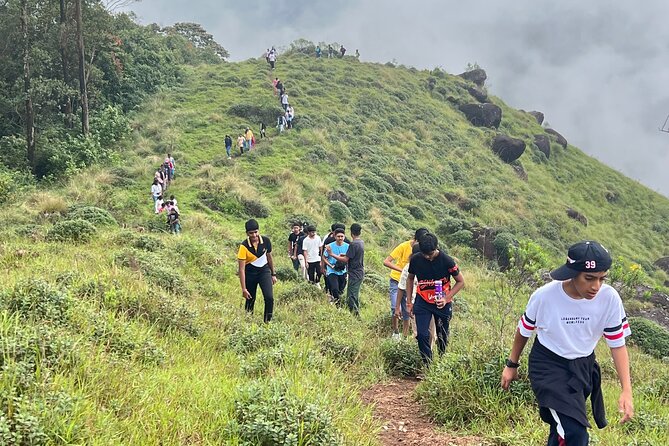
The hiking begins from the meeting point, and the first hour is a soft climb through tea plantations. The word soft is doing real work here. You’re active, but the pace is set for a guided walk rather than a workout race.
What makes this first section special is the guide’s storytelling. You’ll hear about two locals, Kannan and Devan, who showed the British around the area. That connection leads to the first tea saplings being planted at Parvathimala, which is also referred to as the seventhmala estate.
Why this is worth your time: it’s easy to walk past tea rows like they’re just background. Here, you learn how the tea landscape was created and how the local names and people connect to the British-era planting story. It gives you something to pay attention to beyond the views.
You’re also getting your legs warmed up gradually. In a region like Munnar, that matters. When you reach the grassland and forest sections, you’re not starting from scratch.
Grasslands on Lakshmi/Laxmi hills: plants, open sky, and possible bison
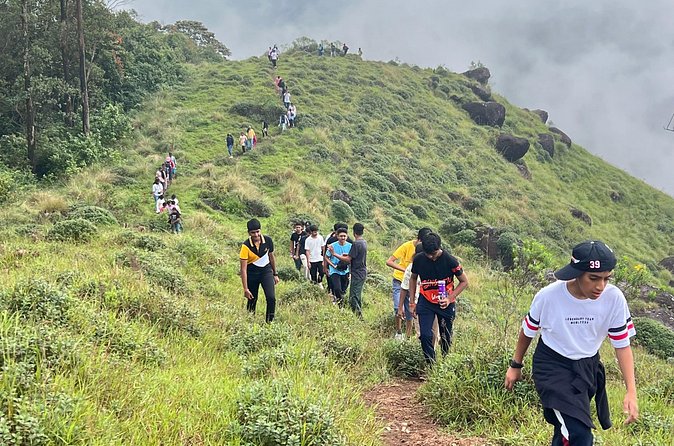
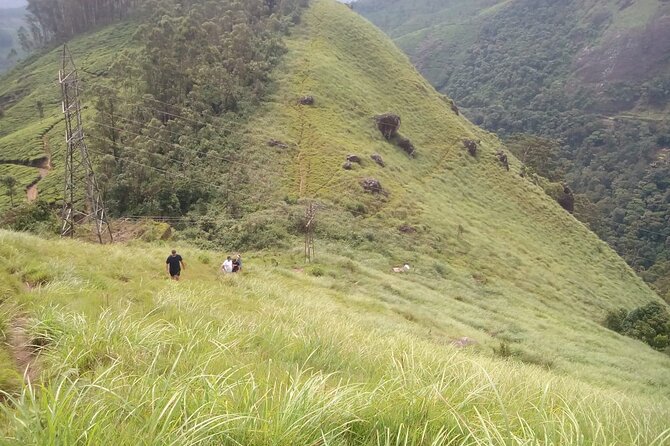
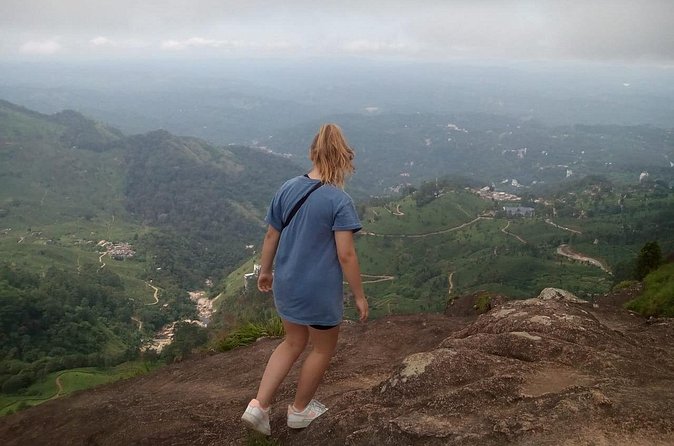
After the tea section, the route moves into the grasslands with amazing views of surrounding places. This part of the hike is about openness. The trail opens up so you can look around, and the guide points out flowering and non-flowering plants.
That detail is more than botanical trivia. Grasslands in Munnar are a reminder that the area isn’t only tea and forest. The ecosystem changes with elevation and exposure, and that’s why you get those wide views from Lakshmi/Laxmi hills during the hike.
The guide also shares a practical wildlife note: sometimes bison may be present in this grassland area. You should treat that as a possibility, not a promise. Still, the point is useful. It nudges you into a calmer, more observant mindset.
A balanced way to think about this section: you’ll get your best horizon views here, but you may also feel more exposed to wind or cooler air than you do in the tea rows and forest shade. Dress accordingly.
Shola forest bird spotting: orange and black flycatchers
Next you enter shola forest, and the hike shifts again. Shola forest is cooler and more enclosed, and it changes the experience from long-range views to close-up watching.
This is where flycatchers come in. The route is set up so you can look for flycatchers of different colors, with an emphasis on orange and black.
If you love bird moments, you’ll probably enjoy this section because the guide is actively guiding your attention. Instead of random scanning, you’re looking with a plan: where the guide expects the colors and movement to show up.
If you’re not a dedicated bird watcher, don’t worry. The forest segment still breaks up the hike nicely and adds that “different kind of Munnar” feeling. It’s also a mental reset between the wide grasslands and the final viewpoint area.




Near the top on Laxmi hills: Anamudi context and the view pause
As the hike continues, you reach an area described as being almost at the top of Laxmi hills. This is also when you get the “slow down” moment.
First, the guide builds in Anamudi context. The tour notes that you experience Anamudi, described as south India’s highest peak. Even if you can’t clearly pick the peak out in every weather condition, you’re at least getting the geographic framing while you’re standing in the right elevation zone.
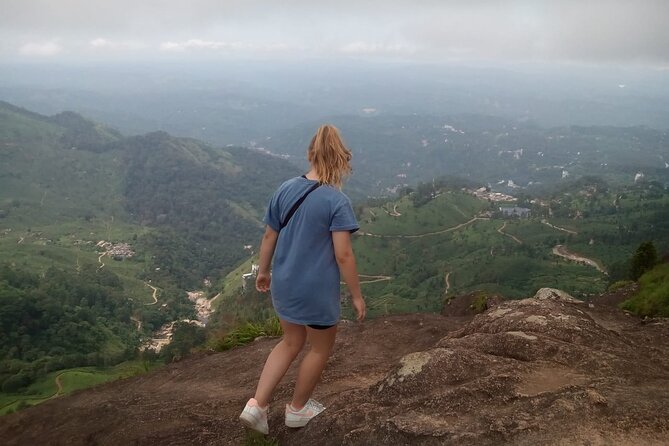
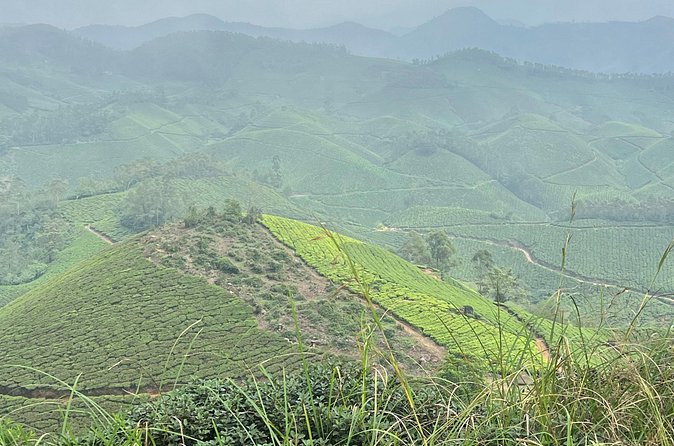
Then comes the best part for many people: a chance to relax for a while. During this pause, you can see the whole of Munnar and surrounding places at your feet. That’s the highlight, because it’s the only moment when you stop walking long enough to really take in what you climbed for.
Views in the hills are rarely “one view.” As you look around, the tea ridges, grassland edges, and forest folds all make sense as parts of one system. Even if you’re not a photo person, you’ll feel that wow factor when your brain switches from walking to surveying.
The descent back to the start: how it usually ends
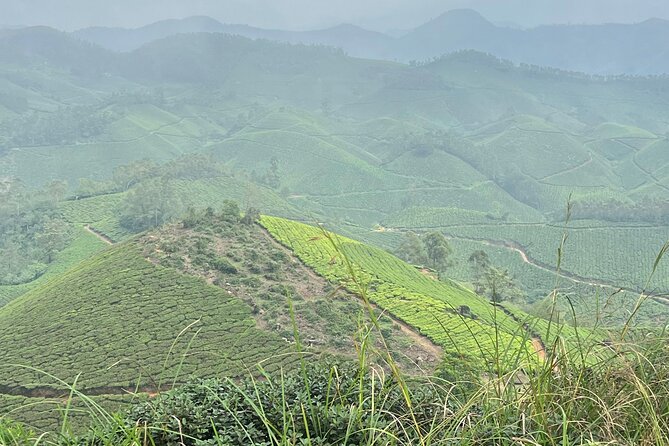
After the relax period, the guide escorts you and starts the descent. The info here is clear: after about another hour of walking, you reach back at the starting point, and the hiking ends.
That structure keeps the route readable. You get a gradual buildup, one main viewpoint payoff, then a controlled return. It’s not a long, day-long trek. It’s more like a well-paced morning hike that still leaves you with energy for the rest of your Munnar plans.
Because this ends back where you started, you don’t need to think about transport or transfers mid-journey.
Price and value: is $15.20 a fair deal for 4 hours in Munnar?
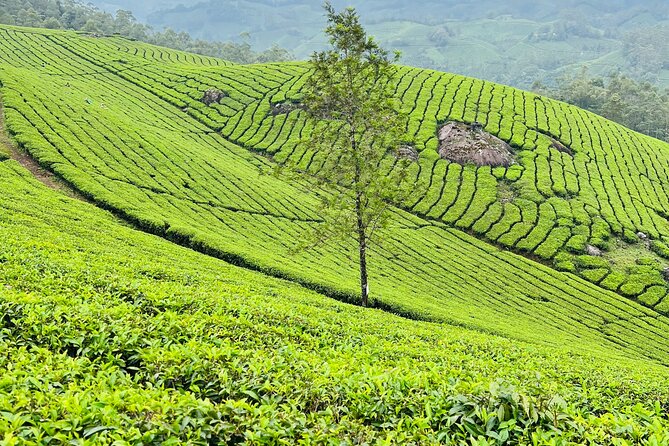
The price is $15.20 per person, and for a guided hike that covers tea plantations, grassland, and shola forest with viewpoint time, it can be good value—especially if you’re comparing it to paying for separate experiences.
Two value drivers matter here:
1) Guiding and storytelling. The tea plantation section isn’t random walking. You get the Kannan and Devan story tied to Parvathimala and tea planting. That turns the hike into a cultural + nature walk, not just exercise.
2) Time efficiency. In about four hours, you cover multiple habitats and a major viewpoint moment. For many visitors, that’s exactly what you want in Munnar: variety without losing the whole day.
You may also benefit from group discounts, which helps if you’re traveling with friends or family and can bundle together as one group.
One small caution on value: because you’re paying for a guided, soft hike experience, it’s not the cheapest option if your goal is purely self-guided tea views. If you like guided context and wildlife spotting, this price starts to make a lot more sense.
Guides you might meet: Vinu’s viewpoint tweaks and Sarooj’s English-and-safety vibe
Good hiking guides can change everything, and the names linked to this experience show why.
Vinu (spelled Vinu or Vinoo in the notes) is mentioned with two standout strengths: he can take you on a special path for additional viewpoints, and he can handle unexpected moments with calm resourcefulness. In one instance, a guest got hurt, and the guide used local herbs to help substitute for a bandage until things were settled. That’s not something you plan for, but it matters that the guide knows what to do when the day doesn’t go perfectly.
Another detail that’s worth noting: Vinu is also described as picking people up even when it’s still dark and coordinating a coffee stop before the hike. If you’re aiming to catch dawn light, an early-start approach is part of the way at least some guides operate.
Also, Sarooj is mentioned as a driver across a multi-day plan and as someone who made guests feel safe and spoke good English. Even if you’re only doing this hike, that kind of language-and-safety professionalism is a strong sign that the provider cares about more than just getting you from A to B.
You can’t guarantee specific guide assignments from the information provided, but the theme is consistent: good communication, practical problem-solving, and attention to views.
What you should do to enjoy this hike more (quick practical tips)
This is a soft guided hike, but it still involves walking in sloped terrain and shifting through forest and open grassland. To make it feel easy and not annoying, I’d plan like this:
- Wear shoes you can trust on uneven ground.
- Bring a light layer for mornings that feel cooler than you expect.
- Keep your phone ready for the viewpoint pause, but don’t let it slow you down too much during the walking sections.
- If you’re into birds, take your time in the shola forest segment. The flycatcher spotting works better when you slow down.
Also, the guide’s stories are part of the experience. You’ll enjoy the hike more if you treat it like a guided walk with nature stops, not a race to finish.
Should you book this Munnar tea, grassland, and shola hike?
Book it if you want a morning in Munnar that mixes history, nature, and views without spending the entire day on transport. The combination of tea plantations, Lakshmi/Laxmi grasslands, and shola forest gives you variety in a short window, and the viewpoint pause is a real reason to choose this over a quick tea stop.
Skip it (or look for a different option) if you only want easy flat sightseeing. This is still a hike for a few hours, and the main value comes from walking through the habitats and listening to the guide’s stories.
If you’re traveling with a group and can use the group discount, it becomes even more tempting. And if you care about bird spotting and enjoy guided context, this is one of the more satisfying ways to get beyond the usual tea-row photos in Munnar.
FAQ
How long is the hiking experience in Munnar?
It’s about 4 hours (approx.).
What time does the tour start?
The start time is listed as 7:00 am.
Where is the meeting point?
You meet at KSRTC Depot Munnar, MSA Rd, Moolakadai (near the listed coordinates).
Where does the tour end?
The activity ends back at the meeting point.
Is this experience guided?
Yes. It’s described as a soft guided hiking experience.
What will we see during the hike?
You can expect tea plantations, grasslands on Lakshmi/Laxmi hills with flowering and non-flowering plants, shola forest with flycatcher birds (including orange and black), and viewpoint time over Munnar. Anamudi is also part of the experience.
Is it a private tour or a group tour?
It’s private for your group only.
Do I get a ticket on my phone?
Yes. The experience includes a mobile ticket.
Is there a group discount?
Yes, group discounts are part of the features.
What is the cancellation policy?
Free cancellation is available. You can cancel up to 24 hours in advance for a full refund. If you cancel less than 24 hours before the start time, the amount paid won’t be refunded.