REVIEW · YOKOHAMA
Japanese Calligraphy Class in Yokohama with Tea and Sweets
Book on Viator →Operated by Mami's calligraphy · Bookable on Viator
A quiet brush stroke can change your whole afternoon. In Yokohama, this small class teaches Japanese calligraphy with patient, clear English coaching, then turns it into a take-home souvenir at Jack’s Tower.
I love the fact that you can write something personal right away—either a favorite character or a single kanji from your name—then copy it onto a traditional paper uchiwa. One thing to consider: since it’s a hands-on class, you’ll want comfortable standing and sitting time (it lasts about 2.5 hours), even though the pace is relaxed.
In This Review
- Key highlights you’ll care about
- Why Yokohama’s Port Opening Memorial Hall Makes This Class Feel Easy
- Meet Mami: The Part That Turns Confusing Strokes Into Steps You Can Copy
- Choosing Your Kanji: From Model Worksheet to Your Own Uchiwa Fan
- The Brushwork Lesson: What You’re Learning Under the Quiet Surface
- Tea and Sweets: The Reset Button After Ink and Concentration
- What You Take Home: Your Uchiwa, Plus an English Beginner Guide
- Price and Value: Why $19.51 Can Feel Like a Bargain
- Who This Yokohama Calligraphy Class Fits Best
- Timing, Meeting Point, and How to Plan Your Afternoon
- Should You Book This Calligraphy Class in Yokohama?
- FAQ
- How long is the Japanese calligraphy class in Yokohama?
- What will I create during the class?
- Can I write my name in kanji?
- What’s included with the class at the end?
- Will I get anything to take home besides the fan?
- What if I need to cancel?
Key highlights you’ll care about
- Small group size (max 6) means more personal attention as you practice brush control
- Mami’s English explanations make the steps feel doable, not mysterious
- Write your own kanji (or one character from your name) and transfer it to your final fan
- Tea choice included: sencha or hojicha, plus Japanese sweets to round out the lesson
- Take-home materials: a finished uchiwa fan and an English beginner’s guide
Why Yokohama’s Port Opening Memorial Hall Makes This Class Feel Easy
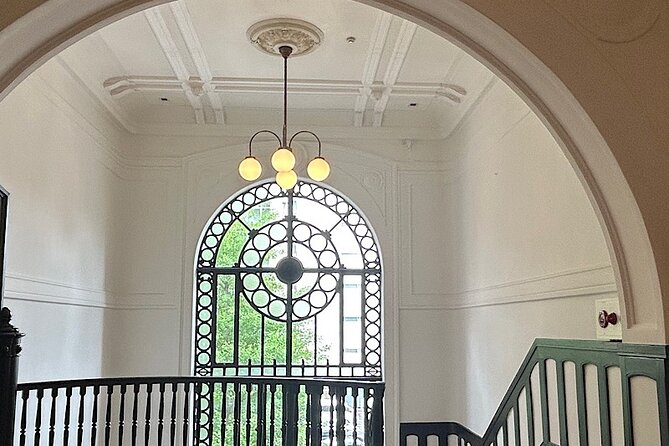
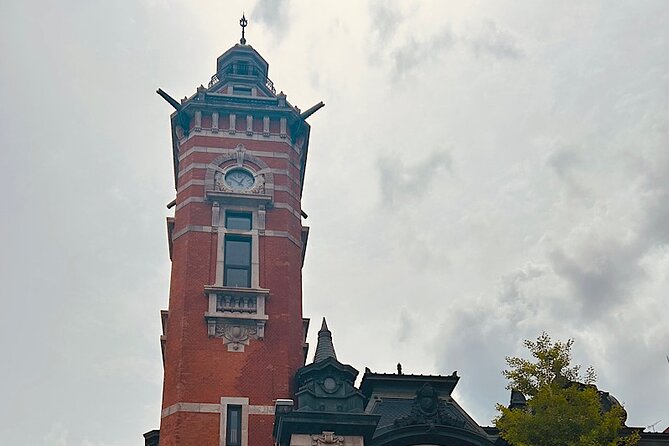
The setting matters. This class runs at the Port Opening Memorial Hall, inside the area of Jack’s Tower in Yokohama, a traditional-feeling building that keeps the mood calm instead of touristy. You’re not doing calligraphy in a rushed room. You’re doing it in a place that already feels like Yokohama respects its own heritage.
That calm tone shows up in how the lesson flows. You get time to watch first, then practice, and then move on. The goal isn’t to perform perfect writing. The goal is to understand what the strokes are doing and how to shape them with your brush. For me, that’s the difference between calligraphy as a “thing you try” versus calligraphy as a skill you can keep using later.
The second reason this spot works well is simple: it’s close to public transportation. You’re not building half a day of logistics just to try something creative for a couple hours.
You can also read our reviews of more tours and experiences in Yokohama.
Meet Mami: The Part That Turns Confusing Strokes Into Steps You Can Copy
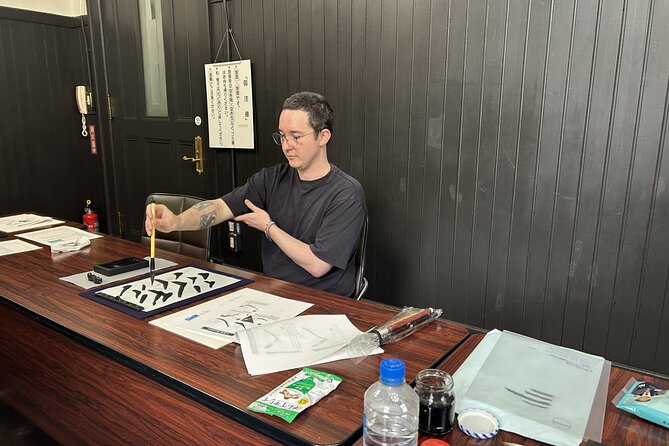
Your instructor is Mami, and everything about the class style centers on clarity and patience. You’ll get guided instruction in English, and the teaching approach is set up for different starting points. Some people will be brand new to brush and ink. Others might have done calligraphy before and just need a refresher on stroke order and pressure.
From what’s described, Mami helps you settle on what to write, then teaches the brush strokes step by step. That matters because calligraphy isn’t only about copying a shape. It’s about rhythm: when to press, when to lift, and how each stroke stays balanced. If you’ve ever tried to copy Japanese characters without knowing stroke logic, you know how frustrating it can get.
Also, the lesson includes more than just writing. You can expect some extra context and friendly conversation during the practice and breaks, including recommendations for what to visit after. That turns your afternoon into a little Yokohama story, not a stand-alone workshop.
Choosing Your Kanji: From Model Worksheet to Your Own Uchiwa Fan
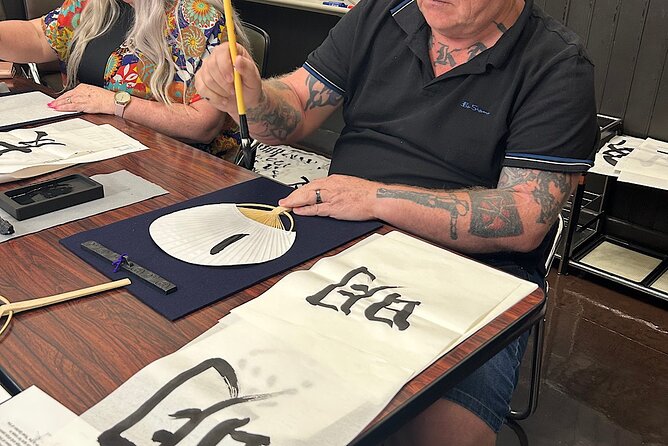
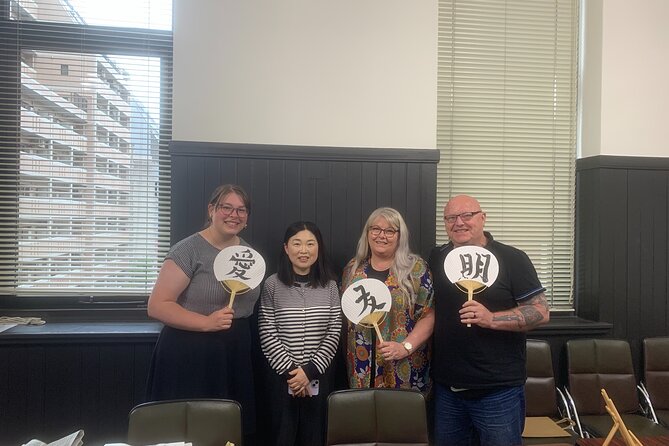
Here’s where the class becomes personal. You’ll start with a model you use on the spot, then you’ll write your favorite character or a single character from your name in kanji. That’s a great way to make the finished souvenir meaningful without needing long, advanced research.
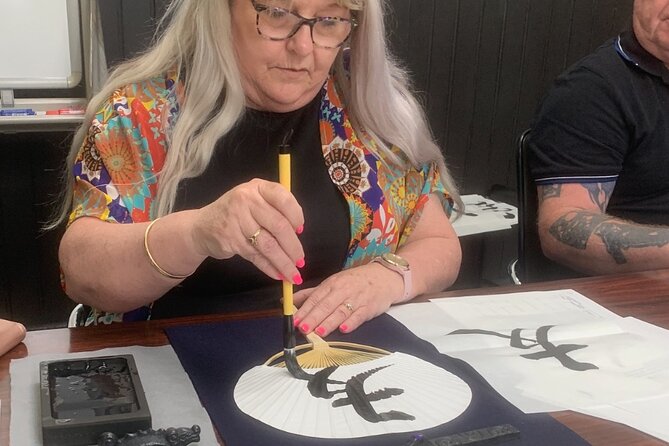
Next comes the fan. You’ll copy your writing onto a paper fan (uchiwa) as your final calligraphy art. This part is especially satisfying because it’s not just a sheet of paper you can misplace. A fan is practical as a keepsake. It also gives you a ready “story” to tell later: this is the character I chose, shaped in strokes I learned.
A quick practical note: copying from a model to your own fan can feel slower than you expect, even if the group is small. That’s normal. Give yourself permission to take the time. The best results here usually come from careful movement, not speed.
One more useful angle: since you get to write only one character (or a chosen single kanji), the class stays focused. You’re learning the stroke logic behind a character, not juggling a whole page of text. For most visitors, that’s exactly the right level.
The Brushwork Lesson: What You’re Learning Under the Quiet Surface
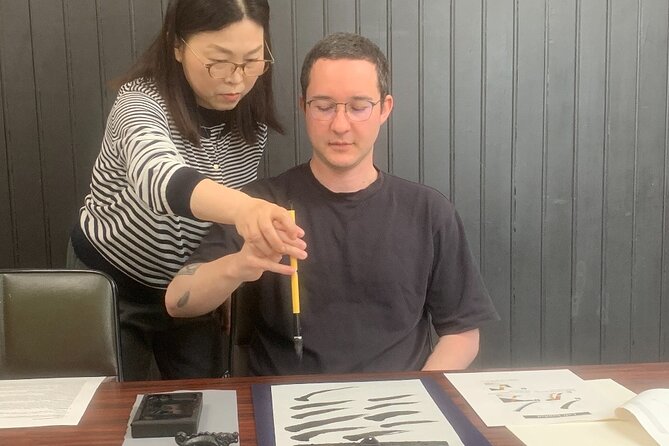
Even if your final piece is just one character, you’re practicing fundamentals that translate. The class focuses on brush handling and the graceful stroke shapes of kanji. You learn the mechanics—how the brush behaves, how to guide it across the surface, and how to make the strokes look intentional.
What I like about this structure is that it doesn’t pretend calligraphy is only artistic. It’s partly technique. When you understand technique, you stop feeling like calligraphy is a talent you either have or you don’t. Instead, you start seeing it as something you can train with the right steps.
In a class like this, that “micro-learning” is what sticks. Even if you forget the exact order later, you’ll still remember the feeling of how a press-and-lift stroke should look.
Tea and Sweets: The Reset Button After Ink and Concentration
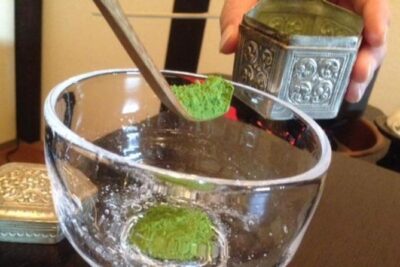
After you write, you get a breather. The end of the lesson includes Japanese tea and sweets, and you can choose between sencha and hojicha.
That choice is more than a small detail. It’s a real part of how Japanese tea drinking sets the tone of the day. Sencha tends to feel lighter and grassy, while hojicha is typically roasted and more mellow. So if you want something that tastes a bit gentler after ink work, hojicha can be a good bet. If you want something crisp and clean, sencha fits.
Then there are Japanese sweets. The combo is smart: it turns the activity from a “class only” experience into a complete cultural pause. You get a chance to talk, ask questions, and come down from the concentration required for controlled brush strokes.
If you’re the type who likes to learn but also likes to end with something comforting, this tea-and-sweets portion is the kind of payoff that makes the ticket feel more like a real experience and less like a quick craft.
What You Take Home: Your Uchiwa, Plus an English Beginner Guide
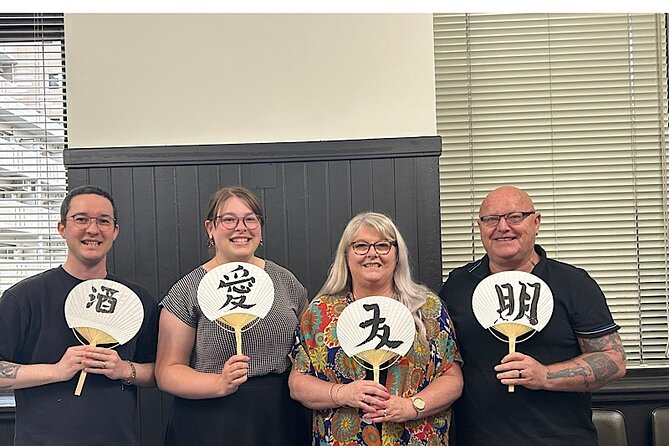
You leave with two major take-home items.
First, you take home your finished calligraphy art on the paper fan (uchiwa). That’s your souvenir, and it’s also proof of learning. A finished piece is more satisfying than a “practice sheet” because it’s something you can display or use later.
Second, you receive a beginner’s guide to calligraphy in English. That’s a practical add-on because it helps you keep going after the class. If you’ve ever tried a hobby once and then had trouble finding the next step, this kind of guide helps bridge the gap.
I also like the format. A fan souvenir plus an English guide is a balanced combo: one gives you immediate pride, the other gives you a path forward.
Price and Value: Why $19.51 Can Feel Like a Bargain
At about $19.51 per person for roughly 2 hours 30 minutes, this class is priced like a visitor-friendly workshop, and it holds up well as value.
Here’s what you’re actually paying for:
- Real in-person instruction from Mami in English
- Materials for making your own calligraphy fan
- Tea choice (sencha or hojicha)
- Japanese sweets
- An English beginner guide to carry the learning forward
When you add that up, the cost makes more sense. Many cultural activities charge you for the “activity” but don’t include a thoughtful end moment like tea and sweets. Here, the lesson feels like a full, contained experience: learn, practice, finish, then relax.
The small group size (max 6) also matters for value. If the group were larger, you’d lose the feeling of being coached through mistakes. Here, the structure supports personalized guidance.
Who This Yokohama Calligraphy Class Fits Best
This is a strong choice if you want something hands-on that still feels culturally grounded. It works well for:
- First-timers who want an English-friendly introduction to kanji strokes
- Couples or small groups who want a shared activity that produces a real souvenir
- Families with mixed experience levels, because the instruction can adjust to where you are
It’s also a good fit if you like activities that slow you down. Calligraphy asks you to focus in a gentle way, and the tea break makes it feel like a planned pause in your day.
If you’re the kind of traveler who mainly wants big-ticket attractions all day, this won’t replace that. But if you want a day’s worth of meaning in just a couple hours, this class can do that.
Timing, Meeting Point, and How to Plan Your Afternoon
Plan to meet at Port Opening Memorial Hall, Japan 231-0005, Kanagawa, Yokohama, Naka Ward, Honchō, 1-chōme 66 (the Jack’s Tower area). The class ends back at the meeting point, so you don’t need to worry about figuring out the next location at the end.
Because it’s near public transportation, I’d build it into a flexible part of your day. You can pair it with a broader Yokohama walk before or after, without needing a long transfer.
Also, budget your attention. Even though the vibe is relaxed, you’re using brush technique and copying your chosen character. If you arrive rushed or hungry, you’ll feel it. If you arrive calm, you’ll enjoy the whole pace more.
Should You Book This Calligraphy Class in Yokohama?
If you want a small-group, English-friendly calligraphy lesson that produces a take-home uchiwa fan plus an English beginner guide, I’d say book it. The combination of Mami’s patient teaching style, the chance to write a personal kanji character, and the tea-and-sweets finish is exactly the kind of “worth it” experience that doesn’t require special skills.
Only skip it if you’re looking for something purely fast or purely sightseeing-focused. This is about making and learning, not checking off landmarks.
FAQ
How long is the Japanese calligraphy class in Yokohama?
The class runs about 2 hours 30 minutes.
What will I create during the class?
You’ll practice calligraphy and copy your chosen kanji into a paper fan (uchiwa) as your finished artwork.
Can I write my name in kanji?
Yes. You can write a single character from your name in kanji, or choose a favorite character.
What’s included with the class at the end?
At the end, you’ll enjoy Japanese tea (sencha or hojicha) and Japanese sweets.
Will I get anything to take home besides the fan?
Yes. You’ll also receive a beginner’s guide to calligraphy in English.
What if I need to cancel?
You can cancel for a full refund up to 24 hours before the experience start time.