REVIEW · AQABA
Half day Jeep Tour in Wadi Rum incl. water and Bedouin tea
Book on Viator →Operated by Wadi Rum Stars Valley · Bookable on Viator
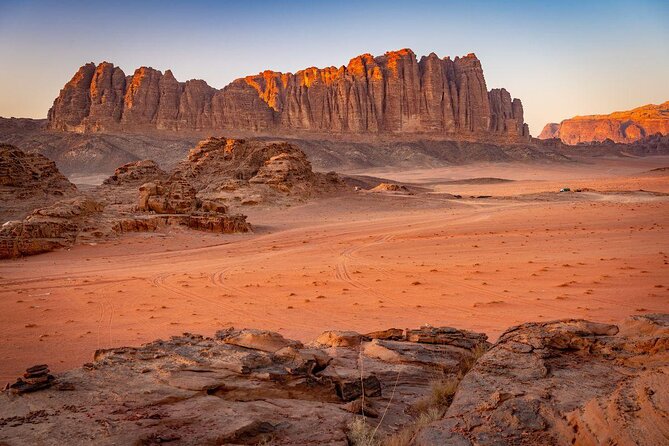
Red sand, real Bedouin tea. This half-day Jeep tour is built for maximum desert time with a local guide who can explain what you’re seeing, from Lawrence Spring to the rock arches. It’s also a small-group ride (up to 12), which keeps the stops feeling personal instead of rushed.
What I like most is the mix of water, history-by-rock, and big photo moments. Lawrence Spring is a standout because it’s a real natural water point in the desert where camels still drink.
I also like the variety of movement: dune climbing for a wide view, then canyon walks and short scrambles. Small Arch and the Abu Khasaba Canyon walk give you that wide-open-meets-up-close feeling, without needing a full day. One consideration: there’s some uneven sand and climbing at the arches, and the 7 JD Wadi Rum Protected Area entrance fee is not included unless you have the Jordan Pass.
In This Review
- Key things to know before you go
- Why a half-day Jeep loop makes sense in Wadi Rum
- Price and value: what $40 covers (and what to plan for)
- How the timing feels: 8:00 AM to 6:00 PM and a real 4-hour plan
- Stop-by-stop: the sights that shape the tour
- Stop 1: Lawrence Spring and the desert water system
- Stop 2: Red sand dune views plus Bedouin tea
- Stop 3: Khazali Canyon inscriptions
- Stop 4: The Small Arch scramble and a guide-made photo
- Stop 5: Um Frouth Rock Arch bridge photos
- Stop 6: Abu Khasaba Canyon walk (and possible sandboarding)
- Stop 7: Um Sabatah sunset (tea around a campfire if timed right)
- The driver and Bedouin guide factor: why it changes the trip
- What to bring and what to expect physically
- Camel rides and the Bedouin camp upgrade: choose based on how you travel
- Camel ride add-on
- Overnight Bedouin camp
- Should you book this Wadi Rum Jeep tour?
- FAQ
- How long is the Jeep tour in Wadi Rum?
- Where does the tour start and end?
- What is included in the price?
- Is the Wadi Rum Protected Area entrance fee included?
- Can I add a camel ride?
- Is an overnight Bedouin camp upgrade available?
Key things to know before you go
- Small-group Jeep tour (max 12) means easier conversation with your guide and less waiting at each stop
- Lawrence Spring + camel water gives you a rare look at real desert life, not just scenery
- Rock arches you can scramble on create great viewpoints, and your guide will help with photos at key spots
- Canyon walk with narrow sections lets you stretch your legs through the desert cuts, not just sit in the vehicle
- Bedouin tea is part of the rhythm at the dune stop, and tea around a campfire can happen if you go afternoon
- Optional add-ons include camel rides and an overnight Bedouin camp upgrade for dinner and breakfast
Why a half-day Jeep loop makes sense in Wadi Rum
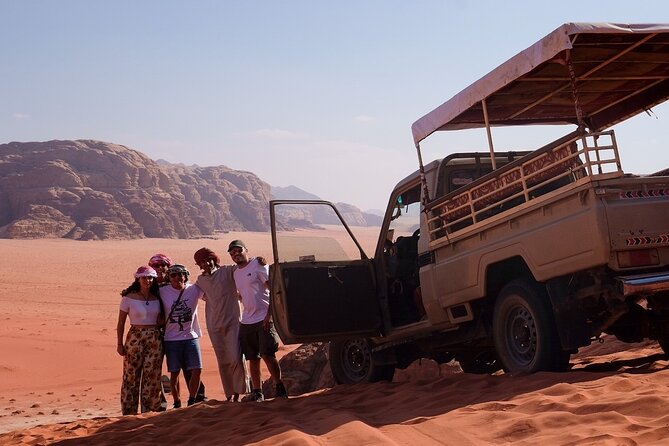
Wadi Rum is the kind of place where you can lose the whole day and still feel like you barely scratched the surface. This tour helps you avoid that by focusing on the most memorable sights in the Wadi Rum Protected Area, but keeping the total time around four hours.
You’ll ride in a Jeep with a local Bedouin guide who can put landmarks into context. That matters here. Lots of tours show you dunes and rocks; fewer explain why certain places are meaningful, like the water points and the inscription areas.
The best part of the half-day format is that it works even when you have a packed itinerary in Aqaba or you’re arriving late. It’s also ideal for first-time visitors who want the highlights without committing to a full-day trek.
You can also read our reviews of more tours and experiences in Aqaba.
Price and value: what $40 covers (and what to plan for)
The price is $40 per person, and the tour includes bottled water plus coffee and/or tea. For a Jeep tour inside a protected area, that’s a straightforward deal—especially because you’re not just traveling; you’re also stopping at multiple set-pieces.
Two costs to keep in mind:
- Wadi Rum Protected Area entrance fee: 7 JD per person, unless you have the Jordan Pass
- Optional upgrades: Bedouin camp for 15 JD (dinner + breakfast), and camel rides with set time options
Also watch for this detail: the itinerary lists stops as ticket-free, but the protected area entrance fee is still something to confirm based on your situation and whether you hold the Jordan Pass. In practice, you’ll want to be ready with cash or card for that 7 JD if you don’t have the pass.
How the timing feels: 8:00 AM to 6:00 PM and a real 4-hour plan
This tour runs within the provider’s opening hours of 8:00 AM to 6:00 PM, seven days a week. Tours are about 4 hours in total, with a clear start and return around the same area.
You start near Wadi Rum village, at the parking lot next to Wadi Rum Rest House / meeting point area. The driver picks you up there and brings you back there after the tour. If you choose the overnight option, you stay at the Bedouin camp instead of returning immediately.
Because it’s half-day, you’ll get time at each stop, but the schedule moves. That’s good for efficiency, just know you won’t linger for hours at one viewpoint. If you’re the kind of person who likes to take your time, plan to prioritize what matters most to you: dune views, inscriptions, arches, or the canyon walk.
Stop-by-stop: the sights that shape the tour
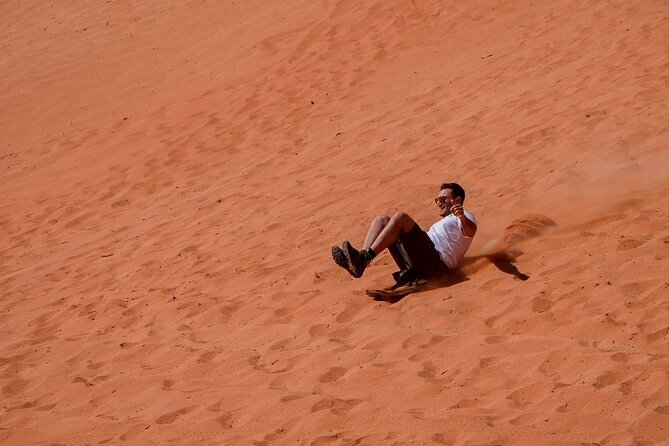
Here’s what your route is built around, and what each stop is good for.
Stop 1: Lawrence Spring and the desert water system
You’ll start at Lawrence Spring, where natural water is collected in the desert and where camels still drink. It’s a small stop, but it hits hard because water is the theme that makes the rest of Wadi Rum make sense.
If you’ve only ever seen desert as empty, this is the moment that corrects that idea. It’s not just dramatic; it’s functional—an actual resource that supports people and animals.
Stop 2: Red sand dune views plus Bedouin tea
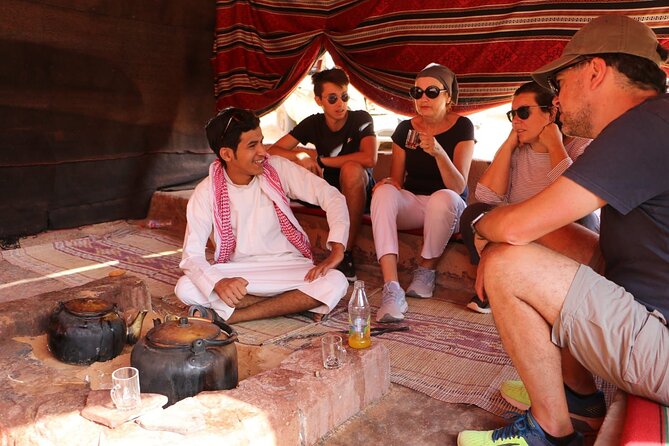
Next comes a stop at a red sand dune inside the Wadi Rum Protected Area. You can climb to the top for a 360-degree view of the desert. Then you’ll slow down and relax with a cup of Bedouin tea.
This is the stop that gives you the classic Wadi Rum feeling: wide, quiet, and a little unreal. The tea part is more than a perk. It helps you regroup before the day turns physical again, especially if you climb up to the dune crest.
One practical note: dune sand can be soft. It’s smart to avoid shoes that will trap sand in a way that makes walking tiring.
Stop 3: Khazali Canyon inscriptions
Then you go into Khazali Canyon, where you can see inscriptions from different periods. The canyon is tight enough to feel like you’re stepping into a corridor, and the markings help you connect the rocks to the human story happening around them over time.
You’re not going to spend all day reading stone carvings, but you’ll get a meaningful taste of how long people have been moving through this area.
Stop 4: The Small Arch scramble and a guide-made photo
The tour heads to the Small Arch. Here you’ll scramble up and get the view from the top. Your guide will also take a nice photo when you’re up there.
This is one of those stops where the timing is short but the reward is big: you get a dramatic rock shape, a strong photo angle, and that satisfying sense of having earned the view with your own legs.
If you’re nervous about uneven surfaces, take it slowly and use your hands for balance. Your guide can help you find a safer line if needed.
Stop 5: Um Frouth Rock Arch bridge photos
After the Small Arch, you’ll climb to Um Frouth Rock Arch, sometimes described as a bridge-like rock formation. The emphasis here is on getting up to the top for photos.
This one is more about the rock geometry and the angle it gives you back across the desert. It also keeps the tour’s rhythm moving—no long detours, just a clear sequence of standout spots.
Stop 6: Abu Khasaba Canyon walk (and possible sandboarding)
Next is Abu Khasaba Canyon, where you’ll be dropped off at the start and can walk through the canyon toward the end. Plan about 30 to 45 minutes for the walk, with beautiful desert views along the route and narrower sections that feel more enclosed.
At the end, there might be some time for sandboarding. That’s a maybe, not a guaranteed feature of your route, but it’s a nice option if conditions and timing line up.
This is the stop that turns the tour from viewing into doing. Your legs will feel it, but in a good way. If you want one “walk” moment that feels different from the dune climb, this is the one.
Stop 7: Um Sabatah sunset (tea around a campfire if timed right)
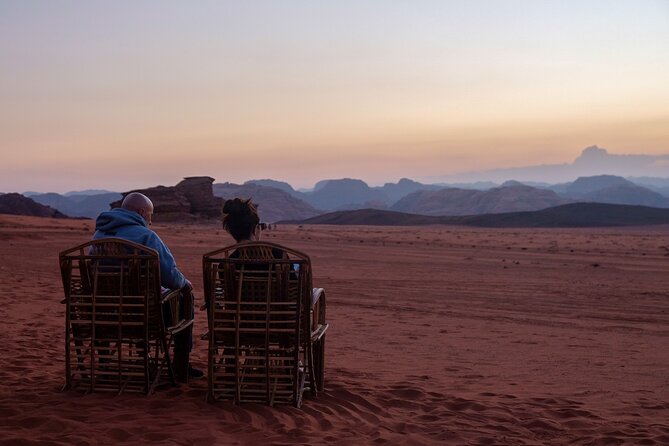
If you start the tour in the afternoon, you’ll have the chance to watch the sunset at Um Sabatah while enjoying Bedouin tea around a campfire.
This is a great reason to choose a later departure if your schedule allows it. Morning tours are still excellent for seeing more daylight, but sunset at Um Sabatah is a mood shift—cooler air, long shadows, and that warm glow that makes the rocks look sculpted.
If you care about sunset, ask about start time when you book. The tour is built to include it when timing works.
The driver and Bedouin guide factor: why it changes the trip
This tour is only as good as the person steering it, and the guide component here is a big part of the value. In the stories people share, the experience stands out for clear communication and on-time pickup. One name that comes up often is Abdul, praised for a smooth, thoughtful approach and solid English explanations.
A good guide does more than name places. They help you understand what you’re looking at, and they keep the stops moving at a pace that lets you enjoy each location instead of just passing through.
Also, because the group is capped at 12, you’re less likely to feel like you’re in a cattle line waiting for the next photo. In some cases the group can end up very small, which makes questions easier and the whole desert feel quieter.
What to bring and what to expect physically
You’re in a desert, so the basics matter:
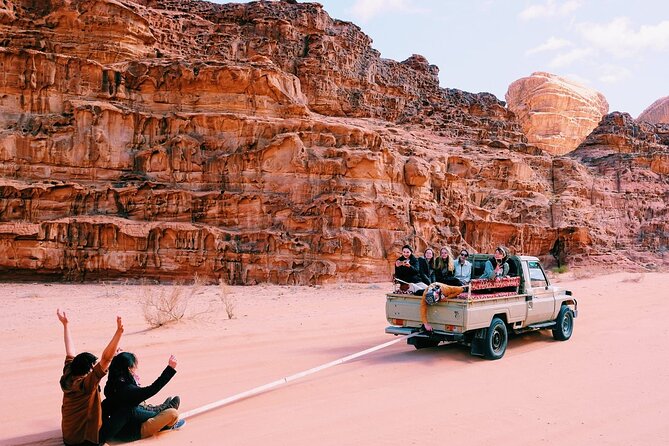
- Bring sun protection (hat/sunglasses) and plan for warm conditions
- Wear shoes you can walk in on sand and rocks
- Expect short scrambles at the arches and walking sections in the canyon
There’s a practical side to all those rock formations. When your route includes scrambling, you’ll want to take balance seriously. Slow movements usually beat rushing. If you’re traveling with kids, or if someone in your group has limited mobility, you’ll want to discuss comfort level before you go, because some climbing is part of the experience.
On the positive side, you’re not signing up for a marathon. It’s movement in pieces, with plenty of pauses for photos and tea.
Camel rides and the Bedouin camp upgrade: choose based on how you travel
Two optional add-ons can help you match the day to your travel style.
Camel ride add-on
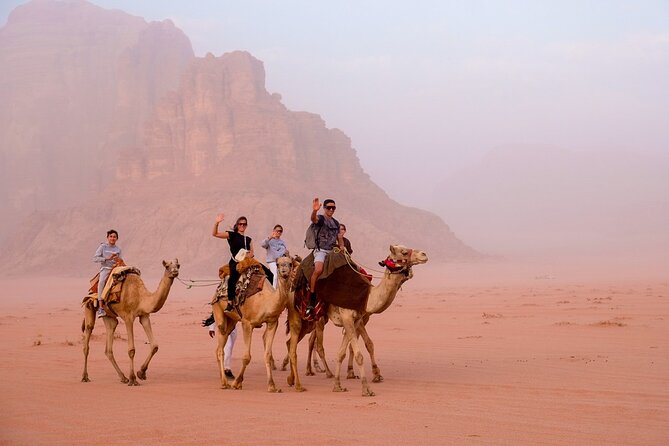
You can add a camel ride for 30 minutes (15 JD), 60 minutes (20 JD), or 120 minutes (35 JD). This is an easy way to add a slower, more traditional feel without committing to an overnight.
If you’re already doing a lot of walking on the ground, a shorter camel ride might fit better. If you want a longer, full sensory experience, go longer—but recognize you’re adding time to your overall schedule.
Overnight Bedouin camp
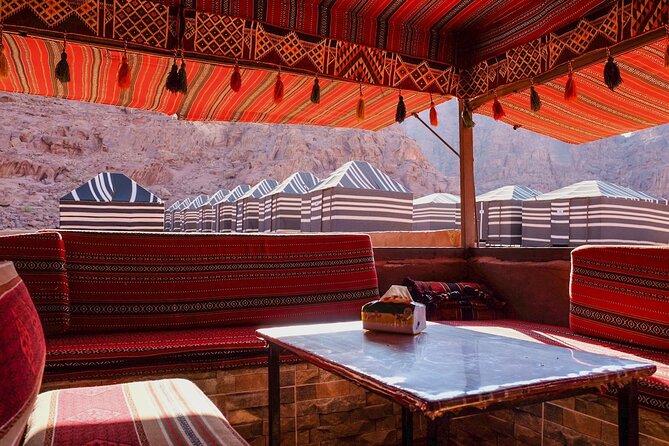
For 15 JD per person, you can stay in the provider’s Bedouin camp, including dinner and breakfast. If you’re deciding between half-day and more time, this is a clean upgrade because it bundles the overnight food rather than forcing you to plan it separately.
One big benefit: you get to stay for the kind of desert evening you can’t fully experience on a quick loop. That said, it’s an extra cost and an extra commitment, so only do it if you genuinely want to shift from sightseeing mode to relaxing mode.
Should you book this Wadi Rum Jeep tour?
If you want a high-impact Wadi Rum visit with minimal planning, this tour is an easy yes. The value is strongest when you:
- Have limited time and want the main highlights inside the protected area
- Like a small group experience with a guide who can explain what you’re seeing
- Want both viewpoints (dunes, arches) and movement (canyon walk)
- Care about tea as part of the rhythm, not just a random refreshment
Consider a different option if you:
- Don’t feel comfortable with sand and scrambling on rock formations
- Are trying to avoid any extra fees beyond the listed tour price (because the protected area entrance fee may still apply)
Also, if sunset matters to you, aim for an afternoon start so Um Sabatah lines up with golden hour.
FAQ
How long is the Jeep tour in Wadi Rum?
The tour lasts about 4 hours.
Where does the tour start and end?
The tour starts at the Wadi Rum Rest House / Wadi Rum village meeting area and returns back to the same meeting point area.
What is included in the price?
The tour includes bottled water and coffee and/or tea.
Is the Wadi Rum Protected Area entrance fee included?
The Wadi Rum Protected Area entrance fee is not included. It costs 7 JD per person unless you have the Jordan Pass.
Can I add a camel ride?
Yes. Camel ride add-ons are available for 30 minutes (15 JD), 60 minutes (20 JD), or 120 minutes (35 JD).
Is an overnight Bedouin camp upgrade available?
Yes. For 15 JD per person, you can stay overnight in the Bedouin camp, including dinner and breakfast.
If you tell me your travel month and whether you’re aiming for sunrise or sunset, I can help you pick the best start time for your schedule.