REVIEW · LONDON
Twinings 2-Hour Tea Tasting Masterclass in London
Book on Viator →Operated by R Twinings Ltd. · Bookable on Viator
Tea tasting in London, with a real plan. This Twinings masterclass takes you from bud to cup to six tea categories you actually taste, not just hear about. Expect hands-on guidance, sniffs, sips, and a teacher who breaks down what makes tea good.
I love that the class is built around tasting and judging: you sample White, Yellow, Green, Oolong, Black, and Pu’erh, then practice describing what’s in the cup. I also like the story thread, from when tea reached Britain to how London’s tea culture shaped the way we drink today.
One possible drawback: at $69.45 for about 2 hours, it’s a focused experience. If you’re looking for a long sightseeing walk or a meal outing, this won’t feel like that.
In This Review
- Key things you’ll notice in this Twinings tea class
- Where It Starts: Twinings at 216 Strand (Temple)
- Two Hours of Tea History, From Bud to Cup
- The Six Tea Styles You’ll Taste (White to Pu’erh)
- How the Pros Slurp: A Simple Way to Judge Tea
- Small Group Size (Max 5) Means You Actually Get to Ask
- The Setting: Basement Classrooms, Calm Air, and Focused Tasting
- Shop Time After Class and a Possible Product Discount
- Price and Value: Is $69.45 Worth It?
- Who This Masterclass Is Best For
- Should You Book This Twinings Tea Tasting Masterclass?
Key things you’ll notice in this Twinings tea class
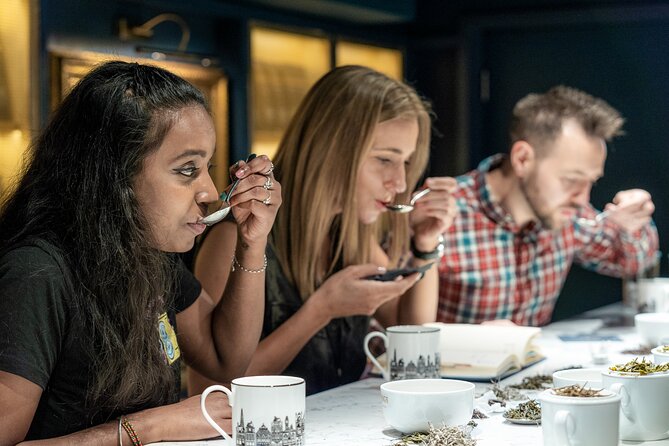
- Small group up to 5 people, so questions stay alive and the pace stays comfortable
- Six tea styles (White, Yellow, Green, Oolong, Black, Pu’erh) with guided tasting
- A structured way to evaluate tea, including rating and using description words
- How professionals slurp, so you learn to taste with your whole mouth
- Teas served in a relaxed setting that some people found chic, clean, and even air-conditioned on hot days
- A chance to shop right after, with some past students reporting a discount on products
Where It Starts: Twinings at 216 Strand (Temple)
Your class meets at 216 Strand, Temple, London WC2R 1AP. It’s convenient because it’s near public transportation, and you won’t need a car or complex navigation.
The session ends back at the same meeting point. That matters because you can plan an easy add-on after your tea time without guessing how you’ll get across town.
You can also read our reviews of more tours and experiences in London.



Two Hours of Tea History, From Bud to Cup
This is a 2-hour masterclass designed to connect story with sensation. You’ll learn where tea comes from, how it moves from plant to finished cup, and why quality matters.
You also get the Britain angle: when tea arrived, how it spread, and what it changed in everyday life. For a lot of people, that history is the hook, but the class keeps pulling you back to the senses so it doesn’t stay theoretical.
Guides for this experience can include instructors such as Alessandra, Liam, Rachel, Rosie, and Angelo. In the best sessions, you can feel the teaching style: animated, practical, and built for interaction, even in small groups.
The Six Tea Styles You’ll Taste (White to Pu’erh)
The tasting menu is the star: White, Yellow, Green, Oolong, Black, and Pu’erh. You’re not just sampling for novelty. The goal is to help you notice differences in aroma, flavor, and feel in the mouth.
Here’s what that means in real terms while you’re sitting there:
- You’ll taste across multiple processing styles, so you can compare what changes in the final cup
- You’ll learn what professionals look for when they evaluate tea quality
- You’ll practice paying attention long enough to notice the aftertaste, not just the first sip
Past students highlight that the range feels intentional. Even if you already drink tea, this kind of set nudges you to stop guessing and start comparing.
How the Pros Slurp: A Simple Way to Judge Tea
Tea can sound mysterious until someone teaches you how to test it. This class uses hands-on techniques, including the funny-but-effective idea of how professionals slurp.
That slurp isn’t about drama. It’s about getting tea to hit more areas of your palate so aroma and flavor show up more clearly.
You’ll also be asked to describe what you’re tasting, and you’ll get help with vocabulary. People mention getting examples of words to use, plus some structure around how to rate what’s in front of you, including referencing multiple categories during the tasting.
If you like learning by doing, this part is where the masterclass earns its keep. You leave with a method you can use at home, not just memories of what you tasted.
Small Group Size (Max 5) Means You Actually Get to Ask
This isn’t a big lecture room. The class is capped at a maximum of 5 people, and that size is a big deal for comfort and pacing.
In small groups, you can ask follow-up questions as they come up. You’re also more likely to get personal attention as you smell and sip the teas, instead of being rushed through a “here’s your cup” assembly line.
Some people also noted that even when the class was tiny, the instructor kept the energy up and stayed fully focused on making the experience work. That’s the kind of reliability you want, especially when you’re spending a non-trivial amount for a short outing.





The Setting: Basement Classrooms, Calm Air, and Focused Tasting
The experience is tied to Twinings and is run in a dedicated setting, which some past students described as in the basement of a chic, clean bar. That kind of space tends to be quieter and more controlled than a crowded public area.
A few people also mentioned that it was air-conditioned, which is worth noting if you’re visiting in warm weather. Tea tasting can get a little intense on the senses, so comfort matters.
The upside here is focus. You’re not trying to hold a cup while dodging foot traffic. You can smell properly, sip calmly, and concentrate on differences between tea styles.
Shop Time After Class and a Possible Product Discount
A common bonus is what happens right after the tasting: you get time to look around and apply what you just learned. Some past students specifically mentioned getting a discount on products after the class.
Even without assuming a discount every time, the value is clear: you’ll shop smarter. After learning what to notice in aroma and taste, you’re less likely to buy based on label claims or guesswork.
If you’re the type who brings a short list to the store, this timing helps you leave with tea that matches what you actually enjoy.
Price and Value: Is $69.45 Worth It?
At $69.45 per person for about 2 hours, you’re paying for three things at once: guided tea education, structured tastings across six categories, and a teachable tasting method.
Is it a bargain? Not really. But it can be good value if you:
- enjoy hands-on classes more than museum-style learning
- want a repeatable way to taste tea and not just drink it
- like the idea of trying tea varieties you might not pick on your own
The discount-on-products reports can also improve the math. If you plan to buy tea anyway, the class can act like a guided buying session.
Also, booking tends to happen about 28 days in advance on average. If your trip dates are fixed, don’t leave it to the last minute.
Who This Masterclass Is Best For
This fits best for people who want London flavor beyond the typical tourist stops. It’s also a great choice if you enjoy sensory experiences that are guided, not random.
You’ll likely enjoy it if:
- you drink tea sometimes and want to understand what you’re tasting
- you like interactive classes and asking questions
- you want a fun activity that works for different ages and experience levels
It can also be a good gift. Several people mentioned doing it with family across generations and having a shared, memorable experience.
If you’re not interested in tea at all, you might feel like it’s more work than payoff. But even then, the history angle and tasting technique can make it feel like a cultural lesson, not a lecture.
Should You Book This Twinings Tea Tasting Masterclass?
Book it if you want a focused, small-group class where you taste real tea variety and leave with a practical way to judge what’s in your cup. It’s especially worth it if you’re already curious about tea quality, processing styles, or how tea culture shaped Britain.
Skip it if you want big outdoor sightseeing, a long meal, or zero sensory attention. This is a short appointment built around tasting, smelling, and learning to describe what you taste.
If that sounds like your kind of afternoon, Twinings on the Strand is a solid bet.