REVIEW · LONDON
Buckingham Palace, St James Palace & Tea at Kensington Palace
Book on Viator →Operated by Top Tasting Tours · Bookable on Viator
Tea at a palace saves your London day. This 2-hour royal walk strings together the palace neighborhoods around Green Park, St James’s, and Buckingham, then ends at Kensington Palace for included high tea. I love the small group size (maximum 10, often 4–6), which keeps the pace calm and the stories personal. I also love that you’re fed like a true Brit, with sandwiches, Welsh scones, and cake.
One possible drawback: it’s a walking route with short stop times (about 5–10 minutes each), and palace access is limited unless you’ve selected state room entry at check-out. If you’re hoping for a long, ticketed hang inside Buckingham or St James’s, plan for mostly exterior sights.
In This Review
- Key Things to Notice Before You Go
- A Royal Walk Plan That Ends with High Tea
- Green Park Start: Quiet Passages at the Royal Edge
- St James’s Back Streets: Where Power and Old Clubs Collided
- Spencer House and the 18th-Century Townhouse Detail
- The Mall and Clarence House: Exteriors with the Right Context
- Buckingham Palace Area: The Site Story You Don’t Hear on a Postcard
- Wellington Arch, Bomber Command Memorial, Apsley House: Royal London Beyond Royalness
- Kensington Gardens Landmarks on the Way to Tea
- Kensington Palace Grounds: When the Story Ends in High Tea
- What High Tea Includes (and what to expect on your plate)
- How Long You Really Spend at Each Spot
- Price and Value: Is $173.45 a Good Deal?
- Getting the Most Out of the Tour (Without Overthinking It)
- Who Should Book This Royal Walk and Tea?
- Should You Book It?
- FAQ
- How long is the tour?
- How much does it cost?
- What group size should I expect?
- Where does the tour start and end?
- Is afternoon tea included?
- What does the afternoon tea menu include?
- Do I need to select anything to get palace access?
- What languages is the tour offered in?
- Do I need public transit money?
- Is there free cancellation?
Key Things to Notice Before You Go
- Small group pacing (max 10, often 4–6) means more Q&A and less standing around.
- Back-street royal routing takes you away from the densest crowds early on.
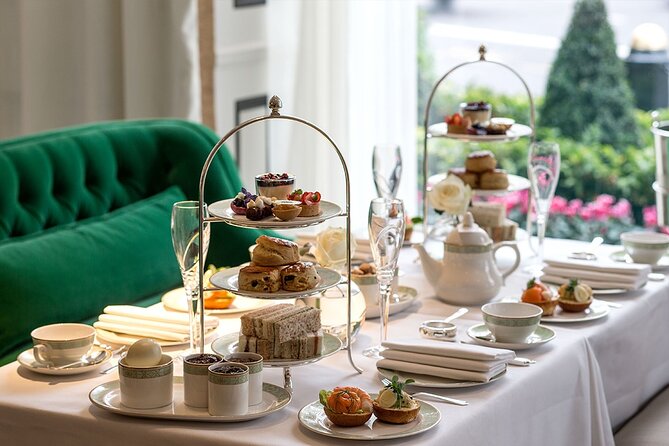
- High tea at the Orangery finishes the day with sandwiches, scones, and a royal cake selection.
- Tea history is part of the experience, not just background fluff.
- Optional State Rooms entry may be available if you select it at check-out.
- A guide sets the tone; names like Simon, David, and Tom come up again and again in guest feedback.
A Royal Walk Plan That Ends with High Tea
This tour works because it’s built for real time in London. You start at Green Park and move through the royal web of St James’s, the Mall area, and the Buckingham neighborhood—then you wrap up in Kensington Palace grounds with a proper afternoon tea.
The biggest “value move” here is the pairing: the guided walk gives you context for what you’re seeing, and the high tea gives you a scheduled place to sit down and reset. At about 2 hours total, it’s also a smart option when you’re trying to pack in major sights without losing half the day to queues.
And since the group is kept small, you don’t get that big-tour feeling. I like that you can actually hear the guide and keep your questions moving, especially when the stories get specific—like why certain buildings were chosen by particular royals, or how London’s social clubs grew out of older taverns and chocolate houses.
You can also read our reviews of more tours and experiences in London.

Green Park Start: Quiet Passages at the Royal Edge
You begin at Green Park near Piccadilly Underground. This is a strong start because it lets you get bearings quickly, and then the tour shifts away from the busiest routes.
You’ll hear why the park matters in royal London’s geography, but the practical part is what you notice on your feet: the guide leads you toward quieter angles and discreet passageways that steer you away from the standard “see-it-from-here” crowd flow. That small routing choice makes the early part feel calmer—and it helps the later stops feel smoother, too.
Stop time here is short (about 10 minutes), so come ready to walk with purpose. This isn’t the tour for taking slow photos for an hour. It’s for seeing, listening, and moving.
St James’s Back Streets: Where Power and Old Clubs Collided
From Green Park, you head into St James’s, the aristocratic quarter where the landed gentry and political world overlapped long before today’s “royal tourist” map.
What I like about this section is the way it’s framed: you’re not just marching past famous street names. You’re walking through smaller back streets where the guide connects the dots between older institutions—taverns and chocolate houses—and how some of them evolved into prestigious clubs in the seventeenth century.
This stop is also brief (about 10 minutes), but the goal is to change your lens. After this, St James’s feels less like a “royal address” and more like a place where London social life and decision-making braided together.
Spencer House and the 18th-Century Townhouse Detail
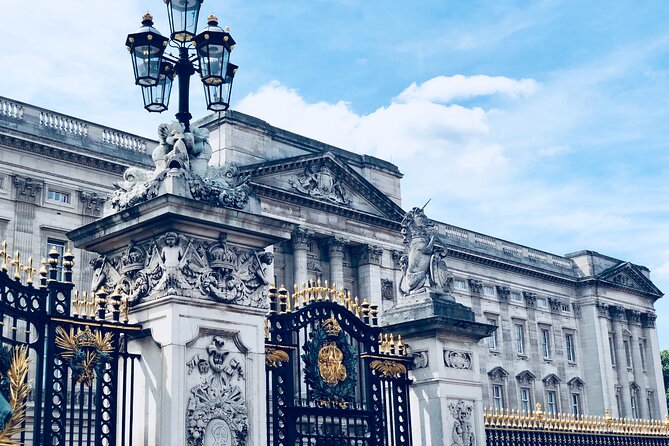
Next is Spencer House, built between 1756 and 1766 for John, first Earl Spencer—an ancestor of Diana, Princess of Wales.
Even with limited time (about 5 minutes), you get something useful: you learn how this kind of townhouse fits into London’s larger royal story. It’s not a palace you tour for hours; it’s a surviving example of what elite residence life looked like before today’s streamlined tourist circuit.
This is one of those stops where listening matters more than sight lines. If you’re paying attention, you’ll notice the “finish” of the architecture and understand why this building is singled out as London’s finest surviving eighteenth-century town house.
The Mall and Clarence House: Exteriors with the Right Context
The tour pauses at the Mall area and gives context around St James Palace—including the key point that it’s not regularly open for visitors. You can attend Sunday services at the Chapel Royal and the Queen’s Chapel, but for this walk, you’re mainly seeing the area through a historical guide’s lens.
Then you move to Clarence House, built between 1825 and 1827 to a design by John Nash. The guide ties it to the Duke of Clarence, who became King William IV (reigning 1830–1837). The practical story here is why he preferred Clarence House over the adjacent St James’s Palace: the older Tudor building was too cramped for his liking.
This is great listening material because it explains something you might otherwise miss when you’re just scanning façades. The architecture becomes a clue—about comfort, power, and preference.

Buckingham Palace Area: The Site Story You Don’t Hear on a Postcard
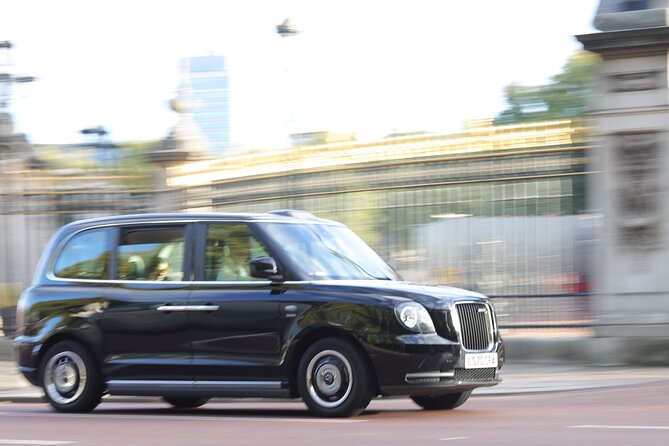
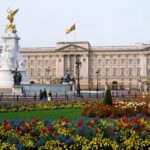
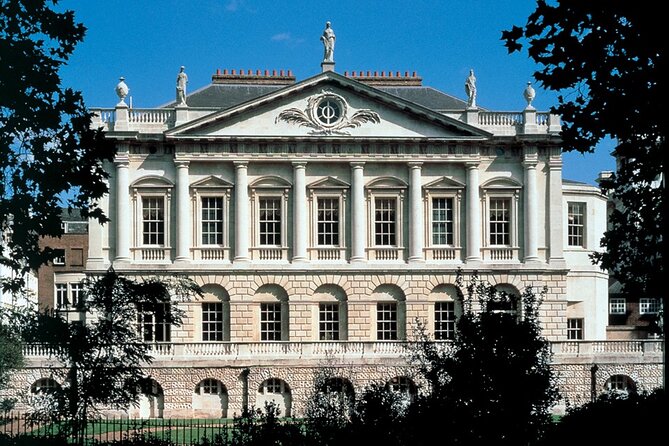
You’ll reach Buckingham Palace for about 5 minutes as part of the walk through the surrounding area.
Here’s the kind of detail that makes the quick stop feel worthwhile: the guide explains the site’s deep layers, including that the future palace land was part of the Manor of Ebury (Eia), and that a river system—the Tyburn—still flows beneath the courtyard and south wing. Ownership shifted across major moments in English history, including ties to Edward the Confessor and Edith of Wessex, and later shifts after the Norman Conquest.
The quick timing matters. This isn’t a “tour the palace” experience by default, so don’t come expecting long, slow interior viewing. Come for the story and the feel of the palace neighborhood—then let the high tea be your main time inside something special.
Wellington Arch, Bomber Command Memorial, Apsley House: Royal London Beyond Royalness
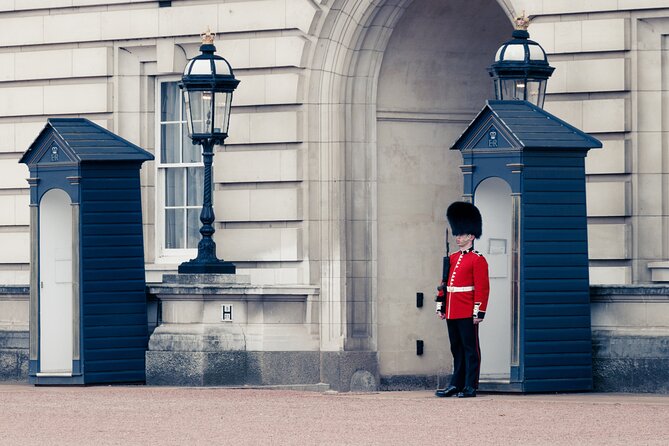
London’s royal zone isn’t just pageantry. The tour nudges you into a broader view with two big “tone changes.”
First is Wellington Arch (Decimus Burton, built 1828). The guide points out the design details, including the four-horse chariot and the figure of peace (added in 1912). The mention of a central passage reserved for royalty adds a useful layer: even monuments tied to national pride had rules and access patterns.
Then comes the Bomber Command Memorial, facing Hyde Park Corner. This stop gives real weight. It commemorates RAF Bomber Command crews and marks the sacrifice of 55,573 aircrew from multiple countries, plus civilians killed during raids. It’s short (about 5 minutes), but it doesn’t feel like filler. It’s a reminder that this part of London carries memory as well as monarchy.
Next, you’ll see Apsley House, built in red brick by Robert Adam between 1771 and 1778 for Lord Apsley, the Lord Chancellor. Some Adam interiors remain, and the guide notes the Piccadilly Drawing Room and the Portico Room behind the giant Corinthian portico added by Wellington.
This sequence is one reason I think the tour works: it keeps you moving through contrasts—royal power, national pride, and wartime remembrance—without turning the day into a textbook.
Kensington Gardens Landmarks on the Way to Tea
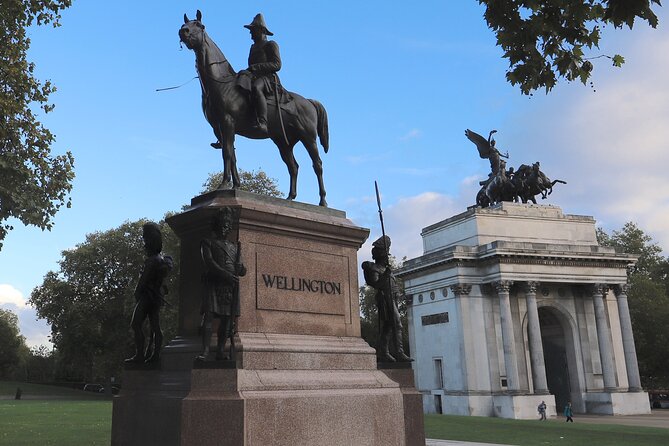
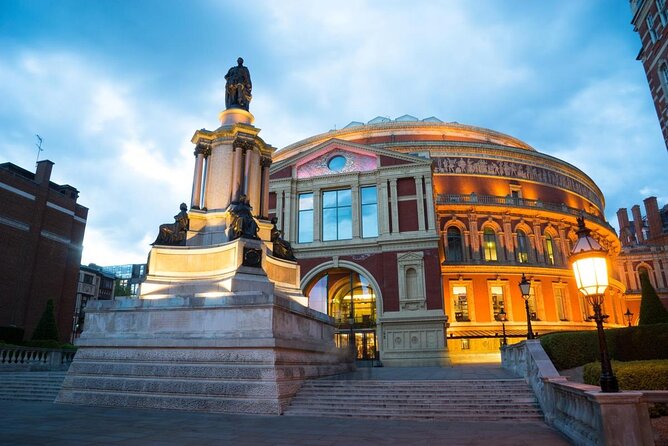
As the walk continues, you pass Royal Albert Hall on the northern edge of South Kensington. The hall’s capacity (about 5,272) and its opening by Queen Victoria in 1871 provide solid grounding. The guide also connects the space to the mix of performers that have appeared there over the years.
You then get to Albert Memorial in Kensington Gardens, another quick stop (about 5 minutes). It commemorates Prince Albert, who died in 1861 of typhoid. I like that the guide doesn’t treat it as a pretty statue stop; it ties the monument to a specific historical event.
And then you’re on your way to the highlight: Kensington Palace.
Kensington Palace Grounds: When the Story Ends in High Tea
You’ll spend time at Kensington Palace as the tour’s end zone, with high tea served at the Orangery.
Kensington Palace gets dramatic quickly in the palace-area story you’re told: George II rose at 6:00 am, had hot chocolate, then suffered a fatal event soon after. The guide shares that a post-mortem found a thoracic aortic dissection, and that he was succeeded by George III, with burial at Westminster Abbey. The story also includes the detail about instructions for the sides of the coffins to be removed so their remains could mingle.
Again, timing is short (about 5 minutes), but the payoff is that you arrive at tea with context—not just curiosity.
What High Tea Includes (and what to expect on your plate)
The afternoon tea is a big part of why people rate this so highly.
You’ll get:
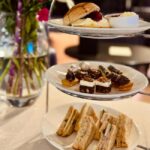
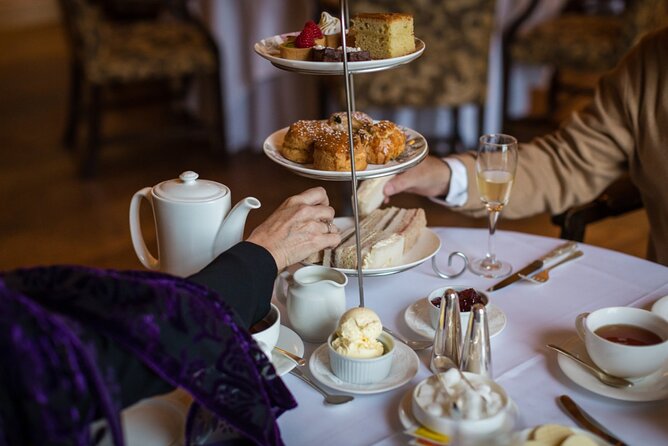
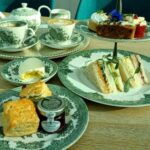
- Delicate finger sandwiches as a starter (the variety changes by season; gluten-free, vegan, and halal options can be catered for)
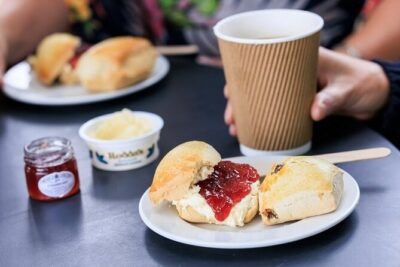
- Welsh scones, served with clotted cream and strawberry jam (you may have options with or without raisins, and dietary preferences can be accommodated)
- A royal cake selection for dessert (the exact cakes vary by season)
You’ll also learn about the history of tea drinking in England, which is a nice touch because it turns the meal into a story you can carry home.
One practical bonus: you’re given a private table at the afternoon tea venue. That matters if you don’t want to spend your “tea time” scanning for seating.
Alcohol isn’t included, but you can purchase it during the service. If you want to keep this purely classic and kid-friendly, you can.
A detail worth noting from guide-and-meal culture: some guests highlight that the tea experience is served on Princess Diana’s royal china. Even if you’re not a “china person,” it adds a real sense of occasion.
How Long You Really Spend at Each Spot
You’re looking at about 2 hours total, with short stop times:
- Green Park and St James’s are around 10 minutes
- Most of the other stops are about 5 minutes
- You end at Kensington Palace for the Orangery high tea
So here’s the practical expectation: you’ll see a lot of “important London” in a short time, but you won’t get long interior visits unless state room entrance is selected at check-out. The walking pace is designed so the guide can tell the key stories without you needing to read placards all day.
If you want the in-depth palace experience, you can use this tour as your orientation, then return later under your own steam. If you want the day to be simple and satisfying, this fits that goal.
Price and Value: Is $173.45 a Good Deal?
At $173.45 per person, the value depends on what you compare it against.
If you just wanted exteriors and a map, you’d spend less. But the included parts are doing the heavy lifting:
- Small group setup (max 10, often 4–6)
- A guide-led walk with royal-area storytelling
- Afternoon tea with sandwiches, scones, and cake
- A private table
- Tea drinking history as part of the experience
Also, the tea isn’t a token bite. It’s a full afternoon tea menu with classic components like scones and jam, plus cake. That’s where a big chunk of the cost often gets justified.
If you add optional State Rooms entry (when selected), the value rises again—because then you’re blending guided context, scenic location, and ticketed access.
Bottom line: you’re paying for guidance and the meal, not just walking by famous buildings.
Getting the Most Out of the Tour (Without Overthinking It)
A few simple tips make your day smoother:
- Wear comfortable shoes. This is not an all-day stroll, but it’s still a walking day with multiple stops.
- Bring a charged phone and be ready to use your mobile ticket.
- Plan for quick photo moments rather than long stops at each site.
- If you care about the Changing of the Guard timing, don’t assume this tour centers on it. You’re on a route with short viewing windows.
- If you have dietary needs, request them in advance. Options include gluten-free, vegetarian, vegan, and halal.
Who Should Book This Royal Walk and Tea?
I’d book this if you:
- Want a high tea experience in a royal setting, without handling planning details
- Like walking tours but don’t want a workout disguised as sightseeing
- Want context for the Buckingham/St James/Kensington area beyond what you’ll get from your phone
- Prefer a small group day with a guide who can keep the stories moving
It’s also a good pick for families, based on how guides have been described as sharing information in ways that work across ages. If your group includes people who want the history and people who just want the tea, this format gives both.
Should You Book It?
If your ideal London day is: quick royal highlights + a guided story + a real meal at the end, then yes, I think you should book it. The small group size keeps it friendly, and the included high tea at Kensington Palace is the kind of “finish strong” plan that turns a short day into a memorable one.
Skip it (or pair it with a second plan) if you’re mainly hunting for long palace interior time. This is built for smart orientation and classic afternoon tea, not for spending hours inside State Rooms unless you’ve selected that option.
FAQ
How long is the tour?
The duration is about 2 hours (approximately).
How much does it cost?
The price is $173.45 per person.
What group size should I expect?
It has a maximum of 10 travelers, and it’s typically around 4–6 people.
Where does the tour start and end?
It starts at Green Park Underground (Piccadilly, London W1J 9DZ) and ends at Kensington Palace (Kensington Gardens, London W8 4PX) at the Orangery, where tea is hosted.
Is afternoon tea included?
Yes. Afternoon tea includes sandwiches, scones, and cakes.
What does the afternoon tea menu include?
You can expect delicate finger sandwiches, Welsh scones with clotted cream and strawberry jam, and a royal cake selection. Gluten-free, vegan, and halal options are catered for depending on request.
Do I need to select anything to get palace access?
State rooms entrance is included only if you select it at check-out. Otherwise, palace entrance is not included.
What languages is the tour offered in?
The tour is offered in English.
Do I need public transit money?
Bus fare is not included. You should bring a contactless card or Oyster card, and the cost noted is £1.75 per person.
Is there free cancellation?
Yes. You can cancel for a full refund up to 24 hours in advance. If you cancel less than 24 hours before the start time, the amount paid is not refunded.