REVIEW · NAGOYA
Experience Japanese calligraphy & tea ceremony at a traditional house in Nagoya
Book on Viator →Operated by 蝶ノ屋 · Bookable on Viator
Ink and matcha calm your mind in Nagoya. This small-class experience pairs a quick Sengoku period history talk with hands-on Japanese calligraphy, then finishes with a tea ceremony where you drink matcha and try serving it yourself; I especially like the careful step-by-step guidance and the peaceful traditional-house setting. One thing to consider: beyond your finished, framed calligraphy piece, the tour does not include extra souvenirs, so don’t expect a shopping bag of extras.
In Nagoya, this kind of cultural practice feels practical, not performative. You’re not stuck in a loud workshop or a sightseeing hall—you’re in a home-style setting with tatami mats, shoji paper screens, and the kind of traditional garden calm that’s getting harder to find. With a small group (max 6) and English support, it’s a good choice if you want culture with context and time to ask questions.
In This Review
- Key things you’ll notice right away
- Entering a traditional Nagoya kominka, not a museum hall
- Sengoku period history briefing: the 15-minute context that makes it click
- Japanese calligraphy: from grinding ink to choosing your own symbol
- How the ink part teaches patience
- Brush technique and how to get started
- Pick a meaning-based symbol, then write a clean copy
- A practical consideration
- Tea ceremony in the tea room: matcha as a guest, then as the host
- Why matcha time is more than a drink
- Who’s this best for in Nagoya?
- Price and logistics: what $179.63 really covers
- Hosts and atmosphere: where the warmth makes learning easier
- What you should do before you go (simple prep)
- Should you book Japanese calligraphy and tea in Nagoya?
- FAQ
- How long is the Japanese calligraphy and tea ceremony experience?
- What’s included in the price?
- Are souvenirs included?
- What language is it taught in?
- How many people are in the group?
- Is the location hard to reach?
- Is confirmation provided after booking?
- What should I tell you if I have dietary allergies?
- What are the cancellation rules?
Key things you’ll notice right away
- Small-group pace (up to 6): you get room for questions and coaching, not just a fast demo.
- A Sengoku story starter (about 15 minutes): you get historical framing before you start writing and sipping.
- Real calligraphy basics: you learn how to handle the brush and how to grind ink the traditional way.
- A finished framed keepsake: your clean-copy calligraphy work is framed as part of the experience.
- Matcha, then hands-on serving: you start as a guest, then practice the guest role yourself.
- Hosts who set a welcoming tone: the experience is repeatedly praised for warmth and clarity.
Entering a traditional Nagoya kominka, not a museum hall
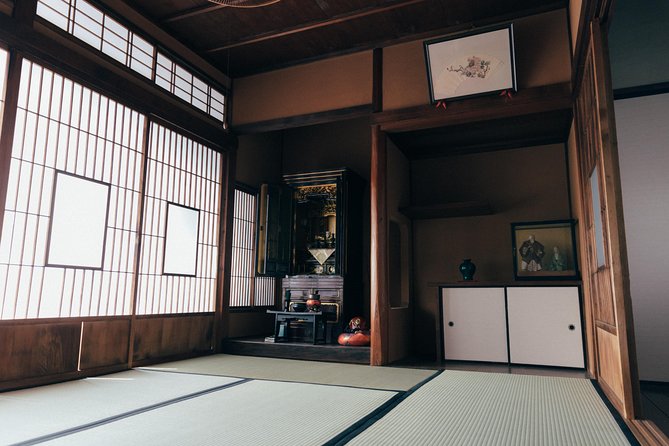
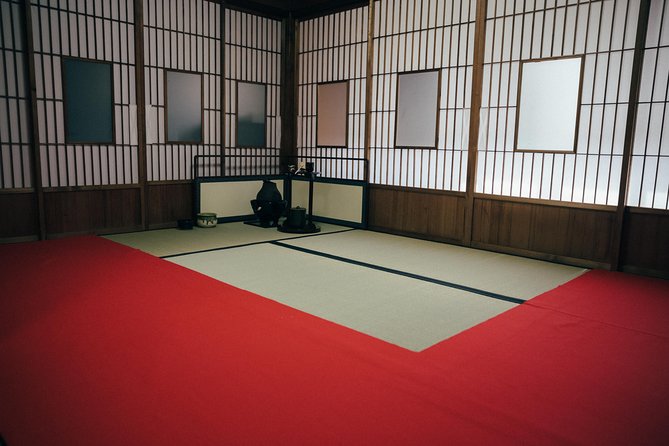
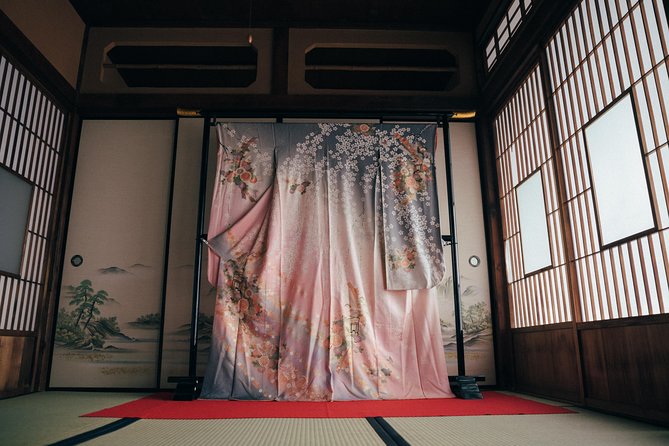
If you want Japanese culture that feels lived-in, start with the setting. This experience takes place in a kominka, a traditional Japanese farmhouse-style house. Inside, you’ll see the classic elements that usually only show up in photos: tatami mats underfoot, shoji (paper walls) that soften the light, and traditional garden views that help everything slow down.
I like this kind of venue because it changes your mindset. A calligraphy brush in a modern room can feel like a craft class. In a home with tatami and sliding paper screens, it becomes closer to a ritual you’re learning to respect. You’re also in Nagoya, a city tied to the legacy of powerful figures from the Sengoku period—so the whole experience has a built-in cultural “why,” not just a “how.”
You can also read our reviews of more tours and experiences in Nagoya.
Sengoku period history briefing: the 15-minute context that makes it click
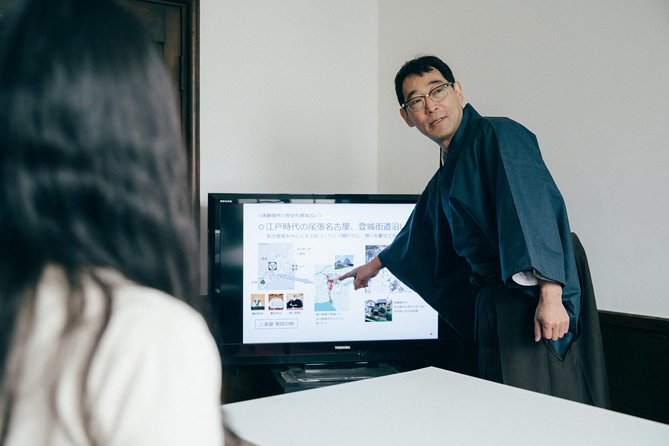
Before you pick up a brush, you’ll get an easy-to-follow history explanation. Expect about 15 minutes of commentary with a slide show focused on Nagoya during the Sengoku era.
The talk centers on why the Owari district (including Nagoya) mattered, especially as a base for samurai culture. You’ll connect the dots between Nagoya and major names of the period—Oda Nobunaga, Toyotomi Hideyoshi, and Tokugawa Ieyasu—and you’ll see how that context shaped the culture people associate with feudal Japan.
I find this step matters because calligraphy and tea aren’t just artistic skills. They’re both connected to discipline, etiquette, and attention. When you understand the background—even at a basic, story-first level—you’ll watch for the “meaning behind the form” as you go.
Japanese calligraphy: from grinding ink to choosing your own symbol
Now for the main event: the calligraphy practice. The experience follows a very hands-on flow, and it’s built around the basics.
How the ink part teaches patience
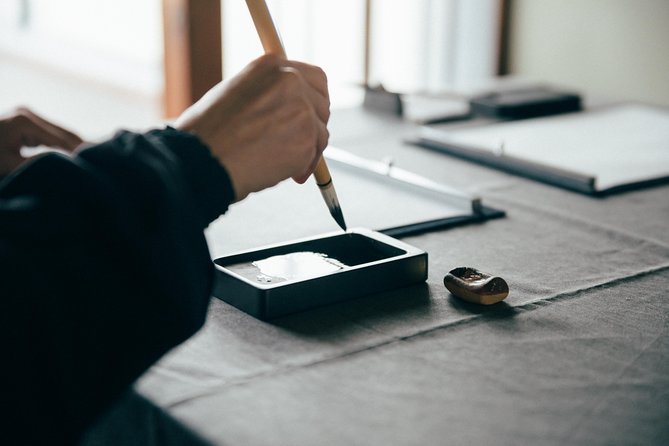
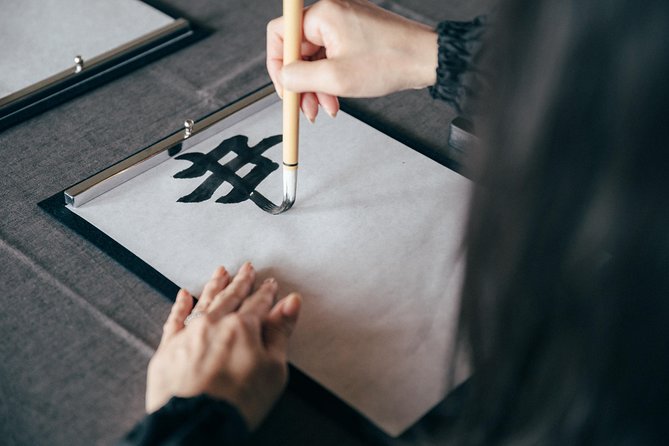
You’ll begin by dripping water on the inkstone, then rubbing an ink-stick slowly. That step isn’t filler. It forces your hands to slow down and your mind to focus. You’ll also notice the distinct ink smell that comes with the traditional grinding process—something you can’t fully replicate with pre-made ink.
I like that this portion is quiet and tactile. It turns calligraphy into a practice of control, not just artistic output. And when you’re later asked to hold the brush and move it correctly, your body already understands the pace.
Brush technique and how to get started
You’ll learn core basics like how to hold the brush and how to move it. The goal here is not perfection in one sitting. It’s getting the mechanics right enough that your writing looks intentional.
Pick a meaning-based symbol, then write a clean copy
After the fundamentals, you’ll choose symbols with meaning and designs from the sample options. This is one of the best parts for first-timers, because you’re not stuck with a random alphabet lesson. You select something that fits what you want the piece to represent.
Then you’ll write on a clean copy, and your finished work is framed as a souvenir. That framing detail is worth paying attention to. It means your effort doesn’t end on the table—it leaves the experience ready to display.
A practical consideration
Calligraphy is calming for many people, but it’s also detail-heavy. If you arrive feeling rushed or stressed, plan to slow down with it. The experience works best when you’re willing to take your time for about a couple of hours total (including tea).
Tea ceremony in the tea room: matcha as a guest, then as the host
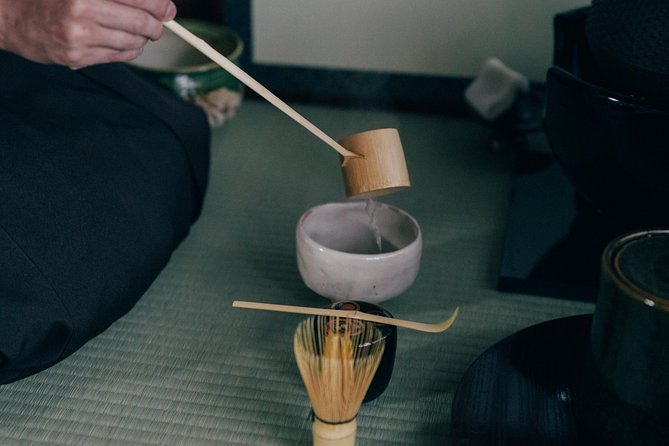
After calligraphy, you’ll move to the tea room for the tea ceremony portion. This segment is structured in a way that helps you learn without drowning in rules.
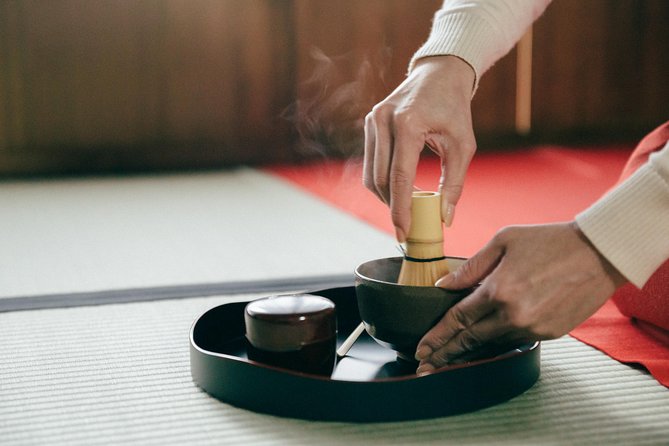
First, you’ll get an explanation of the tea room setting and utensils. Then you’ll try matcha tea first, served to you by the host. When you get used to the atmosphere, you’ll switch roles and practice serving tea yourself.
I like this two-step approach. It’s easier to understand the motions when you’ve already felt the rhythm as a guest. You can compare what you’re doing to what you just experienced—how to hold, how to present, and how to slow down enough that the ritual feels respectful.
Why matcha time is more than a drink
The experience is built around calm. You’re not just sipping a beverage—you’re participating in a structured moment where attention is the point. That’s the cultural value. Even if you’ve had matcha before, the tea ceremony format teaches you how people connect taste, etiquette, and mindfulness.
The tour also includes some Japanese sweets along with the tea, and the calligraphy and tea are paired so you’re not bouncing between unrelated activities.
Who’s this best for in Nagoya?
This works well if you want a true cultural skill you can take home—without needing prior experience.
You’ll probably love it if:
- You’re curious about Japanese culture beyond photos and landmarks
- You want a small-group class where you can ask questions
- You like crafts with clear steps and a calming pace
- You want the Sengoku-era context to make tea and calligraphy feel connected
It may be less ideal if:
- You’re expecting a fast, high-energy attraction
- You’re shopping mainly for lots of souvenirs (only your calligraphy piece is effectively part of the keepsake outcome, and extra souvenirs are not included)
- You need a long walking tour; this is an indoor, guided experience
The experience is described as suitable for most travelers, so it’s not restricted to advanced levels. You’ll be supported, and you only need basic willingness to follow instructions and move at a gentle pace in a traditional setting.
Price and logistics: what $179.63 really covers
At $179.63 per person for about 2 hours 30 minutes, this isn’t a cheap impulse activity. But for what you get, the cost starts to make sense.
You’re paying for:
- A guided calligraphy lesson with all the tools provided
- A history briefing with slides about Nagoya in the Sengoku period
- A structured tea ceremony with explanations
- Matcha tea plus Japanese sweets
- A framed calligraphy souvenir created during the session
- A small group size (maximum 6), which often means less rushed teaching
The experience also uses a mobile ticket, and it’s near public transportation, which helps you fit it into a city day without excessive hassle. The fact that it’s booked about 17 days in advance on average also suggests it’s popular—so if you’re traveling in a busy season, you’ll do better by reserving ahead.
One more thing I appreciate: the hosts are described as warm and the location is reasonably easy to find. That’s not glamorous, but it matters a lot when you’re learning something new and you just want the day to start smoothly.
Hosts and atmosphere: where the warmth makes learning easier
The best praise in the feedback focuses on the human side—clear teaching and welcoming hospitality. Names shared include Yuzo Mori and his wife, who are recognized for letting participants take part in Japanese culture in their traditional home.
That matters because calligraphy and tea ceremony can feel intimidating if you think you must be an artist or a tea expert. A good host keeps the experience grounded. Here, the tone is described as warm, and the combination of the history explanation, calligraphy instruction, and tea guidance helps you feel capable step by step.
And since this happens in a home environment, the quiet matters. You’ll feel the contrast between a relaxed room and a rushed tourist environment. The silence is part of the teaching.
What you should do before you go (simple prep)
No special gear is required based on the provided details, and most people can participate. Still, a little planning makes the experience smoother.
- Arrive with time to settle in. A traditional-house setting rewards calm arrival.
- If you have allergies, let the organizers know in advance. The tea comes with sweets, and they provide sweets.
- Keep expectations realistic: you’re learning fundamentals and producing a framed keepsake, not competing in a calligraphy contest.
- If you’re traveling with someone who prefers photos over participation, this might feel more engaging for the person who enjoys hands-on activities.
Should you book Japanese calligraphy and tea in Nagoya?
I think you should book this if your Nagoya plan has room for something quiet and skill-based. It’s strong value when you want an experience that includes both teaching and context: the Sengoku-era briefing gives you meaning, the calligraphy gives you hands-on practice, and the tea ceremony adds cultural rhythm with matcha and sweets.
Skip it if you’re mainly chasing outdoor sightseeing, or if you’re hunting for lots of included souvenirs. This is about learning and participating—your framed calligraphy is the main keepsake payoff.
FAQ
How long is the Japanese calligraphy and tea ceremony experience?
It runs about 2 hours 30 minutes.
What’s included in the price?
You’ll get matcha tea and Japanese sweets, and all tools of Japanese calligraphy.
Are souvenirs included?
The tour does not include souvenirs beyond what’s part of the calligraphy experience (your finished calligraphy is framed as part of the activity).
What language is it taught in?
The experience is described as being with English.
How many people are in the group?
The group size is limited to a maximum of 6 travelers.
Is the location hard to reach?
It’s near public transportation, and the location is described as reasonably easy to find.
Is confirmation provided after booking?
Confirmation is received at the time of booking, unless you book within 7 days of travel—in that case, confirmation arrives within 48 hours subject to availability.
What should I tell you if I have dietary allergies?
You should tell the organizers in advance if you have allergies, since sweets are provided with the matcha.
What are the cancellation rules?
This experience is non-refundable and cannot be changed for any reason.