REVIEW · FUJISAWA
Trip to Kamakura & Enoshima: Shrines, Seaside, Temples &Tea
Book on GetYourGuide →Operated by Machinovate Japan Ltd. · Bookable on GetYourGuide
Bamboo, sea air, and a giant Buddha in one day. I like the matcha and wasanbon moment in a bamboo-temple tea house, and I really like the Enoden train ride that feels like you stepped into an older Japan. One catch: this is a walking-and-outdoors kind of trip, so plan for several hours on your feet and wear shoes that don’t hate you.
You’ll start at 08:00 outside Shinjuku Station South Gate and spend the day bouncing between temples, shrines, and coastal viewpoints. For the $150 price, the smart part is that key admissions and the Enoshima Kamakura Freepass for tour transport are included, so you’re not constantly doing money math. The day can also run to schedule changes on busy days, so keep your socks ready for a little timing wiggle.
In This Review
- Quick hits before you go
- Why Kamakura and Enoshima work so well in a single day
- From Shinjuku to Fujisawa: getting rolling the easy way
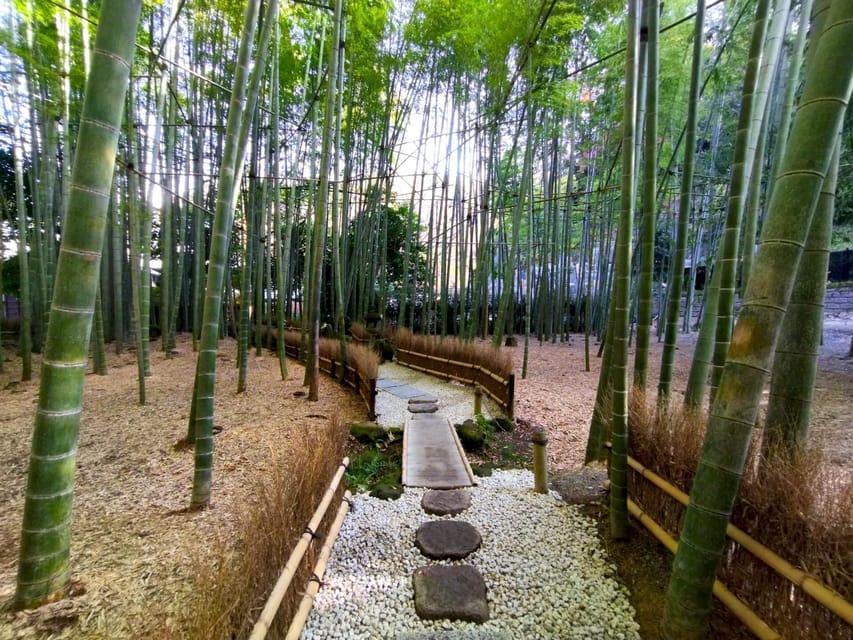
- Hokokuji Bamboo Forest and tea house matcha: the calm part of the day
- The matcha and wasanbon moment
- What could be a drawback here
- Shirahata Shrine: red torii, bridges, and koi feeding
- Feeding Japanese koi
- Kamakura’s street-food and shopping time: where the day gets fun
- How to make the most of your 1-hour window
- Kōtoku-in (Great Buddha): seeing it from the outside is only half the point
- Why the inside matters
- A practical drawback to consider
- Enoshima by Enoden: the retro train ride that makes the coast feel close
- Why this matters for your trip
- Enoshima Island: coastline walks, views, and the observatory climb
- Mount Fuji is a bonus, not a guarantee
- Possible sunset timing
- The return trains: wrapping the day back to Shinjuku
- Price and value: why $150 can feel fair here
- The main value trade-off
- Who this tour suits best (and who should think twice)
- My booking advice: should you book this Kamakura and Enoshima day trip
- FAQ
- FAQ
- Where is the meeting point for the tour?
- What time does the tour start?
- How do we travel between Kamakura and Enoshima?
- What is included in the Enoshima Kamakura Freepass?
- Is the matcha and sweet experience included?
- Can I feed the koi at the shrine?
- Can you enter the Great Buddha statue?
- Is lunch included?
- Are Enoshima observatory fees included?
- What should I do about weather and walking?
- Is there a chance to see Mount Fuji?
- Is free cancellation available?
Quick hits before you go
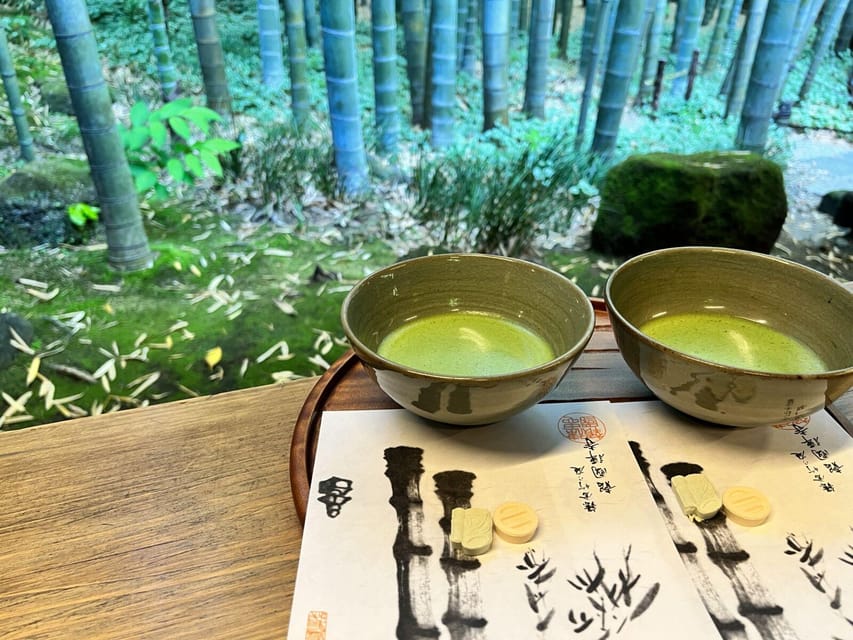
- Bamboo-temple tea break with matcha and wasanbon (served with a view of bamboo)
- Shirahata Shrine koi feeding in a calm pond setting
- Kōtoku-in Great Buddha entry so you don’t just look from the outside
- Enoden (local seaside train) ride through Kamakura area streets and toward the shore
- Enoshima observatory + shrine views, with Mount Fuji only on very fair weather days
Why Kamakura and Enoshima work so well in a single day
If you’ve only got one day to pull yourself out of Tokyo mode, Kamakura and Enoshima are one of the cleanest choices. You get old-school Japan in Kamakura—shrines, a bamboo temple, and the Great Buddha—then you shift to sea air and big coastal scenery on Enoshima.
This tour is designed for exactly that rhythm: walk a little, learn a little, eat a little, then ride a local train and climb for views. It’s not a “see everything by bus and zoom past it” day. It’s closer to a guided route that gives you context while still giving you time to wander.
And since this uses public transport, it’s also a chance to feel how locals actually move between these places.
From Shinjuku to Fujisawa: getting rolling the easy way
The day starts at 08:00 outside Shinjuku Station South Gate at the Green Window ticket office (midori no madoguchi). Your guide will be holding a Snow Monkey Resorts sign, which helps a lot when you’re standing in a sea of people.
Then you take the train from Shinjuku toward Fujisawa. The total train time early on is about 60 minutes to Fujisawa (the itinerary lists 85 minutes for the train portion overall), and the timing is part of the day’s flow. You’re not just commuting—you’re setting up the order of visits so you hit Kamakura first, then Enoshima later when the light is often better for coastal views.
Practical note: because this tour uses public transport, timing can shift a bit if traffic is poor or the day is busy. So don’t make any tight plans for right after you get back to Shinjuku.
Hokokuji Bamboo Forest and tea house matcha: the calm part of the day
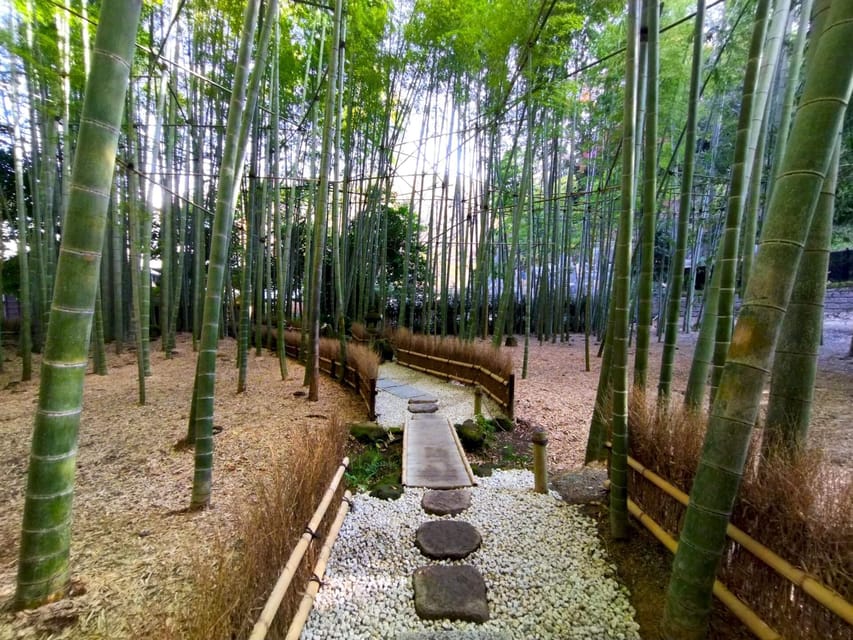
Kamakura can feel busy, but the first major stop slows everything down. After arriving at Kamakura Station, you walk about 30 minutes to Hokokuji, a temple area known for its bamboo forest and tea-house connection.
On the way in, you walk along a river and pass traditional houses. That walk matters because it sets the scene before you even reach the bamboo. When you arrive, you don’t feel like you’ve been dropped into a photo spot. You feel like you’re moving through a real neighborhood-to-temple transition.
The matcha and wasanbon moment
At Hokokuji, the best part for many people is the tea experience: you’ll have traditional matcha along with wasanbon, a classic Japanese sweet. This is timed so it doesn’t feel rushed. You’re also doing it in a temple setting overlooking the bamboo forest, which makes the whole tea break more than just tasting something.
If you care about tea culture, this stop is a highlight because the guide explains the importance of tea ceremony and tea culture in Japan, not just the ingredients in your cup.
What could be a drawback here
Bamboo temples can mean some steady walking on uneven ground and stairs depending on how your group moves. If you’re sensitive to hills or steps, bring that in mind early so you’re not “making it work” with weak shoes.
Shirahata Shrine: red torii, bridges, and koi feeding
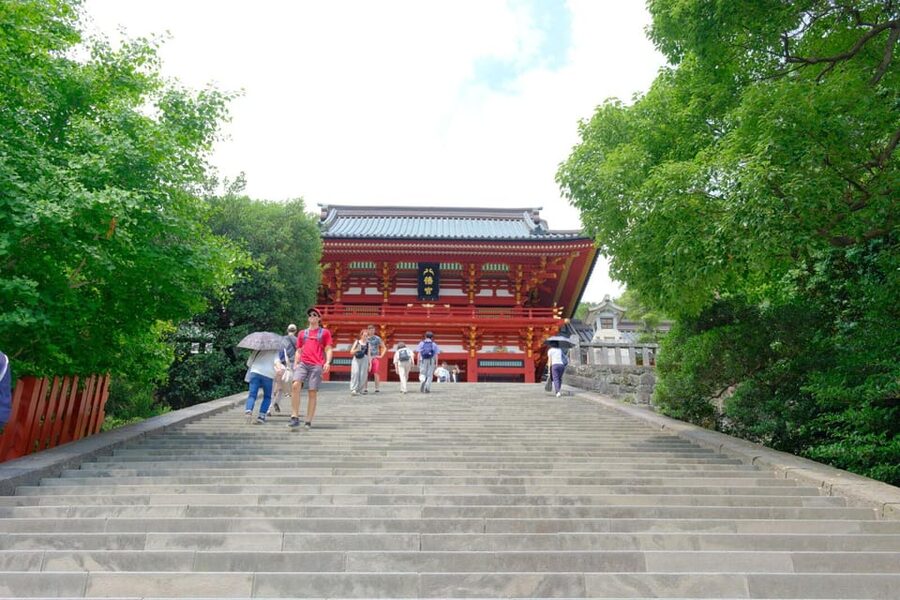
Next comes Shirahata Shrine, reached by walking about 20 minutes back toward central Kamakura. The shrine is known for its large red torii gate and bridges that lead you into the complex.
This stop hits three things at once:
- the visual iconography (that red gate and the approach)
- the history context your guide provides
- and the hands-on moment, koi feeding
Feeding Japanese koi
You’ll spend about 30 minutes at Shirahata Shrine, including feeding the resident koi in the pond. This is one of those small experiences that sticks in your brain because it’s not just looking at something. You’re interacting with the setting, and the pond makes the whole area feel peaceful even if Kamakura streets are busy outside the shrine gates.
A quick reality check: feeding koi is time-based. If you show up late for your group’s meeting point, you might miss the moment. So treat this like a scheduled activity, not a casual stop.
Kamakura’s street-food and shopping time: where the day gets fun
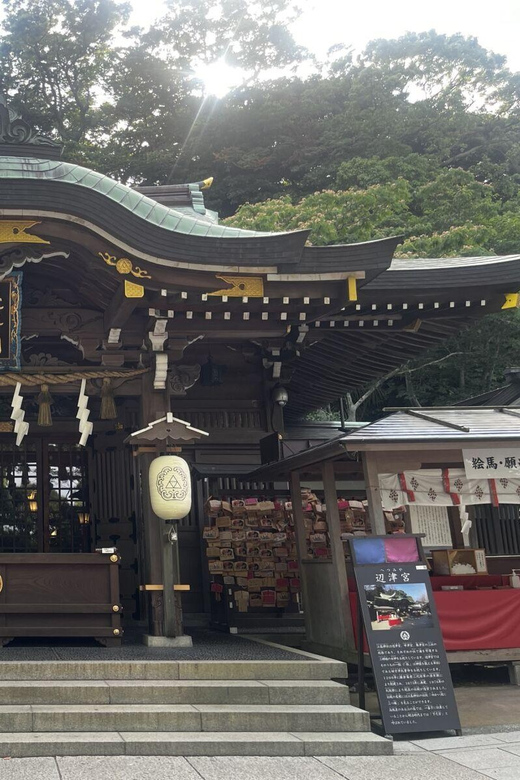
After the shrine, you walk about 5 minutes to Kamakura’s main shopping and eating district. This is your lunch break area, with about 1 hour of free time.
This is where the tour turns practical. Your guide gives you introductions and local food recommendations, then you get to choose what you actually want to eat. Many people love this part because Kamakura street-food options can be almost too many. You’re not forced into one set meal, and you can hunt for your own favorites in the time you have.
How to make the most of your 1-hour window
Think of lunch here as two jobs:
1) eat something distinctly Kamakura
2) pick a souvenir without panic-buying
Because food and drinks aren’t included, plan to pay for whatever you choose. And because the group moves on afterward, set a timer in your head. If you get distracted, you’ll be the one sprinting back to the meetup point, and nobody wants that kind of workout.
Kōtoku-in (Great Buddha): seeing it from the outside is only half the point
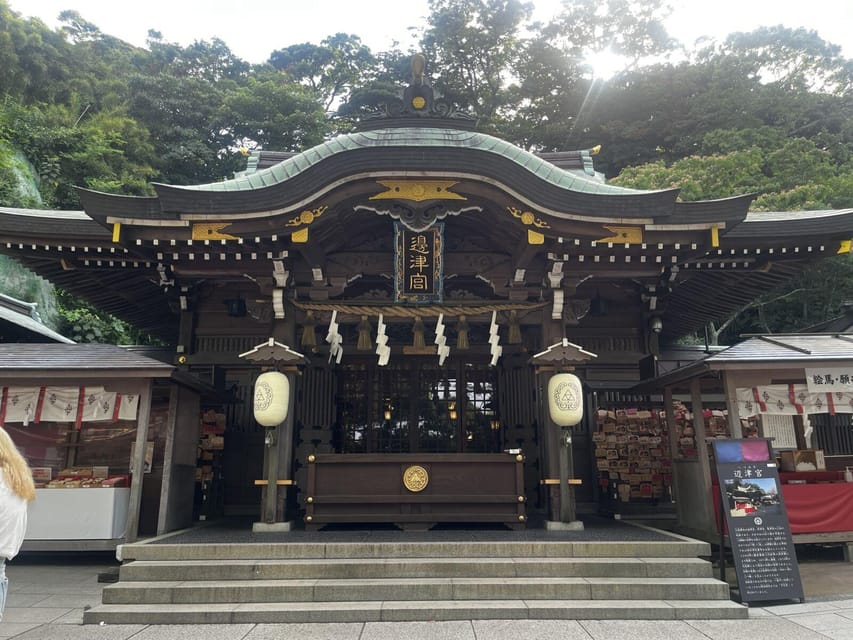
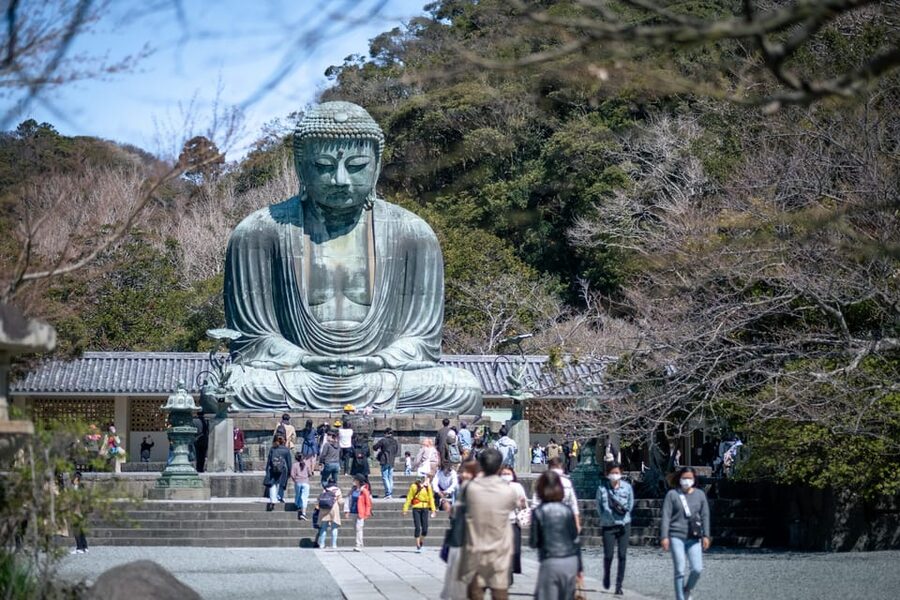
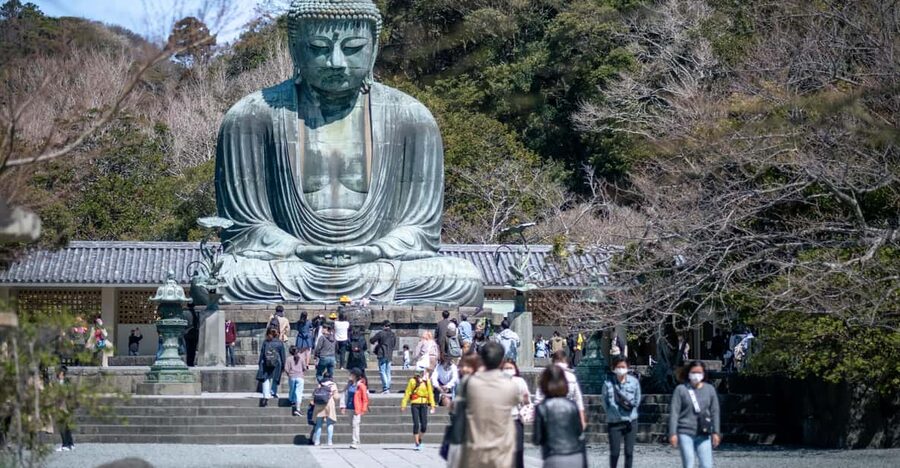
Then you shift to the most famous Kamakura sight: Kōtoku-in, the temple known for its Great Buddha statue. This is where the day’s “wow” factor gets heavy.
The tour includes a guided visit for about 30 minutes, plus important admission perks. You’re not limited to exterior viewing. You can enter the Great Buddha statue, which is a huge difference from most sightseeing. You get to experience the power and scale from the inside, not just look up at it from the courtyard.
Why the inside matters
Large statues can be impressive from outside, but entering changes the sensation. The size becomes real in your body, not just your eyes. It’s also a different kind of photo opportunity because the interior experience isn’t something you can replicate by standing behind a barrier outside.
A practical drawback to consider
This stop is part of a busy sightseeing route. If crowds swell, your time inside can feel tight. Go at the pace that lets you absorb it rather than chasing every photo angle.
Enoshima by Enoden: the retro train ride that makes the coast feel close
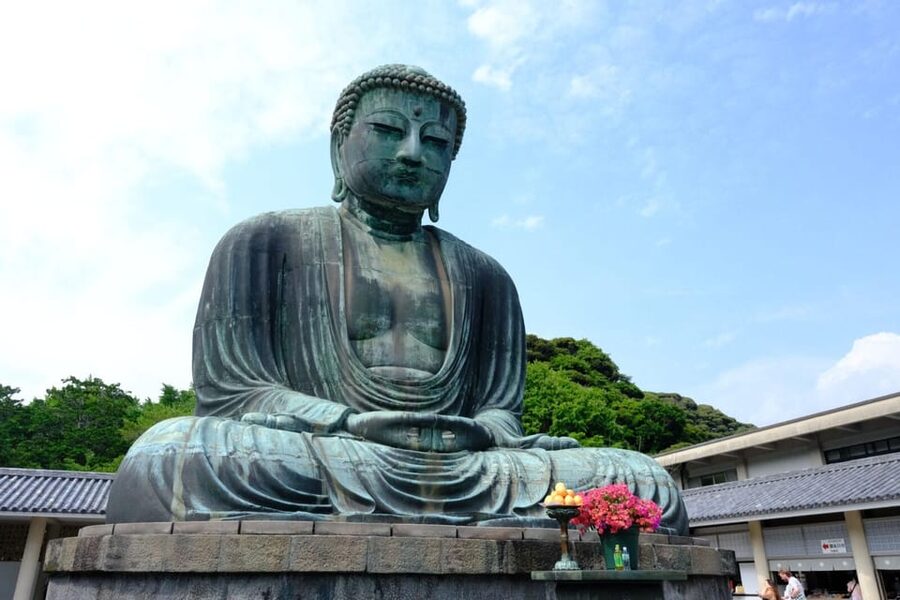
After Kōtoku-in, it’s time to head to Enoshima. You walk about 5 minutes to Hase Station and hop on the Enoden train. The ride to Enoshima is about 23 minutes.
This is one of the tour’s signature experiences: Enoden is iconic, and the car ride feels old-school in a good way. You’re not stuck on a modern subway screen. You’re moving through streets and toward the seashore, and the change in scenery helps you transition mentally from temple day to seaside day.
Why this matters for your trip
If you’re the type who likes the “in-between” moments of travel, Enoden is where you get them. It’s not wasted time. It’s part of the day’s story.
And because the transport for the tour is covered by the Enoshima Kamakura Freepass, you’re not juggling tickets while you’re trying to enjoy the ride.
Enoshima Island: coastline walks, views, and the observatory climb
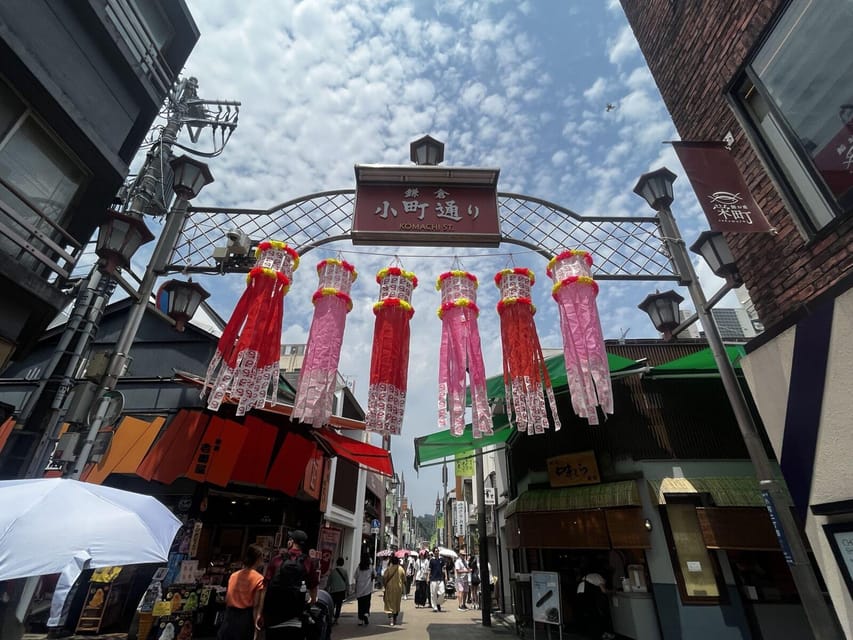
Once you arrive on Enoshima, you walk along the coastline for about 1.5 hours total in the island area, including hiking and guided time. This part is popular with both locals and tourists, and it’s easy to see why: it’s a mix of ocean views, walking paths, and classic island energy.
On the route, you’ll also get scenic viewpoints from Enoshima’s shrine and observatory. The tour includes observatory admission and escalators, which helps if you’re not trying to earn your views with stairs alone.
Mount Fuji is a bonus, not a guarantee
On very fair weather days, you may be able to see Mount Fuji from the Enoshima area. That’s a nice add-on, but you shouldn’t plan your whole mood around it. Plan to enjoy the coast no matter what the sky decides.
Possible sunset timing
Depending on the time of year, you might catch the sunset as you leave Enoshima. Even when you don’t hit sunset, the late-afternoon sea light can still feel great for photos and for just slowing down after all that earlier walking.
The return trains: wrapping the day back to Shinjuku
After finishing Enoshima, you walk back to Katase Enoshima Station and take the train back to Fujisawa. Then you board the train back to Shinjuku.
The itinerary lists longer train segments later in the day (around 1.5 hours to get back by the time you return to the meeting area). The key point: this is a full-day circuit, not a quick peek. You’ll want dinner plans that don’t require you to be fresh and energetic.
Price and value: why $150 can feel fair here
At about $150 per person for a 1-day Kamakura and Enoshima plan, the value depends on what’s included. In this case, the tour covers several “otherwise annoying” costs:
- the Enoshima Kamakura Freepass for tour transport
- admission fees tied to the bamboo temple and the Great Buddha
- the inside entrance for the Great Buddha statue
- the koi feeding fee
- Enoshima escalators and observatory admission fees
- the matcha and sweet tea-house experience
- an English-speaking guide
That’s a lot of ticket line-items handled for you. So you’re paying mostly for guided routing, translation, and the parts that add up. Food and drinks are not included, but the tour does give you lunch free time in a place where you can choose what you want.
The main value trade-off
You’re trading flexibility for structure. This is a guided day with set stops and set times. If you want to roam Kamakura at your own pace, you’ll need a different plan. If you want the route designed and the key admissions done, this price starts to make sense.
Who this tour suits best (and who should think twice)
This works especially well if:
- you want a guided intro to Kamakura’s temples and shrine culture
- you enjoy food stops and want help picking where to eat in the Kamakura district
- you like scenic train rides and not just walking between attractions
- you don’t want to figure out every ticket and admission fee yourself
You might think twice if:
- long walking outdoors is tough for you
- you hate group timing, since the day includes scheduled visits and meetup points
- you’re hoping for a totally low-effort, minimal-stairs day
My booking advice: should you book this Kamakura and Enoshima day trip
I’d book this if your goal is a classic Kamakura-to-Enoshima sampler with the important icons, plus actual experiences like koi feeding and an inside entry to the Great Buddha. The tea-house matcha with wasanbon in the bamboo setting is also a strong reason by itself.
I’d pass if you’re mainly chasing one giant attraction and want lots of free roaming with no structure. This day is designed for coverage, not wander-only.
If you do book, go in with the right mindset:
- wear comfortable shoes
- keep your meetup times on your radar
- plan to spend money on lunch and drinks during your free time
- bring a small weather plan, since the day is outdoors and timing can shift a bit
FAQ
FAQ
Where is the meeting point for the tour?
You meet outside Shinjuku Station South Gate at the Green Window ticket office (midori no madoguchi), where your guide will be holding a Snow Monkey Resorts sign.
What time does the tour start?
The tour begins at 08:00am.
How do we travel between Kamakura and Enoshima?
The tour uses local public transport, including the Enoden train from Hase Station to Enoshima.
What is included in the Enoshima Kamakura Freepass?
The Freepass covers transport for the tour.
Is the matcha and sweet experience included?
Yes. Admission to the bamboo temple and the tea and sweet experience (matcha and wasanbon) are included.
Can I feed the koi at the shrine?
Yes. The tour includes a Japanese koi feeding fee at Shirahata Shrine.
Can you enter the Great Buddha statue?
Yes. Great Buddha temple admission and the entrance fee to go inside the Great Buddha are included.
Is lunch included?
Lunch is not included. You’ll have about 1 hour of free time in Kamakura for lunch and exploring.
Are Enoshima observatory fees included?
Yes. Enoshima island escalators and observatory admission fees are included.
What should I do about weather and walking?
The tour involves several hours of outdoor walking. Wear sensible shoes and check the weather forecast, and bring an umbrella or rain coat if necessary.
Is there a chance to see Mount Fuji?
On very fair weather days, you can see Mount Fuji from Enoshima.
Is free cancellation available?
Yes, you can cancel up to 24 hours in advance for a full refund.