REVIEW · DALAT
Tea & Coffee Tour
Book on GetYourGuide →Operated by HOMELAND TOURIST · Bookable on GetYourGuide
Dalat has a way of turning simple drinks into full-day stories, and this tour is built for that exact magic. I like that you get both Arabica coffee and tea in one morning, plus a great English-speaking guide to translate what you’re seeing. The pick-up and routing are tight, so the tradeoff is you’ll move quickly between stops and won’t linger forever.
You’ll also get a proper sense of how coffee and tea go from plant to cup, not just a quick photo stop. My other favorite part is ending with a coffee shop visit where the story comes together, right before you head back to your hotel. One consideration: the factory-side stop can vary depending on opening times, so you might do the winery/showroom or the tea museum as the day allows.
In This Review
- Key highlights you’ll notice right away
- Tea & Coffee Tour overview: what you’re really buying
- Old Railway Station of Indochina: a dramatic start before the fields
- Arabica coffee plantations at Cau Dat: from picking to milling
- Tea plantations on the Cau Dat hills: hand-picking and the view effect
- Winery & showroom versus Tea Museum: one stop, flexible timing
- Linh Phuoc Pagoda: glass, porcelain, and the 50,000 bottle dragon
- Dantala Waterfall after lunch: nature pacing and photo planning
- Coffee shop ending: how to turn tastings into a real Dalat story
- Price and value: is $128 per group up to 2 a good deal?
- What to expect with a private group and English guide
- Who should book this tour (and who might skip it)
- Should you book the Tea & Coffee Tour?
- FAQ
- How long is the tea and coffee tour?
- What time does the tour start?
- Is hotel pickup included?
- What’s included in the price?
- Is lunch included?
- Can I cancel for free?
Key highlights you’ll notice right away
- Old Railway Station of Indochina: French-era architecture plus an old steam locomotive and a cog railway system
- Cau Dat Arabica plantations: watch the stages from picking to drying, milling, and tasting
- Tea hills around Giant Turbin (Cau Dat): tea fields with hand-picking and beautiful views
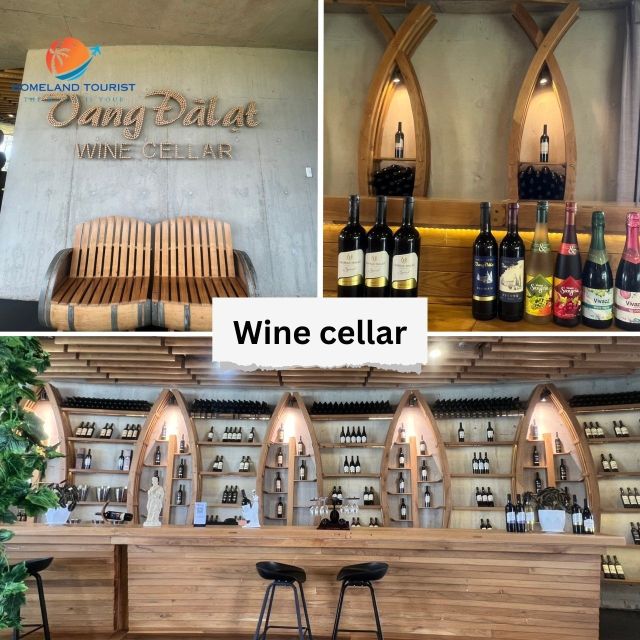
- Wine showroom or Tea Museum: choose one depending on factory hours, so you still get a second “taste lesson”
- Linh Phuoc Pagoda: glass, pottery, porcelain mosaics, Guan Yin, and a 49m dragon made with bottle fragments
Tea & Coffee Tour overview: what you’re really buying
This isn’t just a scenic day out. You’re paying for an organized, private route that links Dalat’s agriculture to its culture and then back to your cup of coffee or tea.
The tour runs about 5 hours and is private for a small group (priced per group up to 2). You’ll start around 8:30 am with hotel pickup in the Dalat center, then work through plantations and viewpoints before finishing in the late morning/early afternoon timeframe.
If you want one trip that covers coffee, tea, a standout pagoda, and a waterfall without needing to plan anything yourself, this is a strong match.
You can also read our reviews of more tours and experiences in Dalat.
Old Railway Station of Indochina: a dramatic start before the fields
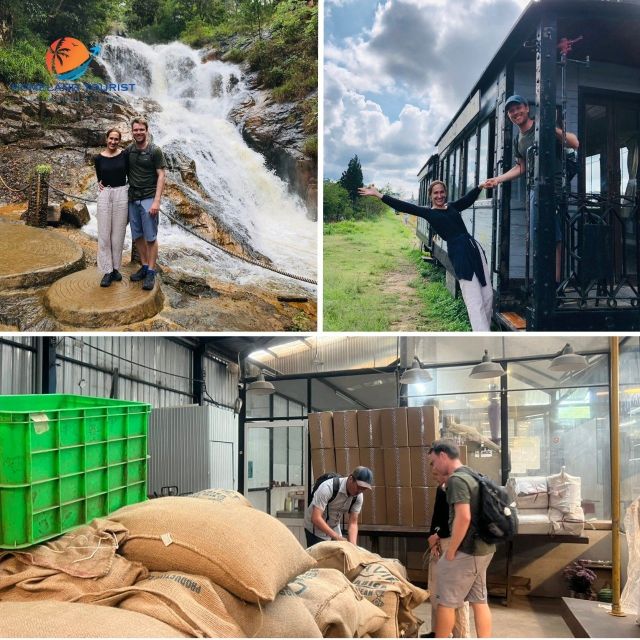
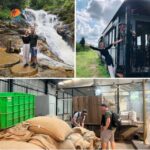
You begin at the Old Railway Station of Indochina, known for its ancient French architectural look and its atmospheric slice of Dalat history. It’s not the kind of stop where you just walk past. The station area includes an old steam locomotive of Japan and a cog railway with Swiss technology, which gives you a sense of how Dalat’s transportation history was engineered.
This is a smart first move because it sets the tone. You’re about to see plants grown on cooler highland terrain, and the railway story helps you understand why Dalat developed the way it did.
Practical note: this stop is quick, and it’s mostly about visuals and context, so don’t come expecting a museum-style deep dive.
Arabica coffee plantations at Cau Dat: from picking to milling
Next comes the heart of the coffee lesson: the Arabica coffee plantations toward Cau Dat. Here, your guide walks you through the process stages, from harvesting to what happens after.
You’ll learn about:
- picking coffee at the field
- selecting coffee at the field and then again at the factory
- drying coffee seeds
- milling coffee seeds and producing Arabica instant coffee
That last part matters. Many coffee tours stop at “see beans, drink coffee.” This one explains how the plantation work connects to the final product you’ll taste later.
I especially like that this stop focuses on the working steps of coffee, not just the romantic view. You can ask questions as you go, and an English-speaking guide makes the difference when you’re trying to connect production steps to flavor.
Wear-and-tear reality check: plantation pathways can be uneven, so comfortable shoes are worth it. You’re also spending time outdoors before the pagoda and waterfall, so light layers are a good idea.
Tea plantations on the Cau Dat hills: hand-picking and the view effect
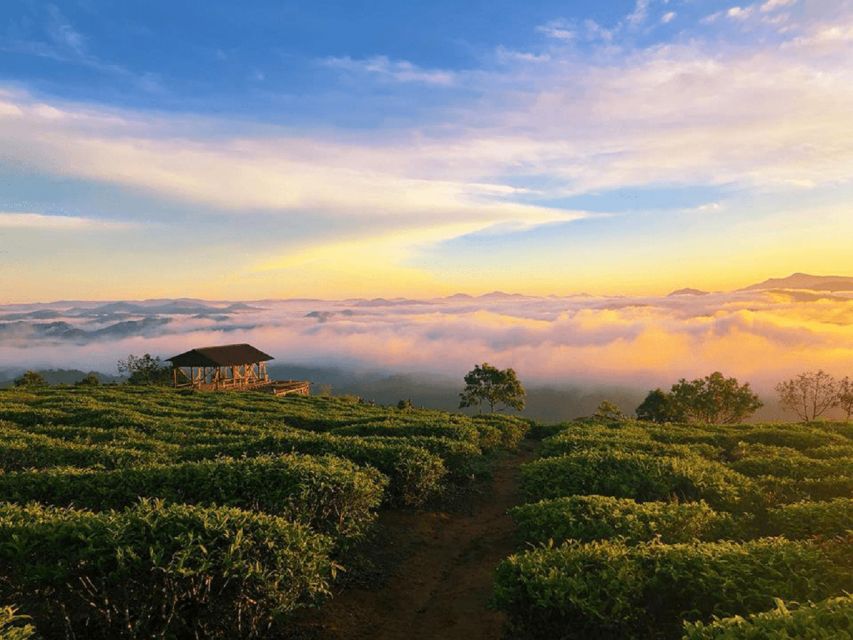
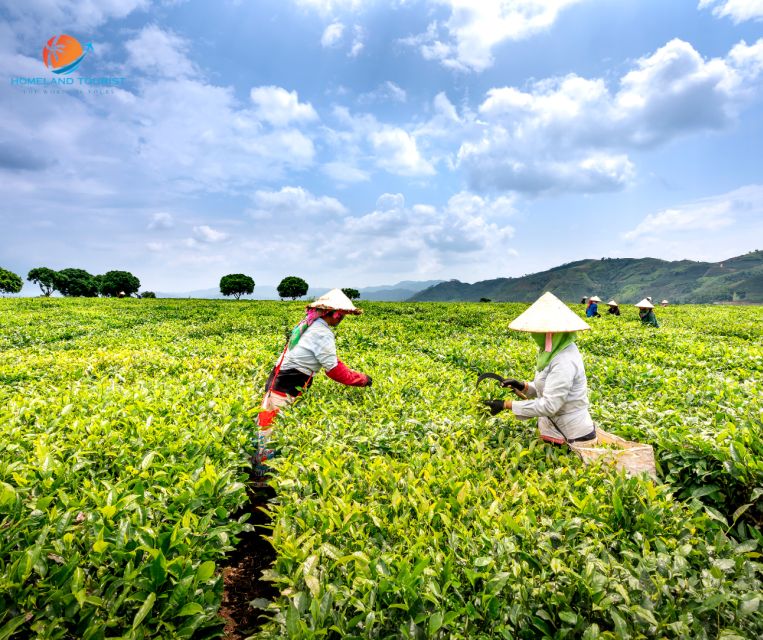
After coffee, the tour shifts to tea. You’ll visit the tea plantations around the Giant Turbin (Cau Dat) area, where tea stretches across green hills and you can see the human side of tea production.
The tour’s description highlights women in traditional dress picking tea, which is one of the most striking visual details of this day. Beyond the photos, it’s also a good way to understand how much the process relies on careful harvesting.
And yes, the scenery is part of it. Tea on curving hills means you’ll often get wide sightlines over patchwork fields, and that changes how you perceive the day. A coffee plantation can feel “agricultural and practical.” A tea plantation can feel like a full landscape.
The pacing here is important. You’ll want to look around while you can, because the tour keeps moving toward the pagoda and your next production stop.
Winery & showroom versus Tea Museum: one stop, flexible timing
One of the more “real-world” parts of the itinerary is the factory-area decision. Depending on opening times, you’ll do either:
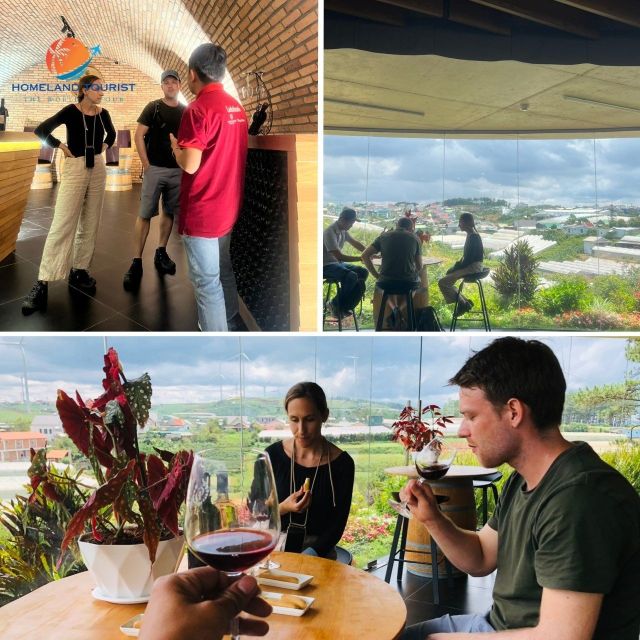
- the Winery & Showroom of Dalat wine, where you understand the wine production process and taste wine,
- or a Tea Museum option (chosen based on what’s open).
This flexibility is useful, because it keeps your day from collapsing if a single venue isn’t operating at that moment. At the same time, it’s a small tradeoff: you can’t guarantee which option you’ll get on your specific day.
If wine is your priority, you might prefer a day when you’re confident the factory is open. If tea history is more your thing, the museum option will scratch that itch. Either way, you’re getting one more production-linked stop, which is the tour’s whole theme.
Linh Phuoc Pagoda: glass, porcelain, and the 50,000 bottle dragon

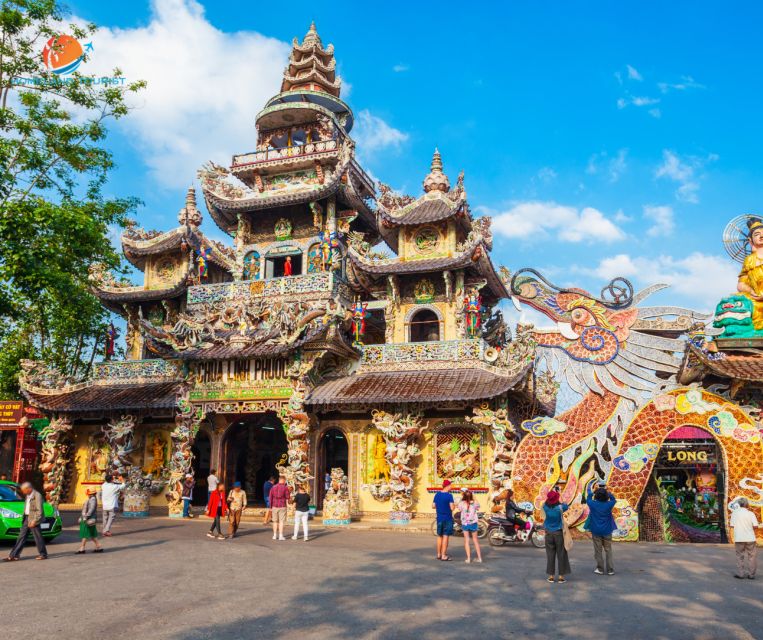
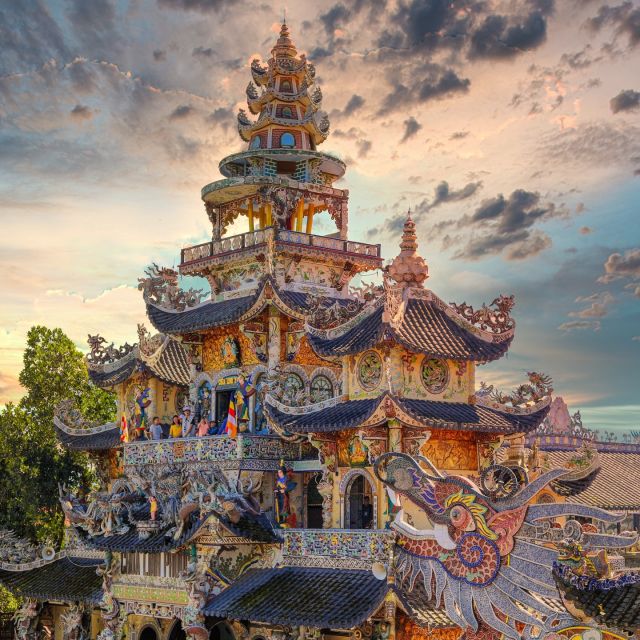
Then the day turns into something you’ll remember long after the coffee is gone: Linh Phuoc Pagoda.
This pagoda is famous for its architecture made from debris of glass, pottery, and porcelain, creating colorful art across the structures. It’s not just decorative. The whole place feels built from reclaimed pieces, which makes it visually playful and also kind of thought-provoking in a quiet way.
Two details you shouldn’t miss:
- a unique Guan Yin statue associated with immortal flowers of Vietnam
- a 49m long dragon whose fin is covered with fragments from 50 thousand bottles of beer
That dragon detail is the kind of thing that makes you pause mid-walk and say, wow, someone actually planned that. It turns a cultural stop into something dramatic and personal, which is exactly what you want on a shorter tour day.
I also like that you’re not stuck at only one “mood.” Coffee and tea are calm and agricultural. The pagoda is art and spectacle. That contrast keeps the day from feeling repetitive.
Dantala Waterfall after lunch: nature pacing and photo planning
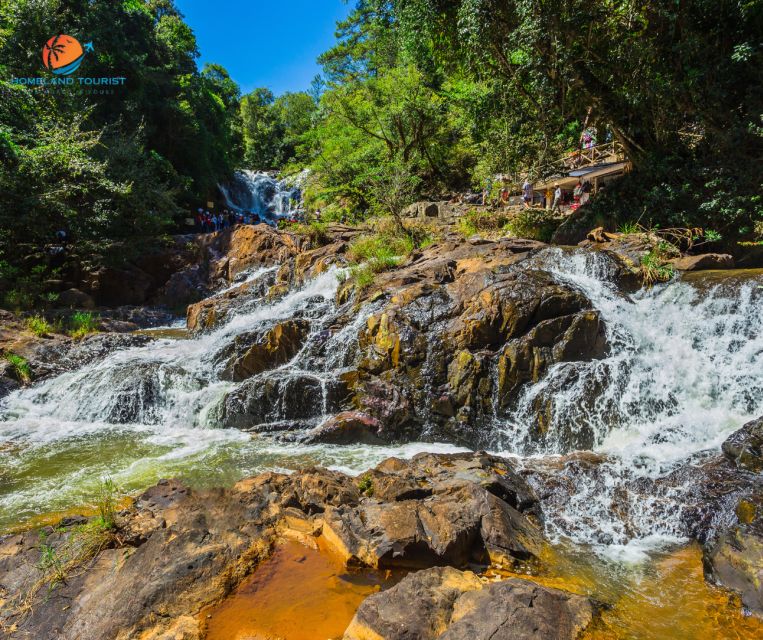
In the afternoon, after lunch, you’ll visit Dantala Waterfall. The goal here is less “learn every detail” and more “enjoy the imposing waterfall and the natural side of Dalat city.”
Lunch isn’t included in the tour price, though you can add it if you want. The listing mentions lunch is about $10 per person extra if you choose to have it. If you’d rather keep costs controlled, you can rely on the tour’s included voucher for a BBQ restaurant provided by Homeland Tourist, depending on how you pair the meal timing with the itinerary.
For photos, waterfalls are tricky because the lighting can shift fast. If you care about pictures, keep your camera ready and don’t waste time waiting for the perfect moment. The tour is time-managed, so you’ll want to get a few strong shots right away.
Also, because this is a short tour overall, waterfall time is part of the schedule, not an open-ended stroll. That’s fine, but go in knowing it’s a highlight stop, not a long hike.
Coffee shop ending: how to turn tastings into a real Dalat story
Your last stop is a Coffee Shop where you can enjoy your cup of coffee, and your guide shares the coffee story in Dalat. This is a smart closing move because it puts the morning’s production lesson into flavor and context.
You’ve already learned the steps: picking, drying, milling, and the idea of Arabica instant coffee. So when you taste, you can connect what you saw to what you’re feeling in the cup.
This is also when I think the tour works best for first-timers. If you don’t know what to ask, the guide can help you notice the differences between styles and local preferences without making it feel like a classroom.
At the end, the tour typically wraps around 4:30 pm and returns you back toward your hotel area.
Price and value: is $128 per group up to 2 a good deal?
At $128 per group (up to 2 people) for a private tour, the value depends on how you compare it to typical “grab a ride and go” experiences in Dalat.
Here’s what you’re getting for that price:
- English-speaking tourist guide
- private vehicle
- entrance fees and tourist permits
- bottled water
- a voucher for a BBQ restaurant (Homeland Tourist)
- private group setup (so you’re not squeezed into a large crowd itinerary)
For me, the biggest value piece isn’t just the sights. It’s the combination of agricultural education (coffee and tea production steps), plus the cultural stop that’s truly visually intense (Linh Phuoc Pagoda), plus the waterfall.
If you’re traveling as a pair, the per-person cost is easier to justify. For a solo traveler, it can still work well if you specifically want a private vehicle and guide rather than shared pacing.
The main cost to watch is lunch. Lunch is not included, and it’s listed at $10 per person if you want it. If you’d rather eat on your own, plan your timing accordingly so you don’t end up hunting for food while the day moves.
What to expect with a private group and English guide
Because it’s a private group, you can set a comfortable pace within the itinerary. The guide can answer questions about coffee/tea steps, which is the point of this whole experience.
Also, the tour is built with the assumption you’re starting in central Dalat. You’ll be picked up at your hotel or another spot in the Dalat center, and you should wait in the lobby about 10 minutes before the scheduled pickup.
That small timing habit matters. With only a 5-hour window, being on time keeps the day smooth.
Who should book this tour (and who might skip it)
This tour is a great fit if you:
- want tea and coffee education in one compact trip
- like a balanced day that mixes agriculture, a major pagoda, and a waterfall
- prefer a private vehicle with an English guide rather than navigating yourself
You might consider skipping if you:
- hate time-managed schedules and want slow, long stays
- expect a full day dedicated only to one theme (like coffee only or tea only)
For most people landing in Dalat for a short visit, this is a practical way to cover a lot without overthinking.
Should you book the Tea & Coffee Tour?
I think it’s worth booking if you want the “how it works” side of Dalat coffee and tea, paired with one of the most visually memorable pagodas in the area. The value improves especially if you’re traveling as up to 2 people, since it’s private without hiking the price into “charter car” territory.
Before you book, decide what matters more to you: the production lesson (coffee and tea), or the specific factory stop you’d like most (winery/showroom versus tea museum, based on opening times). If you’re flexible and just want a well-run day, you’ll probably walk away with better coffee and tea instincts than you arrived with.
FAQ
How long is the tea and coffee tour?
The tour duration is about 5 hours.
What time does the tour start?
It starts in the morning, with pickup at around 8:30 am, and you’ll need to check availability to see the exact starting times.
Is hotel pickup included?
Yes. Pickup is included for hotels in the Dalat center, and you should wait in the hotel lobby about 10 minutes before pickup.
What’s included in the price?
The price includes an English-speaking guide, private vehicle, entrance fees and tourist permits, bottled water, and a voucher for a BBQ restaurant of Homeland Tourist.
Is lunch included?
Lunch is not included. It’s offered as an extra option for about $10 per person if you want it.
Can I cancel for free?
Yes. Free cancellation is available up to 24 hours in advance for a full refund. Reserve now and pay later is also offered.