REVIEW · CHIBA
Kimono Dressing & Tea Ceremony Experience at a Beautiful Garden
Book on Viator →Operated by Japan Travel by G · Bookable on Viator
Kimono and tea change your whole pace fast. This Chiba experience pairs kimono dressing with a garden walk and a proper matcha tea ceremony in a traditional room by Mihama garden. I love how it feels like stepping into older Japan without needing a history textbook.
I especially liked the hands-on dressing part with Grace, who has lived in Chiba for years and clearly explains the why behind what you’re wearing. You also get real outfit options: women can choose kimono plus a Japanese-style cosplay costume, and men can pick a hakama look with their kimono.
One possible drawback: it’s about 2 hours, so if you’re hoping for a long, meandering garden day, this is more of an efficient taste of the experience than a full-day event.
In This Review
- Key highlights you’ll feel right away
- Shoraitei in Mihama: a real tea-room start, not a costume factory
- Dressing time: kimono, cosplay options, and a hakama look for men
- The garden stroll at Mihama: seasonal flowers, a pond-side mood, and photo time
- Tea ceremony at the traditional tea room: matcha, seasonal sweets, and the culture behind it
- Value check: what $80 buys you in Chiba (and what makes it worth it)
- Who should book this kimono and matcha experience
- Small tips to get the most from the experience
- Should you book this tour?
- FAQ
- Where do we meet for the kimono and tea ceremony experience?
- How long is the experience?
- Is it a private tour?
- What’s included besides dressing in kimono?
- Where is the tea ceremony held?
- How does booking confirmation and cancellation work?
Key highlights you’ll feel right away
- Shoraitei setup inside a traditional tea room space by Mihama garden
- Kimono + choice of cosplay (women) or hakama-style look (men)
- Garden stroll time built in for photos and seasonal flower viewing
- Matcha ceremony with matcha and seasonal Japanese sweets
- Grace as your guide, with Ari assisting, for culture-focused explanations
Shoraitei in Mihama: a real tea-room start, not a costume factory
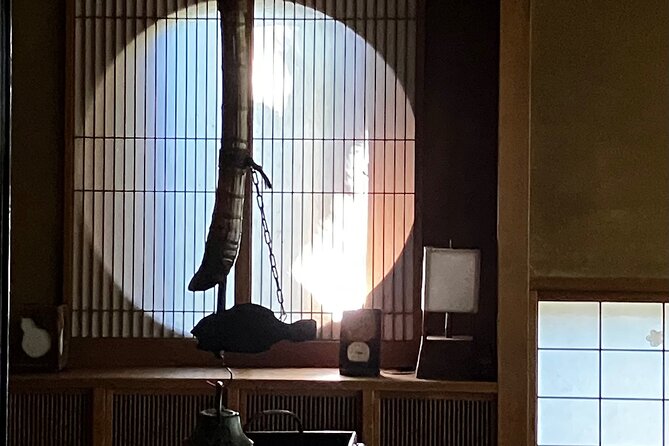
You meet at Shoraitei in Mihama Ward, Chiba, at 2-chōme-116 Hibino (261-0021). The energy there is calm and traditional, which matters. This isn’t just about putting on clothes and rushing through pictures. The experience is structured around tea culture and the garden setting that tea rooms were designed for.
Grace is your guide, and her background really comes through. She’s a mother of two, lived in Chiba about 18 years, and speaks with the kind of ease that makes complicated cultural details feel simple. Ari also assists, so you’re not left guessing when questions pop up during dressing or tea preparation.
If you want Japan that feels personal and local, this is a strong match. You’ll get the feeling of ancient Japan, but with clear, friendly guidance so you’re not standing there wondering what happens next.
Dressing time: kimono, cosplay options, and a hakama look for men
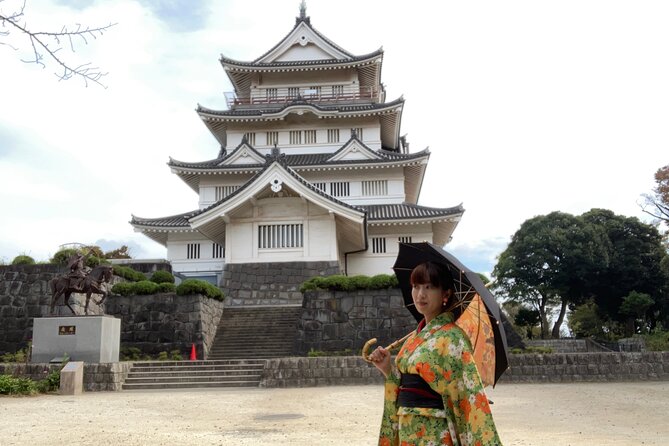
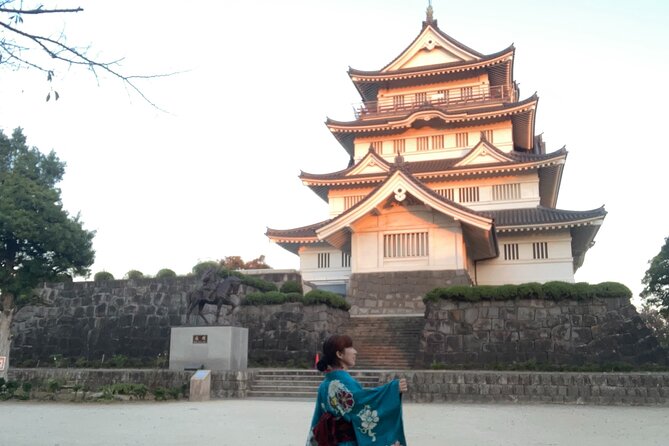
After you arrive, the focus shifts to the dressing. Kimono is prepared for you, and your host helps you put it on correctly. For women, there’s a kimono selection plus Japanese-style cosplay costumes available. For men, there’s an option to choose a hakama style that gives a samurai-adjacent silhouette alongside the kimono.
What I like about this part is that it turns a big, intimidating clothing experience into something manageable. You’re guided step-by-step, and you’re not expected to know how obi knots work or how to stand for photos. It also helps you interact with the space in a more natural way. When you’re dressed for the setting, the garden feels less like a backdrop and more like the point.
Practical note: this kind of traditional dressing usually takes time, which is why the full experience is around 2 hours. Plan to enjoy the process, not just the results.
The garden stroll at Mihama: seasonal flowers, a pond-side mood, and photo time

Once you’re dressed, you head out for a walk around the garden. The tea ceremony room is connected to Mihama garden vibes, so the scenery feels like part of the ritual rather than a separate activity.
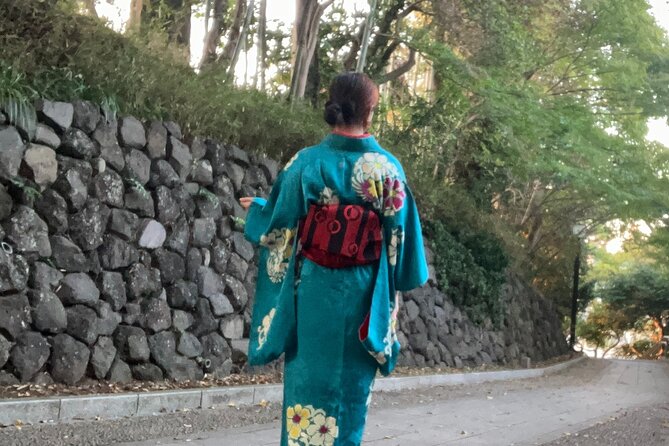
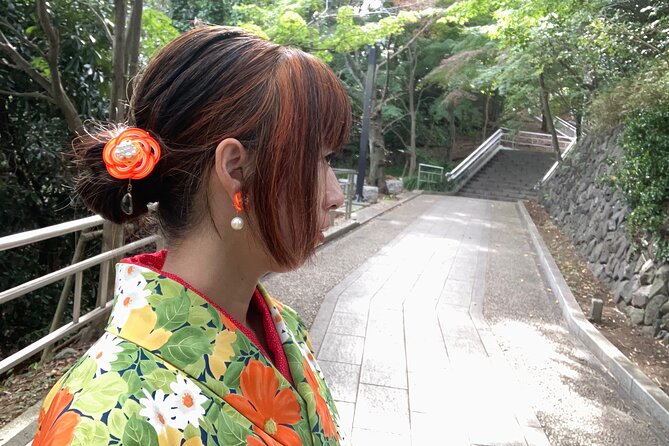
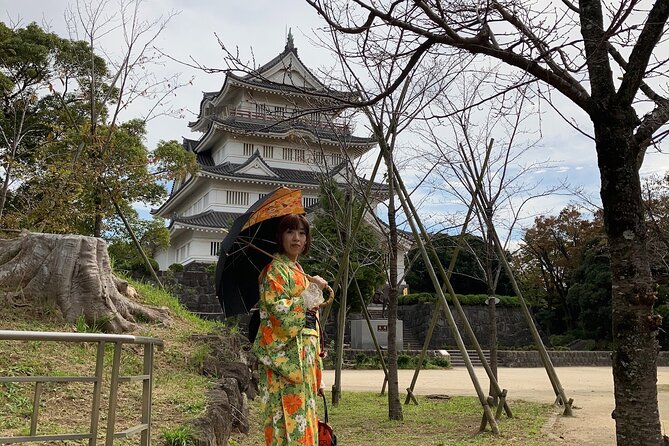
You’ll stroll through the garden, enjoy the pond area, and take photos around the grounds. Seasonal flowers are part of the experience, which is important. In Japan, seasonality isn’t a decoration idea—it’s how people pay attention to time passing. That attitude fits perfectly with a kimono walk, because the clothing itself belongs to that sense of occasion.
A small consideration: your clothing choices (kimono and hakama) can affect how fast you walk. That’s not a problem if you’re in “slow down and look” mode. If you’re chasing speed or long distances, you might find the pace more relaxed than you expected.
Tea ceremony at the traditional tea room: matcha, seasonal sweets, and the culture behind it
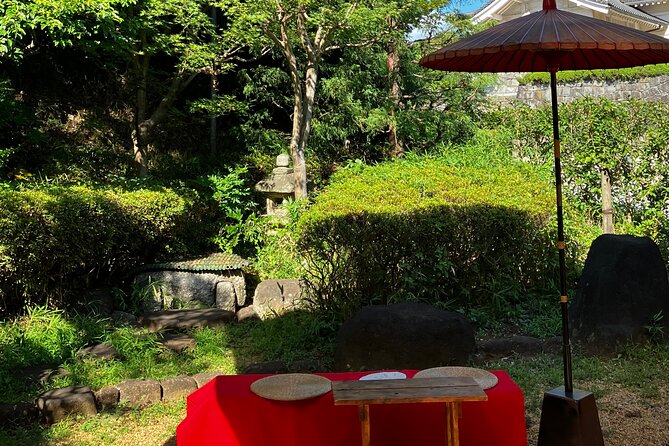
After the garden time, the experience moves to tea. You’ll have a traditional Japanese tea ceremony with matcha green tea and traditional Japanese sweets. The matcha is the star: it has that distinct aroma and a flavor profile that balances slight bitterness with sweetness.
Here’s the cultural value. Tea ceremony isn’t only about drinking tea—it’s about attention, movement, and manners. Grace’s role matters because she turns what could feel like a series of steps into a simple explanation of why each part exists. That’s how you get more than a photo of a cup.
You’ll also taste seasonal sweets chosen for the time of year. That’s not just a snack. It reinforces the same theme as the garden walk: the experience is meant to match the season, not ignore it.
One more detail to file in your brain: the place where it’s served changed from Gaihana-tei to Mihama-en as of April 2025. So if you’ve seen older references online, this update is why the tea stop can show up under different names. In practice, the experience is tied to the traditional tea-room setting by the Mihama garden area.
Value check: what $80 buys you in Chiba (and what makes it worth it)
At $80 per person for about 2 hours, this isn’t a “cheap photoshoot” type of activity. You’re paying for three things that usually cost extra when they’re separated: guided kimono dressing, dedicated garden time in the right setting, and a traditional matcha tea ceremony with sweets.
If you’ve done costume experiences that feel rushed, you’ll notice the difference here. Because it’s private (only your group), you’re not squeezed into a shared schedule with strangers and you get more time for questions. And because Grace (with Ari assisting) handles the cultural explanations, you’re not just acting out a scene—you’re learning what the scene represents.
For couples, families, and small groups, the value often feels strongest when you want something interactive but still easy to understand. You’re not expected to plan anything complicated. The experience organizes the flow for you: dress, walk, tea.
Who should book this kimono and matcha experience
This is a great fit if you want Japan that feels authentic and hands-on. It’s especially good for:
- Couples who want a romantic, calm activity with real cultural context
- Travelers who like culture that’s explained in plain language
- People who want a kimono experience that includes both garden and tea, rather than only one piece
- Any group that prefers a private setup instead of a crowd
It may be less satisfying if your main goal is maximizing sightseeing time. You only have around 2 hours, and part of that is dressing. Think of it as a focused cultural interlude, not a full-day tour of every corner of Chiba.
Small tips to get the most from the experience
A few things help you enjoy it more smoothly:
- Wear comfortable basics under your outfit choices. Kimono dressing is hands-on, and comfort makes the process easier to enjoy.
- Go in with a slower mindset for the garden walk. Traditional clothing can naturally reduce your speed.
- Ask Grace questions while you’re there. She has the background to connect what you’re seeing to how Japanese people approach the tea room and seasonality.
- If you want the hakama look or cosplay options, choose early with your guide when you arrive so you get the style you want.
Should you book this tour?
I’d recommend booking it if you want a genuine kimono-and-tea experience that’s guided, not chaotic. The biggest selling points are the quality of the hosting—Grace as guide and Ari assisting—and the way the experience connects kimono, the garden, and matcha into one coherent cultural moment.
If you’re on the fence, ask yourself one question: do you want to learn while you’re doing? If yes, this is a strong pick. If you just want quick photos with minimal interaction, you might feel this is more structured and slower than you expected.
FAQ
Where do we meet for the kimono and tea ceremony experience?
You meet at Shoraitei, 2-chōme-116 Hibino, Mihama Ward, Chiba, 261-0021, Japan. The activity ends back at the meeting point.
How long is the experience?
The experience lasts about 2 hours.
Is it a private tour?
Yes. It’s a private tour/activity, and only your group participates.
What’s included besides dressing in kimono?
After dressing, you’ll stroll around the garden, and you’ll also experience a Japanese tea ceremony with matcha green tea and traditional Japanese sweets.
Where is the tea ceremony held?
The tea is served in the tea room by Mihama garden at Shoraitei. The place where it’s served changed from Gaihana-tei to Mihama-en as of April 2025.
How does booking confirmation and cancellation work?
You’ll receive confirmation within 48 hours of booking, subject to availability. You can cancel for a full refund up to 24 hours before the experience’s start time.