REVIEW · HO CHI MINH CITY
Ho Chi Minh City: Vietnamese Lotus Tea Culture Experience
Book on GetYourGuide →Operated by CÔNG TY CỔ PHẦN SẢN XUẤT THƯƠNG MẠI DỊCH VỤ TRÀ VIỆT · Bookable on GetYourGuide
Tea blooms in a lotus bud. In Ho Chi Minh City, you’ll watch artisan Ky brew tea inside fresh lotus buds, taste lotus tea, and make your own fragrant keepsake.
I love the practical, hands-on guidance, especially the step-by-step tea-leaf placement inside the flower. I also like the cultural context you get along the way, including a story tied to King tea harvesting and a background connected to 1883.
The main consideration is that it’s truly hands-on: you handle lotus flowers and tea leaves. You’ll get one lotus flower filled with your own blend, so if you’re hoping for multiple take-home items, you may need to consider buying more.
In This Review
- Key things I’d plan for
- Lotus-Bud Brewing: What Makes This Vietnamese Tea Experience Special
- Meeting at 19 Hai Trieu Street Near Bitexco Tower
- Part 1: Vietnamese Tea Culture, West Lake Lotus, and the 1883 Story
- Part 2: Watching Artisan Ky Brew Inside Fresh Lotus Buds
- Part 3: Tay Ho Lotus Tea Tasting and Lotus Petal Scenting
- Part 4: Make Your Own Lotus Flower Keepsake (Tea Leaves Step-By-Step)
- Price and Value: Is This $15 Per Person Worth It?
- Who This Workshop Suits Best (and Who Might Skip It)
- Should You Book This Lotus Tea Culture Experience?
- FAQ
- Where is the meeting point for the lotus tea workshop?
- How much does the experience cost?
- What’s included in the price?
- Is transportation included?
- Do I get to take anything home?
- Is the workshop suitable for children?
- Is it wheelchair accessible?
- Can I cancel and get a refund?
Key things I’d plan for
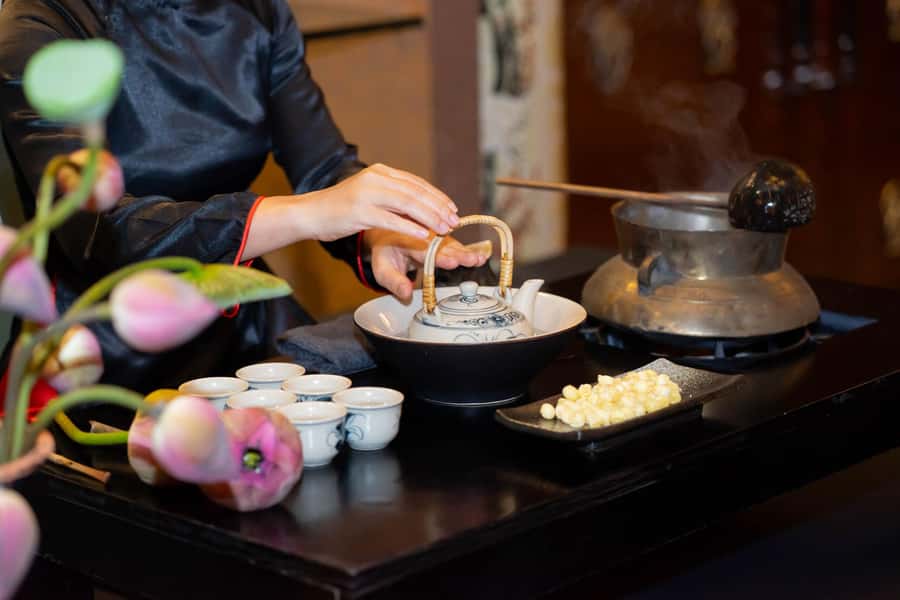
- Lotus-bud brewing live: watch an artisan demonstrate the delicate method inside fresh lotus buds
- Tay Ho Lotus Tea tasting: sample the tea’s subtle notes and aroma in a guided session
- Lotus petal scenting: try scenting tea with fresh lotus petals yourself
- Your tea keepsake: create 1 lotus flower filled with your blend, with step-by-step coaching
- English-friendly support: an English-speaking host & artisan plus an English guidebook
- Central meeting point: opposite Bitexco Tower, 2nd floor, about a 1-minute walk from Nguyen Hue Walking Street
Lotus-Bud Brewing: What Makes This Vietnamese Tea Experience Special
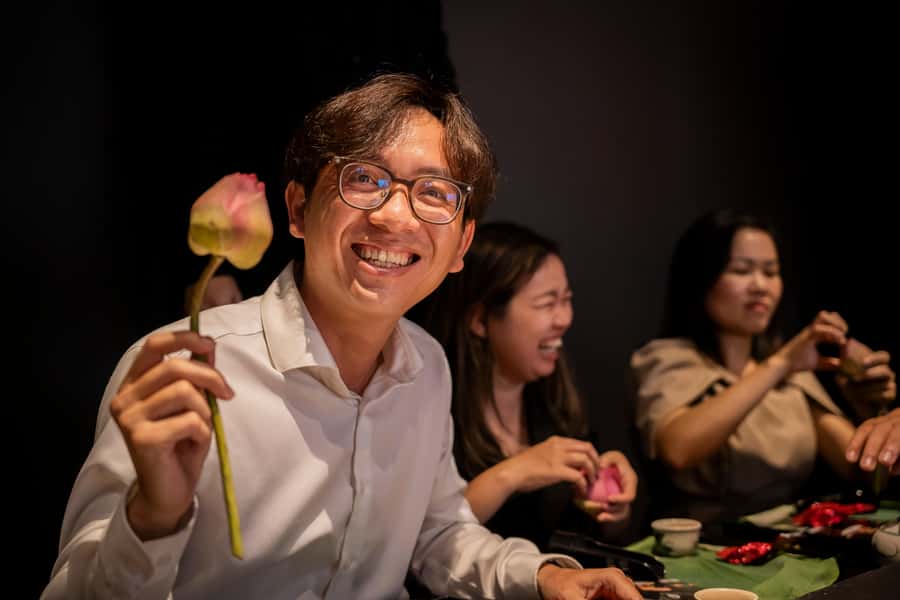
This is not just a taste-and-go stop. The core of the experience is watching tea become a craft using real lotus flowers, then doing parts of that process yourself.
Vietnamese lotus tea is famous for a very specific idea: the flower isn’t decoration. It’s part of the brewing and scenting. In this workshop, you’ll learn how lotus buds are used as a brewing setting, and you’ll understand why patience matters—small movements and careful handling are the difference between the aroma working cleanly and the flavor getting muted.
What I find genuinely useful is that the workshop treats tea like a skill you can learn. You’re guided through what goes where, how to handle lotus flowers, and what to pay attention to during tasting. If you like food culture that has a hands-on component, this fits well.
You can also read our reviews of more tours and experiences in Ho Chi Minh City.
Meeting at 19 Hai Trieu Street Near Bitexco Tower
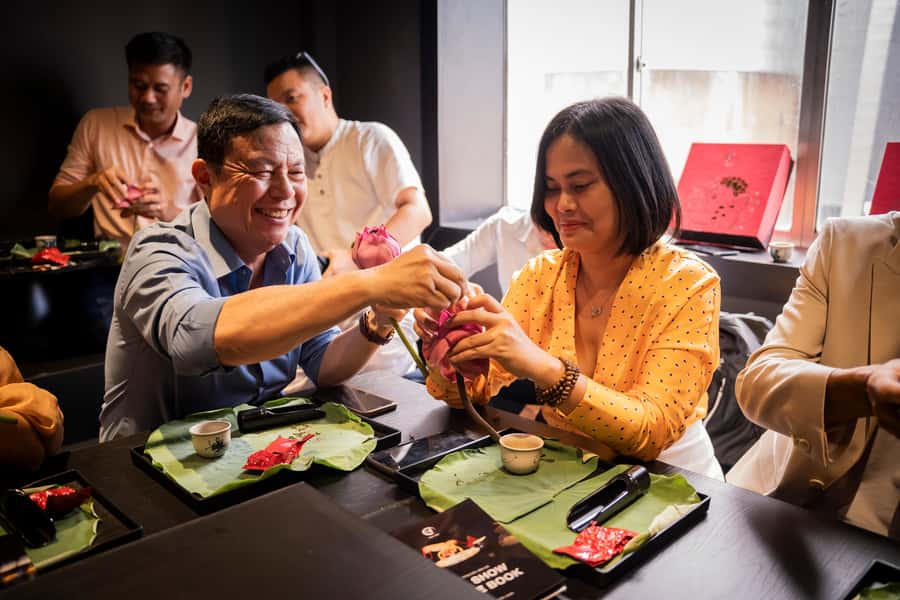
You meet at a showroom directly opposite Bitexco Tower, on the 2nd floor of a local apartment building at 19 Hai Trieu Street in District 1. It’s an easy walk from Nguyen Hue Walking Street, roughly a 1-minute stroll, so you don’t have to factor in long commutes or tricky navigation.
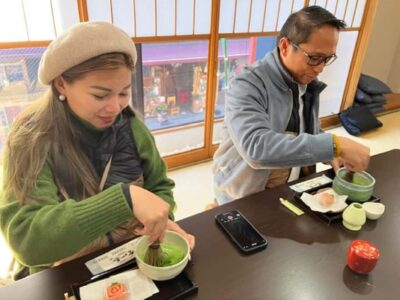
The venue is set up for a tea session, not a big performance venue. That matters because you’re there to focus—on brewing technique, aroma, and flavor. Expect photos in a traditional tea setting as part of the experience.
One practical note: transportation is not included. If you’re coming from farther districts, plan your ride in advance so you arrive on time. Also, the experience ends back at the meeting point, so you don’t need to solve a “where do I go next?” problem.
Part 1: Vietnamese Tea Culture, West Lake Lotus, and the 1883 Story
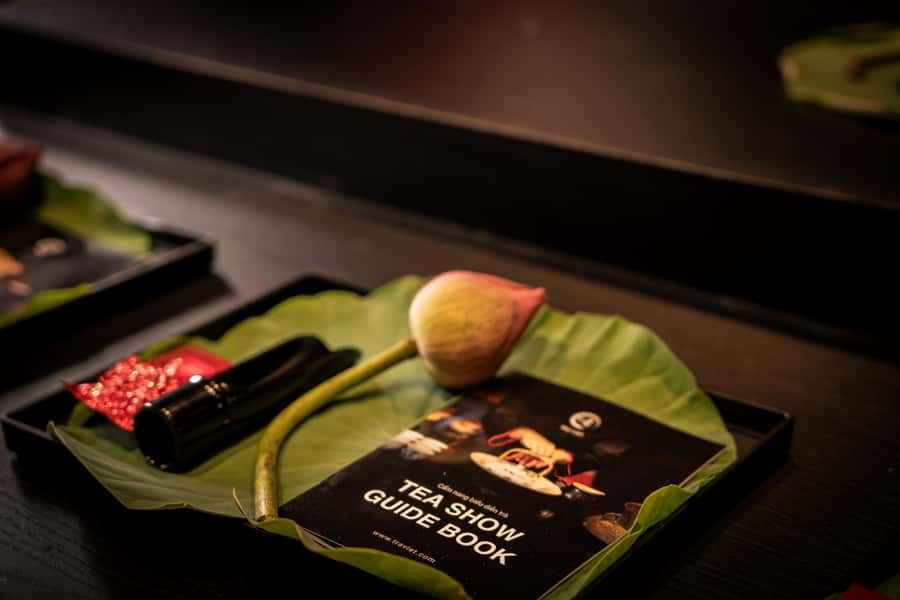
The start of the experience is an introduction to Vietnamese tea culture in everyday life and ceremonies. You’re not just hearing trivia. You get the cultural significance of tea and how it fits into Vietnamese traditions—where tea isn’t only about caffeine, but also about etiquette, timing, and attention.
Then you shift to the story behind West Lake Lotus Tea, described as a carefully handcrafted delicacy made using real lotus flowers. That background is helpful because it explains what you’re about to taste later. When you understand the flower-based method, Tay Ho Lotus Tea tasting becomes more than a sip—it becomes a continuation of the story you heard first.
One bonus from the way the session is taught: the presenter connects the craft to history. In the guidance, there’s a mention of a story tied to King tea harvesting and a background connected to 1883. Even if you’ve read a little about Vietnam before, it’s the kind of detail that turns a workshop into a cultural lesson you’ll remember.
Part 2: Watching Artisan Ky Brew Inside Fresh Lotus Buds
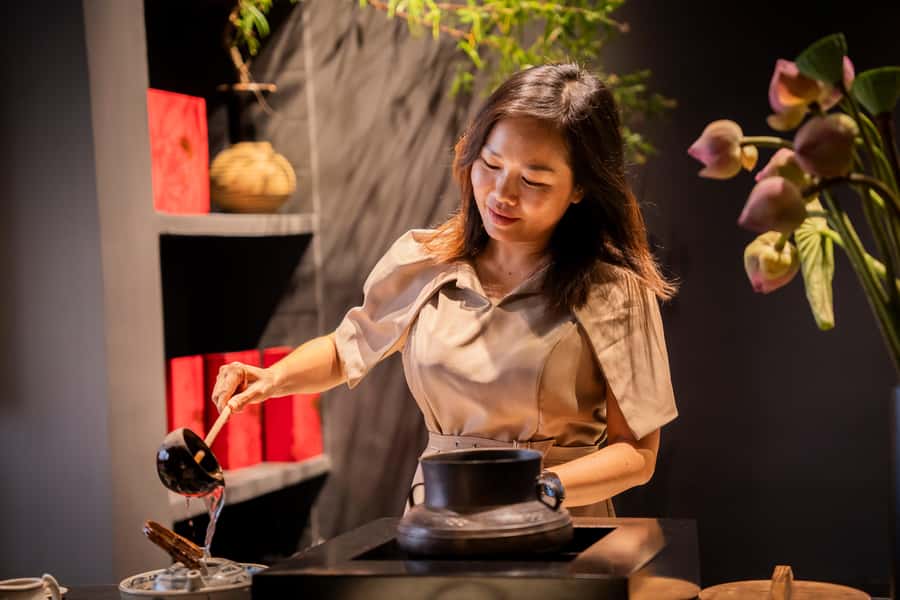
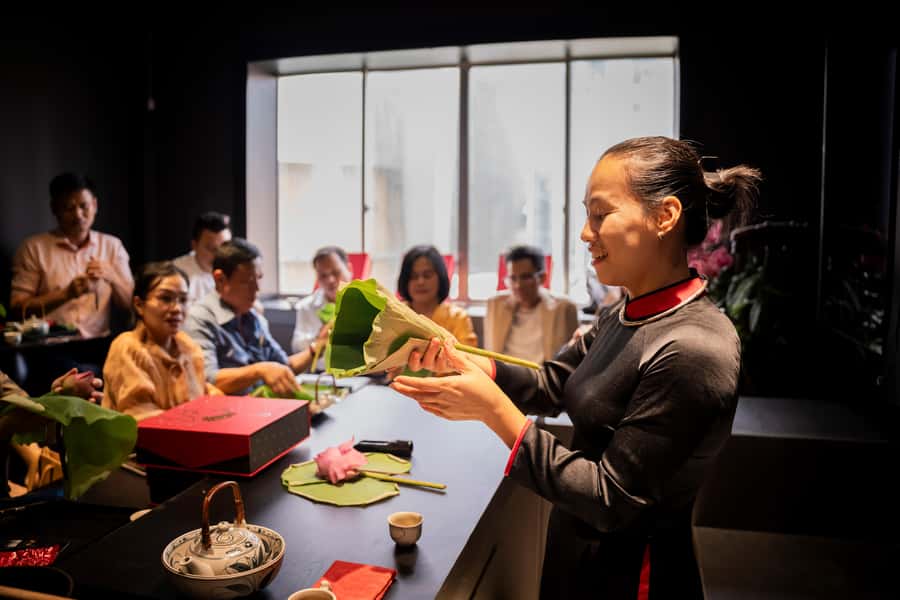
After the intro, you watch a live performance by a skilled tea artisan. In this part, the method is the star: brewing tea inside fresh lotus buds using an almost forgotten technique passed down over generations.
This is where the “craft” feeling really shows up. You’ll see how the artisan handles the lotus buds and how the brewing method changes the experience. Because lotus flowers are real and delicate, you can’t treat this like a factory process. It’s technique plus timing.
I like this part because you’ll leave with a better sense of what makes lotus tea different from regular scented tea. It’s not just adding a fragrance. It’s a method where the flower and the tea interact in a controlled, careful way.
If you’re sensitive to strong scents, it’s still a tea environment, so expect aroma. You’ll get to taste later too, so use this performance as your baseline for smell and texture.
Part 3: Tay Ho Lotus Tea Tasting and Lotus Petal Scenting
Once the brewing performance sets the tone, you move into tasting. You’ll enjoy the flavor of Tay Ho Lotus Tea during a guided tasting session. The host guides you through how to taste, so you’re not left guessing what you’re supposed to notice.
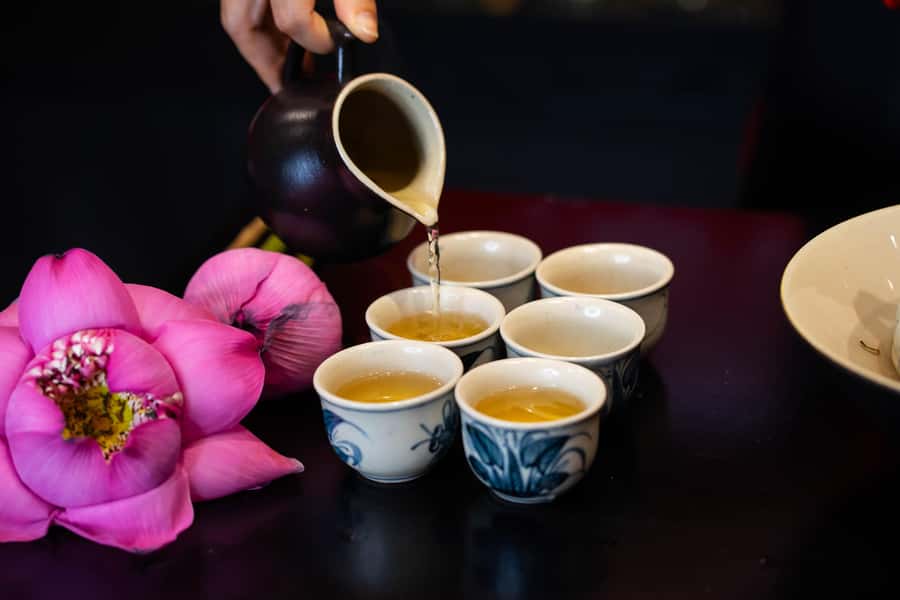
Then comes the part I think many people enjoy most: infusing tea with fresh lotus petals. This is the scenting experience, and it’s gentle and meditative in feel. You learn how the lotus petals contribute a delicate fragrance, which is a different sensation than drinking straight tea.
This is also a good moment for you to slow down. Lotus tea can be subtle; it’s not meant to overpower. If you rush, you miss the delicate notes that make it memorable. Let the aroma settle, then taste deliberately—small sips, short pauses.
Part 4: Make Your Own Lotus Flower Keepsake (Tea Leaves Step-By-Step)
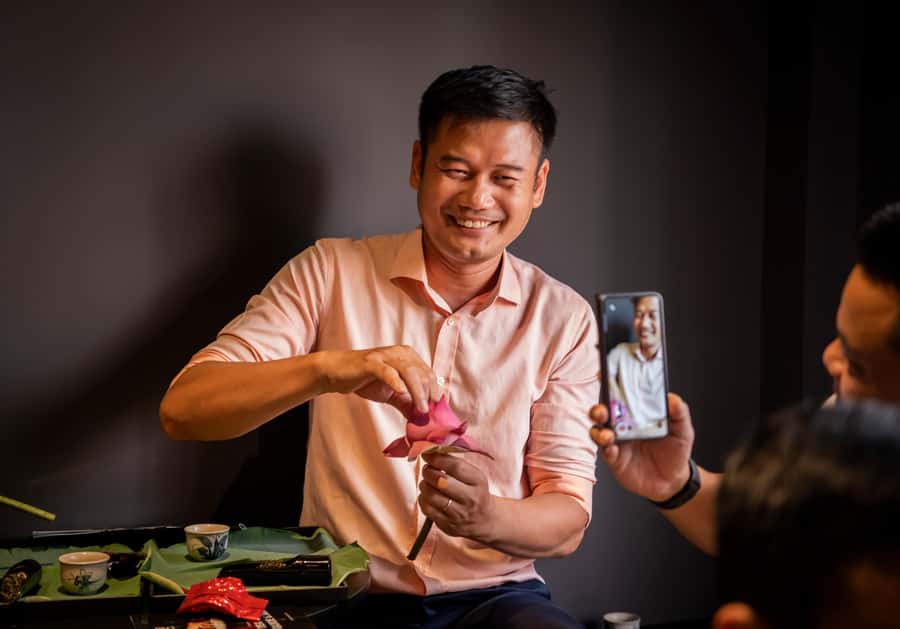
The hands-on finale is where your experience turns into a keepsake. You create your own lotus-scented tea to bring home, using real lotus flowers.
Here’s what makes it meaningful: you’re taught step-by-step how to place tea leaves into the lotus flowers, exactly in the traditional style. The instruction is practical, not vague. You’re not just observing the craft—you’re participating in it.
You’ll also receive one lotus flower filled with your own tea blend as part of what’s included. That’s a solid takeaway because it’s tied to what you learned in the earlier parts: the tea isn’t random. It’s the same lotus tea logic you watched and tasted.
If you’re thinking about gifts, this is one of those food-cultural souvenirs that actually feels personal. It’s also a conversation starter when friends ask what lotus tea tastes like and how it’s made.
Price and Value: Is This $15 Per Person Worth It?
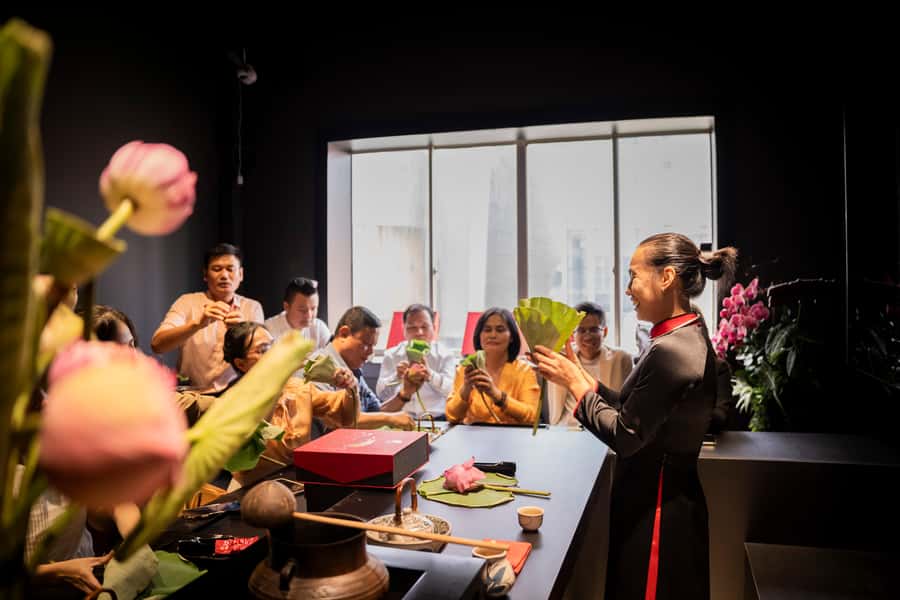
At $15 per person, this sits in the low-cost end for a cultural workshop in Ho Chi Minh City—especially one that includes tasting and a hands-on keepsake.
You’re getting multiple value streams:
- a tasting session with Tay Ho Lotus Tea
- a lotus petal scenting activity
- a guided, step-by-step lotus tea making component
- an included take-home item (1 lotus flower with your blend)
- English-speaking host and artisan plus an English guidebook
- photo opportunities in a traditional setting
What you’re not getting is meals or drinks outside the tasting, and transport to the venue. Also, additional tea purchases are available only if you want extra.
For me, the value part comes down to the take-home piece. One lotus flower sounds small, but it’s the kind of item that can’t be replicated at a typical street stall. You’re not just paying for tea—you’re paying for the method and the guided learning.
Who This Workshop Suits Best (and Who Might Skip It)
This is a strong fit if you:
- like cultural food experiences you can do, not just watch
- enjoy learning the story behind a specific specialty like West Lake Lotus Tea and Tay Ho Lotus Tea
- want a calm pause from the center of District 1
- like taking home something that’s tied to a real process
It’s also good for couples and solo travelers because it’s structured, guided, and small-scale. You’ll know what’s happening next: intro, performance, tasting, then your hands-on lotus flower.
The main reason to skip is if you don’t want to handle delicate items. The experience involves handling lotus flowers and tea leaves, and it isn’t suitable for wheelchair users. If that’s a concern for you, it’s better to choose a different tea-focused activity.
Should You Book This Lotus Tea Culture Experience?
If you want Vietnamese tea culture with a real skill component, I’d book this. It’s easy to get to from Nguyen Hue Walking Street, the teaching is in English, and you leave with a lotus flower filled with your blend.
If your idea of a workshop is purely passive, you might find the hands-on part more involved than you expected—especially since lotus flower handling is part of the experience. But if you’re curious and want to learn the method, this is one of the simplest ways to do it without over-planning.
FAQ
Where is the meeting point for the lotus tea workshop?
You meet at the showroom directly opposite Bitexco Tower, on the 2nd floor of a local apartment building at 19 Hai Trieu Street, Ben Nghe Ward, District 1, Ho Chi Minh City. It’s about a 1-minute walk from Nguyen Hue Walking Street, and the experience ends back at the meeting point.
How much does the experience cost?
The price is $15 per person.
What’s included in the price?
Included are the tea tasting session, a hands-on lotus tea scenting activity, 1 lotus flower filled with your own tea blend, an English tea show guidebook, photo opportunities in a traditional tea setting, and an English-speaking host & artisan.
Is transportation included?
No. Transportation to the venue is not included.
Do I get to take anything home?
Yes. You’ll receive 1 lotus flower filled with your own tea blend as part of the experience.
Is the workshop suitable for children?
It is not suitable for children under 2 years.
Is it wheelchair accessible?
No. It is not suitable for wheelchair users.
Can I cancel and get a refund?
Yes. You can cancel up to 24 hours in advance for a full refund. There’s also a reserve & pay later option that lets you book and pay nothing today.