REVIEW · BIG ISLAND OF HAWAII
Hawaiian Tikis and Guava Tea
Book on Viator →Operated by Paradise Unplugged · Bookable on Viator
Tiki art and real ferns in one walk. This 2-hour Big Island experience mixes hand-carved Hawaiian tiki art with a genuine look at life built around the land, not a theme park. I particularly love the chess-themed display of life-sized tikis that you see right at arrival, then you follow the property’s lava-rock paths into a rainforest full of plants that most people only see on signs.
I also like how the hosts’ building work turns into part of the story: recycled pallet structures, lava rock sculptures, and the prototype cabin called The Okina. One thing to consider is that the walk follows a naturally uneven lava flow path, so you’ll want solid grip shoes, especially if the ground is damp.
If you want a Big Island stop that feels handmade, personal, and plant-focused, this is an easy one to get excited about.
In This Review
- Key highlights at a glance
- What this Fern Forest stop really is (and why it works)
- Arrival: recycled pallets and chess tiki statues
- Stop inside the fern world: walking a natural lava-flow path
- Lava rock art and in-place sculptures you can actually track
- The Okina prototype: a tiny house built from 100% recycled pallets
- Hands-on energy: when carving stops being a spectator sport
- Who will enjoy this most (and who might want to pick another option)
- Price and value: $75 for a small, personal rainforest experience
- Timing, group size, and what to bring for comfort
- About the guava tea part (and how to confirm it)
- Should you book Hawaiian Tikis and Guava Tea in Fern Forest?
- FAQ
- Where is the tour meeting point?
- How long does Hawaiian Tikis and Guava Tea take?
- What time does the tour start?
- What is the group size limit?
- Is the tour offered in English?
- Is guava tea included?
- Is there free cancellation?
- Are service animals allowed?
Key highlights at a glance
- Chess-themed tiki welcome with 7 life-sized statues along a recycled-pallet fence
- Over 300 hapu’u ferns growing in a naturally formed lava-flow path
- Lava rock and tiki sculptures that are built and placed in situ, not staged for photos
- The Okina prototype house made from 100% recycled pallets, with water catchment and solar electricity
- Small group size (max 10), so you get time to ask questions and look closely
- English-speaking host(s) with a mobile ticket for the simplest check-in possible
What this Fern Forest stop really is (and why it works)
Fern Forest can feel like an endless list of “look at the trees” options. This tour works because it gives you a reason to look closely. You’re not only walking through tropical vegetation; you’re seeing how people shape a property using what the landscape already offers—lava rock, timber, pallets, and careful placement.
The vibe is part art show, part off-grid storytelling. You’ll see hand-carved tiki work, lava rock sculptures, and structures made from reclaimed materials. And since the property includes an uneven lava path and hundreds of native-feeling ferns, the whole walk stays grounded in the rainforest setting, not just the creations.
You can also read our reviews of more tours and experiences in Big Island of Hawaii.
Arrival: recycled pallets and chess tiki statues
Your tour begins at Jungle King Avenue in Fern Forest (meeting point). When you arrive, you’re greeted by seven life-sized tiki statues arranged to represent the game of chess. The placement matters. It’s not a random scatter of carvings; it’s a visual setup that gives you a “start here” moment, then invites you to follow the route onward like you’re moving across a board.
One practical detail I like: the fence uses 100% recycled pallets. It signals the theme right away. This isn’t just a collection of objects; it’s an entire property built with a recycling-minded mindset. Even if you’re not an art person, it helps you understand what you’re about to see—tiki carvings and structures are part of the hosts’ off-the-grid approach.
If you’re traveling with kids, this chess setup tends to be an easy hook because it gives them something simple to notice first: pieces, positions, and the idea of a game.
Stop inside the fern world: walking a natural lava-flow path
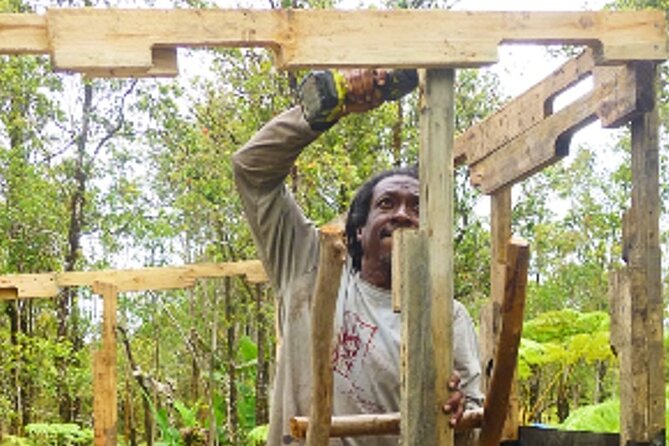
After the tiki welcome, your main nature focus kicks in: a naturally formed, uneven lava flow path. That detail matters for two reasons. First, it keeps you on an actual terrain route rather than a flat “walkway for everyone” trail. Second, it positions you where you’ll be surrounded by plant life instead of just passing by it.
On this walk, you’ll encounter over 300 hapu’u ferns in their natural environment. Hapu’u ferns have that classic tree-fern look, with tall fronds and a silhouette that really reads as rainforest. Here, you’re not spotting a single fern for a quick photo; you’re moving through a pocket where the ferns are the point.
You’ll also see other tropical trees and plants throughout the tour. The property is presented as a living space, with wildlife and sounds as part of the experience. In practical terms, it’s the kind of place where you’ll notice things if you slow down. Look for where light hits fronds. Watch how the path curves around the rock formations. That’s where the rainforest feels real, not labeled.
Lava rock art and in-place sculptures you can actually track
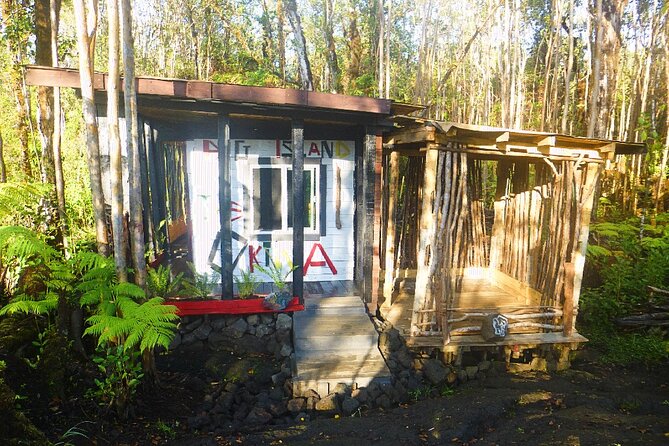
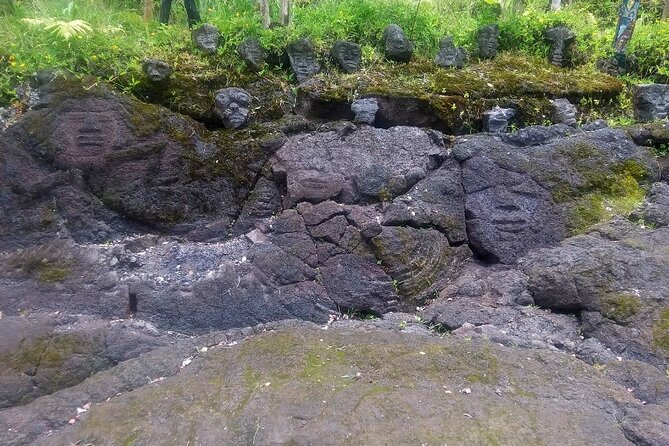
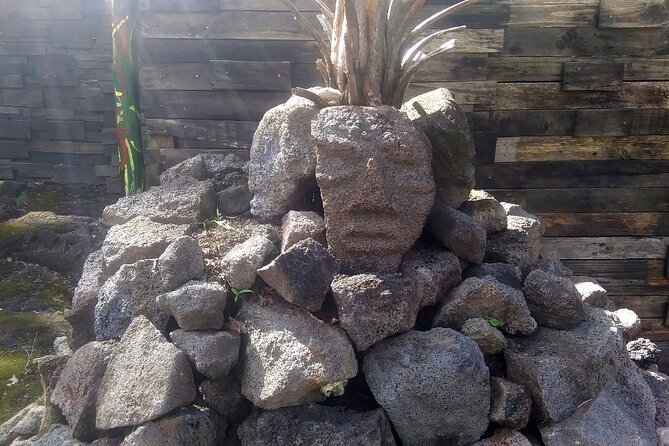
Along the route, you’ll see lava rock sculptures and other carved elements. Since the material is local, the art tends to feel “of the place,” not pasted on. A standout in the tour description is a specific stone sculpture labeled as “Rasta,” which is in situ—meaning it’s positioned in the landscape where it belongs rather than brought out like a portable exhibit.
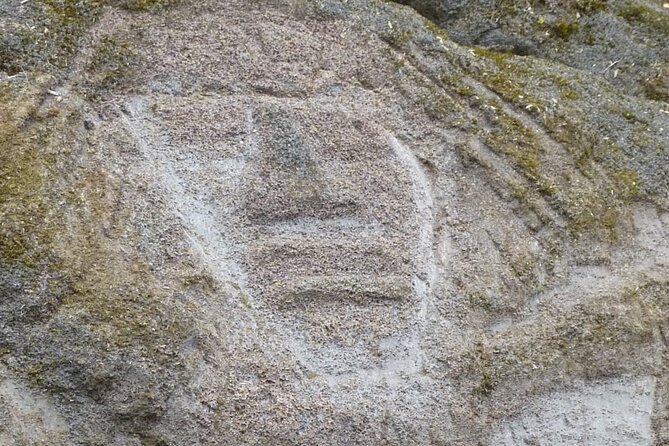
There are also hand-carved Hawaiian tiki statues and lava rock carvings that reflect the hosts’ work. From an experience standpoint, I like that you’re not just told what to look at. The tour format encourages you to move close, observe texture, and take in how lava rock chips, carved grooves, and the surrounding tropical growth all interact.
If you’re the type who likes travel photos, you’ll get plenty. But the better value is slower than a photo sprint. You’ll leave with more understanding of what the artists are doing and why recycled materials and lava rock fit this specific setting.
The Okina prototype: a tiny house built from 100% recycled pallets
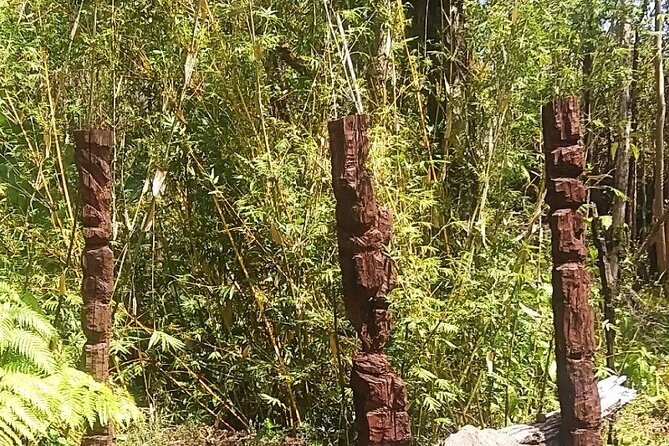
The tour then takes you to The Okina, described as a prototype house built from 100% recycled pallets. This is where the experience shifts from “art walk” to “how it’s built and why it matters.”
Inside, the hallways and sleeping area are about 100 square feet. That’s small enough that you immediately grasp the constraint-driven logic of off-grid living. Instead of thinking about a huge vacation home, you’re seeing a compact layout where every inch has a job. The tour makes that practical. You don’t just admire the structure; you get the sense of how a space like this would feel day to day.
Two key off-grid features are part of the story:
- A water catchment system
- Solar electricity
Those details turn the cabin from a quirky art project into something closer to a working idea. It’s still creative and playful, but the message is functional: you can build a system for basic needs using the resources you’re surrounded by.
Also, the house includes mixed-media artwork. It’s not all about carvings outdoors; you’ll see pieces integrated into indoor spaces too. That gives the whole tour a more complete “world” feeling—like you’re touring a home, not just passing through a yard.
Hands-on energy: when carving stops being a spectator sport
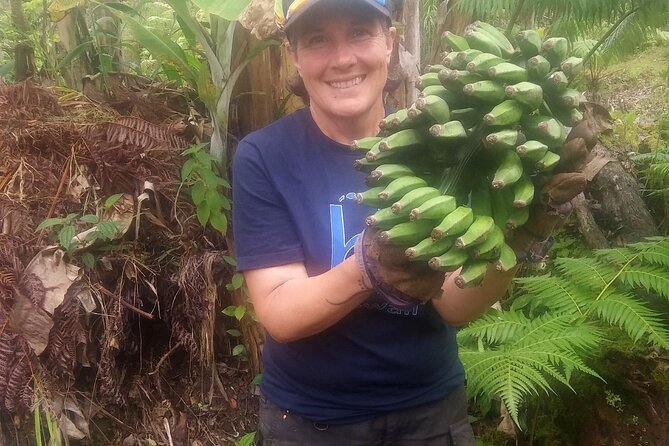
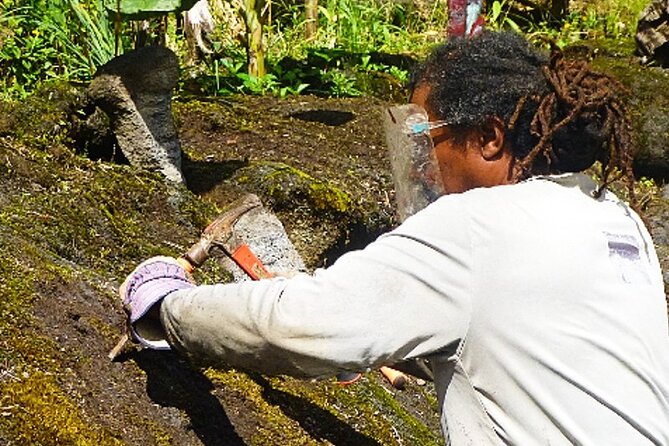
One of the most praised aspects from people who did this is the host hospitality and the hands-on interaction. A family highlight was watching the guide guide an 11-year-old in trying wood carving and chiseling rock. That small moment is more than a novelty. It changes the way you experience the art.
When you handle a tool, even briefly, you start to notice craftsmanship. You understand effort. You recognize that tiki and lava-rock carving aren’t just “decor.” They’re skills, patience, and a feel for material.
Even if you don’t carve, the hands-on approach affects the entire pace. You’ll likely ask more questions. You’ll look closer at edges and tool marks. And because the group size is capped at 10 travelers, your questions won’t vanish under the noise of a crowd.
Who will enjoy this most (and who might want to pick another option)
This tour fits best if you like one of these ideas:
- art that’s connected to a working place
- nature walks where the plants are the main event
- off-grid and low-impact building concepts
- small-group experiences with real conversations
It’s also a good family activity. Kids can engage with the tiki chess theme and get energized by the carving attempt. Adults tend to enjoy the blend of rainforest plants and practical building elements.
The main mismatch is straightforward: if you want a perfectly paved, fully stroller-friendly trail, this isn’t advertised as that kind of walk. The route follows uneven terrain along a lava flow. You can still participate as most travelers can, but your comfort level will matter.
Price and value: $75 for a small, personal rainforest experience
At $75 per person for about 2 hours, this sits in the mid-range for Big Island tours. What makes it feel like good value is that you’re not just paying for access to scenery. You’re paying for:
- a curated walk focused on hapu’u ferns
- an art-and-building narrative tied to the property
- a small group setting capped at 10 travelers
- real off-grid systems information (water catchment and solar)
In other words, you get two experiences stitched together: rainforest plant viewing and a behind-the-scenes look at how one property is built. If your travel style is “I want to learn something real, not just check a box,” the $75 makes more sense.
Timing, group size, and what to bring for comfort
The tour runs for about 2 hours and starts at 2:30 pm, ending back at the meeting point on Jungle King Avenue. That afternoon timing can be nice because you’re not dealing with the earliest heat. You’re also more likely to enjoy the rainforest atmosphere at a comfortable pace.
Since the maximum group size is 10, the tour tends to feel paced. You’ll have time to look at carvings, check out sculptures, and spend a moment with the fern plants without feeling rushed.
What I’d bring (practical, not fancy):
- closed-toe shoes with good traction
- a light rain layer (Fern Forest can be wet, and lava rock paths don’t love slick soles)
- insect protection
- water
If you plan to do hands-on activities, you may want comfortable clothes you don’t mind getting a little jungle-damp.
About the guava tea part (and how to confirm it)
The experience title includes guava tea, but the detailed notes you provided focus most on the tiki, fern, and Okina components. If guava tea is important to your plans, I’d confirm with Paradise Unplugged when you book—like when it’s served and whether it’s included as part of the tour route.
That way you’re not guessing on arrival, and you can plan your snack and hydration needs.
Should you book Hawaiian Tikis and Guava Tea in Fern Forest?
Book this if you want a Big Island experience that’s personal and built around the place. The combination of chess-themed tiki art, 300+ hapu’u ferns, and the off-grid Okina prototype gives you variety without feeling scattered. I especially think it’s worth it for families and for travelers who like learning how small systems work on the ground—water catchment, solar power, and recycled-material building.
Skip it if you need a smooth, predictable trail or if your top priority is a big, wildlife-heavy guided hike. This is more about art, building ideas, and rainforest plants you can slow down for.
If you like the sound of a small-group walk with real craftsmanship and a working homestead feel, this one is an easy yes.
FAQ
Where is the tour meeting point?
The tour starts at Jungle King Avenue, Fern Forest, HI 96778, USA.
How long does Hawaiian Tikis and Guava Tea take?
It’s about 2 hours (approx.).
What time does the tour start?
The start time listed is 2:30 pm.
What is the group size limit?
The maximum number of travelers is 10.
Is the tour offered in English?
Yes, the tour is offered in English.
Is guava tea included?
The name includes guava tea, but the details provided here don’t specify when or how it’s served. It’s smart to confirm with the operator when you book.
Is there free cancellation?
Yes. You can cancel up to 24 hours in advance for a full refund.
Are service animals allowed?
Service animals are allowed.