REVIEW · BIG ISLAND OF HAWAII
Big Island Jungle Tour with Guava Green Tea
Book on Viator →Operated by Paradise Unplugged · Bookable on Viator
Tea in the jungle sounds odd until it works. On the Big Island, this Paradise Unplugged tour mixes a real working banana garden, tiki and lava rock art, and banana green tea plus guava green tea in about two hours.
I especially love the hands-on carving and tool time, led by Jason and Nicki, and the plant focus that includes Hawaiian hapuu ferns plus apple bananas you can actually tie back to their cultivation work. One possible drawback: this is an active, outdoor, practical experience, so it may not be a great fit if you have mobility limits or prefer everything to be purely passive.
In This Review
- Key highlights at a glance
- Walking into Paradise Unplugged on Big Island
- The first encounter: tiki collection, lava rocks, and outdoor art
- Hapuu ferns and the tropical garden you can actually name
- Banana cultivation and apple bananas: practical plant knowledge
- Hands-on tiki carving: hammer, chisel, and creative confidence
- Okina off-grid living: water catchment and composting toilets
- Tea at the Tiki Tea Bar: banana green tea and guava green tea
- Price and what $75 is really buying you
- Who should book this jungle tour
- Best tips to get the most out of your 2 hours
- Should you book this jungle tea tour?
- FAQ
- How long is the Big Island Jungle Tour with Guava Green Tea?
- What does the $75 price include?
- Where does the tour start and end?
- What group size should I expect?
- Is the tour offered in English?
- Can I cancel and get a full refund?
Key highlights at a glance
- Small group size capped at 10, so you get real conversation time instead of a quick photo stop
- Hapuu fern focus across a tropical garden with 300+ Hawaiian hapuu ferns
- Banana cultivation lessons centered on harvest techniques for 150+ apple bananas
- Tiki craft with real tools including hammer and chisel time, plus other hands-on demos
- Off-grid learning in an Okina built from recycled pallets, with water catchment and composting toilets
- Tea at the end featuring banana green tea and guava green tea
Walking into Paradise Unplugged on Big Island
This is the kind of tour that feels more like getting invited to see someone’s home project than joining a scripted sightseeing route. You start on Jungle King Ave in Fern Forest, and the whole experience is designed around one property: art, plants, and an off-grid way of living that stays practical instead of preachy.
The group is small (maximum 10), and that matters. You can ask questions. You can follow along when you get close to plants and materials. And when you’re offered hands-on time, you’re not stuck watching from the back row.
You can also read our reviews of more tours and experiences in Big Island of Hawaii.
The first encounter: tiki collection, lava rocks, and outdoor art
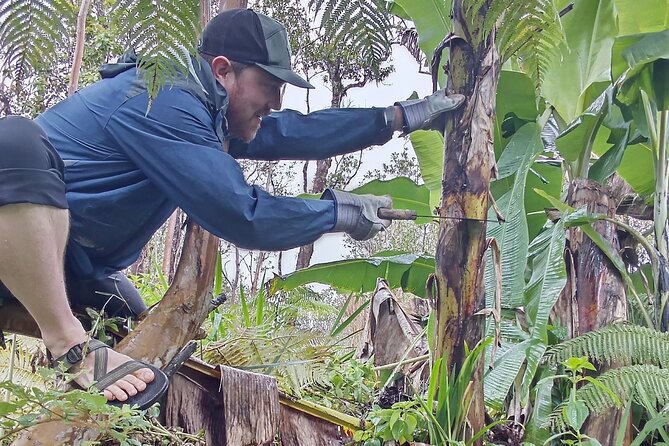
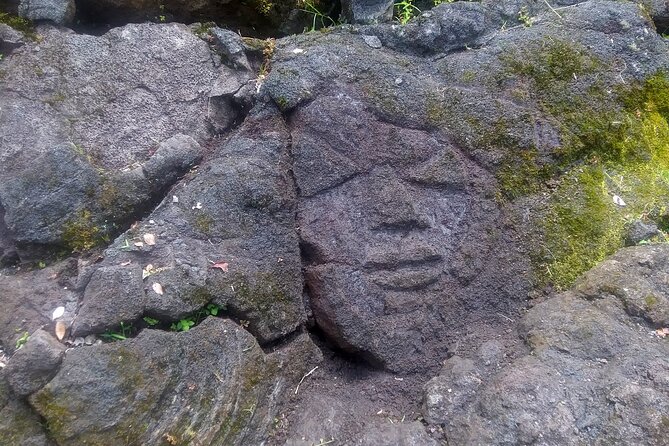
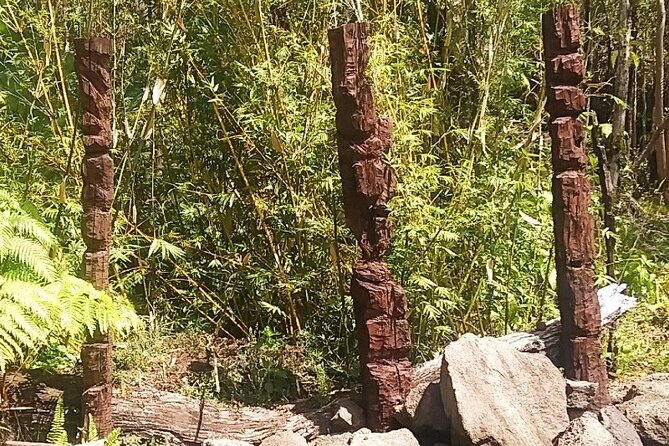
Your tour begins with an up-close look at Paradise Unplugged’s tiki world and lava rock sculpture collection. They point out that their tiki collection is the largest rain-forest tiki collection in Hawaii, which sounds like a brag until you realize they’ve built it into their day-to-day creative life.
You’ll also see lava rock sculptures, including a piece nicknamed Mount Rastamore. If you like Hawaiian-style whimsy mixed with real craft, this part hits the right note: you get the story of why the sculptures exist, and how the materials fit into their environment.
Next comes an outdoor art gallery setting, including a rotating exhibit. This is where the tour’s tone becomes clear. It’s not only about the plants. It’s also about how art can be made from what’s around you, what you save, and what you refuse to throw away.
Hapuu ferns and the tropical garden you can actually name
After the art introductions, you move into the garden side of the tour, where the focus shifts to plants you can identify and understand. The star here is the Hawaiian hapuu fern collection—300+ Hawaiian hapuu ferns.
What I like about this approach is that it connects scenery to specifics. Instead of generic “look at the jungle,” you get a chance to learn how these ferns belong in their habitat and what makes them special in the Hawaiian ecosystem.
You’ll also get a sense of how the property is managed: where plants are grown, what thrives, and how their garden supports an overall off-grid lifestyle. It’s a good reminder that rainforest isn’t just a view. It’s a living system you either work with or struggle against.
Banana cultivation and apple bananas: practical plant knowledge
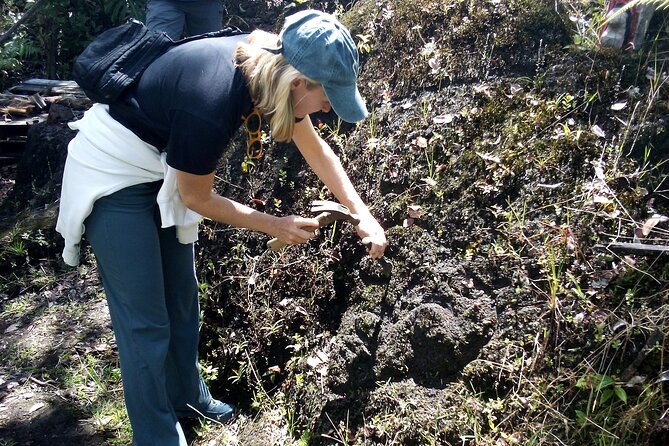
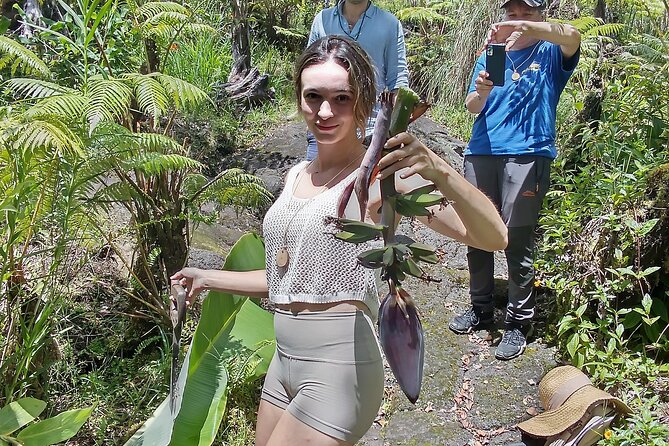
Bananas are the tour’s working backbone, and you’ll learn how they cultivate them for harvest. They highlight techniques used to grow and harvest apple bananas, with a collection of 150+ plants.
This is one of the most valuable parts of the experience if you care about food and sustainable practices. You don’t just hear about bananas as a tropical fruit—you see them as a crop that needs care, timing, and an approach that fits the site conditions.
One thing that stood out from descriptions of the experience is how hands-on it can feel. You may be asked to participate in work tasks during the tour, like planting or basic tool practice, depending on the moment and how the group is progressing.
Hands-on tiki carving: hammer, chisel, and creative confidence
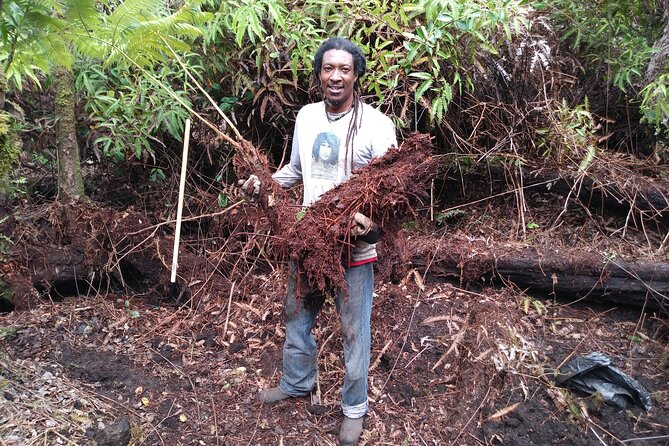
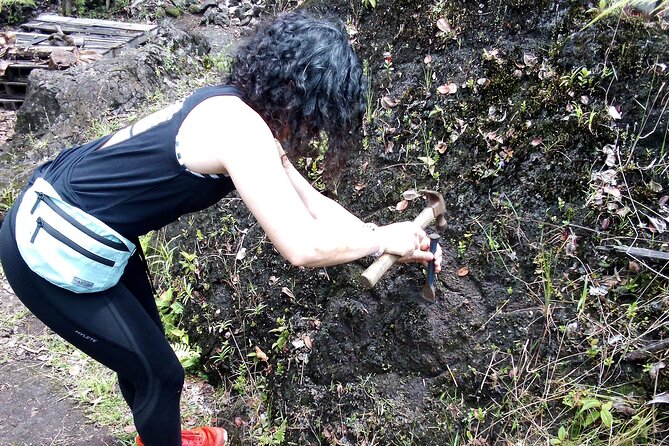
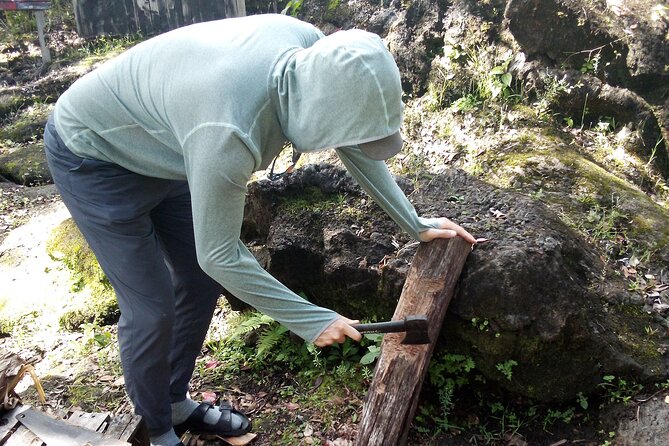
The tour includes a chance to carve a tiki using a hammer and chisel. This is more than a souvenir moment. It’s a short crash course in how art becomes real with your own hands, not just with a guide talking about it.
For people who love making things—wood, stone, or anything in between—this is a highlight. You get to understand tool handling, the feel of materials, and the patience behind small design choices. It also makes the art section click later, because you’ve experienced the effort that goes into it.
Some descriptions also mention other hands-on demonstrations like sawing or axe work as part of the craft process. Even if you only do the chisel carving portion, you’ll still come away with more respect for the skills involved.
Practical note: plan on being fully in the moment. This isn’t a “watch and leave” activity. If you prefer to keep your hands clean and your feet perfectly planted, you may find this portion less comfortable.
Okina off-grid living: water catchment and composting toilets
One of the most interesting sections is the Okina, an off-grid structure made from recycled pallets. You’ll see it as a working example, not just a photo opportunity.
The tour explains key elements of their off-grid lifestyle, including water catchment and composting toilets. This is where the experience becomes more than “cute jungle tour with tea.” It shows how daily systems can be designed around limited resources and a site-specific approach.
I find this section especially helpful because it stays grounded. The goal isn’t to convince you to go off-grid tomorrow. The goal is to show what’s possible, and how people can reduce waste while living with the environment instead of fighting it.
Tea at the Tiki Tea Bar: banana green tea and guava green tea
The tour ends with a sample at the Tiki Tea Bar: banana green tea and guava green tea. They also describe this as a refreshing tea break after the hands-on work and plant time.
Here’s what to expect flavor-wise, based on descriptions from past participants: banana-leaf tea tends to feel smoother and lighter compared with typical green tea, while guava-leaf tea stays closer to a classic green tea taste. Either way, it’s a nice payoff that keeps the tour’s theme consistent—everything connects back to plants they grow and use.
This is also a good moment to ask “how do you…” questions about cultivation, composting, or daily routines. Tea turns the tour into conversation instead of a checklist.
Price and what $75 is really buying you
At $75 per person for about two hours, you’re not paying mainly for a bus ride or a big roadside attraction. You’re paying for access to a working property and a guided experience that includes craft time, plant time, and off-grid living examples.
The small group size (maximum 10) matters for value. It turns the visit into a personal, question-friendly experience rather than a rushed walk. And the included tea and coffee/tea add a small but real “you’re not out here paying for everything” benefit.
One more value angle: the tour doesn’t just show nature. It shows how people design for it. That practical perspective is hard to get from the typical “stand and point” format.
Who should book this jungle tour
This is a great match if you:
- like hands-on activities and don’t mind getting a bit involved
- want plant-focused learning tied to real cultivation
- enjoy Hawaiian culture through craft, off-grid creativity, and everyday decisions
- like meeting hosts who talk through what they’re doing and why
You might want to skip (or at least think carefully) if:
- you have mobility limits, because the tour includes active outdoor work and tool-based activities
- you prefer a purely passive tour with no hammer/chisel time
Best tips to get the most out of your 2 hours
Since you’ll be outdoors and participating, show up ready for hands-on nature time. Wear clothes you don’t mind getting a little jungle-worn. You’ll also get more out of the tour if you come with curiosity about plants, composting, and growing food where soil and conditions may not be ideal.
Also, pace yourself during the craft section. Chiseling and hammering take focus. You’ll enjoy it more if you treat it like a learning moment rather than a race to finish.
Should you book this jungle tea tour?
Book it if you want Big Island that feels lived-in: plants with names, art you can touch, and an off-grid story explained in real terms. The combination of hapuu ferns, apple banana cultivation lessons, and tea made from what they grow is a solid reason to spend your time here.
Skip or reconsider if you’re looking for easy, seated sightseeing. This experience is practical and active, and it works best when you’re open to getting involved.
FAQ
How long is the Big Island Jungle Tour with Guava Green Tea?
The tour is about 2 hours.
What does the $75 price include?
The admission ticket is included, and coffee and/or tea are included as part of the experience.
Where does the tour start and end?
The tour starts at Jungle King Ave, Fern Forest, HI 96778, USA, and it ends back at the meeting point.
What group size should I expect?
The maximum group size is 10 travelers.
Is the tour offered in English?
Yes, the tour is offered in English.
Can I cancel and get a full refund?
Yes. You can cancel up to 24 hours in advance for a full refund. If you cancel less than 24 hours before the experience starts, it won’t be refunded.