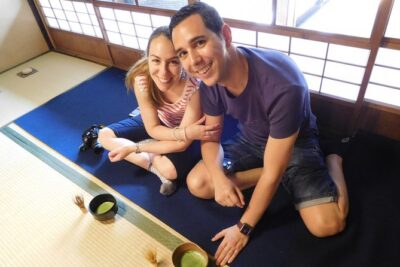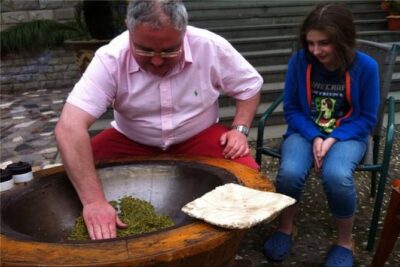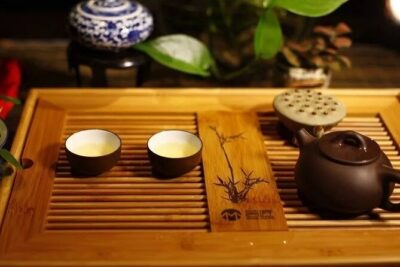
REVIEW · CHENGDU
Half-day Private Mahjong course in Local Tea House
Book on Viator →Operated by Chilli Cool China · Bookable on Viator
Mahjong starts with chili and tea. This private Chengdu Mahjong class sends you to a local spice market first, then into a cozy tea house room to learn the game from English-speaking instruction (with Lance leading the way for many sessions). I especially liked the Sichuan spice market stop—seeing and sampling the ingredients you’ll hear about right before the Mahjong lesson—and the patient, friendly teaching style that keeps the rules clear. The only drawback to plan around is time: with roughly 3 to 4 hours total, you’ll learn how to play, not become the household champion.
Hotel pickup and drop-off make it easy to fit in without babysitting directions. You’re also not just watching from the sidelines; you get afternoon tea, snacks, bottled water, and food tastings built into the flow. If you’re sensitive to short walking stretches in a busy market area, just keep comfortable shoes in mind.
In This Review
- Key Highlights Worth Your Attention
- Why Chengdu Mahjong Fits Best When It’s Tied to Food
- Chilli Cool’s Kitchen and the Spice Market Stop
- From Market to Tile Room: How Mahjong Gets Taught
- Tea House Timing: The Included Afternoon Tea Part
- What $60 Really Buys You in Chengdu
- Pickup, Duration, and How to Plan Your Afternoon
- Who Will Enjoy This Mahjong and Tea Lesson Most
- A Few Smart Prep Tips So You Enjoy It More
- Should You Book This Tour or Skip It?
- FAQ
- How long is the Chengdu Mahjong course?
- Do they pick you up and drop you off?
- Is this tour private?
- What’s included during the experience?
- Is the guide English speaking?
- How old do children need to be to join?
- Where does the tour start and end?
- Do I receive a mobile ticket?
- What is the cancellation policy?
Key Highlights Worth Your Attention
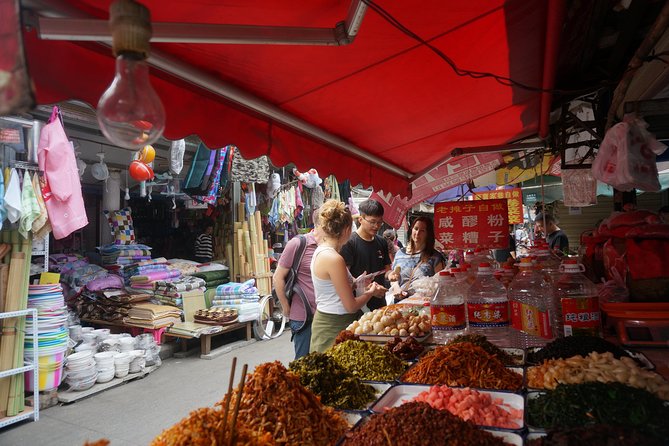
- Local spice-market visit first: learn how Sichuan spices and ingredients shape local food culture.
- Tea-house style instruction room: the lesson happens in a Chinese-characteristics room, not a sterile classroom.
- English-speaking guide teaching the rules: you get the game explained in an easy way before testing yourself.
- Afternoon tea as part of the lesson: you practice your new skills while enjoying tea and small bites.
- Private format for your group: only your party participates, so pacing stays comfortable.
- Convenient hotel pickup and drop-off: you spend less time commuting and more time doing.
Why Chengdu Mahjong Fits Best When It’s Tied to Food
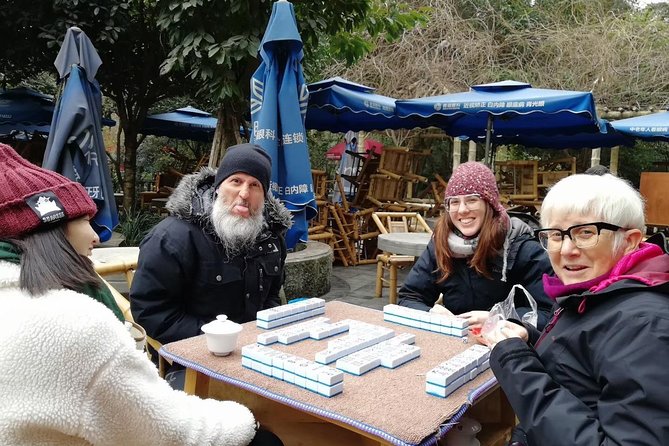
Chengdu is famous for food, and this experience uses that fact on purpose. Instead of jumping straight to tiles and scoring, you start in a spice market atmosphere where you can actually connect what you taste with what you’ll hear about in Sichuan cuisine. That order makes the whole morning or afternoon feel less like a random activity and more like a cultural mini-course.
The second reason it works: Mahjong is social, and your lesson is set up in a way that feels human. You’re not just memorizing rules; you’re learning with an English-speaking guide and then getting a chance to put it into action with tea nearby. Think of it like learning a game while you’re still in the rhythm of local life—market sounds outside, tea going inside, tiles on the table.
You should also know what this is and isn’t. It’s a half-day class focused on learning, not on running a full tournament. So if you already play a lot, you might still enjoy the spice-market context, but don’t expect a deep strategy boot camp in one session.
You can also read our reviews of more tours and experiences in Chengdu.

Chilli Cool’s Kitchen and the Spice Market Stop
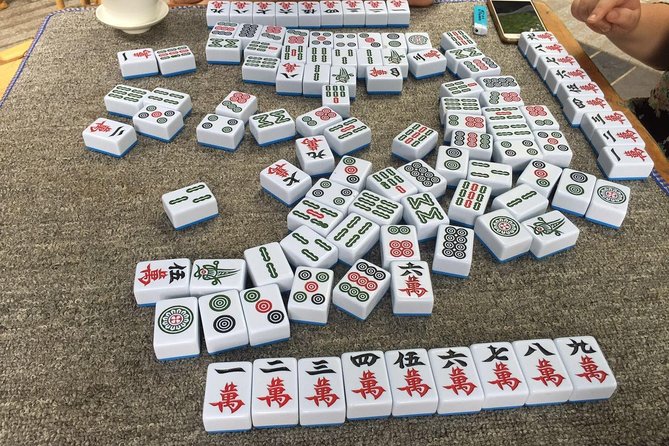
Your first major stop is tied to Chilli Cool’s Kitchen, where the experience starts in an authentic local market setting. This is where you’ll explore different Sichuan spices and ingredients. The point isn’t just to look around—it’s to understand what you’re seeing and how those ingredients show up in Sichuan cooking.
You can expect three practical things here:
- Ingredient recognition: the guide helps connect spice names and textures to the way they’re used locally.
- Food culture context: you’re learning how Sichuan cuisine is built, one ingredient at a time.
- Tastings along the way: food tasting is included, so you’re not stuck with theories.
Market walking is also the part of the day where you’ll feel Chengdu outside the main tourist lanes. One of the strongest themes from past experiences is the sense of being in a less visited neighborhood area rather than a staged market corridor. It’s a better way to get a real sense of day-to-day life, even if your total time is short.
Practical note: markets can be busy and sensory-heavy. Wear comfortable shoes and keep a quick hand on your phone for photos, but also be ready to pause for tastings and explanations.
From Market to Tile Room: How Mahjong Gets Taught
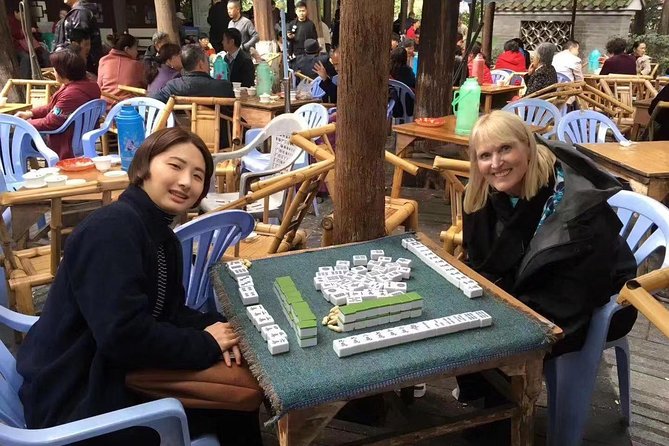
After the spice learning, you move to a cozy room with Chinese-characteristics. This is where the “gin rummy-like” comparison helps. You’re not being forced into complicated terminology right away. Instead, the guide explains the rules in an easy way, and then you practice with guidance.
The format is built for clarity:
- The guide walks you through the basics step-by-step.
- You learn the rules first, then test your understanding with a local tea as part of the lesson rhythm.
- The pacing is friendly and patient, especially if it’s your first time.
I like that the lesson is not presented like a test. Past classes emphasize the guide’s ability to teach without rushing, which matters a lot when you’re learning something that has its own logic and vocabulary. If you’ve ever felt lost in a new game, you’ll appreciate instruction that starts from the beginning and keeps moving only when you’re ready.
There’s also a good “real-world” feel here: you’re not sitting in a lecture hall. You’re learning in a space that looks and feels like it belongs to the culture you’re exploring. That small detail changes how fast you absorb new information.
Tea House Timing: The Included Afternoon Tea Part
One of the smart touches of this experience is how it blends the lesson with downtime. You get afternoon tea and coffee and/or tea, plus snacks and bottled water. There are also food tastings, which means the day is already built to keep your energy up.
In a Mahjong class, that matters. Mahjong is attention-heavy. You have to watch patterns, follow turns, and think ahead a little. A tea break isn’t a distraction here—it’s part of the learning design. It gives your brain a reset while you’re still in the same “game mood.”
Even better, the tea is connected to the lesson itself. You test your mastery degree with a local tea, which makes the experience feel like a small ritual instead of a standard activity where you only learn and then leave.
If you like food-based activities, this is one of the nicer ways to experience Sichuan culture without spending hours on a long tour day. You get an ingredient context first, then you get a comfortable tea-house pace while learning the game.
What $60 Really Buys You in Chengdu
At $60 per person for a private half-day experience, you’re paying for three things that are hard to recreate on your own:
- A guided spice-market experience where you learn which ingredients matter and why.
- A guided Mahjong lesson from an English-speaking instructor, not just a self-study video.
- Convenience services like hotel pickup and drop-off, plus included snacks and tea.
Is it expensive? It’s not cheap in a budget sense, but it’s also not paying for a big all-day itinerary. For many visitors, the value comes down to avoiding the guesswork. In a market environment, it’s hard to know what you’re looking at. In a Mahjong lesson, it’s hard to learn the rules properly without someone correcting your confusion in real time.
This is also private, which changes the math. You’re not buying a seat in a large group where pacing can get awkward. The “only your group participates” format helps keep the lesson comfortable and allows the guide to work at a speed that fits you.
If you’re traveling with a partner and you like hands-on cultural activities, this price often lands as fair value. If you’re a hardcore Mahjong player, you might feel the class is short, but for most people it’s a fun introduction tied directly to Sichuan food culture.





Pickup, Duration, and How to Plan Your Afternoon
The experience runs about 3 to 4 hours. You’re picked up from your hotel area when pickup is offered, then you return to the meeting point at the end. The meeting point is Zhangjia Alley in the Jinniu District (610083). The tour ends back there.
That structure is practical if you’re trying to keep your day open for other Chengdu plans—maybe a Sichuan food stop later, or time to explore on your own after the class. Because you’re back fairly quickly, you don’t feel like you lost an entire day to one scheduled activity.
One more detail to note: the experience includes bottled water and snacks. That means you’re less likely to end up hungry or scrambling for food during the switch from market walking to the tea-house lesson room.
If you’re sensitive to market conditions—crowds, heat, or standing—plan to dress for comfort and keep the itinerary in mind as a walking-plus-sitting day.
Who Will Enjoy This Mahjong and Tea Lesson Most
This class fits best if you want something that feels local and active without being exhausting. You’ll likely enjoy it if you:
- Like food culture as a gateway into local traditions.
- Want to learn Mahjong with English instruction and a patient guide.
- Prefer a private class where pacing can be comfortable.
- Enjoy tea and small tastings as part of the experience.
It’s also family-friendly in a limited way: the minimum age is 5, and children must be accompanied by an adult. Most people can participate, and the experience is near public transportation, which helps if your pickup arrangements are not ideal.
That said, if you already play Mahjong at a high level and want advanced strategy, you might find the half-day format doesn’t have enough time for deeper learning. It’s an introduction, tied closely to Sichuan spice and tea culture, not an all-day practice camp.
A Few Smart Prep Tips So You Enjoy It More
You don’t need special gear for Mahjong, but you’ll enjoy the day more if you plan for the market part and the tea-house part as two different settings.
Bring:
- Comfortable shoes for the spice-market walk.
- A small, practical mindset—be ready to ask questions and get clarification during the rule explanations.
Also, consider what you want from the class. Some people come for Mahjong rules. Others come for the Chengdu spice market context. You’ll get more out of the day if you approach it with both in mind: taste first, learn second, then test what you learned with tea.
Finally, if you’re booking as a couple or small group, you’ll appreciate how the private structure makes the lesson feel personal. That personal attention is often where the difference shows up between learning something and simply getting through it.
Should You Book This Tour or Skip It?
Book it if you want an experience that connects Chengdu’s food world to a traditional game. You get a local spice-market walk, included tastings, and a guided Mahjong lesson in a tea-house setting, with convenient pickup and drop-off and plenty of included refreshments. It’s also a strong choice for first-timers who want the rules taught in English without feeling rushed.
Skip it if you already know how to play Mahjong well and you’re looking for a longer, strategy-heavy session. In that case, the half-day pace could feel too short, even with the friendly teaching style.
If your goal is a fun, culture-connected afternoon—spices, tea, and tiles—this is the kind of activity that makes Chengdu feel real fast.
FAQ
How long is the Chengdu Mahjong course?
The experience runs about 3 to 4 hours.
Do they pick you up and drop you off?
Yes. Hotel pickup and drop-off are included, and the activity ends back at the meeting point.
Is this tour private?
Yes. It’s private, so only your group will participate.
What’s included during the experience?
Afternoon tea, bottled water, food tasting, snacks, coffee and/or tea, and a professional guide are included.
Is the guide English speaking?
Yes. The Mahjong lesson is taught with an English speaking guide.
How old do children need to be to join?
The minimum age is 5, and children must be accompanied by an adult.
Where does the tour start and end?
It starts at Zhangjia Alley, Jinniu District, Chengdu (610083) and ends back at the meeting point.
Do I receive a mobile ticket?
Yes. The experience includes a mobile ticket.
What is the cancellation policy?
Free cancellation is available up to 24 hours in advance for a full refund.