REVIEW · GLASGOW
Glasgow Gin Tea Experience
Book on Viator →Operated by Red Bus Bistro Company Limited · Bookable on Viator
This is an afternoon tea style tour built around a vintage Routemaster bus and quick hits of major Glasgow landmarks. I like the focus on classic comfort food, especially warm scones with cream, jam, and strawberry garnish, and you get plenty of chances for easy city photo moments from key viewpoints.
One thing to watch: the name may make you expect nonstop gin cocktails and a full narration tour. The operator emphasizes this is a dining experience, and there’s no live or recorded commentary on the bus, with alcohol service potentially limited by current rules.
It runs about 1 hour 30 minutes and keeps things small (max 15 people), so you’ll be sharing space and tables more than you would on a big sightseeing bus.
In This Review
- Quick highlights you’ll feel right away
- Step on board: what this Glasgow Gin Tea Experience is really like
- What you get to eat and drink (and where gin may not show up)
- The timing and logistics that affect your comfort
- Gallery of Modern Art: your first art hit and social starting point
- City Chambers and the George Square feel: civic pride and big architecture
- Glasgow Cathedral and the Necropolis: medieval survival meets Victorian symbolism
- Wellpark Brewery: the city’s working side, not just the tourist side
- Glasgow Tower and the Tolbooth Steeple area: where the city’s clocking happens
- Doulton Fountain and the big exhibition connection
- People’s Palace and Winter Gardens: how Glaswegians lived, worked, and played
- Clyde bridges and cranes: engineering views you can’t fake
- SEC Armadillo and OVO Hydro: modern Glasgow event culture
- Clydeside Distillery and Riverside Museum: craft and curiosity
- Glasgow Tower at the Science Centre and the big-picture city loop
- Tennent’s Bar and the Hunterian Art Gallery: local flavor and serious art
- University of Glasgow and Mitchell Library: big ideas in real buildings
- Kelvingrove Art Gallery and Museum: the classic Glasgow crowd-pleaser
- Who this tour fits best (and who should skip it)
- Value check: is $69.31 worth it?
- Should you book the Glasgow Gin Tea Experience?
- FAQ
- How long is the Glasgow Gin Tea Experience?
- Where does the tour start?
- What language is the experience offered in?
- Is there a toilet on board?
- What’s included in the price?
- Is gin or alcohol included?
- Is there live or recorded guide commentary during the ride?
- How many people are on the tour?
Quick highlights you’ll feel right away
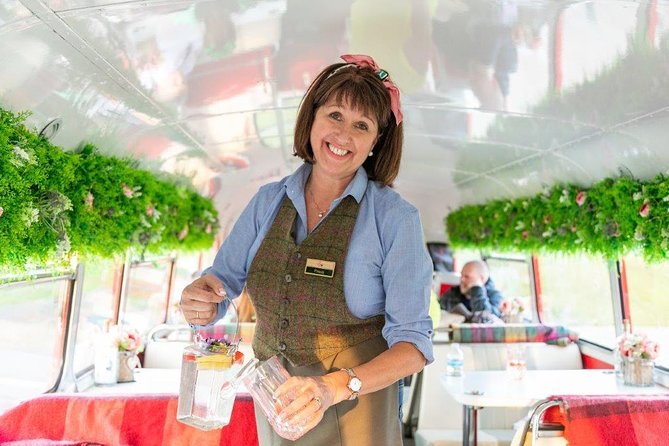
- Tea-and-treats on a vintage Routemaster: cozy, photo-friendly, and a lot more relaxed than standard bus tours
- Comfort-food set menu: warm scone with cream and jam, mini quiche, sandwiches, and petit fours
- Plenty of landmark time from the route: iconic city scenes around George Square, the Cathedral area, and the Clyde
- Small group vibes: max 15 travelers, with a good chance to chat at the shared table
- Hosts add Glasgow tips: you can ask questions and get practical suggestions, even without formal narration
Step on board: what this Glasgow Gin Tea Experience is really like
Think of this as tea first, sightseeing second. The vehicle is part of the charm: you’re on a vintage-style Routemaster, not a modern tour coach, so the ride feels more like a themed social outing than a strict tour program. You’re also not going in and out constantly. Expect short photo moments and tight timing, with the food and drinks doing most of the heavy lifting.
The group size matters. With a maximum of 15 travelers, you’re more likely to meet people and actually sit and talk, especially if you’re on a busier day where table sharing is the norm. That can be a plus if you want companionship, and a minor annoyance if you’re the type who wants zero small talk.
The practical downside is simple: there’s no toilet on board. Since it’s about 90 minutes, plan on using the facilities before you arrive and keep water reasonable during the ride.
You can also read our reviews of more tours and experiences in Glasgow.

What you get to eat and drink (and where gin may not show up)
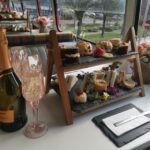
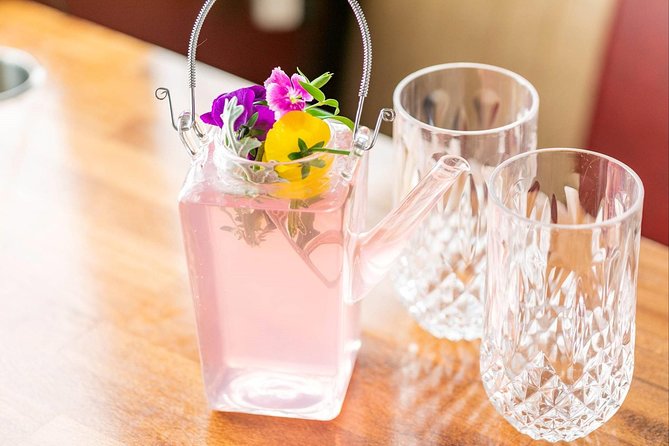
Let’s start with the included menu, because it’s the heart of the experience. Your spread includes unlimited tea and coffee, plus a warm home-baked scone with cream, jam, and strawberry garnish. You’ll also get handmade sandwich selections, a warm mini quiche, and a selection of petit fours. Coffee and/or tea is part of the package, and those sweet little extras matter—petit fours are the kind of thing that turns a meal into an event.
Alcohol is handled differently. The experience is called the Glasgow Gin Tea Experience, and alcoholic beverages are listed as available to purchase. But the operator also notes that, due to government restrictions, they’re currently unable to serve alcohol on the tour date. That’s why you should mentally separate the theme from the guarantee. You’re definitely getting tea. You might not be getting gin service the way you’re picturing it.
If you’re hoping for a Prosecco-and-gin party, go in with flexibility. If you want a tasty afternoon tea outing with a relaxed city loop, you’ll probably be happy.
The timing and logistics that affect your comfort
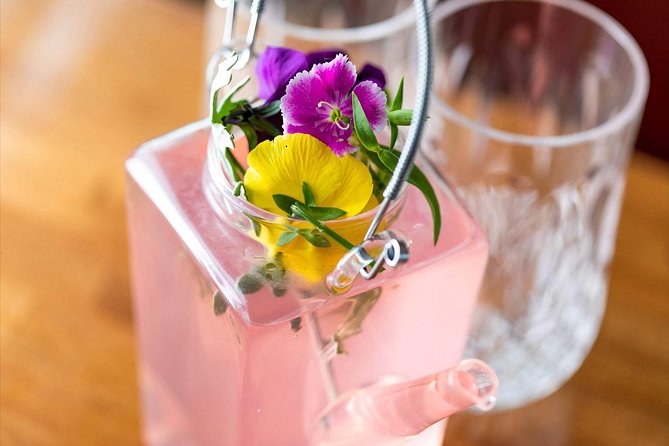
This tour is roughly 90 minutes, and it’s designed to keep the pace smooth. Still, there are a few things that can make or break your experience.
Where you’ll start: Shuttle Street, 36 Shuttle St, Glasgow G1 1QA. Arrive 5–10 minutes early so you’re not stuck watching everyone board without you. They can’t wait for latecomers.
Seating and tables: you should expect to share a table on busier weekend tours. If you prefer not to, the operator says they’ll try to accommodate you on a quieter tour.
Onboard narration: this is important. There is no live or recorded guide commentary on the bus. You’re not settling in for a scripted “look left, now look right” performance. Hosts do offer information and tips (and they’ll answer questions), but it’s not the same as a guided coach tour with commentary throughout.
Transfers and getting around: the landmarks are many, but the stops are generally about short stops and photo chances rather than long museum-style visits every time. If you hate rushing, plan your expectations around quick glimpses.
Gallery of Modern Art: your first art hit and social starting point
You begin at a strong Glasgow anchor: the Gallery of Modern Art. It’s a world-class museum setting, and it’s also one of those places where people naturally gather. That’s good for this kind of tour because it helps you settle in before you start moving.
If you’re the type who likes to connect what you see with what you’ve read, this is a good early stop. You can take a quick look, then carry that “what kind of city is this” feeling with you as the tour shifts from art spaces to civic monuments.
A practical note: since the overall experience is short, don’t plan on going deep into galleries unless you’re comfortable doing a light scan.
City Chambers and the George Square feel: civic pride and big architecture
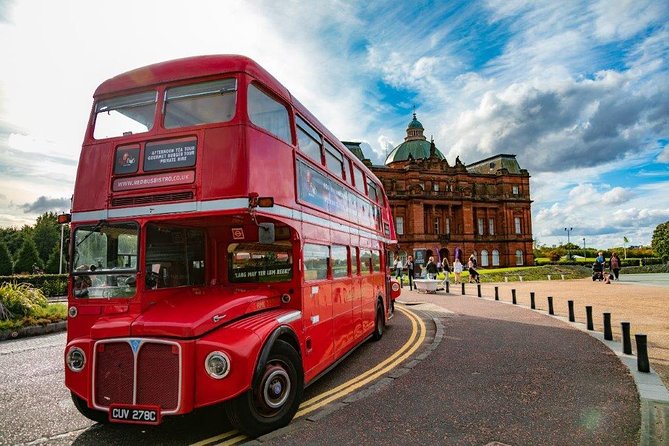
Next comes a big one for photo lovers: City Chambers in George Square. This is one of the city’s most iconic and imposing civic buildings, tied to Glasgow’s wealth and industrial prosperity—exactly the kind of story that pops when you see the building in person rather than only in photos.
This stop is also great for orientation. After seeing the City Chambers, you’ll have a better sense of where the core power-and-history zone sits in Glasgow. Even if you don’t go inside for a deep architectural tour, the exterior alone gives you a “this is Glasgow’s main stage” moment.
Glasgow Cathedral and the Necropolis: medieval survival meets Victorian symbolism
This is where the tour turns from “city center landmarks” to “place with a story.”
Glasgow Cathedral is one of Scotland’s magnificent medieval buildings, and what makes it special is survival. It’s noted as the only one on the Scottish mainland to survive the Reformation of 1560 intact. That’s the kind of detail that makes your photos feel less like postcard images and more like evidence of how long the city has been changing.
Right beside it is the Necropolis—Victorian garden cemetery with architecture, sculpture, and stories. It’s modeled on Père-Lachaise in Paris, and the scale is striking: tens of thousands of burials are estimated here. Even if you’re not a cemetery fan, it’s hard to deny the visual punch. It reads like an outdoor gallery of memorial design.
Why this matters for you: these stops are one of the few times on a short tea tour when the city stops being “just pretty.” You get context about how Glasgow remembers itself.
Wellpark Brewery: the city’s working side, not just the tourist side
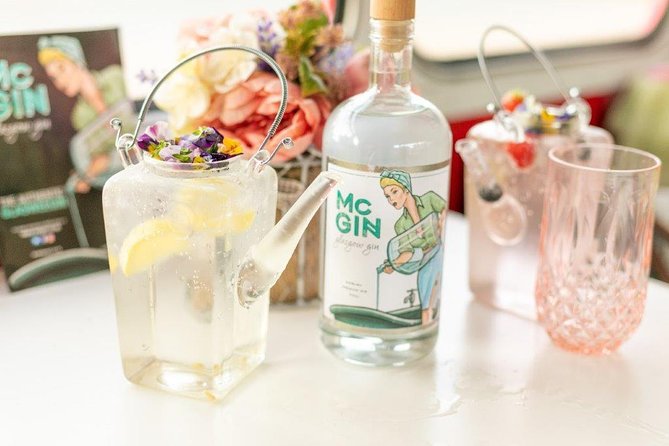
Then the tour moves into something more everyday and Scottish: Tennent’s Wellpark Brewery. It’s been part of Scotland and its culture for generations, producing award-winning brews since 1885.
This stop adds texture. Lots of visitors only see the polished front of Glasgow—museums and monuments. A brewery reminder brings you back to the idea that Glasgow is also industry, craft, and long-running local brands.
Glasgow Tower and the Tolbooth Steeple area: where the city’s clocking happens
You’ll also pass Glasgow Tower, tied to the Tolbooth Steeple in Glasgow Cross. It’s topped by a clock and a stone crown, and it was once part of a larger Tolbooth that included space for a town clerk’s office, a council hall, and even a city prison.
That combination—government, justice, timekeeping—makes the tower more than a “nice view” stop. It’s a physical reminder of how cities used to run from the center. If you like architectural storytelling, you’ll enjoy spotting the details and imagining the building’s earlier roles.
Doulton Fountain and the big exhibition connection
Another playful landmark on the route is the Doulton Fountain, connected to the 1888 International Exhibition in Kelvingrove Park. The exhibition drew over 5.7 million visitors—an eye-opening number that helps you understand how seriously Glasgow threw its weight around internationally.
The fountain is also described as the largest fountain ever constructed in ceramic. That’s the kind of detail you’ll appreciate when you see the form in person because you can’t help but think about the craftsmanship involved.
People’s Palace and Winter Gardens: how Glaswegians lived, worked, and played
This stop focuses on real people, not just buildings. People’s Palace, set in historic Glasgow Green, holds objects, photographs, prints, and film showing how Glaswegians lived, worked, and played over time.
For your trip planning, this is one of those places that helps you understand Glasgow’s personality. It’s not only about what the city looks like. It’s about what it felt like.
Clyde bridges and cranes: engineering views you can’t fake
The middle-to-late part of the route leans hard into river engineering, and it’s more interesting than it sounds.
You’ll pass Kingston Bridge, described as a busy, balanced cantilever dual-span road bridge carrying around 150,000 vehicles every day. That’s not a gentle “look at the scenery” bridge. It’s Glasgow in motion.
Then there’s the Clyde Arc, connecting Finnieston and areas near Glasgow Science Centre in Govan. Its curved design and angled crossing gives you that modern engineering feel.
Next comes the Finnieston Crane (Stobcross Crane), a disused but retained giant cantilever crane. It’s still operational as a symbol of engineering heritage and was used for loading cargo, including steam locomotives, for export worldwide.
Why this section is worth it: it gives you an “I get what Glasgow was built to do” feeling, not just “I saw a pretty building.”
SEC Armadillo and OVO Hydro: modern Glasgow event culture
You’ll also see major venues like the SEC Armadillo and the OVO Hydro. The SEC Armadillo is tied to Foster + Partners and marked a new era for the waterfront when it opened in 1997. The Hydro is a multi-purpose indoor arena at the Scottish Event Campus.
Even if you don’t attend an event, these stops show how Glasgow shifted from industrial muscle to design-forward spaces and big public gatherings.
Clydeside Distillery and Riverside Museum: craft and curiosity
Clydeside Distillery is Glasgow’s first dedicated Single Malt Scotch Whisky Distillery in over 100 years, with a visitor experience, cafe, and specialist whisky shop. It’s an easy add-on for anyone who enjoys a themed stop that connects food and drink with local identity.
Then the Riverside Museum of Transport and Travel enters. It’s award-winning and packed with transport objects—everything from skateboards to locomotives, plus all sorts of vehicles and even some pop-culture surprises. For many people, this is the stop they’d happily spend longer in if the timing allowed.
Don’t worry if you don’t go deep here during your tea tour. The value is in seeing the range and letting it set up what you might want to return for later on your own.
Glasgow Tower at the Science Centre and the big-picture city loop
There’s another Glasgow Tower stop (part of the Glasgow Science Centre complex). If you like the “science + city” vibe, it’s a nice transition point. It keeps the experience from feeling like only history and architecture.
Tennent’s Bar and the Hunterian Art Gallery: local flavor and serious art
You’ll also pass through Tennent’s Bar, a much-loved city centre local in the West End. It’s described as one of the last traditional pubs in that area, known for beers, tasty food, and lively banter.
While this is still part of a short tea tour, it’s a valuable reminder that Glasgow’s identity isn’t just museums and monuments. The pub culture is part of the city’s everyday rhythm.
Then you hit Hunterian Art Gallery, with a strong public art collection in Scotland, including work ranging from Rubens and Rembrandt to Scottish Colourists and Glasgow Boys. If you care about art depth, this stop points you toward a place worth a separate, longer visit.
University of Glasgow and Mitchell Library: big ideas in real buildings
The University of Glasgow is included as well, with a long timeline since 1451 and references to major figures like Adam Smith, James Watt, and Lord Kelvin. It’s a reminder that Glasgow also produces thinkers, not only builders.
Mitchell Library follows as a landmark at Charing Cross and part of Glasgow Libraries. It’s described as containing some of the finest collections available in a public library, with materials Scottish and international.
For your trip, these stops are useful because they show Glasgow’s range: commerce, academia, culture, and public knowledge—one city, many lanes.
Kelvingrove Art Gallery and Museum: the classic Glasgow crowd-pleaser
Kelvingrove Art Gallery and Museum is another strong local favourite. It opened in 1901 and is family friendly, with stunning architecture and a long-established role as a place people want to return to.
Even if you only get passing impressions on a short tour, this stop helps you see why Glasgow has a reputation for art you don’t have to hunt for.
Who this tour fits best (and who should skip it)
This experience is great for you if you want a guided day starter that mixes food and landmarks without spending hours planning museum entrances. You’ll enjoy it if you like:
- a small-group vibe (max 15)
- classic afternoon tea comfort food
- quick photo opportunities around central Glasgow and the Clyde
It’s not ideal if you’re expecting a full narrated sightseeing coach tour. With no live or recorded commentary on board, you’ll get tips through conversation, but you won’t get constant guided narration. It also may not deliver the gin-drink expectation on every date due to alcohol service limitations.
Value check: is $69.31 worth it?
At $69.31 per person, you’re paying for a packaged experience: included food (scone, quiche, sandwiches, petit fours), unlimited tea and coffee, and a ride that takes you through a lot of major city landmarks in about 90 minutes. That’s the key value: you’re not just paying for a bus loop. You’re paying for a meal experience plus sightseeing snapshots.
If you were planning to buy afternoon tea on its own, the menu here gives you a full spread rather than a tiny snack. The landmark component also helps if you’re new to Glasgow and want fast orientation before you choose where to spend more time later.
The only value-risk is expectation mismatch. If you’re mainly chasing gin cocktails and heavy guided narration, you may feel the price doesn’t match the experience you wanted.
Should you book the Glasgow Gin Tea Experience?
I’d book this if you want a relaxed, small-group Glasgow intro with included afternoon tea and easy landmark photo stops, especially if you like historic architecture plus river engineering visuals. It’s a fun way to get your bearings fast and then decide what to explore in more depth later.
I’d reconsider if your main goal is gin service and a narrated tour. The operator’s own guidance points to alcohol service limits on some dates and no onboard narration. In that case, you might be happier choosing a more traditional guided sightseeing tour and then grabbing afternoon tea separately.
FAQ
How long is the Glasgow Gin Tea Experience?
The experience runs for about 1 hour 30 minutes.
Where does the tour start?
It starts at 36 Shuttle St, Glasgow G1 1QA, UK.
What language is the experience offered in?
It is offered in English.
Is there a toilet on board?
No, there is no toilet on board.
What’s included in the price?
Included items include a warm scone with cream and jam, handmade sandwich selections, unlimited tea and coffee, selection of petit fours, warm mini quiche, and alcoholic beverages are available to purchase. A souvenir drinks cup is not included.
Is gin or alcohol included?
Alcoholic beverages are available to purchase, but the operator notes alcohol service may be restricted due to government rules.
Is there live or recorded guide commentary during the ride?
No. The operator states they do not offer live or recorded guide commentary on the buses.
How many people are on the tour?
The tour has a maximum of 15 travelers.