REVIEW · CHIANG RAI
Chiang Rai: 7 Major Sites, Golden Triangle & Tea Plantation
Book on GetYourGuide →Operated by LocalCNXTours · Bookable on GetYourGuide
Chiang Rai can feel like three different planets. I loved the chance to see Wat Rong Khun (White Temple) up close and then move into the darker, stranger storytelling of the Opium Museum, all in one day with a calm pace. The one possible drawback: it starts early (pickup 8:00–8:30) and it is not a good fit if you need lots of mobility or you are 70+.
This is also one of the better-value ways to hit major sights without doing the logistics yourself. You get a minibus with air-con, a private English-speaking guide, a buffet Thai lunch, and drinking water. Just watch your choice of ticket options, because admissions may be extra depending on what you pick.
If you want a day that mixes temples, regional history, and a real taste of Thai agriculture, this works. Bring a hat and sunscreen, and be ready for a full day that returns you to Chiang Rai in the evening.
Key highlights worth planning around
- White Temple, Blue Temple, and Black House in a single loop, so the art-heavy theme makes sense
- Golden Triangle + Opium Museum for the historical context behind this borderland region
- Chui Fong Tea Plantation for a slower, green contrast to the temples
- Karen Hilltribe Village (optional) if you want more of the local community story
- Small group size (up to 10) that keeps the schedule workable
In This Review
- A tight loop of Chiang Rai’s art, history, and tea
- Morning pickup and how to set yourself up for a smooth day
- White Temple, Blue Temple, Black House: art that teaches you how to look
- Wat Rong Khun (White Temple): modern art with religious symbolism
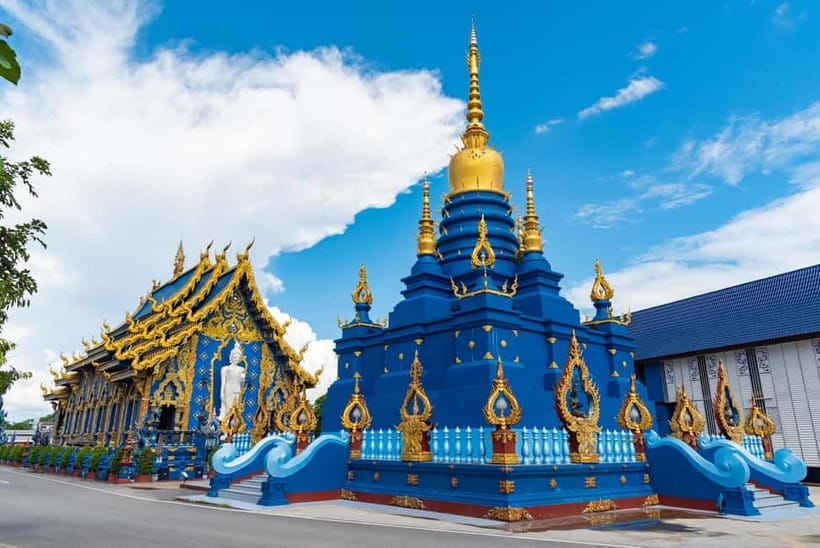
- Blue Temple: Buddhist history mixed with a bold style
- Black House (not really a temple): the museum angle
- Golden Triangle and Opium Museum: understanding the region’s turning points
- Karen Hilltribe Village (optional): add a community perspective
- Chui Fong Tea Plantation: a calmer end to a packed day
- Lunch at a Thai buffet: what to expect and how to manage food needs
- Price and what you actually get: tickets included vs excluded
- Group size, guide style, and why the pace usually works
- Who this day tour suits best
- Should you book this Chiang Rai 7-site day?
- FAQ
- What time does the pickup happen?
- Is there a pickup and drop-off in Chiang Rai city?
- How big is the group?
- What language is the guide?
- What meals are included?
- Are temple and museum tickets included?
- What’s included in the price besides meals and transport?
- What should I bring?
- Who is this tour not suitable for?
A tight loop of Chiang Rai’s art, history, and tea
This one-day tour is built around a very clear idea: Chiang Rai is not just temples. It is also modern Thai art, borderland history, and everyday landscapes like tea farms. The best part is how the day is arranged like a story. You start with artwork that explains imagination and belief, then you shift into the Golden Triangle’s history and consequences, and you end with something hands-on and agricultural.
I like that it is practical. Instead of bouncing between scattered stops on your own, you get one organized run with transport, water, and a guide to keep you oriented. And because the group stays small (up to 10), you usually get enough time to look, not just pose for a quick photo.
The tour also leans into the big “why” behind each site. Guides such as Guitar and Ping were praised for explaining the connections between art, culture, and the region. So if you like asking questions and getting straight answers, this format tends to work well.
Morning pickup and how to set yourself up for a smooth day
The day starts early, with pickup during a 30-minute window from 8:00 to 8:30 am. Pickup and drop-off are included within 6 kilometers of Chiang Rai city center. If you stay farther out, you’ll need to coordinate a meeting point, so send your hotel name to make the pickup easier.
You’ll ride in a minibus with air-conditioning and a driver. That matters more than it sounds in Chiang Rai, because you are moving between very different places across the province in a single day. You also get drinking water, which is not guaranteed on every budget tour.
What to bring is simple and worth respecting:
- Hat for sun protection
- Sunscreen because you’ll be outside at multiple stops
Also, this tour has a few clear boundaries: no pets, and you should skip alcohol and drugs. If you have food needs, tell the guide ahead of time; the buffet lunch can include vegetarian options on request.
You can also read our reviews of more tours and experiences in Chiang Rai.
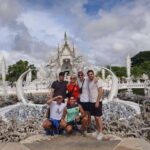
White Temple, Blue Temple, Black House: art that teaches you how to look
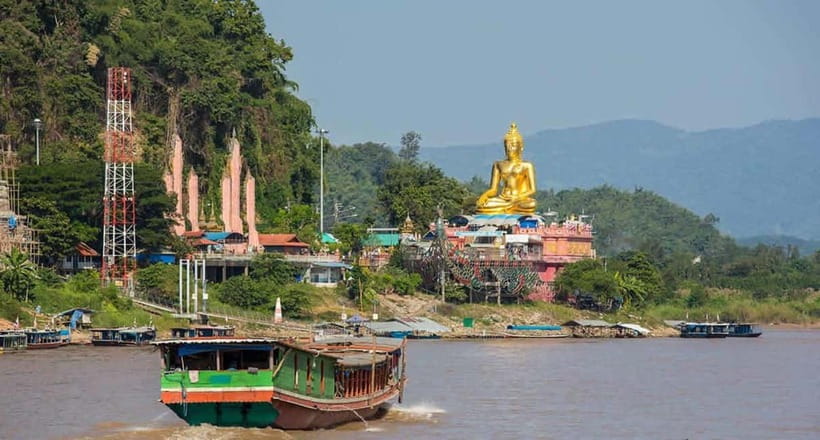
The three temple stops are the heart of the experience. They are close enough together to feel like one theme, but different enough to keep you awake.
Wat Rong Khun (White Temple): modern art with religious symbolism
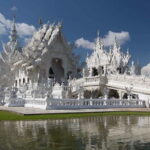
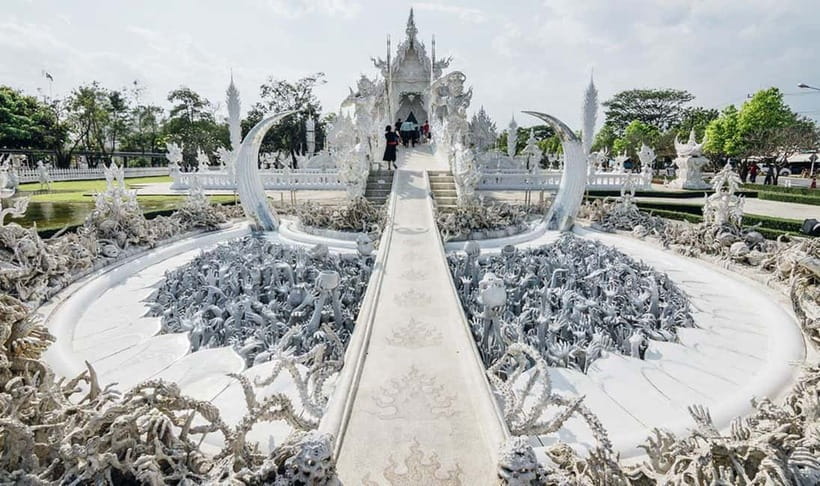
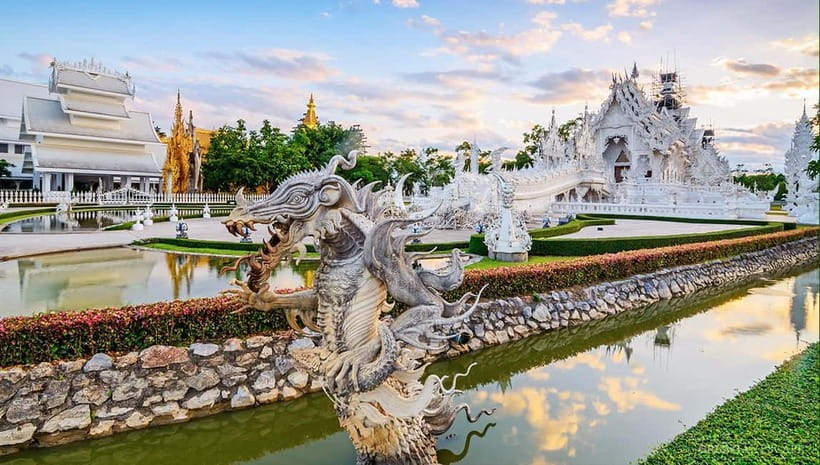
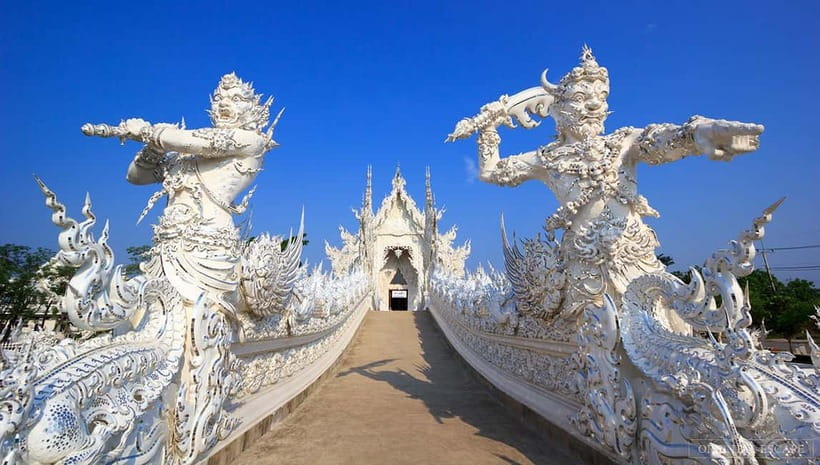
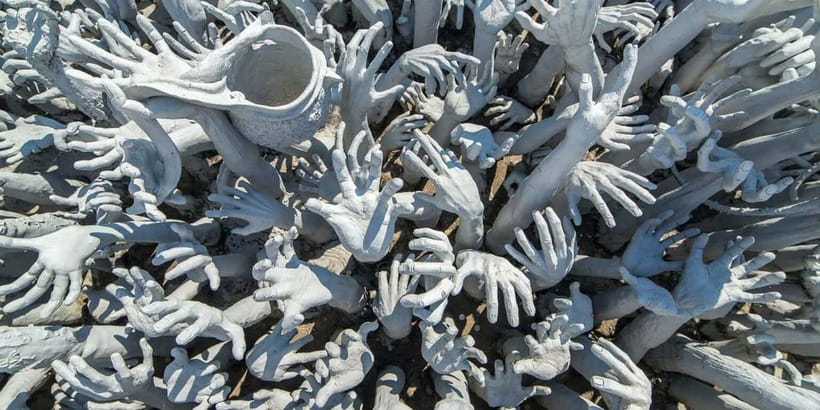
Wat Rong Khun, often called the White Temple, is described as a modern art temple built by a visionary Thai artist. The key thing to know before you go: this is not just a classic temple photo spot. It is a modern structure packed with symbolism, and your guide can help you see the references rather than just admire the color.
If you are the type who likes to understand what you are looking at, you’ll probably enjoy this one a lot. It also works well even if you are not super into temple architecture, because it feels like contemporary art that happens to be attached to Buddhist themes.
Tickets note: the White Temple admission is listed as 200 baht per person if your chosen option excludes tickets.
A small practical tip: plan to spend enough time looking slowly, not just walking past for the main view. The White Temple rewards patience.
Blue Temple: Buddhist history mixed with a bold style
Next comes the Blue Temple. The vibe here is different: it is all about color and strong visual design. The tour frames it as proof that Chiang Rai blends modern art with Buddhist history.
This stop is a good “reset” after the White Temple. If the White Temple gives you symbolism you have to work at, the Blue Temple often feels more immediate. You look up, you notice patterns, and you start to see how these artists use form to communicate ideas.
Black House (not really a temple): the museum angle
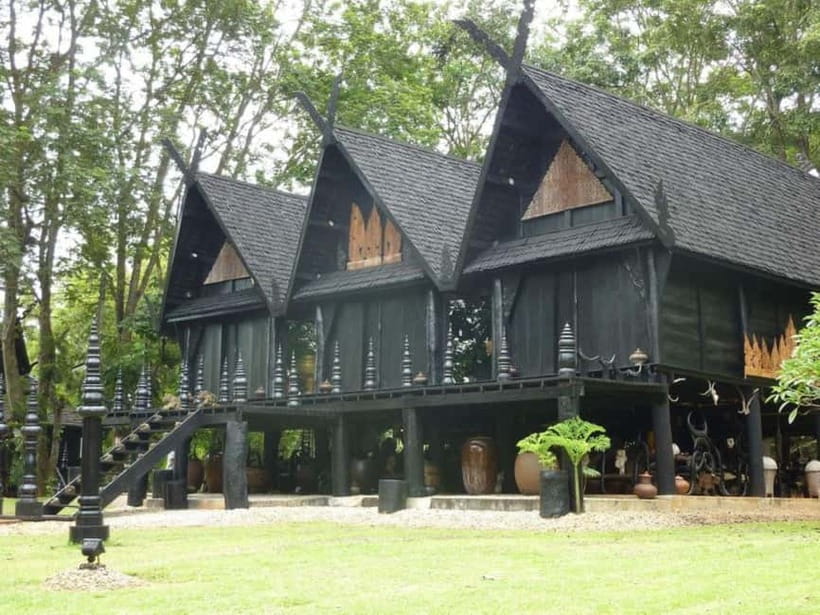
The Black House is where the day gets unusual in a good way. The tour describes it as not really a temple, more like a museum, and it may not be for everyone.
This is the stop to decide your own style. If you enjoy odd stories, handcrafted details, and artifacts presented with personality, you’ll likely like it. If you prefer quiet religious spaces over quirky museum displays, you might find you want less time here and more time at the temples.
Either way, having it in the same day keeps Chiang Rai from feeling repetitive. You go from glowing white symbolism to electric blue design to something darker and stranger.
Golden Triangle and Opium Museum: understanding the region’s turning points
After the temple loop, you shift into the Golden Triangle area. This is one of those places where history is not abstract. It is tied to borders, trade routes, and conflict in the real world.
The Opium Museum is the history anchor of the experience. The tour highlights it as a must-see, and that makes sense because it turns a geography that could feel like a scenic stop into a story about impact.
If you take the museum part seriously, you will probably come away with more context for why this region became a global symbol. And because your guide is English-speaking and actively engages (guides like Ping and Guitar were mentioned for being engaging while answering questions), you’ll likely understand the timeline and themes instead of just reading labels.
Practical advice: allow yourself time to slow down at the museum. This is not a “run through and grab a photo” kind of stop. If you rush it, you lose the point.
Karen Hilltribe Village (optional): add a community perspective
The Karen Hilltribe Village is listed as an option. That matters, because “optional” usually means you can decide based on your interests and energy level.
If you choose to go, you’re adding a community perspective to the day. It helps balance the heavy art and history stops with something more human and local. If you skip it, you still get temples, Golden Triangle, the Opium Museum, tea, and the lunch, so the day remains complete.
How to decide: if you like meeting people, asking questions, and learning how communities live beyond the headline attractions, you’ll probably appreciate this add-on. If you prefer to focus on the art and history, you may find you’d rather keep your time for the White Temple or the tea stop.
Chui Fong Tea Plantation: a calmer end to a packed day
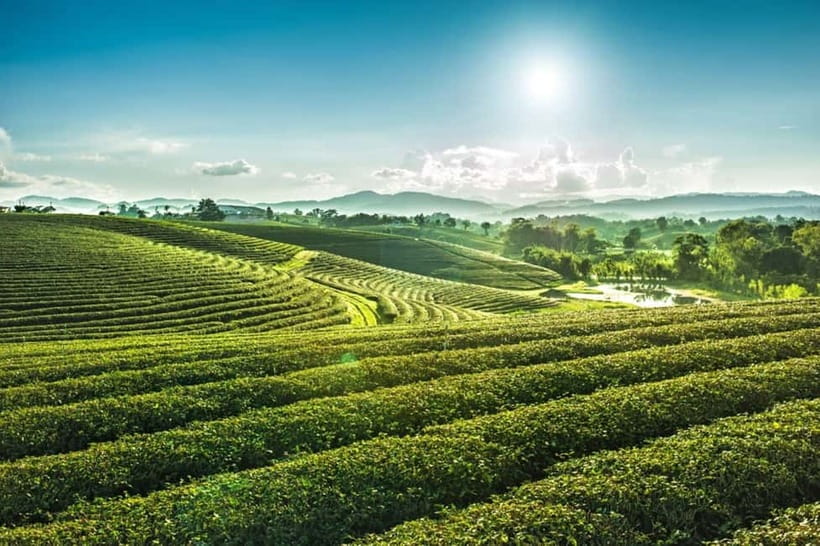
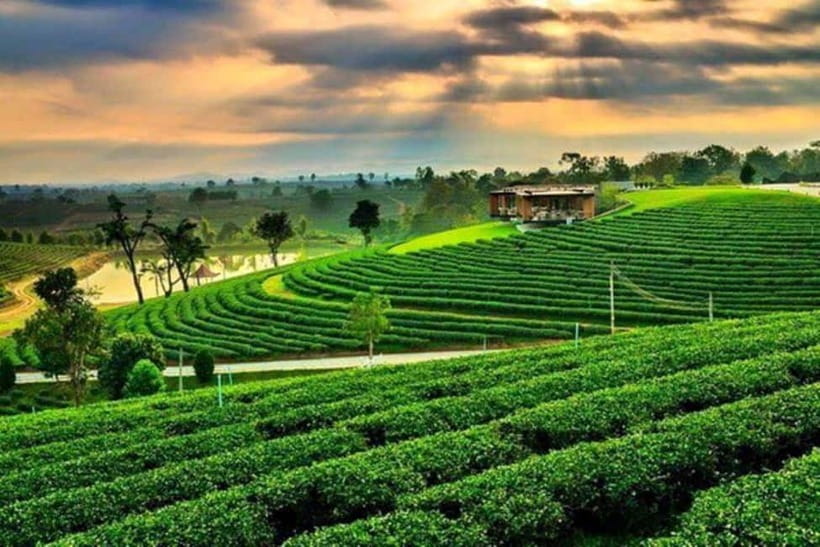
Then you head to the Chui Fong Tea Plantation. This stop is valuable because it changes the texture of your day. Up to this point, you’ve been in temple-heavy sightseeing and museum history. Tea adds a slower pace and a different kind of landscape, with the feel of agriculture and daily work.
Even if you are not a tea expert, a plantation visit can still be worthwhile. It helps you understand the region beyond tourism. And it breaks up the day so you’re not stuck in the same kind of environment for every hour.
Bring sunscreen here too, and expect you may be outside for parts of the visit. If your energy runs low after the museum and temples, this is often the kind of stop where you can stand, look, and reset without needing to “perform” for photos.
Lunch at a Thai buffet: what to expect and how to manage food needs
Lunch is a buffet Thai lunch, with water included and restrictions to note. If you have dietary restrictions or allergies, inform your guide. Vegetarian food is available upon request.
In practice, a buffet can be a great choice on a long day because you can adapt quickly to your appetite and avoid waiting for a single plated meal. Just be honest with your guide about what you cannot eat, especially if you have allergy-level restrictions.
If you are traveling with dietary limits, this part of the tour is one of the most important value points. A tour like this can go wrong fast if the food options are limited. Here, the tour setup gives you a chance to keep the day smooth.
Price and what you actually get: tickets included vs excluded
The stated price is $72 per group up to 1, with a one-day format. What makes the pricing feel fair depends heavily on which ticket option you choose.
You have two options:
- Option 1: Included all tickets (so admissions are covered in your price)
- Option 2: Excluded all tickets (so you may pay site fees yourself)
The tour specifically notes White Temple ticket = 200 baht per person. If you go with ticket-excluded pricing, plan for that additional cost, and be ready that other site admissions could also be extra.
Here’s how I’d think about value:
- If you prefer a simple, predictable day with fewer payments, choose ticket-included.
- If you are comfortable paying admissions on the spot and want more control over the budget, ticket-excluded can work, as long as you confirm what fees apply to each stop.
Also factor in what’s already included: transportation by air-conditioned minibus, private English-speaking guide, buffet lunch, drinking water, and travel accident insurance. That package is a big reason this tour often feels like good value compared with piecing together taxis and separate entrance tickets.
Group size, guide style, and why the pace usually works
This is a small group tour limited to 10 participants. That size matters. With fewer people, you spend less time waiting and more time at each stop, especially at the temples where you want time to actually look.
The guide is listed as private English-speaking, which usually means you are not stuck with a generic audio script. Across guides named in the information (Guitar, Ping, Phing, Meo, and others), the common theme is that they were described as helpful and engaging, and many guests specifically appreciated the explanations and English clarity.
Practical pacing note: the tour provides enough time at each venue that you can explore rather than sprint. Still, because this is seven major sites in one day, it will not feel like a slow travel day. It’s built for people who want structure and variety.
Who this day tour suits best
This tour is a strong match if you:
- Want to see Chiang Rai’s top sights without planning transport between them
- Like your sightseeing paired with explanations (especially at the White Temple and Opium Museum)
- Enjoy a day that mixes temple art, history, and a real plantation visit
It may be a weaker match if you:
- Need wheelchair access (wheelchair users are not suitable for this tour)
- Are over 70 (the tour states it is not suitable)
- Are not interested in the museum-style feel of the Black House
Should you book this Chiang Rai 7-site day?
Yes, if you want a structured, high-sight-density day that still includes time to look. I’d book it if the White Temple and Opium Museum are high on your list and you want a guide to connect the art and history dots. The lunch and included transport add real comfort for a day that starts early.
I’d think twice if you are sensitive to early mornings, have limited mobility, or you know you will dislike museum-style exhibits at the Black House. Also choose your ticket option carefully so you are not surprised by admissions later.
If you want one day that gives you a clear feel for Chiang Rai beyond the basics, this plan is a solid choice.
FAQ
What time does the pickup happen?
Pickup is included from 8:00 to 8:30 am. Your pickup time is within that 30-minute period.
Is there a pickup and drop-off in Chiang Rai city?
Yes. Pickup and drop-off are free within 6 kilometers of Chiang Rai city center. If you stay farther away, you’ll be given a meeting point.
How big is the group?
The tour is a small group limited to 10 participants.
What language is the guide?
The tour includes a private English-speaking tour guide.
What meals are included?
A buffet Thai lunch is included, and vegetarian food is available upon request if you inform the guide about dietary restrictions or allergies.
Are temple and museum tickets included?
It depends on the option you select. Option 1 includes all tickets; option 2 excludes tickets. The White Temple ticket is listed as 200 baht per person.
What’s included in the price besides meals and transport?
Included items are minibus transport with air-conditioning and driver, free pickup and drop-off (within the stated area), drinking water, travel accident insurance, the private English-speaking guide, and standard ticket coverage if your option includes tickets.
What should I bring?
Bring a hat and sunscreen.
Who is this tour not suitable for?
It is not suitable for wheelchair users and people over 70 years.