REVIEW · CHIANG RAI
7 Wonders of Chiang Rai: Temples, Tea, and Golden Triangle
Book on GetYourGuide →Operated by R U tour and trek · Bookable on GetYourGuide
Chiang Rai packs a lot into one day. I love the variety—starting with the mirror-glass White Temple and ending at tea and history stops like Choui Fong Tea—and I love that the small group keeps everything efficient. The one catch is it’s a long, full schedule with optional entrance fees, plus a late-ish return, so plan your evening around it.
This tour is built around art you can see, not just ruins you walk through. You’ll get modern temple architecture by Chalermchai Kositpipat at Wat Rong Khun, then darker, thought-provoking installations at Thawan Duchanee’s Black House. If you’re the type who likes meaning behind design, this day clicks.
Because it runs all day in a van and on foot, it’s not ideal if you’re limited on mobility. The rules also matter: no baby strollers, no bikes, and it’s not suitable for people over 80 (or babies under 1 year).
In This Review
- Key takeaways before you go
- How the Chiang Rai day really feels (pickup, van time, and pacing)
- Wat Rong Khun (White Temple): mirror-glass purity and modern murals
- Wat Rong Suea Ten (Blue Temple): Suea Ten, gold accents, and the white Buddha
- Baan Dam (Black House): art about death, belief, and life’s darker side
- Long Neck Karen village: brass rings, weaving, and respectful buying
- Choui Fong Tea Plantation: a calm tea break with real work behind it
- Golden Triangle: where three countries meet, plus the opium-era story
- House of Opium Museum: pipes, tools, and how the trade worked
- Price and value: what $41 covers and what may cost extra
- Who should book this 7 Wonders of Chiang Rai tour
- Should you book it?
- FAQ
- FAQ
- What time does pickup start in Chiang Rai?
- What’s included in the tour price?
- Are temple and museum entrance fees included?
- What time does the tour end?
- How long is the day and how is the group size?
- What should I bring, and what’s not allowed?
Key takeaways before you go
- White Temple mirror-glass photos: bring a camera and plan for bright sun glare on the reflective details
- A tight lineup of art temples: Wat Rong Khun, Wat Rong Suea Ten, and Baan Dam on one day
- Cultural stop with a fee: the Long Neck Karen village is a paid add-on (300 baht)
- Tea farm includes tasting: you’ll learn about cultivation, then try freshly brewed tea and tea-based desserts
- Golden Triangle viewpoints plus context: you’ll see Thailand, Laos, Myanmar and get the opium-era story
- House of Opium Museum is optional but direct: it focuses on tools, pipes, and how smuggling worked
How the Chiang Rai day really feels (pickup, van time, and pacing)
The day starts early. You’ll be picked up from your hotel lobby between 8:00 and 8:30 AM, as long as your place is within 3 km of Chiang Rai city center. It’s a small group capped at 10 participants, with an English-speaking guide, so you’re not fighting a crowd to get answers.
Most of the schedule is structured with set time windows: a 1-hour visit at the White Temple, 30 minutes at the Blue Temple, about an hour at the Black House, then cultural and countryside stops before ending around 6:30 to 7:00 PM. That end time matters: if you’re trying to squeeze in travel the same day, don’t. The tour notes it’s not recommended to return to Chiang Mai on the same day because it can run quite late.
Also, admission can stack up fast if you choose every site. The tour makes a point that entrance fees are optional, so you control what you pay for. Your base price includes pickup/drop-off in Chiang Rai city, a Thai lunch buffet, drinking water, and travel insurance—so at least you aren’t starting the day nickel-and-diming just to get moving.
You can also read our reviews of more tours and experiences in Chiang Rai.
Wat Rong Khun (White Temple): mirror-glass purity and modern murals
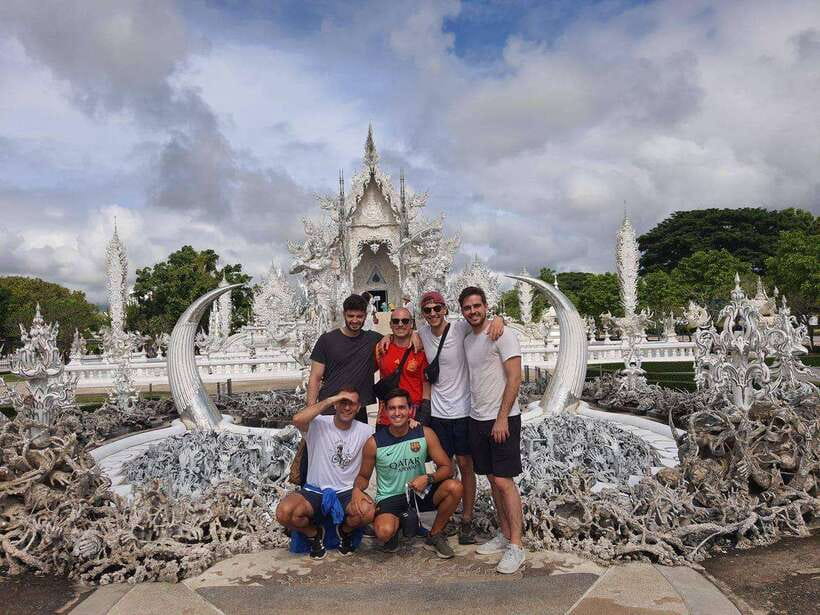
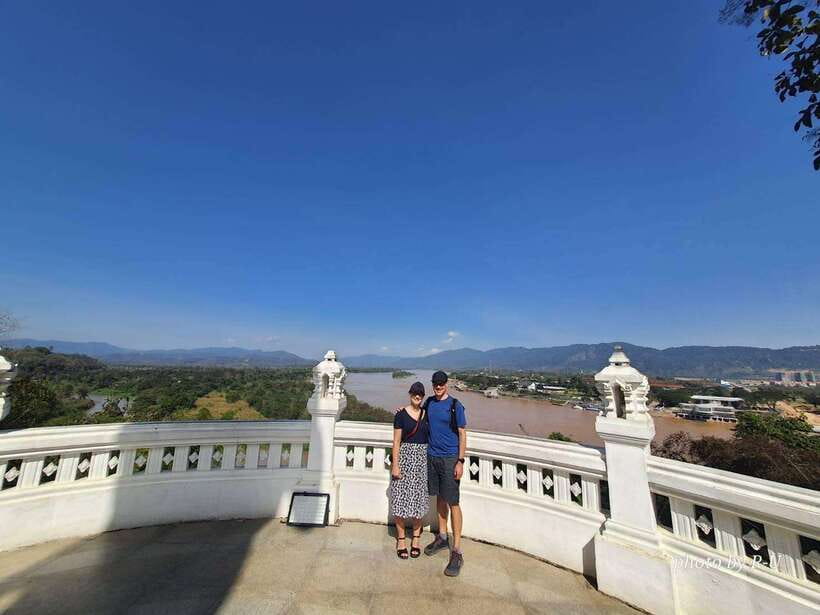
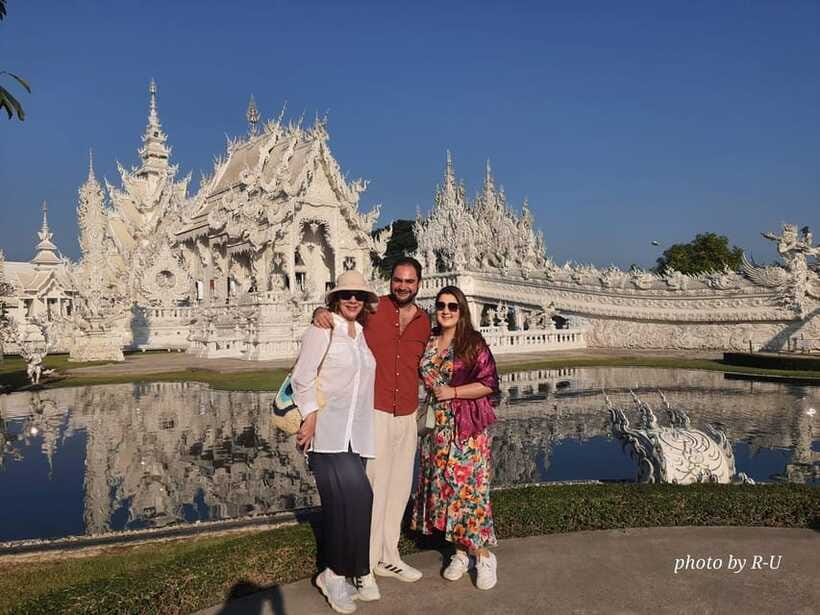
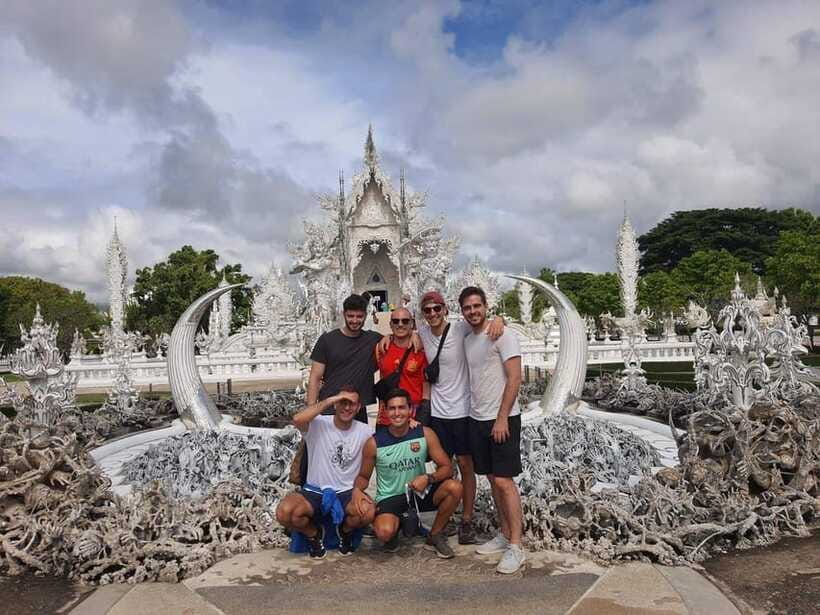
Wat Rong Khun (the White Temple) is where the day kicks into high gear. This dazzling temple was created by Chalermchai Kositpipat, and it’s famous for symbolizing purity through an ultra-bright white design. The details are not subtle: the mirrored glass catches the sun, so the whole place can look like it’s glowing when you walk up.
Inside, the murals mix traditional Buddhist themes with modern references, including pop culture elements. The effect is intentionally unusual, and that’s part of why this stop works. It’s not a museum that asks you to decode everything from a distance. You’re right there, close enough to see how modern ideas get layered onto spiritual visuals.
Practical tip: wear comfortable shoes and plan for bright lighting. With mirrored surfaces, your photos can go a little overexposed in strong sun. A cap or sunglasses can also help your comfort while you stare up at the architecture.
Entrance fee note: the Wat Rong Khun entrance fee is listed at 100 baht per person, and paying it is optional during the tour.
Wat Rong Suea Ten (Blue Temple): Suea Ten, gold accents, and the white Buddha
Next you’ll head to Wat Rong Suea Ten, also known as the Blue Temple. Its look is built on deep blue hues with gold accents, and the design is a modern interpretation of Lanna style architecture. Even if you’re not a temple person, the color alone makes this stop memorable.
Inside, a serene white Buddha statue takes center stage. Around it, you’ll see detailed murals that match the temple’s overall mood—less chaotic than you might expect, more meditative than purely decorative.
The name matters too. Suea Ten means Dancing Tiger, tied to local legend about tigers that once roamed the area. Your guide’s explanation here is useful because it turns the artwork from just pretty colors into a story anchored in place.
You’ll typically have about 30 minutes for this stop, including a break for photos and a guided visit. Like other attractions on this day, entrance fees are optional, based on how you choose to handle paid entry.
Baan Dam (Black House): art about death, belief, and life’s darker side
If the White and Blue Temples feel like brightness and calm, the Black House is the pivot. Baan Dam, created by Thawan Duchanee, is an art complex that deals with the darker aspects of life—especially themes around death and mortality.
Instead of following a typical temple pattern, this place uses symbolism that can feel intense. Buildings are decorated with animal bones, skins, and horns, tied to local beliefs about mortality and existence. It’s not subtle horror movie energy, but it is heavy. If you don’t like symbolism that deals with death, keep that in mind before you commit your time and money here.
What I like about this stop is the way it forces balance. The day already includes beauty, culture, and scenic viewpoints, but the Black House adds a different question: what do people do with fear and the end of life? Whether you agree with the beliefs or not, the art makes you think.
The scheduled visit is about 1 hour. The Black House museum entrance is listed as 80 baht per person, optional if you decide to pay.
Long Neck Karen village: brass rings, weaving, and respectful buying
This part of the day gives you a cultural window into the Long Neck Karen people. In the village, women wear brass rings around their necks, which create the illusion of a longer neck shape. The rings are presented as a symbol of beauty and cultural identity, passed down through generations.
You’ll have time to learn about daily life, watch weaving skills, and understand how traditions are practiced and continued. This isn’t a quick roadside photo stop. It’s scheduled for about 45 minutes with a guided visit, plus sightseeing time.
The village also includes handcrafted souvenirs, and the tour is structured so you can support those goods directly. If you’re buying, I suggest taking the time to look closely at materials and craftsmanship. It’s the simplest way to turn a cultural stop into something more meaningful than a souvenir impulse.
Fee note: the Long Neck Karen village entrance is listed at 300 baht per person, optional during the tour.
One more practical thought: be mindful with photography and questions. This is a lived community, not a theme park.
Choui Fong Tea Plantation: a calm tea break with real work behind it
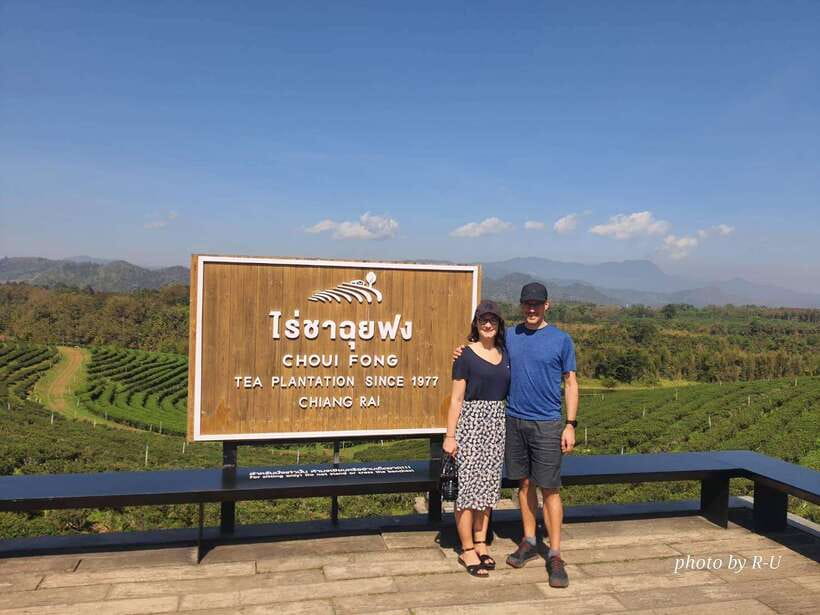
After temples and museum-style symbolism, the Choui Fong Tea Plantation feels like a breath of fresh air. You’ll be in rolling green hills with neatly trimmed tea fields, and the pace slows down.
This stop is for tea lovers, but it also works for anyone who wants a break from temples. You’ll walk through tea rows, learn about cultivation, and then enjoy freshly brewed tea. The tour also points out tea-based desserts at the café, plus panoramic views.
The scheduled time is about 40 minutes, including photo opportunities, guided learning, and some free time. That mix is handy: you can listen when you want, then just enjoy the view and taste something warm.
If you’re planning what to do with your day, this is the stop that gives you the most sensory comfort. The tea tasting isn’t just a gimmick; it matches what you saw while walking the fields.
Golden Triangle: where three countries meet, plus the opium-era story
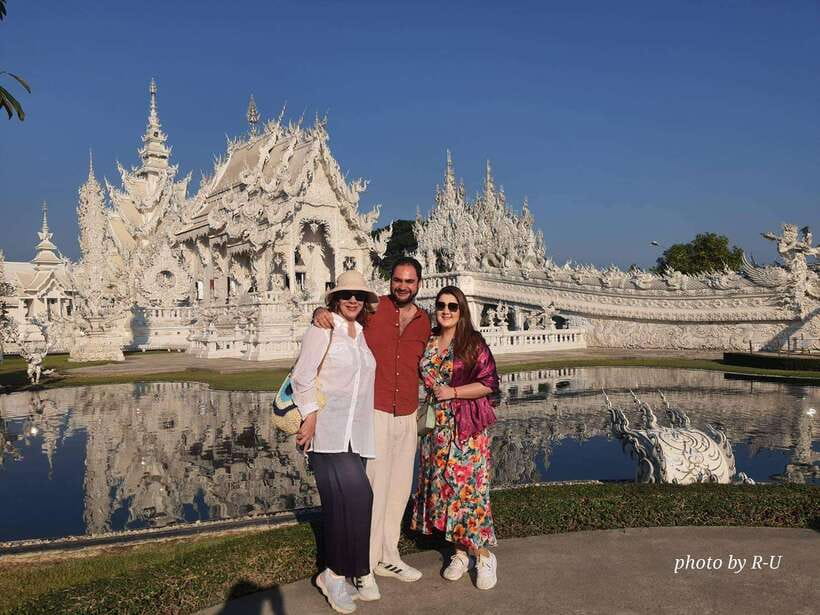
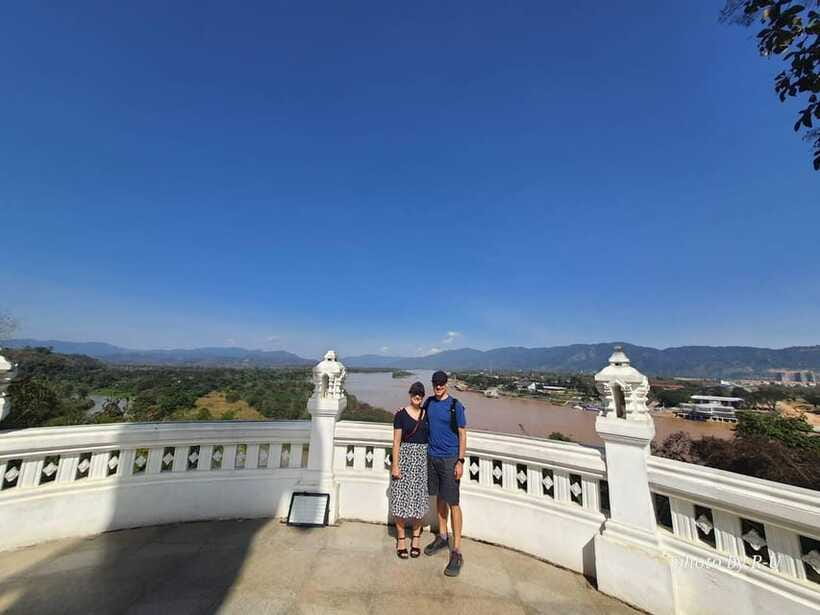
The Golden Triangle stop is a photo-friendly change of scenery. You’ll stand where Thailand, Laos, and Myanmar meet. It’s a viewpoint moment, but the tour also adds context about how this region connects to Southeast Asia’s wider story.
Historically, the area was notorious for the opium trade. The good news is that the tour frames the Golden Triangle today as a more peaceful place to look at the Mekong and Ruak rivers, and to understand how the region has transformed.
This is one of those stops where being guided helps. You’re not just looking at borders on a map; you’re getting the storyline behind why this area matters and how the region moved away from its worst chapter.
Your time here is about 30 minutes, including guided time and free time for photos and viewing.
House of Opium Museum: pipes, tools, and how the trade worked
Right near the Golden Triangle, you’ll visit the House of Opium Museum. This is a smaller museum, and it goes straight for the topic: the history of opium and its impact on local communities.
The exhibits include opium pipes and tools, plus detailed displays that explain cultivation and smuggling processes. It’s the kind of learning that feels concrete, not vague. And it also points toward the broader global efforts to combat the trade.
This stop is scheduled for about 40 minutes, with guided time and space to shop afterward. If you’re sensitive to heavy topics, mentally prepare for it. But if you want to understand why the Golden Triangle is remembered the way it is, this museum gives the missing pieces.
Fee note: the Opium Museum entrance is listed at 50 baht per person, optional.
Price and value: what $41 covers and what may cost extra
At about $41 per person, this tour isn’t just a temple ticket. You’re buying a full-day route with a real structure: pickup and drop-off in Chiang Rai city, an English-speaking guide, Thai lunch buffet, drinking water, and travel insurance.
Then there are the optional entrance fees. From the tour info, you can expect these add-ons if you choose them:
- Wat Rong Khun: 100 baht
- Black House museum: 80 baht
- Long Neck Karen village: 300 baht
- Opium Museum: 50 baht
If you pay for all listed admission items, the total for those fees can add up quickly, so I’d treat the base price as your logistics and guidance cost. The value comes from not having to coordinate transport across widely spread stops on your own, plus the guided explanations that make the art and history click.
Also, your lunch is included as a Thai buffet. That’s one less thing you need to hunt for during a tight day.
Who should book this 7 Wonders of Chiang Rai tour
I’d book this if you want a first-timer’s Chiang Rai day that mixes major sights without stress. It’s a great fit for people who like:
- Modern temple architecture and symbolism (White and Blue Temples)
- Art that confronts uncomfortable themes (Black House)
- Cultural learning with a chance to see weaving and buy handcrafted items (Long Neck Karen village)
- A countryside break plus tea tasting (Choui Fong Tea Plantation)
- A clear historical arc tied to a specific place (Golden Triangle and House of Opium Museum)
It may not be the best fit if you dislike heavy topics, hate long days, or need a lot of walking breaks. And it’s not for the very elderly: the tour is not suitable for people over 80.
Should you book it?
If your goal is to hit the biggest Chiang Rai highlights in one day with an English guide, this tour makes practical sense. The route is packed, but the stops vary enough to keep the day from feeling repetitive—temples shift into art, then into culture, then tea, then borders and history.
I’d only adjust your expectations around two things: it’s a long day with optional paid entry, and the late return means you shouldn’t plan same-day travel back to Chiang Mai.
FAQ
FAQ
What time does pickup start in Chiang Rai?
Pickup is available from within 3 km of Chiang Rai city center, and you should wait at the hotel lobby between 8:00 and 8:30 AM.
What’s included in the tour price?
Your price includes pick-up and drop-off in Chiang Rai city, an English-speaking guide, a Thai lunch buffet, drinking water, and travel insurance.
Are temple and museum entrance fees included?
No. Entrance fees are listed as optional. The tour lists these prices: Wat Rong Khun (100 baht), Black House museum (80 baht), Long Neck Karen village (300 baht), and the Opium Museum (50 baht).
What time does the tour end?
The tour ends back at the meeting point between 6:30 PM and 7:00 PM.
How long is the day and how is the group size?
This is a full-day tour with a total duration listed as 1 day, and it’s a small group limited to 10 participants.
What should I bring, and what’s not allowed?
Bring comfortable shoes, a camera, a credit card, and cash. Baby strollers, bikes, and alcohol and drugs are not allowed. The tour is also not suitable for babies under 1 year and people over 80.