
REVIEW · ONNA SON
Tea ceremony experience with simple kimono in Okinawa
Book on Viator →Operated by SASAGIRIAN / 笹桐庵 · Bookable on Viator
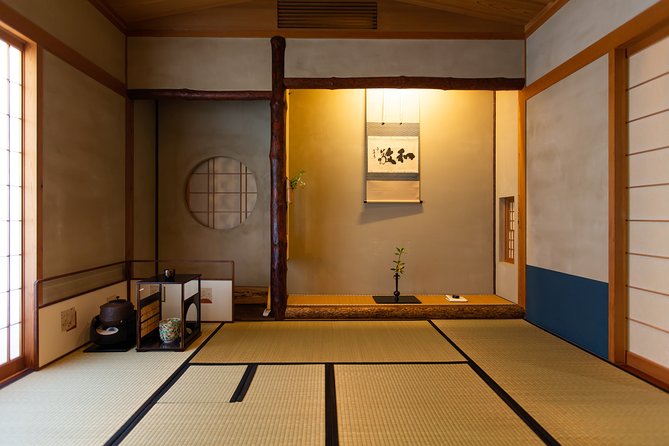
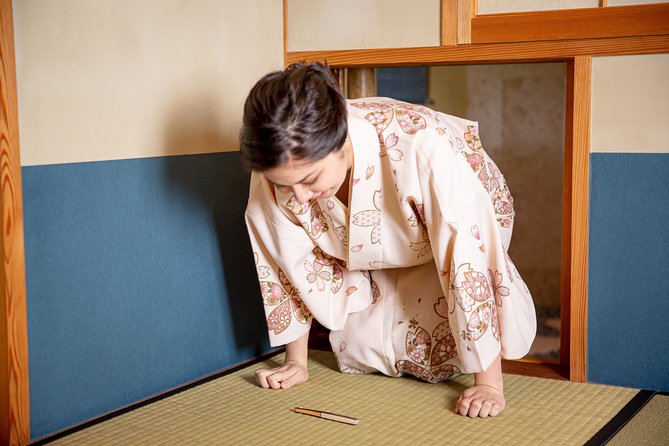
Tea time in Okinawa feels oddly peaceful. At Sasagirian (笹桐庵) in Onna-son, you’ll step into a real Japanese tea room setting that many visitors never find on the island. I especially love the reverence of the space—scroll, flowers, and utensils treated with care—plus the fun moment of entering through the tea room’s small entrance while you’re in a simple kimono.
What I like most is the hands-on part: you’ll taste Okinawan and Japanese sweets, learn how to handle the tea tools properly, and then make your own matcha with guidance. The setup is approachable too, because the tea ceremony includes a seating format with tables and chairs, so it’s not all floor time.
One consideration: the experience depends on good weather. If conditions aren’t right, you’ll be offered a different date or a refund, which matters if you’re tight on schedule.
In This Review
- Key highlights
- A tea room you can actually feel: Sasagirian in Onna-son
- Kimono, manners, and the first ritual steps (clean hands matter)
- Ryurei-style seating: tea ceremony without the floor hurdle
- Sweets first, then the bitter tea: a useful taste lesson
- Handling tea tools: where the respect shows up
- Making your own matcha: the moment it clicks
- Photos at the gold folding screen (and the final cloth change)
- Price and value: is $85.39 worth it?
- Who this experience fits best (and who might want something else)
- Quick tips so you get the most out of it
- A final decision: should you book?
- FAQ
- How long is the tea ceremony experience?
- What does it cost?
- How many people are in a group?
- Where do I meet for the experience?
- Do I need to sit up on the floor?
- What are the age requirements?
- What if the weather is bad?
Key highlights
- Simple kimono, practical and photogenic from the moment you arrive at Sasagirian
- Small entrance tea room moment that sets the tone right away
- Tasting sequence: Okinawan and Japanese sweets, then the bitter tea
- Tool-handling lessons with cloth use and cleansing steps
- Make-and-taste matcha at a Ryurei-style table setup
- Gold folding screen photos plus a final cloth change
A tea room you can actually feel: Sasagirian in Onna-son
If your Okinawa plan is mostly beaches and ryukyu-style scenery (all good choices), this experience gives you something different: quiet, ritual, and close attention to details. The setting is SASAGIRIAN / 笹桐庵, and the experience takes place inside a traditional tea room environment that’s rare on the island.
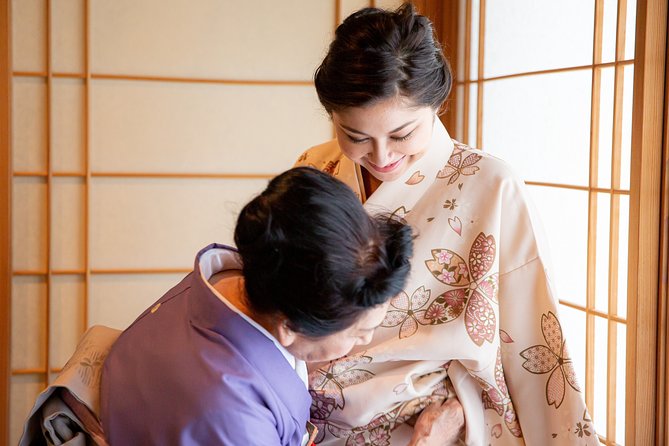
From the start, the experience is designed to help you slow down. You don’t just watch from a distance. You change into a simple kimono, learn the order of actions, and see why the room is treated like a special space rather than a stage. Even the physical layout matters. You’ll practice entering the tea room through a small entrance, which immediately makes the whole ritual feel more real and less like a performance.
I also love how the atmosphere is built from small elements: what’s hanging in the room, how flowers are arranged, and how the tea tools are displayed. Those visuals aren’t random décor. They’re part of the manners lesson—what you notice, what you acknowledge, and how you move.
Kimono, manners, and the first ritual steps (clean hands matter)
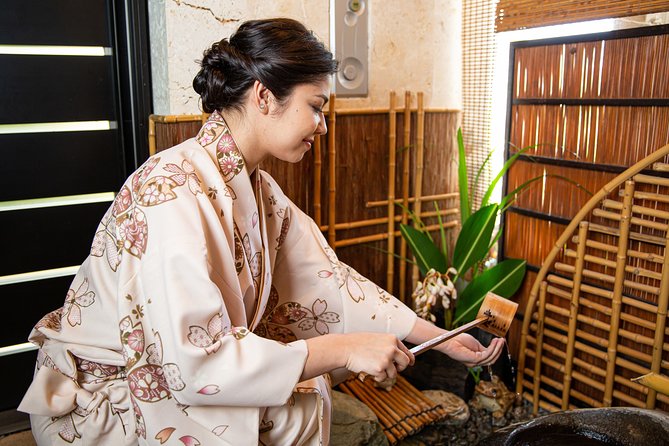
The flow is straightforward, and that’s a big plus when you’re on vacation. You’ll start by changing into a simple kimono and then move through the standard tea ceremony rhythm: cleanse your hands and learn how to enter and appreciate what’s in the room.
Here’s what you can expect early on, step-by-step:
- Change into the simple kimono
- Cleanse your hands
- Enter the tea room and learn basic manners
- Notice the hanging scroll, flowers, and tea tools
This is a great moment to go in with the right mindset. Don’t worry about doing it perfectly. The value is in learning the why behind the actions: in tea ceremony, respect shows up in the way you handle the space, the utensils, and your own movements.
One practical point: the experience notes that most travelers can participate and that you can join even if you cannot sit up. That makes this format far less intimidating than the ceremonies that require long stretches of floor sitting. You’ll still go through the learning, but in a setup that’s meant to be workable.
Ryurei-style seating: tea ceremony without the floor hurdle
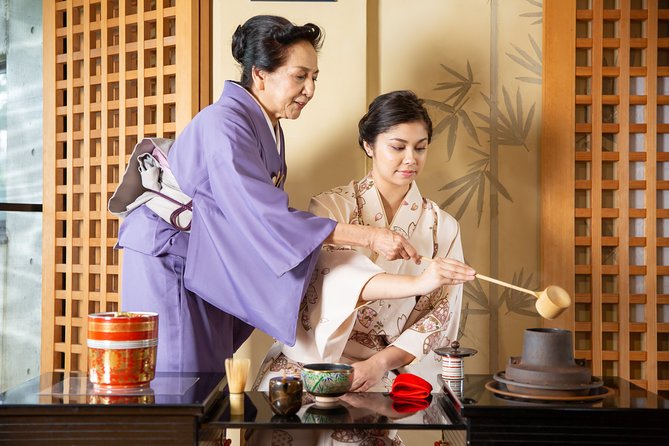
After the tea room introduction, you move to the tea space where the setup is Ryurei-style, using tables and chairs for tea ceremony. That’s a key reason this works well for a wide range of visitors, from kids to older adults.
In plain terms: it keeps your attention on what you’re doing—tasting, learning utensils, and making your tea—rather than on how to hold your body through every step. You’ll still follow the ceremony logic, just with a more tourist-friendly seating arrangement.
Why this matters to you:
- If you’re visiting Okinawa with limited time, you get a full tea experience in about 1 hour 15 minutes
- If you have mobility concerns, this format is explicitly built to accommodate you
- If you’re traveling with family, the group experience stays comfortable for different ages
The max group size is small (6 travelers), so you’re not lost in a crowd. That also helps your instructor keep things moving while still giving you time to understand the steps.
Sweets first, then the bitter tea: a useful taste lesson
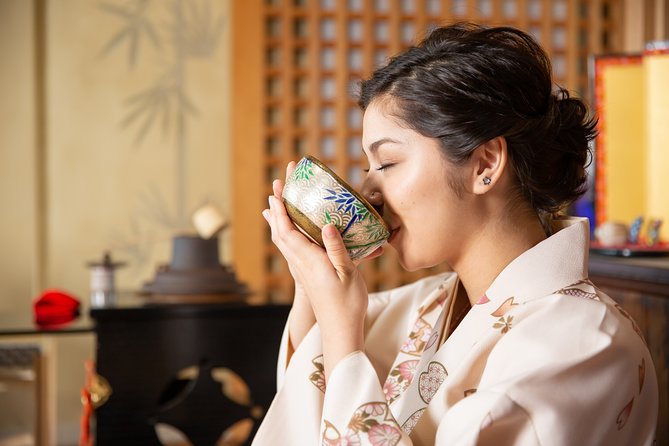
Tea ceremony isn’t only about drinking matcha. The tasting sequence teaches you how flavors and moments connect.
In this experience, you’ll enjoy Japanese and Okinawan sweets before having the tea. Then you’ll experience the tea itself after the sweetness.
This is a smart design for first-timers. If you’re new to green tea flavors, starting with sweets makes the bitter element easier to notice. It also gives you something to talk about during the ceremony—what you liked, how the flavor changes, and what you notice as the bitterness arrives.
And because the sweets include both Japanese and Okinawan options, you get a small cultural crossover: traditional tea ritual plus local taste. That combination is often what makes the experience memorable, even when you don’t remember every utensil name.
Handling tea tools: where the respect shows up
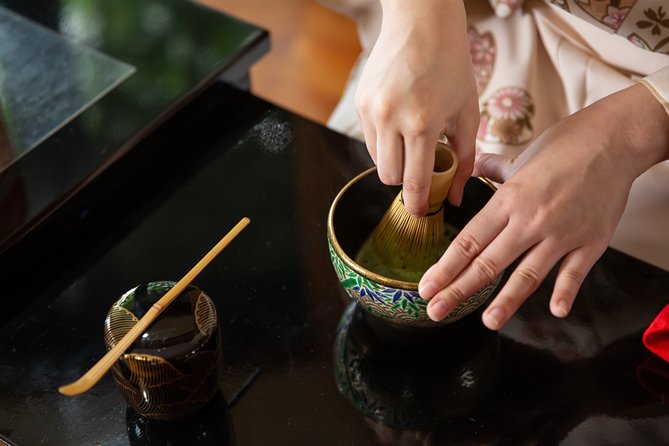
One of the most praised parts of the experience is the way it teaches you to treat the tools with care. You’ll learn how to handle the items and how to cleanse them as part of the ritual.
Specifically, you’ll learn:
- How to handle the silk cloth
- How to cleanse the tea tools
This is where tea ceremony becomes more than a drink. It becomes a mini class in attention. You’re shown the motions and then guided through why those motions exist. In many cultures, the way you touch something tells people how you feel about it; tea ceremony does the same thing, but with utensils and a whole ritual framework.
If you’re a photo person, you might be tempted to focus on snapping pictures. I’d suggest balancing it: take a few, but treat the tool moments like the main event. That’s what turns it from a novelty into a real cultural skill you can carry home.
Making your own matcha: the moment it clicks
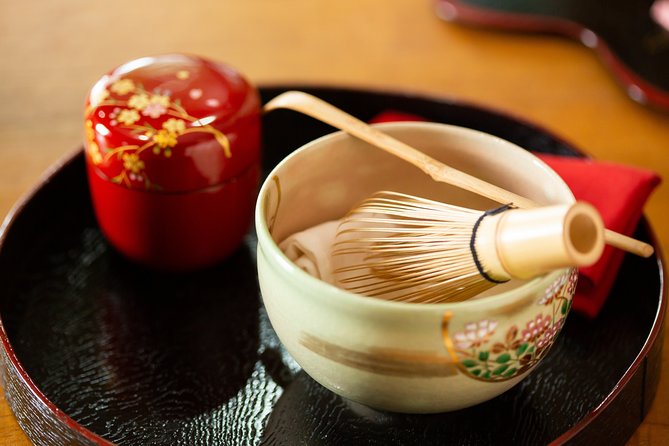
The hands-on finale is exactly what you hope it will be: you’ll add matcha green tea and hot water into the tea bowl, then learn how to make and taste your own tea.
This part is simple to follow, but it has real payoff. When you make the tea yourself, you stop thinking of matcha as something you order and start thinking of it as something you can prepare with intention.
Expect this sequence:
- Add matcha and hot water in the bowl
- Learn the steps for making the tea
- Taste the tea you made
This is also the moment where the instructor-and-support format really helps. The experience includes an experienced instructor, and the support described in the experience feedback is that a translator helps when you need help understanding what’s happening. That matters because tea ceremony involves actions and vocabulary that won’t be obvious from casual guessing.
For me, that’s the value in a structured class. You don’t just leave with a photo. You leave with a new mental map of how the ritual works.
Photos at the gold folding screen (and the final cloth change)
There’s time for photos, and it’s built into the experience: you can take pictures in front of a gold folding screen. That’s a classic tea room visual, and it fits the kimono look perfectly.
You’ll also change cloths at the end. That detail may sound minor, but it adds a sense of completion—like you’re moving through stages rather than just doing one timed activity and walking out.
A tip: take your photos during the designated time window. Don’t try to multitask while you’re in the middle of the tasting or tool-handling steps. In tea ceremony, timing and focus matter.
Price and value: is $85.39 worth it?
At $85.39 per person for about 1 hour 15 minutes, this isn’t the cheapest thing you can do in Okinawa. But it also isn’t just a ticket to a show. You get a guided cultural activity with:
- Kimono experience
- Traditional tea room etiquette instruction
- Tastings (Japanese and Okinawan sweets, plus bitter tea)
- Tool-handling lessons
- Make-your-own matcha with tasting
- Small group setting (max 6 travelers)
When you break it down, you’re paying for a whole package of guided learning plus the materials and setup needed for a real tea ceremony setting. That’s why the price can make sense compared to cheaper experiences that only let you sample one element.
Also note that the experience is booked on average about 22 days in advance. If you’re aiming for a specific day, that tells me you should plan ahead rather than assume last-minute availability.
Who this experience fits best (and who might want something else)
This tea ceremony works especially well if:
- You want a cultural activity that feels different from typical Okinawa shore time
- You’d like a guided experience with a clear structure and steps
- You’re traveling with family across ages (the experience is described as enjoyable for people from kids to older adults)
- You want a small-group activity rather than a big group tour
It might be less ideal if:
- You’re hoping for a long workshop or lots of free time. This is focused and compact.
- You need outdoor flexibility. Since it depends on good weather, you may need to adjust dates.
Quick tips so you get the most out of it
- Wear comfortable basics under the kimono where you can. You’ll be dressing and moving through steps.
- Keep your phone usage respectful. Take photos at the photo moment, then focus during the ceremony steps.
- Go in knowing you’re learning manners and handling—not trying to perform perfectly.
- If you’re visiting with kids, tell them the plan includes tasting and tool steps, so they aren’t surprised by the pace.
A final decision: should you book?
I think this is a strong yes if you want one memorable cultural anchor during your Okinawa stay. The combination of kimono, a real tea room experience, tastings, and a chance to make matcha is exactly the kind of activity that feels worth the time.
If you like hands-on learning, enjoy calm moments, and want something more meaningful than a quick photo stop, this should land well. Just book early enough, and keep your schedule flexible because good weather matters for the experience.
FAQ
How long is the tea ceremony experience?
The experience runs for about 1 hour 15 minutes.
What does it cost?
It costs $85.39 per person.
How many people are in a group?
The group size is limited to a maximum of 6 travelers, with a minimum of 2.
Where do I meet for the experience?
You meet at Japanese Cultural Experience Facility Sasagirian 笹桐庵, address: 1765-8 Nakama, Onna, Kunigami District, Okinawa 904-0401, Japan. The activity ends back at the meeting point.
Do I need to sit up on the floor?
No. You can participate even if you cannot sit up.
What are the age requirements?
Children under 3 cannot participate. People over 4 can participate.
What if the weather is bad?
This experience requires good weather. If it’s canceled due to poor weather, you’ll be offered a different date or a full refund.