REVIEW · HONG KONG
Hong Kong: MingCha Tea Tasting and Pairing Workshop
Book on GetYourGuide →Operated by MINGCHA TEA HOUSE · Bookable on GetYourGuide
Your palate gets trained in 90 minutes. At MingCha Tea House in Hong Kong, a small-group tasting turns Chinese tea into something you can actually explain and repeat, not just sip and forget. You’ll learn how tea is classified and made, then practice brewing the traditional way with a gaiwan.
Two things I really like: the hands-on brewing (not just watching), and the food pairing that shows you how flavor can change with the right bite, including options like rose honey toast. One thing to consider is that this is a focused tea workshop, so if you’re hoping for a sightseeing-style Hong Kong tour, this won’t scratch that itch.
In This Review
- Quick take
- MingCha Tea House in Hong Kong: what you’re really learning
- All five senses at your table: tasting like a pro without pretending
- The tea lineup: green, oolong, white, puer, and how they compare
- Brewing with a gaiwan: the hands-on skill you’ll keep using
- Tea and snack pairings: why rose honey toast works
- Who this workshop is best for (and who should skip it)
- Price and value: is $63 worth 1.5 hours in Hong Kong?
- Finding MingCha Tea House: Fortune Factory Building, Chai Wan
- What the tea masters bring to the room
- Should you book this MingCha Tea Tasting and Pairing Workshop?
- FAQ
- What is the duration of the MingCha Tea Tasting and Pairing Workshop?
- How much does it cost?
- How many teas are included in the tasting?
- Will I practice brewing tea?
- How long will you steep each tea?
- Is the workshop suitable for beginners?
- Where is the workshop located?
- Is it easy to reach by public transport?
- What languages is the workshop conducted in?
- Can I get a refund if my plans change?
Quick take
- Five-sense tasting of both dry leaves and steeped tea, with guidance on what to notice
- 4 to 5 tea types you can compare side by side (green, scented green, red, oolong, white, puer)
- Gungfu brewing practice using a gaiwan, with repeatable technique
- Multiple rounds per tea (typically 5 to 6 brews) so you learn how one leaf changes over time
- Tea-and-snack pairings that teach flavor matching you can re-create at home
MingCha Tea House in Hong Kong: what you’re really learning
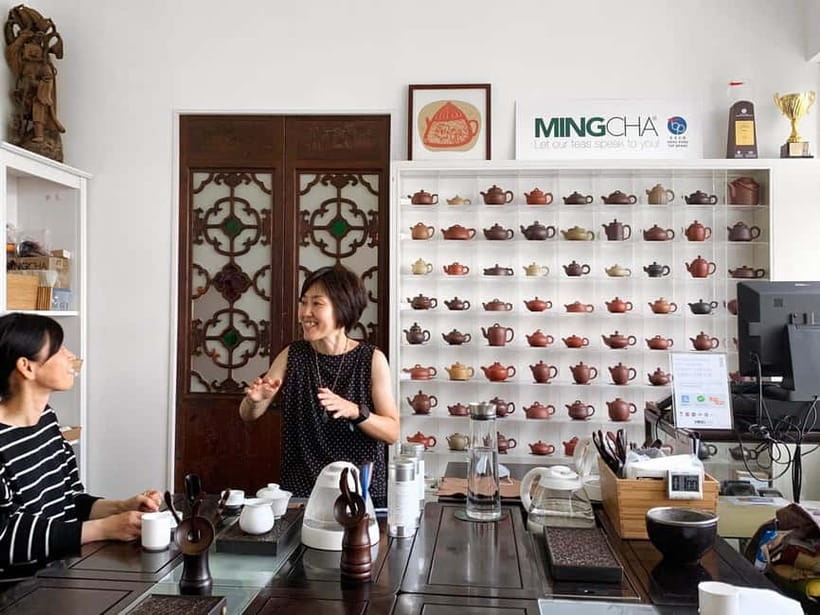
MingCha Tea House is run by Vivian Mak, an artist and designer-turned-entrepreneur. The shop has received major recognition, including a Hong Kong Top Brand award in 2017, and it’s been featured as one of the Worlds Best Tea Shops by Food and Wine Magazine.
That matters because this is not a “tea history slideshow.” The workshop is built around teaching you how to taste, smell, and brew, using a tight set of teas so you can compare differences clearly. With a session size capped at 20 people, you get a more personal rhythm than in big group tastings.
You’ll also get Mandarin, Cantonese, and English support, depending on the session. That makes it easier to follow if your Chinese is limited, and it helps if you want deeper explanations rather than just going through the motions.
All five senses at your table: tasting like a pro without pretending
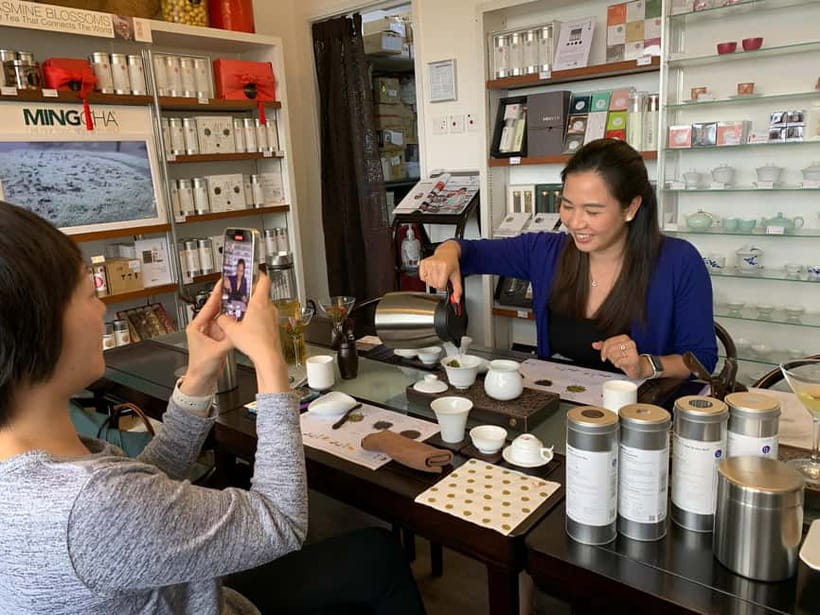
The workshop starts with a sensory approach that trains you to slow down. You’ll look at the leaves, then smell them dry and again after steeping, and yes, you’re guided to pay attention to touch and even sound as the tea process unfolds.
This is useful because tea isn’t one flavor. It’s an evolving set of aromas and tastes that change with water temperature, infusion time, and the way you brew. When someone guides you through what to notice, you stop thinking of tea as either good or bad and start thinking of it as a set of signals.
You’ll taste a curated lineup of about 4 to 5 teas, typically ranging from green and scented green to red, oolong, white, and puer. The goal is comparison: you learn how each style behaves, and you learn what to look for when you’re shopping later.
The tea lineup: green, oolong, white, puer, and how they compare
A big part of the value here is that you don’t just sample once. You’ll explore each tea across multiple brews—typically 5 to 6 rounds—so you notice how the flavor moves from one stage to the next.
In practical terms, this shows you something most first-time tea drinkers miss. Many teas can handle repeated infusions, and the aroma and taste shift as the leaves open up and then gradually relax. Once you’ve had that in your hands, you can brew at home without guessing every single time.
You’ll also get stories tied to origin and cultural meaning, plus production basics. The workshop covers history, botany, classification, and how processing techniques affect what you taste.
That botany and production piece is more than trivia. When you understand what harvest timing and processing do to a tea’s character, you’re less likely to buy based on labels alone.
Brewing with a gaiwan: the hands-on skill you’ll keep using
The workshop doesn’t end at tasting. You learn traditional brewing technique using the gungfu style and a gaiwan, which is a lidded bowl designed for multiple short infusions.
This is one of the best parts of the session because you get to practice, not just watch. Brewing is where your learning becomes muscle memory, and it’s also where you find out what you personally like in the cup.
You’ll get practical tips as you brew, including guidance that helps you brew for yourself and even for others. That turns the experience from entertainment into an actual skill.
And because you’re tasting through repeated rounds during the workshop, you can connect technique to results. You’re not stuck with one “perfect” cup you’ll never match again.
Tea and snack pairings: why rose honey toast works
The pairing component is a real standout. You don’t just get tea and snacks sitting side-by-side; you’re encouraged to taste how the snack changes your perception of the tea.
One example mentioned is rose honey toast, which pairs the crisp texture with subtle floral sweetness. That’s the kind of matchup that trains your palate: you learn to notice whether a tea’s aroma feels louder, softer, or differently balanced when paired with something crunchy and lightly sweet.
Vivian Mak’s approach to pairing is frequently praised, especially for using food combinations that feel a little unexpected. That’s valuable if you like recreating experiences at home, because it gives you a framework for matching flavors and textures instead of just copying a recipe.
Who this workshop is best for (and who should skip it)
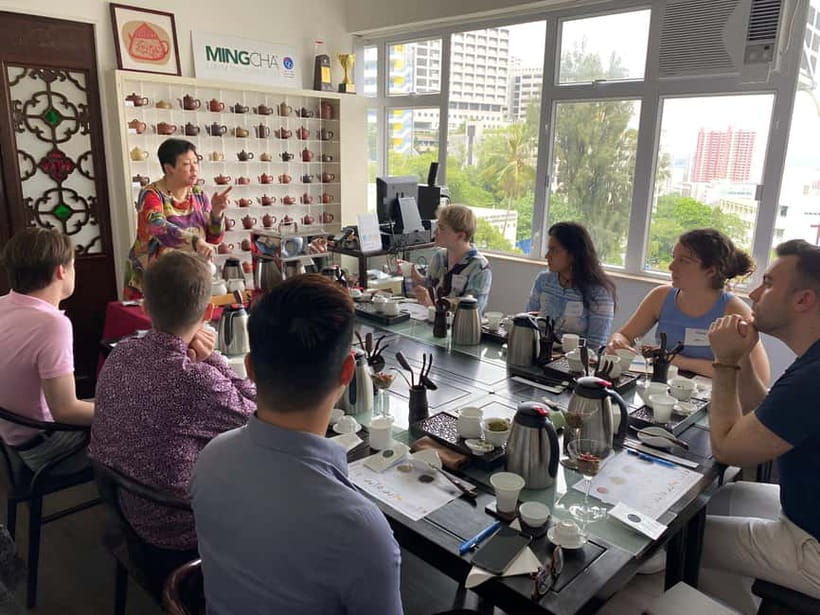
This works well for tea enthusiasts because you’ll get the classification and production context that helps connect what you know to what you taste. It also works for beginners because the session is structured around sensory guidance and a repeatable brewing method.
If you’re a culture seeker, you’ll likely enjoy the origin stories and the way the workshop frames tea as something with real craftsmanship behind it. You’re not only tasting; you’re learning how tea is made and why different styles exist.
If you’re the type who wants a jam-packed itinerary of photos, neighborhoods, and landmarks, this might feel too single-topic. This is a focused, indoor workshop experience centered on tea.
Price and value: is $63 worth 1.5 hours in Hong Kong?
At $63 per person for about 1.5 hours, the price sits in the “pay for instruction” category rather than the “cheap and cheerful sampling” category. In return, you’re getting premium handcrafted teas, guided tasting, hands-on brewing practice, and snack pairings.
Here’s the value logic I’d use if I were choosing. You’re not just tasting four teas once. You’re tasting through multiple brews, learning the differences between tea types, and then practicing technique with a gaiwan. That’s a lot more learning than a standard tasting flight.
On top of that, the workshop is limited to a maximum of 20 participants, which helps you get attention instead of being herded along. For many people, the skill component is what justifies the cost.
One verified booking even described the session as running long and taught so much it felt like a longer experience, which suggests the hosts can pace the group in a way that turns the time into real education.
Finding MingCha Tea House: Fortune Factory Building, Chai Wan
The tea house is in Fortune Factory Building, Block B, 15/F, Unit B2. It’s also about a five-minute walk from Chai Wan MTR Station, Exit C, which is a big help if you want something easy to fit into your day.
The building directions are a little specific, so follow them closely:
- The building entrance (green) looks like a parking lot; walk in and turn left
- Look for Block B by the stainless steel sign, then walk in and turn left to the passenger lift
- Press 15/F, then step out and look for the brown door
- The doorbell is on the right side of that door
This kind of “inside the building” location is common in Hong Kong, but it’s still worth arriving a few minutes early so you’re not scrambling.
What the tea masters bring to the room
The workshop is guided by knowledgeable tea masters, and the hosts include Vivian and Vanessa. Having two presenters can make the flow better, especially when one person explains while the other checks on your brewing.
The language setup also helps: sessions are conducted in English, Cantonese, and Mandarin. That matters because tea vocabulary can get technical fast, and it’s easier to learn when you can fully understand what’s being said.
One verified booking described the session as very informative, and also said it works for both people with some tea background and people who are just starting out. That’s exactly what the structure aims for: sensory training plus technique plus context.
Should you book this MingCha Tea Tasting and Pairing Workshop?
Book it if you want a real tea education you can take home with you. You’ll leave with more than a pleasant drink in your memory—you’ll have a method for brewing with a gaiwan, plus a clearer understanding of how different Chinese tea styles behave across multiple infusions.
Skip it if you mainly want sightseeing or long outdoor time. This is an indoor, skill-based workshop, and that focus is part of its charm.
If you’re in the Chai Wan area and you’d like a calm, structured way to spend 1.5 hours learning something practical, this is a strong choice. For $63, you’re paying for instruction, comparison tasting, and hands-on practice, and that’s a very workable deal in Hong Kong.
FAQ
What is the duration of the MingCha Tea Tasting and Pairing Workshop?
The workshop lasts approximately 1.5 hours.
How much does it cost?
It costs $63 per person.
How many teas are included in the tasting?
You’ll taste 4 premium handcrafted teas, and the selection is typically around 4 to 5 tea varieties.
Will I practice brewing tea?
Yes. The workshop includes hands-on brewing practice using traditional methods such as gungfu style with a gaiwan.
How long will you steep each tea?
You’ll taste each tea through multiple brews, typically 5 to 6 rounds per tea.
Is the workshop suitable for beginners?
Yes. It’s suitable for tea enthusiasts, novices, and culture seekers.
Where is the workshop located?
It’s at MingCha Tea House in Fortune Factory Building, Block B, 15/F, Unit B2.
Is it easy to reach by public transport?
Yes. It’s a five-minute walk from Chai Wan MTR Station, Exit C.
What languages is the workshop conducted in?
It’s guided in English, Traditional Chinese, and Chinese.
Can I get a refund if my plans change?
Free cancellation is available up to 24 hours in advance for a full refund.