REVIEW · CHONGQING
Chongqing 1941 theatre: Tea Art Performance with Folk Art
Book on GetYourGuide →Operated by 成都环球国际旅行社有限公司新都第三分公司 · Bookable on GetYourGuide
Tea, songs, and kung fu in one show. What I like most is the tea art choreography and the up-close performance energy that keeps you watching the whole time, plus you get a real slice of Sichuan folk entertainment. The main drawback is timing: if you arrive late, you can miss the tea and snack part.
This is a compact indoor evening (45 minutes) where multiple traditional acts rotate one after another. You’ll hear Chinese throughout, so it helps if you can enjoy the show even without understanding every word.
For most people, that trade-off is worth it. I’d just plan to get there early and expect a short, high-density performance rather than a long sit-down experience.
In This Review
- Key Things I’d Book It For
- Why Chongqing 1941 Theatre Works: Tea Art Meets Folk Performance
- Getting Inside: The 8th-Floor Meeting Point and Timing That Matters
- The Tea Setup: Gaiwan-Style Experience, a Covered Cup, and How It Fits the Show
- Human Good and Kung Fu: Sichuan Drama Energy in a Tight Time Slot
- Long Mouth Pot Tea Art and the 1.2-Meter Teapot Moment
- Pipa Sounds and Quyi Storytelling: Two Traditions That Travel Well
- Face-Changing Up Close: The Folk Art Moment That Feels Personal
- Price and Value: What $31 Gets You (and One On-Site Tip)
- Who Should Book This Tea Art Performance, and Who Might Skip It
- Should You Book the Chongqing 1941 Theatre Tea Art Show?
- FAQ
- How long is the Chongqing 1941 tea art show?
- What is included with the ticket?
- Is tea provided if I arrive late?
- What time should I arrive before the show?
- Where do I meet for the show?
- What language is used during the performance?
- Is the performance indoors?
- Is there transportation provided to and from the theatre?
Key Things I’d Book It For
- Long Mouth Pot Tea Art: a giant 1.2-meter teapot bit that turns tea-making into visual theater
- A Sichuan drama segment with kung fu: action plus story beats in the same set
- Pipa performance: crisp, sonorous instrument work that carries even when you don’t catch every line
- Quyi Money Board storytelling: singing-style narrative that feels like folk radio, but live
- Face-changing and folk customs moments: close-range spectacle that’s easy to enjoy
Why Chongqing 1941 Theatre Works: Tea Art Meets Folk Performance
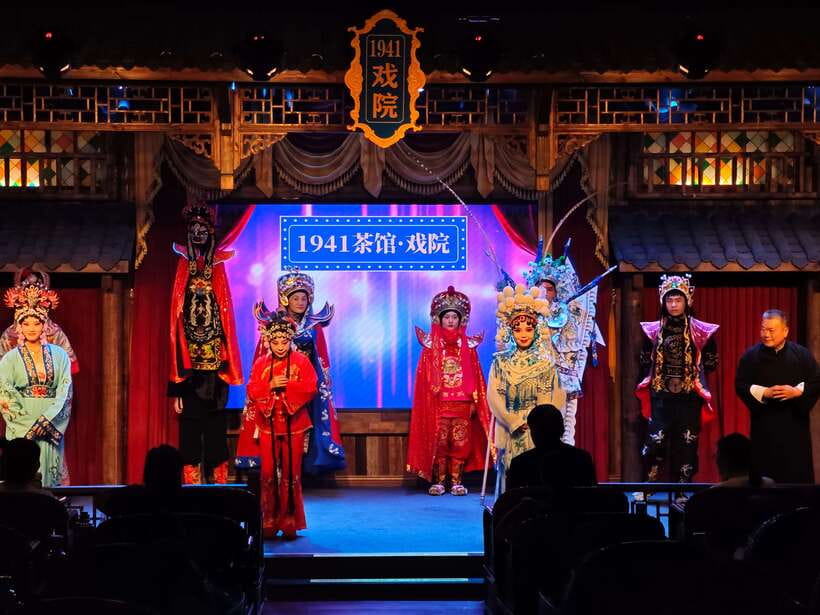
Chongqing 1941 theatre is built like a mini cultural show. You sit down, get tea and a snack, and then a sequence of traditional arts cycles through the stage like a playlist—opera-style drama, music, storytelling, and stage magic elements. The big idea is simple: the tea is part of the atmosphere, and the performance is part of the taste experience.
I especially like how the show doesn’t rely on one single act to carry the night. You’re not stuck watching only opera, or only music, or only “tea stuff.” Instead, the tea ceremony framing gives you a calm center while the performers rotate through different skills around it.
One more thing: the pacing is tight. At 45 minutes, you’re unlikely to feel bored, but you also won’t get a long, slow build. Think of it as a concentrated cultural sampler where the payoff is variety and craft, not length.
Getting Inside: The 8th-Floor Meeting Point and Timing That Matters
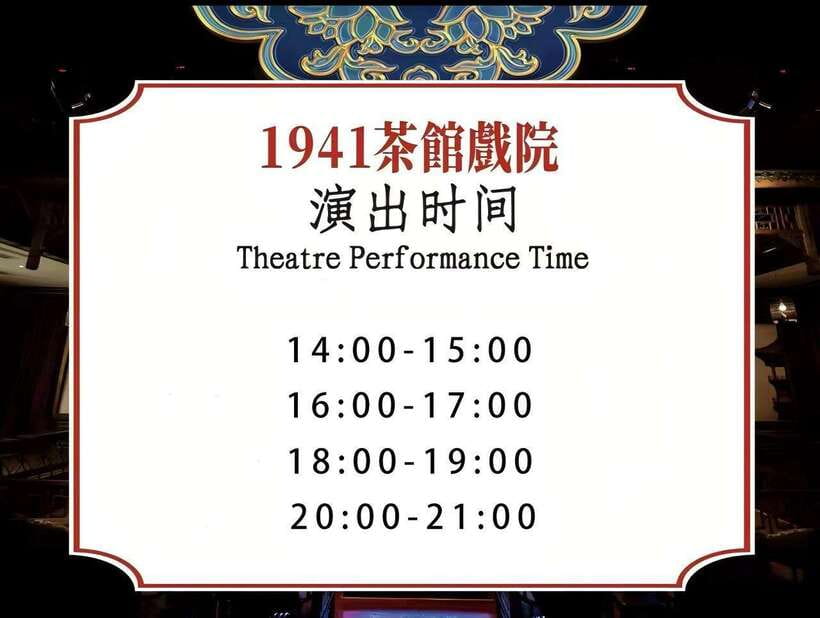
Your meeting point is specific: the Yutian building garage entrance, next to the time elevator, leading you to the 8th floor. In a place like Chongqing, that kind of pin-point detail matters. If you wander, you lose time, and this show rewards early arrival.
Plan to show up 30 minutes before the start time. The show is indoors, and you’ll be seated and staged in time for the tea part. This early window also helps you settle in before the first round of action starts.
There’s another practical reason to arrive early: the tea and snack are part of the included experience, and the show runs on a schedule. If you show up late, you might miss the tea service, which means you’ve paid for an act-focused evening but lose the “tea art + snack” centerpiece.
The Tea Setup: Gaiwan-Style Experience, a Covered Cup, and How It Fits the Show
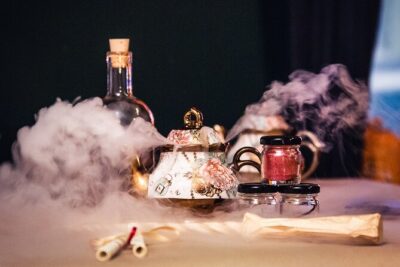
This is a tea-focused show, not a concert with tea sold separately. You’ll get traditional covered-bowl tea (the show includes that part per person) along with a special snack. The tea experience is paired with what’s happening on stage, so you’re not just sipping in silence.
You’ll also notice the tea format fits the performance style. The show centers on traditional tea presentation, and it sets a rhythm: watch, sip, and then watch again as the next segment begins. It’s a smart way to keep non-experts engaged, because the performers use visual cues and stage energy to fill any language gaps.
One key rule: tea is not provided if you’re late. That means if your timing is shaky—airport delays, metro connections, taxi hitches—this is the show where you should build in extra margin. If you’re even slightly unsure you can reach on time, consider buffering your schedule.
Human Good and Kung Fu: Sichuan Drama Energy in a Tight Time Slot
One standout segment is a Sichuan drama performance called Human Good, paired with kung fu. This matters because Sichuan-style drama often mixes storytelling, character emotion, and physical performance. Adding kung fu gives the show a sharper physical rhythm.
What you’ll likely feel here is the contrast: the tea and the calm sitting contrast with sudden motion and impact. That push-pull is part of why folk entertainment works well for visitors. Even if you don’t know the plot, you can still read the body language, the pacing, and the theatrical cues.
Also, this segment contributes to the variety promise. Instead of the show turning into music-only or tea-only, it stays narrative-driven. You get a sense of “something is happening,” not just “something is being performed.”
If you enjoy stage combat, choreographed movement, or dramatic acting styles, this is one of the reasons the show gets strong marks.
Long Mouth Pot Tea Art and the 1.2-Meter Teapot Moment
This theatre has a signature tea art act: Long Mouth Pot Tea Art with a 1.2-meter long teapot. Even if you’ve never seen tea art before, this kind of long-spout setup is built for visual clarity. It’s stage-friendly, and it’s the kind of craft that looks impressive from any seat.
This is the practical value of including tea art inside a show: it gives your eyes a job. You’re watching how the tea artisans handle tools and timing, not just passively listening. And when the teapot’s length is the headline, you don’t need cultural background to appreciate the skill.
You’ll also see how tea presentation can be theatrical. Tea art here isn’t only about flavor; it’s about control—pouring, movement, and precision timed with the performance flow.
If you’re the type who takes photos of food and craft moments, this is one of the best spots to do it. The scene has a clear focal object, and it tends to be photogenic.
Pipa Sounds and Quyi Storytelling: Two Traditions That Travel Well
Two other acts bring different textures to the show.
First, there’s a Pipa performance. The pipa is a plucked instrument, and in this setting it becomes something like the show’s sonic thread. People often remember instrument segments because the sound stays vivid even if you miss the words. The pipa here is described as beautiful and sonorous, and that lines up with what you can expect from the instrument’s range and clarity.
Second, there’s Quyi Money Board—a folk storytelling style that mixes singing and narration. Quyi can feel surprisingly easy to follow because the performer’s delivery does much of the work. Even when you don’t catch every sentence, you pick up the shape of the story: rhythm, pacing, and the performer’s expression.
Together, pipa and quyi help make the show more visitor-friendly. Music lets you enjoy the emotion without translation. Storytelling gives you a thread to latch onto even if the details blur.
If you’re traveling with someone who isn’t into theater or opera but still wants cultural flavor, these two segments are often the bridge.
Face-Changing Up Close: The Folk Art Moment That Feels Personal
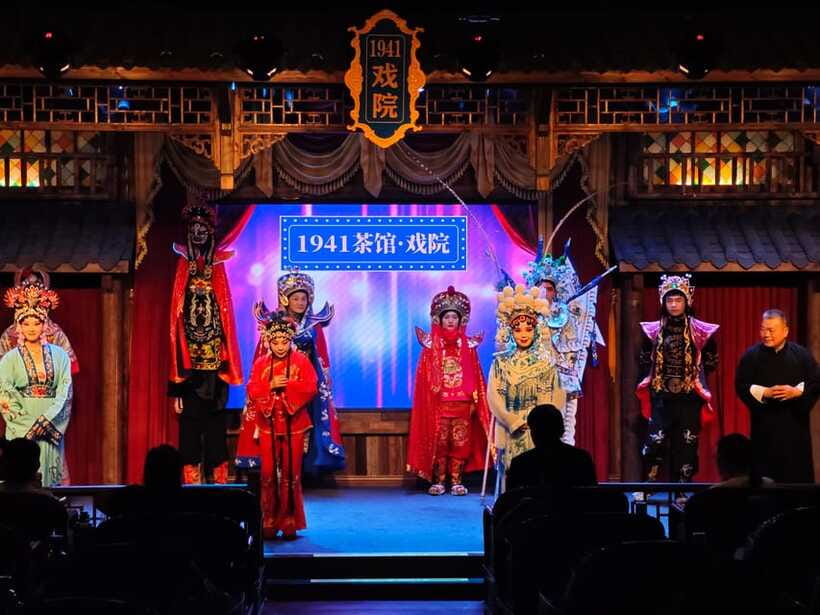
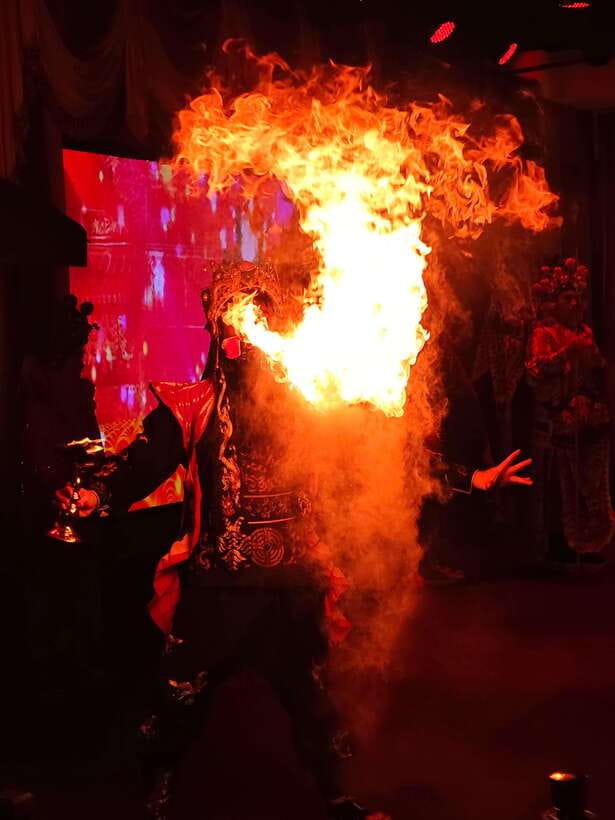
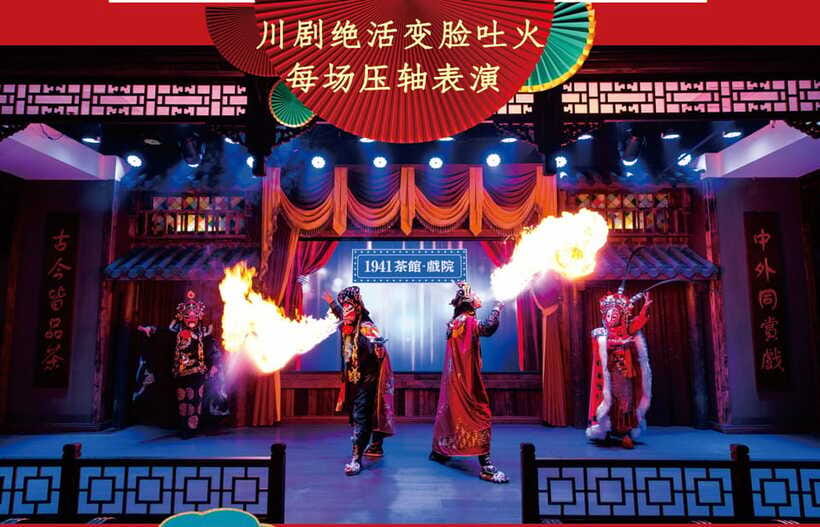
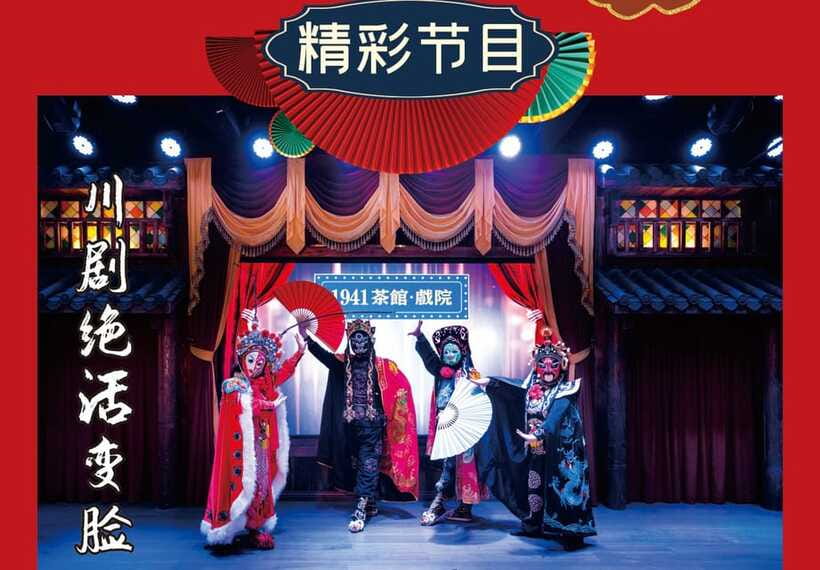
Another memorable part is the close-up folk craft—facial makeup up close, often associated with fast costume-and-face illusion in Chinese opera styles. The show includes moments where facial transformation is part of the entertainment rotation, and it happens with enough proximity that you can notice the craft.
This is the part many visitors find hardest to forget because it feels immediate. Stage magic and face-changing work best when the audience is close enough to notice the speed and the switching. You don’t have to understand the full performance background to react to the surprise.
There’s also a broader rotation of “folk customs programs,” and that keeps the energy from settling into one mode. Even if you came mainly for tea art, these sudden switches in form—opera drama, instrumental music, storytelling, performance illusion—make the experience feel alive.
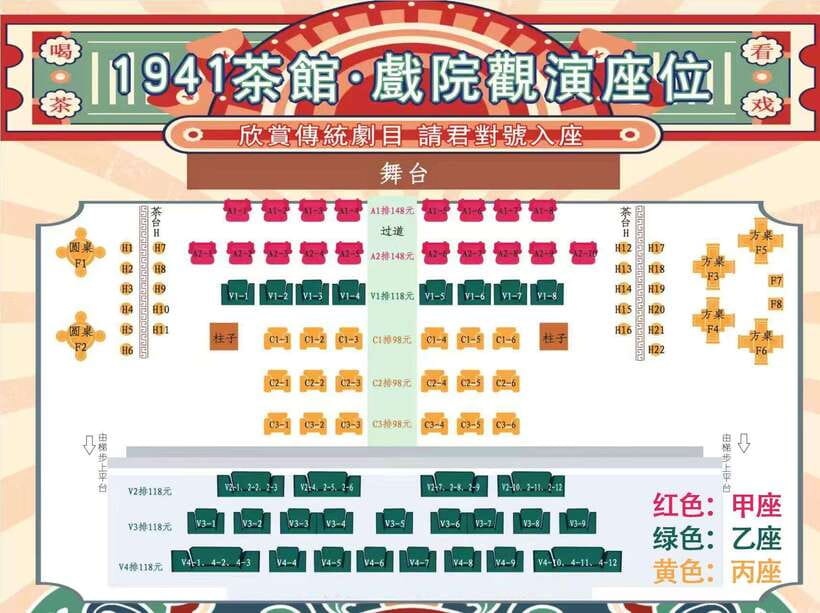
One extra note from the vibe: front-row seating tends to give you more engagement. If you care about interaction, aim for the earlier seats when possible.
Price and Value: What $31 Gets You (and One On-Site Tip)
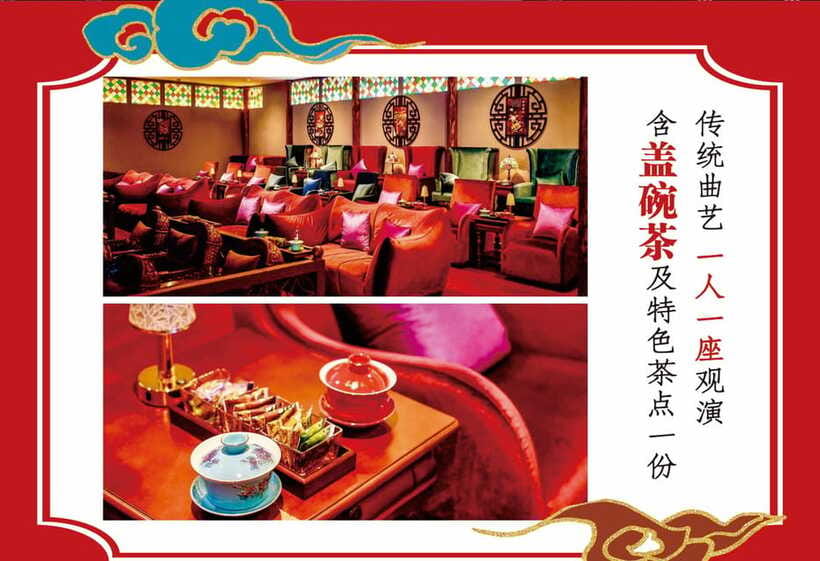
The ticket price is listed at about $31 per person for a 45-minute show that includes tea and a snack, plus multiple performance types. On paper, it’s not a long night, but it’s not just a show-only ticket either. You’re paying for a packaged cultural experience: performance variety + tea art + snack.
The best value angle is density. You get more than one tradition in a short block. Instead of spending an hour doing only one thing, you’re getting a rotation: Sichuan opera drama with kung fu, long-spout tea art, pipa, quyi storytelling, and close-up folk spectacle.
Still, here’s the caution. One important note to keep your money wise: you may find tickets for less if you buy locally at the venue. If saving money matters, it’s worth checking the on-site price before you lock in. Even if you keep the same day plan, it’s smart to compare.
If you can’t risk missing the tea service, though, don’t play chicken with timing. Any savings are only real if you still arrive early enough for the included tea moment.
Who Should Book This Tea Art Performance, and Who Might Skip It
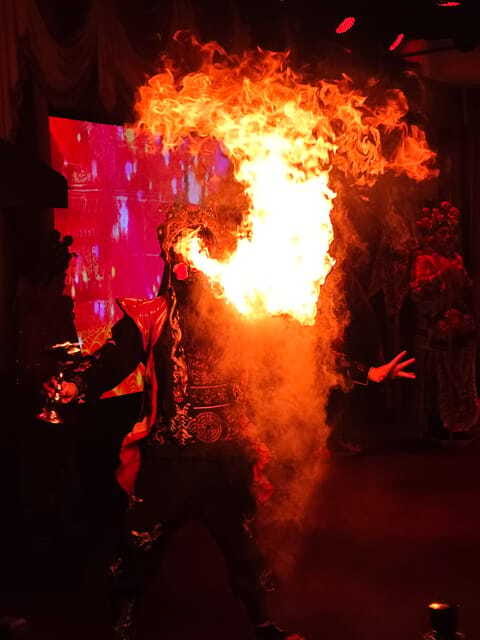
This works best if you want a concentrated introduction to Chongqing folk entertainment without planning a full evening around one venue. It’s also good if you like shows that mix forms: opera-style acting, music, storytelling, and stage craft.
It’s especially suitable for:
- Couples or solo travelers who want a “cultural evening” that stays manageable
- Visitors who enjoy tea as a cultural ritual, not just as a beverage
- People who like variety and short performances rather than long multi-part productions
It may not be ideal if:
- You want a long immersive experience (this is 45 minutes)
- You strongly need English-language explanations throughout
- You’re arriving late and can’t guarantee the included tea timing
Also, the show is in Chinese, so your enjoyment will come more from watching and listening to music and performance energy than from following dialogue line-by-line.
Should You Book the Chongqing 1941 Theatre Tea Art Show?
I think this is a smart booking when you want a compact, cultural, all-in-one evening. The tea art is the hook, but the real reason to go is the variety: Sichuan drama with kung fu, Pipa music, Quyi storytelling, plus close-up folk spectacle. You get enough different elements that you can enjoy it even if language isn’t your thing.
Book it if you can arrive early and you like the idea of seeing traditional crafts performed like theater. If $31 feels steep, check the on-site price option first—just don’t let savings tempt you into late arrival and missing the included tea-and-snack moment.
If your schedule is tight and you want one authentic performance-style evening in Chongqing, this is one of the easiest ways to do it.
FAQ
How long is the Chongqing 1941 tea art show?
The performance is listed as 45 minutes.
What is included with the ticket?
The ticket includes the traditional performance and a covered bowl of tea plus a special snack per person.
Is tea provided if I arrive late?
No. Tea is not provided if you are late.
What time should I arrive before the show?
Arrive 30 minutes before the activity starts.
Where do I meet for the show?
Meet at the Yutian building garage entrance next to the time elevator on the 8th floor.
What language is used during the performance?
The show is in Chinese.
Is the performance indoors?
Yes, it takes place indoors.
Is there transportation provided to and from the theatre?
No. Transportation to and from the activity is not included.