REVIEW · NAGASAKI
Best of Nagasaki with Japanese Tea Ceremony 4 hours Car Tour
Book on Viator →Operated by Nagasaki Private Tours · Bookable on Viator
Nagasaki hits hard, then softens. This 4-hour car tour packs Peace Park and the Hypocenter area with a real Japanese tea ceremony in Shindaikumachi, plus calm pacing that works well when you have limited time. I like that the route is built to keep you comfortable in an air-conditioned ride, and I also like that key stops are handled with included tickets and the tea ceremony, so you’re not juggling cash or figuring anything out while you’re learning.
The main thing to consider is the 4-hour limit. You’ll move through major sites in short, focused time blocks, so it’s not the best choice if you want a slow, deep visit to just one or two places—or if the atomic-bomb subject matter feels like too much for your day.
In This Review
- Key points to know before you go
- A smart 4-hour plan for limited time in Nagasaki
- Peace Park and Hypocenter Park: two sides of the same story
- Atomic Bomb Museum: what you can do in 30 minutes
- Shindaikumachi tea ceremony: matcha, omotenashi, and a needed reset
- Oura Church and Glover Garden: UNESCO stop, then harbor views
- Car comfort and pacing: the real value of “how” this is done
- Price and value: what $221.12 covers (and why it can be worth it)
- Who this tour fits best
- Should you book this Nagasaki peace and tea combo?
- FAQ
- FAQ
- How long is the Best of Nagasaki with Japanese Tea Ceremony tour?
- Is pickup available?
- Is the Japanese tea ceremony included?
- Are entrance fees included?
- Are meals included?
- Is this tour private or shared?
- What is the cancellation policy?
Key points to know before you go
- Cruise-friendly timing: A half-day plan that fits tight schedules without turning into a sprint.
- Peace sites in one run: You see both the memorial grounds and the exact hypocenter area as part of the same flow.
- Museum ticket included: The Atomic Bomb Museum stop is set aside with admission covered.
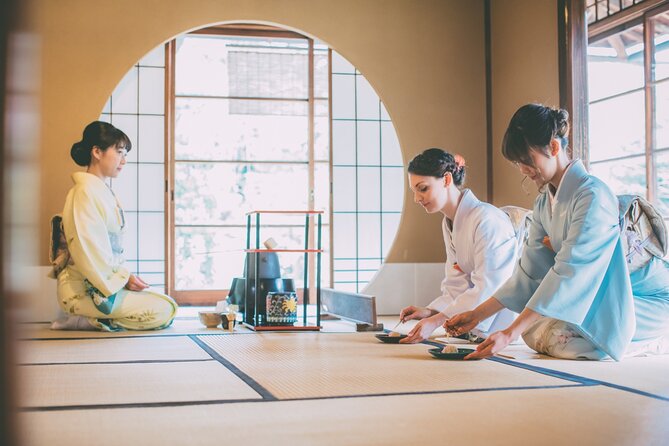
- Shindaikumachi matcha ceremony: You’ll watch the host prepare matcha and learn about omotenashi (hospitality).
- Historic mix, one day: Oura Church (UNESCO) and Glover Garden (Western residences with harbor views) balance the emotional weight of the morning.
A smart 4-hour plan for limited time in Nagasaki
If you’re short on time—especially on a cruise day—this tour-style format makes sense. Instead of bouncing between far-apart areas on your own, you get a car to reduce the walking burden and keep momentum.
I also like that the experience is described as leaving you feeling “not rushed.” The timing is structured: you get focused visits at each stop, then you transfer by vehicle so your feet and brain get a breather between themes. The guide support matters here too. In past groups, guides such as Akihiro and Moeurn (and at other times Hiro and Vichka) have been praised for clear English explanations and for making the story of Nagasaki feel easier to grasp.
One more practical note: transportation may be by private car or taxi, depending on vehicle availability. Either way, the goal stays the same—get you between sights with less friction.
You can also read our reviews of more tours and experiences in Nagasaki.
Peace Park and Hypocenter Park: two sides of the same story
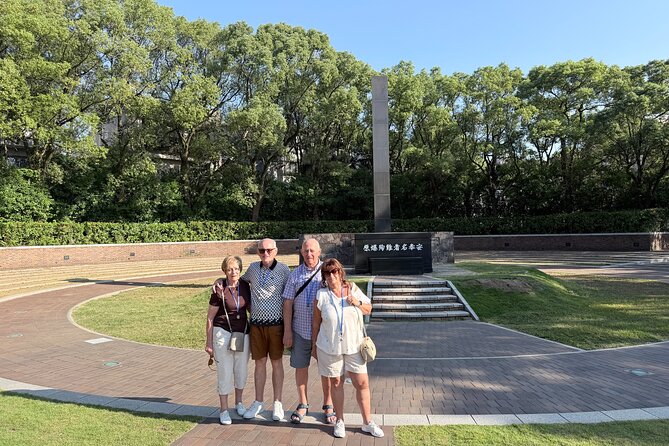
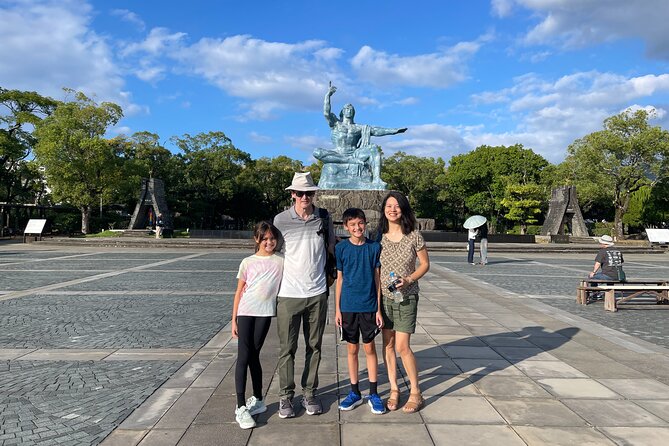
The day starts in the Nagasaki Peace area, with two stops that complement each other: Nagasaki Peace Park and Hypocenter Park.
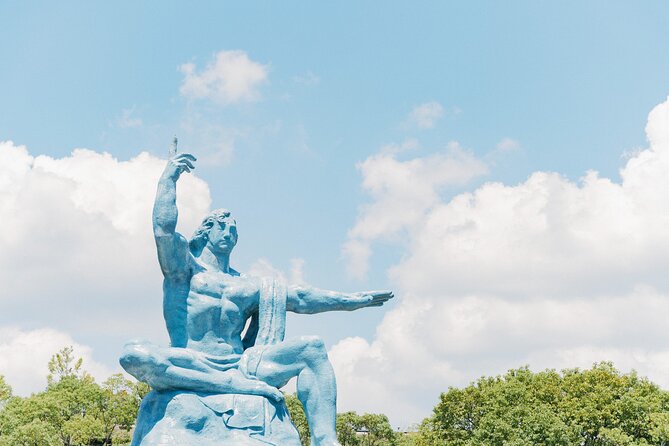
At Peace Park, you walk among memorials and sculptures dedicated to the atomic-bomb victims. There’s time to pause at the Peace Statue area and reflect on Nagasaki’s commitment to peace. This is the “wide-angle” part of the visit—less about a single moment, more about what the city chose to build afterward.
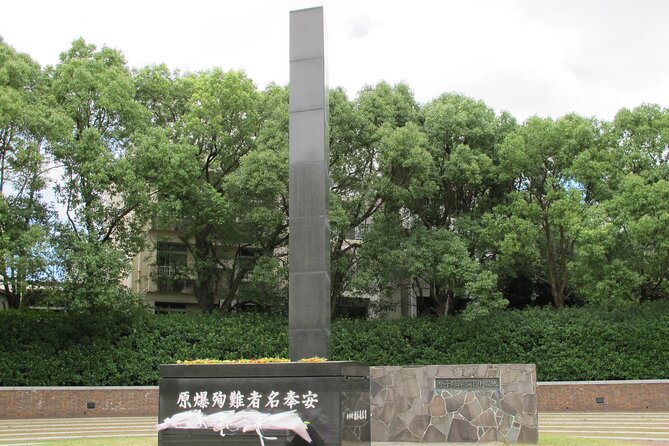
Then comes Hypocenter Park, which brings you to the exact location where the bomb exploded in 1945. This is the “point in space” stop: walk around the monument, take in what’s marked there, and let the history land with clarity. If you’re the type who needs context before details, this pairing works well because it moves from memorial meaning to geographic precision.
My advice: plan to slow down for the first 5 minutes at each park. The sites are designed for reflection, and rushing early on makes the rest feel harder to process.
Atomic Bomb Museum: what you can do in 30 minutes
Next is the Nagasaki Atomic Bomb Museum, with admission included. In a typical 30-minute window, you’re not going to read every label cover to cover, but you can still see the core story: what happened on August 9, 1945, and how the bomb affected the city and its people.
This stop is valuable because it adds “why it matters” context to what you’re already seeing outside. The museum uses exhibits, photographs, artifacts, and personal stories to illustrate the events and impact. Even if you only manage a highlight pass, the museum gives you language and detail you can carry with you at later stops.
Possible drawback: if you’re very sensitive to graphic personal stories, you may want to take your time and step back when needed. The tour schedule allows you some breathing room because the museum stop is timed rather than endless.
Shindaikumachi tea ceremony: matcha, omotenashi, and a needed reset
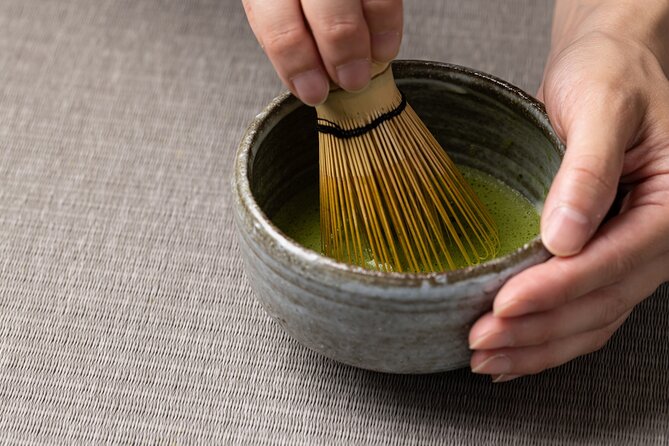
Here’s the part that makes this tour unusual for Nagasaki: after the peace sites, you visit Shindaikumachi for a traditional Japanese tea ceremony. It’s set for about 45 minutes, and the details you’re given focus on watching the host prepare matcha with grace and precision while learning the meaning of omotenashi (hospitality).
This isn’t just a cultural checkbox. It’s a tonal reset. After heavy history, the tea ceremony shifts you into a slower rhythm: watching hands move carefully, noticing how the process emphasizes respect and attention. It can help you absorb the earlier stops without forcing you to keep emotionally “on” the whole time.
What to expect practically: you’ll get the ceremony itself as part of the experience, and there’s no need to arrange tickets separately for this stop in the information provided. If you enjoy hands-on cultural moments—especially ones that teach through observation—this is often the highlight.
My advice: treat the ceremony like a pause, not a break between sightseeing. Put your phone away during the ritual part. You’ll get more out of it.
Oura Church and Glover Garden: UNESCO stop, then harbor views
After tea, the plan continues with two landmark contrasts: Oura Church and Glover Garden.
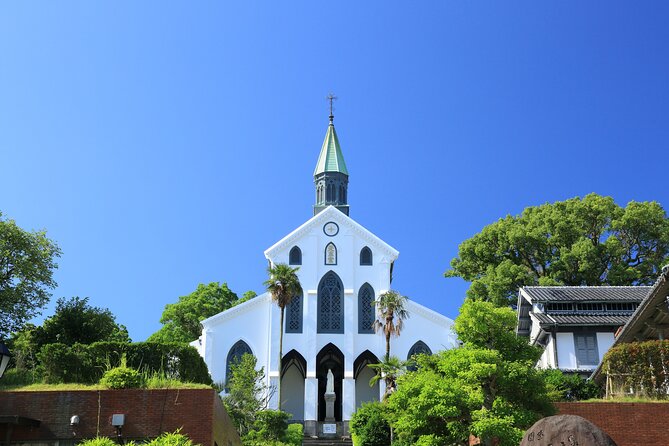
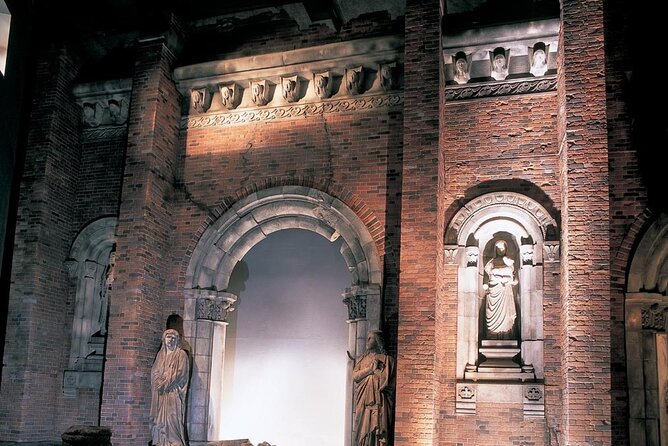
Oura Church is described as Japan’s oldest Christian church and a UNESCO World Heritage Site. That UNESCO status matters because it usually signals a place with preserved historical significance. The tour includes time to explore the historic building and learn about Christianity’s history in Nagasaki, which pairs nicely with the city’s role as a historical crossroads.
Then you head to Glover Garden, with about 30 minutes set aside and admission included. Here, the tone changes again. You explore Western-style residences from the 19th century on a hillside with views over Nagasaki Harbor. The panoramic perspective helps you understand the city as more than a single tragedy story—it also shows how trade, foreign influence, and daily life shaped Nagasaki’s look and identity over time.
My advice: at Glover Garden, focus on viewpoints you can reach without sprinting. The views are the point here, and short time blocks mean you should choose what you’ll photograph and what you’ll just look at.
Car comfort and pacing: the real value of “how” this is done
A lot of Nagasaki sightseeing tours are built around long walking days and “figure it out” transfers. This one is designed around vehicle comfort and short, purposeful visits.
That matters for two reasons:
- You reduce fatigue. Even with “only” a half day, Nagasaki sites add up quickly. A car helps you conserve energy so you’re actually present at the peace sites instead of thinking about your aching legs.
- You reduce uncertainty. The structure is tight, but the logistics are handled: private transportation is included, and the tour uses a mobile ticket.
Also, this is set up as a private experience, meaning only your group participates. That’s a big deal if you want questions answered in your own pace rather than competing with other people’s timing.
One more detail: meals aren’t included. That’s not a dealbreaker, but you should plan to eat before or after, especially if you’re on a cruise timeline.
Price and value: what $221.12 covers (and why it can be worth it)
At $221.12 per person for about 4 hours, this isn’t the cheapest way to see Nagasaki—but it’s also not trying to be. The value comes from bundling the parts that usually cost time and mental energy:
- Private transportation is included (car or taxi depending on availability).
- Entrance fees are handled for the stops marked as included, including the Atomic Bomb Museum and Glover Garden.
- The Japanese tea ceremony is included as a set experience.
- You also get guided explanations in clear English, with guides like Akihiro, Moeurn, Hiro, and Vichka referenced in feedback as supportive and professional.
If you’re comparing costs, it’s useful to think beyond ticket prices. Here, the “hidden cost” is avoiding transit stress and maximizing your limited time. When you only have half a day, that trade often makes sense.
My take: this is a strong value if you want a guided, well-paced highlights route with one memorable cultural add-on (the tea ceremony). If you prefer self-guided freedom or you want to spend half a day on just one theme (only peace sites, for example), you might get more satisfaction using public transit and building your own route.
Who this tour fits best
This tour style is a good match if you:
- have limited time in Nagasaki (cruise-day mindset),
- want a balance of serious history and culture (tea ceremony),
- appreciate guided context in clear English,
- prefer not to spend the day managing transfers and tickets.
It may be less ideal if you:
- want a slow, long visit where you can linger for extended periods at one museum or memorial area,
- need lots of free time to wander independently without a set schedule.
Should you book this Nagasaki peace and tea combo?
I’d book it if your goal is a high-impact overview that treats your time well: Peace Park, Hypocenter Park, the Atomic Bomb Museum, then a tea ceremony reset, finishing with Oura Church and Glover Garden. The fact that the tea ceremony is built into the half-day plan is the main reason this one feels different—and it’s also what makes the emotional arc more manageable.
I’d think twice if you’re looking for deep immersion in a single place or if the topics feel like too much for your day. In that case, choosing one area and giving it more time often feels kinder to your own pace.
FAQ
FAQ
How long is the Best of Nagasaki with Japanese Tea Ceremony tour?
The tour is about 4 hours.
Is pickup available?
Pickup is offered.
Is the Japanese tea ceremony included?
Yes. The Japanese tea ceremony is included as part of the experience.
Are entrance fees included?
Entrance fees are included where applicable. The Atomic Bomb Museum and Glover Garden have tickets included, while the Peace Park and Hypocenter Park are free, based on the details provided.
Are meals included?
No. Meals are not included.
Is this tour private or shared?
It’s private. Only your group participates.
What is the cancellation policy?
You can cancel for a full refund up to 24 hours in advance of the experience start time.